Heart Rate Drift in Zone 2: Should You Slow Down?
Your heart rate drifts up on a long zone 2 run or ride: same pace, same power, a higher heart rate. Should you slow down? Sebastian Weber answers the question coaches ask most at our camps.
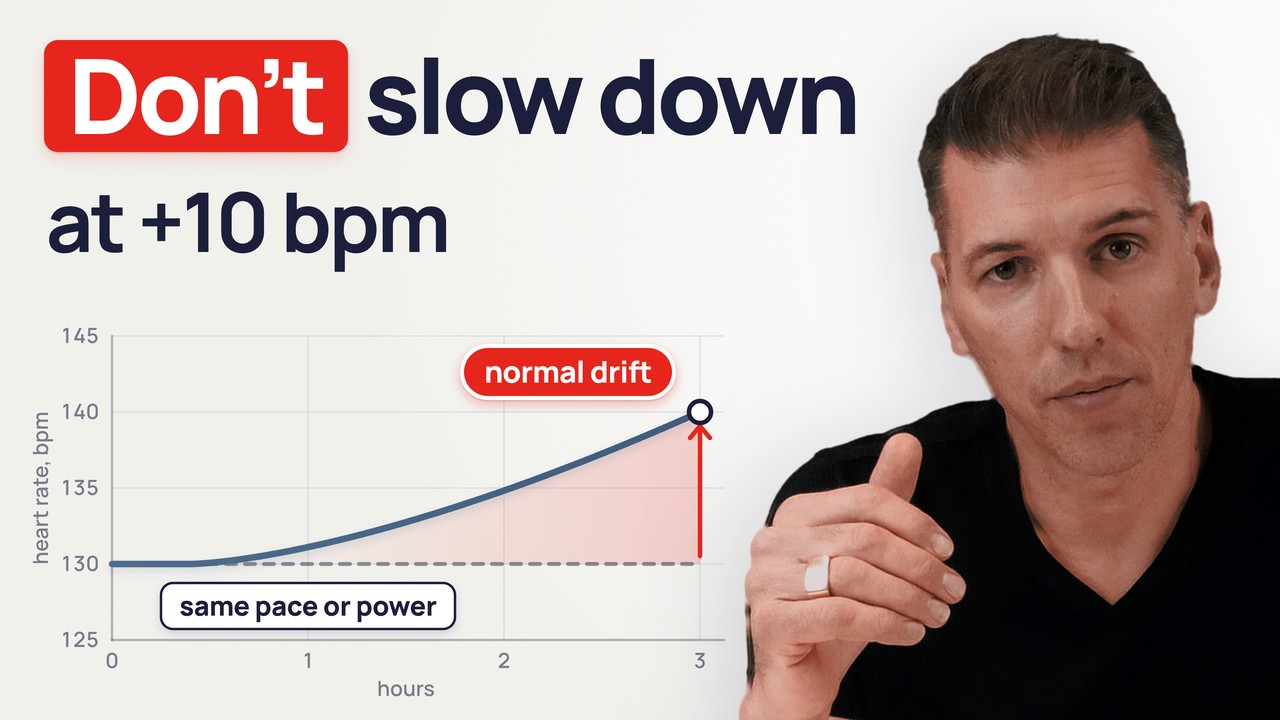

Your heart rate drifts up on a long zone 2 run or ride: same pace, same power, a higher heart rate. Should you slow down? Sebastian Weber answers the question coaches ask most at our camps.
Book a free INSCYD demo: https://inscyd.com/demo
Chapters
00:00 Heart rate drift: should you slow down?
00:32 Same pace or power, a higher heart rate
01:54 When heart rate is the anchor: training cardiac output
03:05 Long sessions with an energetic goal: FatMax and carbohydrates
05:02 Heart rate is the output, not the target
05:14 Heat and dehydration: why heart rate drifts
06:50 The only reason to slow down: a huge drift
07:18 Where the question comes from: old-school heart rate zones
09:40 A small drift, 5 to 10 beats: stick with your pace
Sebastian Weber goes through when heart rate drift, also called cardiac drift or aerobic decoupling, should change your training, and when it should not.
1. Training for cardiac output. If you designed a training program specifically around increasing cardiac output, heart rate is the first-order metric: you use it to monitor, or even set goals on heart rate amplitudes and kinetics.
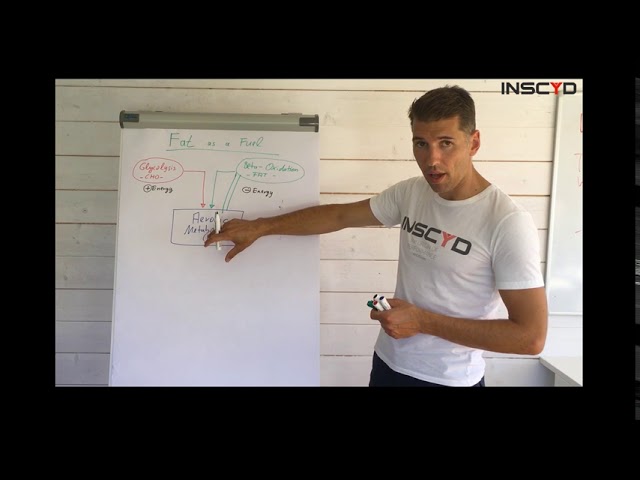
2. Long sessions with an energetic goal. Most longer, lower-intensity sessions target an average power output, lactate concentrations, a certain amount of fat combustion or the FatMax zone. You set the power or pace from the athlete's metabolic profile, so it elicits the fat or carbohydrate combustion rate you target.
3. Heart rate is the output. It is the result of that power or pace, not the first-order metric. Heat and dehydration drive heart rate up without changing the fat and carbohydrate shares much. Your muscle doesn't really care how high your heartbeat is.
4. When to slow down. A huge change, say 130 BPM at a given pace or power and now 150, is a reason to reduce it: not to keep the training stimulus, but for medical and safety reasons, like severe dehydration or severe heat.
5. Where the question comes from. Before GPS watches and power meters, heart rate was how intensity was steered, and lab tests extrapolated zones from lactate to heart rate. For a normal small drift, 5 to 10 beats, stick with your pace, speed or power.
Learn more, in INSCYD
4:15 Instead of guessing from threshold percentages, prescribe training from the physiology you actually want to improve. Training Zone Builder: https://inscyd.com/feature/training-zone-builder
4:22 FatMax describes the exercise intensity at which the athlete reaches maximal fat oxidation (MFO): https://inscyd.com/metric/fatmax
4:58 Carbohydrate Combustion Rate describes how much carbohydrate an athlete utilizes to produce energy at a given exercise intensity: https://inscyd.com/metric/carbohydrate-combustion
5:02 Heart rate is not a performance metric by itself in the same way as VO₂max, VLamax or thresholds are: https://inscyd.com/metric/heart-rate
8:11 INSCYD turns any test, lab, field and even remote, into a complete metabolic profile: https://inscyd.com/feature/performance-testing
Watch next
- Zone 2 Training Explained: Best Intensity for FatMax & Endurance
- The 80/20 Rule Doesn't Work in Endurance Training
- 3 Mistakes You're Making with LT1: Fix Your Zone 2 Training!
- 5 Mistakes You're Making With Lactate Testing
Sebastian Weber is a sport scientist and the founder of INSCYD. He coaches WorldTour cyclists and advises elite federations.
Do you slow down when your heart rate drifts, or stick with your pace? Tell us in the comments on YouTube.
One of the most frequently asked questions in the coach education camps that we are doing with INSCYD, should we adjust the training intensity in prolonged endurance exercise when we see a shift in heart rate? So let me explain. We do these four-day education camps around the globe for all kinds of coaches, swimming, triathlon, running, cycling.
And no matter which sport you're looking, it is a very common question from running coaches, especially from triathlon coaches and cycling coaches, when we do have a longer session of training, low intensity, maybe mixing with some intervals or some FatMax or climbs in the case of cycling, and we do see a shift in heart rate, meaning that for the same speed or the same power output, we now see a higher heart rate.
That's the most common case. Of course, it could also be decreased heart rate. But in most cases, coaches ask more about the case when they see an increased heart rate for the same given pace or power. And the question is then, should we decrease it? So let's think this through and let's look at why you would want to adjust the training intensity if you see this, what you might want to call uncoupling in heart rate. And talk about why you maybe don't want to do that.
So at first, there's one case in training where the answer is absolutely straightforward. If you designed a training program, and I encourage you to learn about that if you haven't done so yet. If you design a training program specifically designed around increasing cardiac output. So cardiac output is one of the main contributors to VO2max.
And you can design training programs specifically focusing on increasing cardiac output. So you know what I'm saying? You can put a focus more on a muscular level in terms of training adaptation, or you can focus a bit more on the central level or specifically cardiac output adaptations. Then very likely in this case, heart rate is a very first order metric you're looking for.
Okay. Meaning you use heart rate as an indicator to monitor, or even as a goal to set goals on specific heart rate amplitudes and kinetics to set the best stimulus on improving cardiac output. In this case, heart rate is a primary driver as the anchor metric of your training. And in this case, you should really only look at that and don't matter so much what the power pace is.
But I would argue that that is not the most common case, especially as I mentioned. The questions arise normally when people see a in longer trainings, which already implies it's a bit lower intensity, so not specifically for cardiac output. So we'll argue it's more often in longer sessions, lower intensity, which are specifically designed around an energetic goal.
What do I mean with that? Energetic goal is targeting a specific average VO2, could be one, it's targeting an average power output, lactate levels, or very likely something around a certain amount of fat combustion or where you stay in your FatMax zone. So this is what's normally used to define or the goal.
And if not anchored to that metric, at least that is what implicitly coaches prescribe this training for, right? Longer sessions to burn a lot of fat, to burn a lot of calorie, maintain a high overall energy output and accumulate hours, right? And in this case, we normally initially prescribe based on power or pace.
Most people, kind of old school, still do it as a percentage of threshold. More advanced would be to set the intensity based on, for example, the precise FatMax intensity, meaning the intensity of which the athlete burns the most amount of fat. Or, for example, I prefer doing that, setting the intensity based on the amount of carbohydrates an athlete burns.
Okay, so if that is your goal, then you basically adjust it or set the power or pace or speed so that it triggers this metabolic adaptation, right? You set up the intensity because you know from a metabolic profile, for example, you know that in this athlete, a certain power pace will elicit the fat combustion rate, carbohydrate combustion rate, whatever you're looking for that you are targeting.
And then the heart rate in this case is really just the collateral. It's not the first order metric. It's the output. It's the result of whatever that power or pace was.
And now if heart rate changes or when heart rate changes in training for that given intensity, it could be because, for example, increasing temperature, heat. It could be because of dehydration. Then for those factors, the most common factors, the most common influences that drive up heart rate, it does not necessarily change anything.
Of course, heat changes a little bit, especially if it's very hot about carbohydrate combustion. But besides that, then it is the heat. It is not the heart rate, right? So just because the heart rate is higher doesn't mean it necessarily changes anything around your primary and original goal why you prescribe this training.
For example, let me stay with that example that we had, a certain fat combustion range or a certain carbohydrate combustion range. So just because the athlete is a bit dehydrated, it's not changing tremendously or significantly something around fat and carbohydrate shares. And therefore, you would ask the question, why would I actually want to change my training intensity?
Or bluntly put, if you prefer that, up to a very high heart rate, your muscle doesn't really care how high your heartbeat is. The muscle cares about it, it needs blood, the blood needs to have oxygen, so it needs to be there. And as long as this blood flow speed is not too high, then it doesn't really matter.
So for all these reasons, I would argue from the, if you go back and review on the original training goal, there shouldn't be any reason really why you adjust the power pace, because you would basically go out of your preferred target zone.
The only reason where you might want to do if you have a huge change in heart rate, and I mean like whatever you have, normally 130 BPM or the athlete has 130 BPM at a given pace or power, and now it's 150. Then I would reduce it, not because you want to adjust it in order to keep the same training stimulus, but you want to adjust it because it's maybe a severe dehydration, okay, or it's maybe severe heat. So it's more for medical and security reasons.
And one thing to keep in mind, and I think this is where the question comes from. The question comes from, this question, the original question, should we change the training intensity of heart rate? I think talking to people in our educational camps, talking to coaches about it, I think the question derives from the kind of, no offense, little bit old school, back in the days approach where we used heart rate to inform training intensity.
What I mean with that, before we had GPS watches, before we had power meters and so on, we were not really able to accurately monitor and prescribe the training intensity based on speed or power. Even though training stimulus is more tightly, at least on a muscular level, is more tightly linked to pace or power, right?
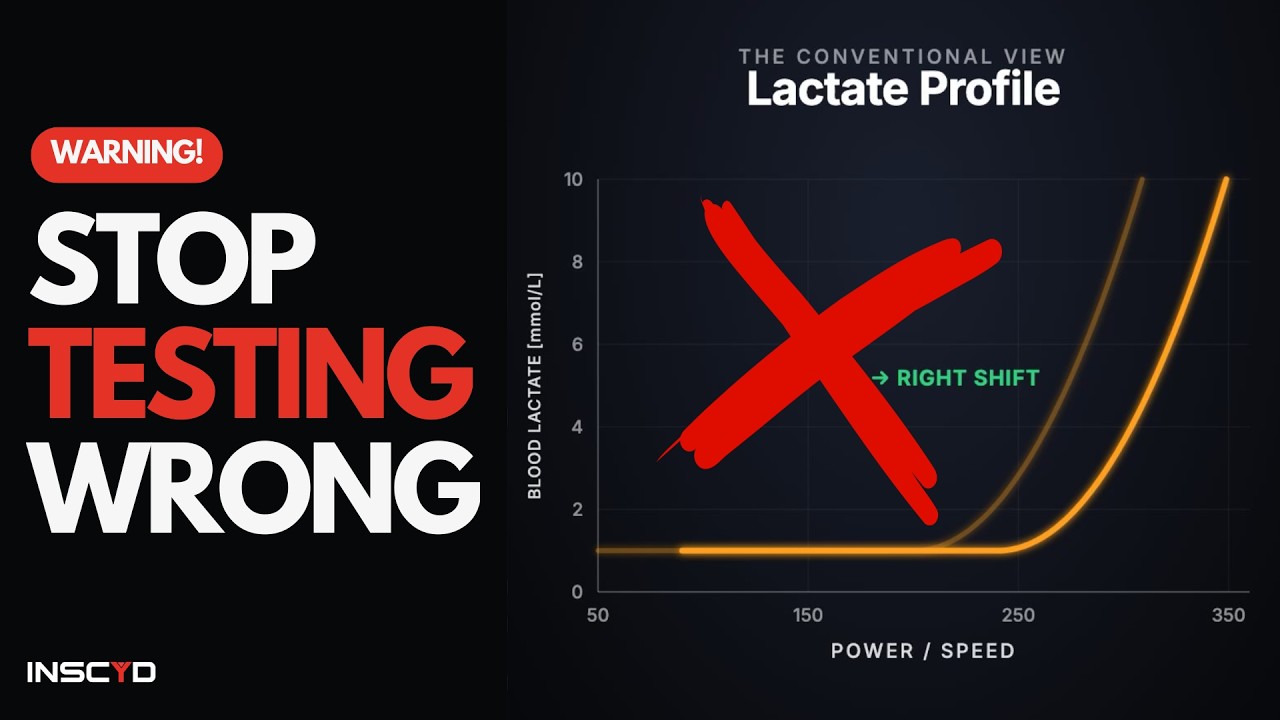
Think about it this way. You might have gone into a lab and, back in the days, people would do a conventional incremental lactate profile test. I mean, nowadays, we know that that's not the best way to test. But anyway, you would do this test. And how this test works is that in the lab, they set the treadmill to a certain speed and they put the power output on the ergometer to a certain power.
And then you measure, for example, the lactate concentration and then use that to make training zones. And you can argue that one of the main reasons to measure heart rate during this test was only to be able to extrapolate from, let's say, a certain lactate concentration, not only to a certain pace or power, but to extrapolate from the lactate concentration to a heart rate.
So now you would have a metric you could use in training to understand if you hit approximately the correct zone. And I say approximately because you will know that heart rate in the lab can be different to heart rate out in training, can vary a lot from day to day, right? So actually, this is the very reason why you likely bought or why your athlete bought a power meter and a GPS watch because it is the better metric to steer your training intensity and therefore there is no really reason to go back to using heart rate except for again you set up training specifically using heart rate for adaptation of the cardiopulmonary system or because the uncoupling of the heart rate, the heart rate drift is so big that you could run into medical reasons, into medical issues.
Besides that, if you just see a normal small uncoupling, 5 to 10 beats or whatsoever, just stick with your pace, speed, or power, because you likely had something to invest to find the correct intensity to elicit FatMax, elicit a certain carbohydrate combustion rate, and so on.