Norwegian 4x4 vs HIIT | Which Actually Maximizes VO2max improvement? - It Depends on the Athlete
This video provides a detailed comparison of oxygen uptake kinetics during high intensity training, specifically contrasting 40 seconds on/20 seconds off intervals with the Norwegian 4x4 protocol. We examine an athlete's oxygen consumption response to both methods, offering insights into h


This video provides a detailed comparison of oxygen uptake kinetics during high intensity training, specifically contrasting 40 seconds on/20 seconds off intervals with the Norwegian 4x4 protocol. We examine an athlete's oxygen consumption response to both methods, offering insights into how different training structures affect vo2 max. This exercise science perspective helps illustrate the impact on cardiovascular fitness.
What you'll learn:
- How VO2 kinetics differ between 40/20 HIIT and Norwegian 4x4 intervals
- Why VLamax — not VO2max — determines the actual aerobic training stimulus
- Why threshold-based intensity prescription fails certain athlete types
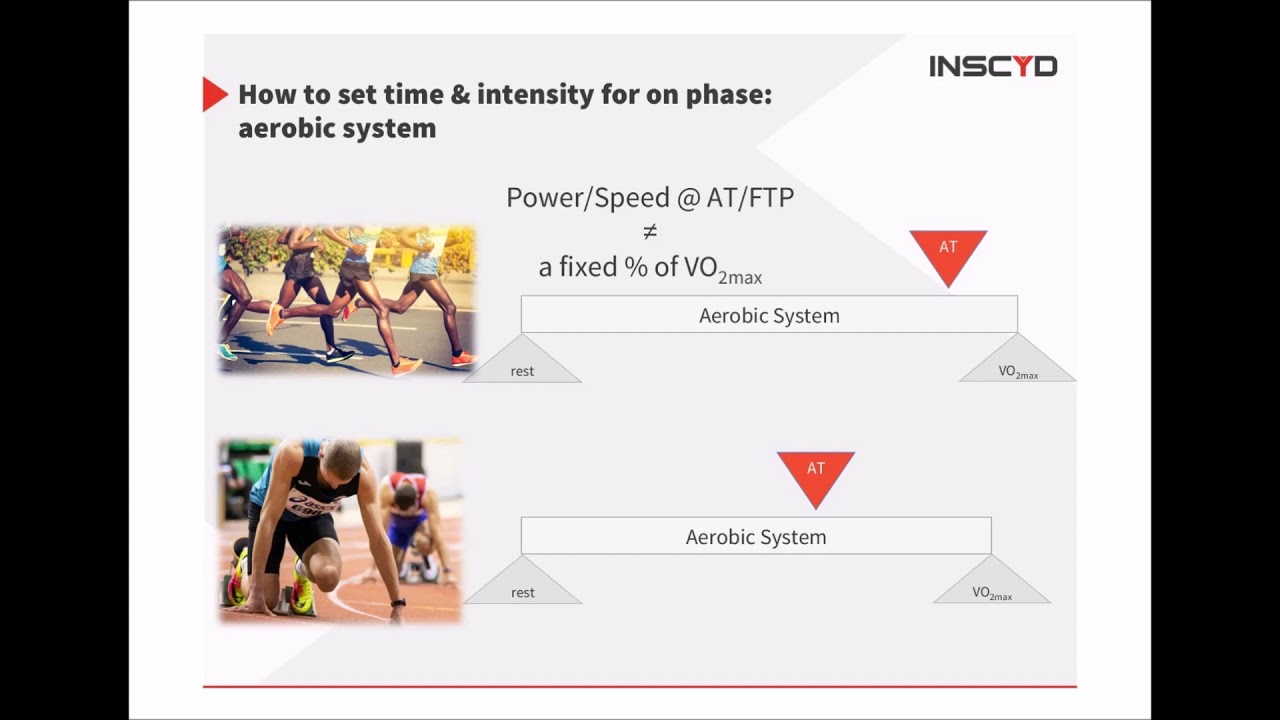
- How to prescribe training zones based on maximum aerobic power instead of FTP/LT2
This is Part 1 of INSCYD's science series on high intensity interval training for endurance athletes.
Read the full article: https://inscyd.com/article/hiit-vs-norwegian-4x4/
CHAPTERS: 0:00 — Introduction: 40/20 vs Norwegian 4x4 VO2 Kinetics 2:14 — VLamax Effect on HIIT 40/20 Response 6:08 — VLamax Effect on Norwegian 4x4 Response 10:15 — Training Zones: Aerobic Power vs Threshold
INSCYD Coaching & Testing Camp: https://inscyd.com/coaching-testing-camp/ See INSCYD in action: https://inscyd.com/demo
So here we are looking at a comparison of the high intense interval training 40 seconds on 20 seconds off to Norwegian's 4x4. We are looking at oxygen uptake kinetics. So the solid blue line is the oxygen uptake kinetics during the Norwegian 4x4 intervals.
The solid red line is the oxygen uptake kinetics during the HIIT protocol. In blue, the dotted line is the VLA max demand during the Norwegian 4x4 and in red it's the VLA max demand during the HIIT protocol. So let's look at what's happening.
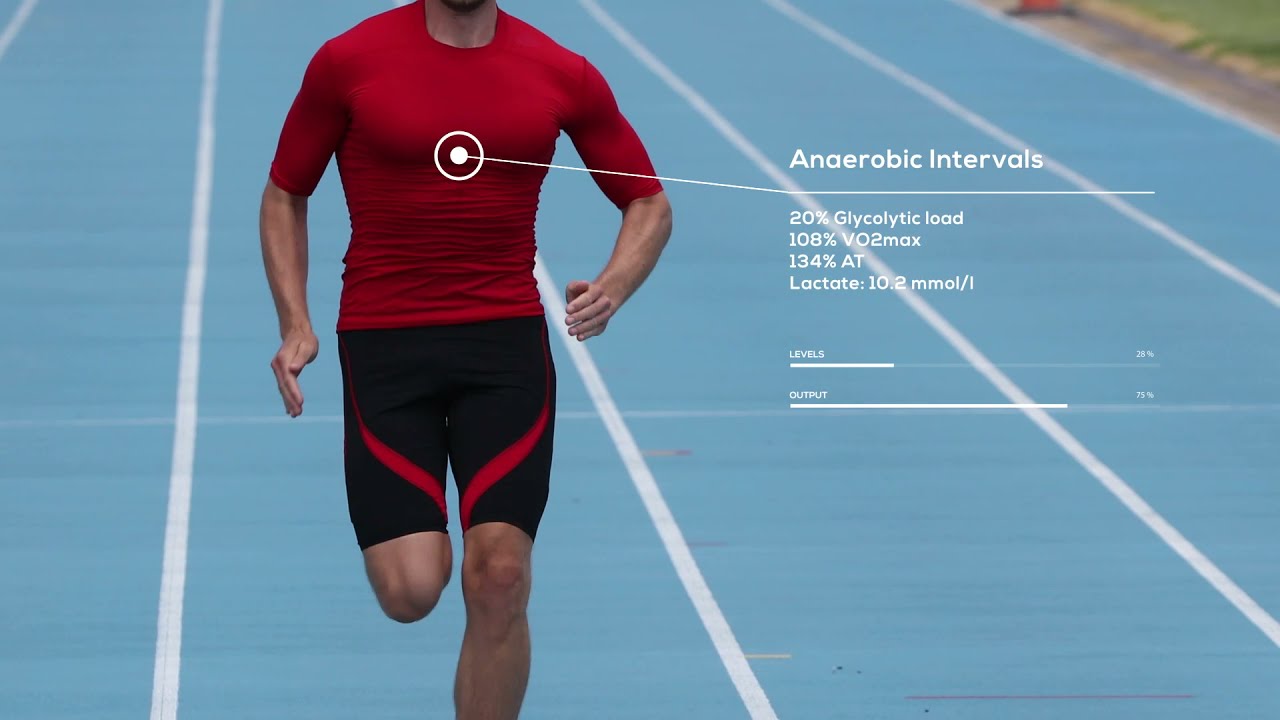
During the HIIT protocol, 40 seconds on at 130% of threshold and 20 seconds off, we see that the oxygen uptake reaches quickly a high plateau during the on phase and drops slightly during the off phase. The VLA max demand during the on phase is very high, around 60 to 80% of VLA max capacity, and during the recovery it's essentially near zero, but the recovery is so short that the VLA max system doesn't have time to fully recover. So by the end of a set of HIIT intervals, the cumulative VLA max stress is very high.
Now look at the Norwegian 4x4. Four minutes at an intensity that corresponds to roughly 90-95% VO2 max. The oxygen uptake rises slowly over the first one to two minutes and then plateaus at a high level for the remaining two to three minutes.
This means the athlete spends a long time at near-maximal VO2 max. The VLA max demand during this phase is moderate, maybe 30 to 40% of VLA max capacity. During the four-minute recovery, VLA max demand drops to near zero and fully recovers.
So the cumulative VLA max stress over a full Norwegian 4x4 session is much lower than HIIT, but the time spent at near-maximal VO2 uptake is much higher. And this is the physiological mechanism that explains why, for the purpose of improving VO2 max, Norwegian 4x4 tends to outperform typical HIIT protocols. It drives a larger VO2 max stimulus with a lower glycolytic cost.
Which also means it's less likely to drive VLA max upward in athletes who need to keep VLA max low, like long-distance triathletes. Conversely, for athletes who need a high VLA max, the HIIT protocol might actually be preferable, because it does provide a strong glycolytic stimulus. So neither protocol is universally better.
It depends entirely on the athlete's metabolic profile and the demands of their event.



![[Tutorial] Training Zone Builder Update](https://cdn.prod.website-files.com/69fb420749df096c7fb865ef/69fdf1e0d26c1f6fe0d4c945_maxresdefault.jpeg)


![[Tutorial] Virtual Test & Performance Projection: Compare Training Outcomes in INSCYD](https://cdn.prod.website-files.com/69fb420749df096c7fb865ef/69fdf1e2a6495029773d8211_maxresdefault.jpeg)


![Create Training Plans Like Top Coaches [5 Steps]](https://cdn.prod.website-files.com/69fb420749df096c7fb865ef/69fdf1e491172a8381d183ad_maxresdefault.jpeg)