INSCYD the Numbers: Running Economy Part 1
Sebastian Weber explains how focusing on and improving running economy can save runners and triathletes time on their marathon and half marathon.
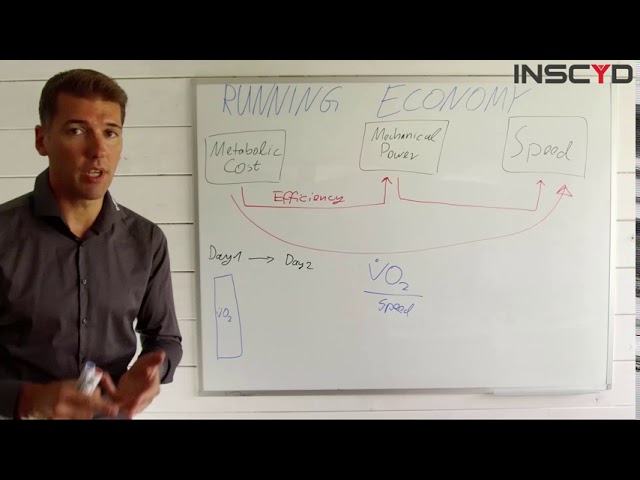

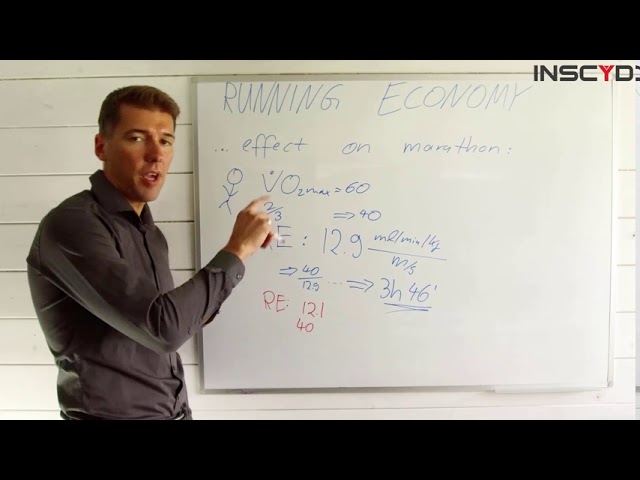
Running economy is a measure of the metabolic cost of running at a given speed. It is typically expressed as the oxygen cost per unit distance, or as the energy cost per kilogram per kilometer. An athlete with better running economy uses less oxygen to run at the same speed compared to a less economical runner, which means they can run faster at the same VO2 or sustain the same pace at a lower percentage of VO2max.
In part 1 of this series on running economy, we cover the basics of what running economy is, why it matters for endurance performance, and how it can be measured and tracked using INSCYD. Running economy is one of three key determinants of endurance performance alongside VO2max and the fractional utilization of VO2max at race pace, which is itself determined by the lactate threshold and VLamax. For runners who have already reached a plateau in VO2max improvement, running economy gains may be the primary lever for further performance improvement.
Running economy can be improved through strength training, plyometrics, and biomechanical work, but also through metabolic training that improves the efficiency of energy use at race pace. INSCYD allows coaches to track running economy alongside the full metabolic profile to understand which interventions are driving performance gains and which areas still have the most room for improvement.





![[Tutorial] Training Zone Builder Update](https://cdn.prod.website-files.com/69fb420749df096c7fb865ef/69fdf1e0d26c1f6fe0d4c945_maxresdefault.jpeg)



![[Tutorial] Virtual Test & Performance Projection: Compare Training Outcomes in INSCYD](https://cdn.prod.website-files.com/69fb420749df096c7fb865ef/69fdf1e2a6495029773d8211_maxresdefault.jpeg)


![Create Training Plans Like Top Coaches [5 Steps]](https://cdn.prod.website-files.com/69fb420749df096c7fb865ef/69fdf1e491172a8381d183ad_maxresdefault.jpeg)