3 Mistakes You’re Making with LT1: Fix Your Zone 2 Training!
Understanding LT1 is essential for optimizing Zone 2 endurance training. In this video, we break down: ✅ Why LT1 depends on your testing device and protocol.
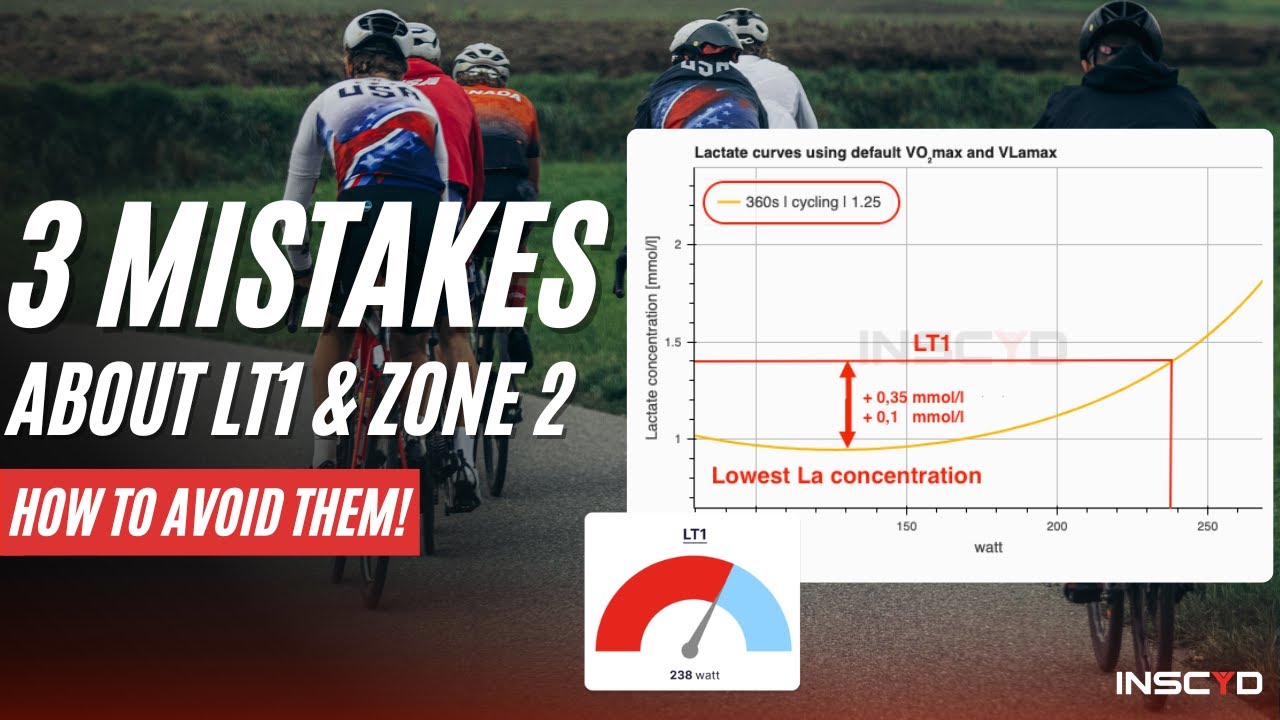

LT1, the first lactate threshold, is the intensity at which blood lactate first begins to rise above resting baseline. It corresponds approximately to Zone 2 in most training zone systems. Many athletes and coaches make three common mistakes when working with LT1.
First, they use inaccurate testing protocols to determine LT1. The most common approach is to use a simple step test with fixed stage durations and find the inflection point in the lactate curve. But this method is highly sensitive to stage duration and protocol design.
A 3-minute stage test will give you a different LT1 value than an 8-minute stage test for the same athlete on the same day. The more accurate approach is to use an algorithm like INSCYD that deciphers the actual underlying lactate production and combustion from the curve, which gives you a physiologically meaningful LT1 that is independent of protocol design. Second, athletes train too hard in their Zone 2 workouts.
Because LT1 is hard to determine precisely without sophisticated analysis, many athletes guess at their Zone 2 intensity and end up training slightly above LT1. This means they're accumulating some glycolytic stress, limiting how often they can train at this intensity, and not getting the pure aerobic adaptation they're looking for. Third, coaches don't track LT1 across test sessions.
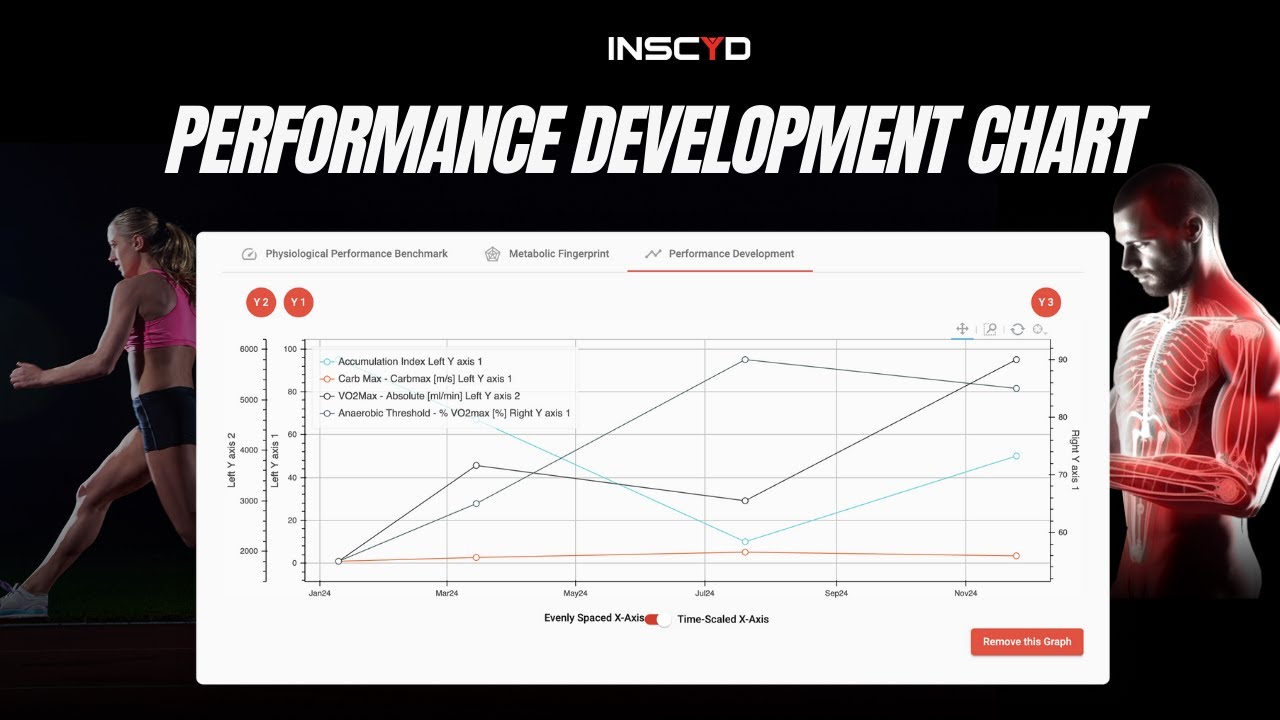
LT1 is actually a very sensitive marker of aerobic adaptation. Changes in LT1 often show up before changes in VO2max and can be an early indicator that training is working or that an athlete is overtraining. Using INSCYD, coaches can track LT1 across multiple test sessions alongside VO2max, VLAmax, and substrate utilization to get a complete picture of how training is driving adaptation.
https://bit.ly/physiology-education
Lactate threshold one, or LT1, is arguably the most important marker to determine your Zone 2 endurance training. Here the three things you likely get wrong about LT1. Number one. LT1 is determined as the first increase in lactate concentration. That refers to a test where you increase the load or speed in an incremental or stepwise manner, and you plot the lactate concentration on the y-axis and the power or speed on the x-axis. Now the question is, what determines, or how do you define, the first increase in lactate concentration?
First, is it an increase above the resting value, or is it an increase above the minimum value? And so, what is the first increase? Is it 0.01 mmol, 0.1 mmol, 0.5 mmol? What is it? Well, matter of fact, it depends on the actual testing device that you're using. Likely a handheld lactate meter has an error of measurement, so for example, if the error of measurement in your lactate meter is 0.5 mmol, then you could actually not determine an increase smaller than 0.5 as a real increase in lactate concentration.
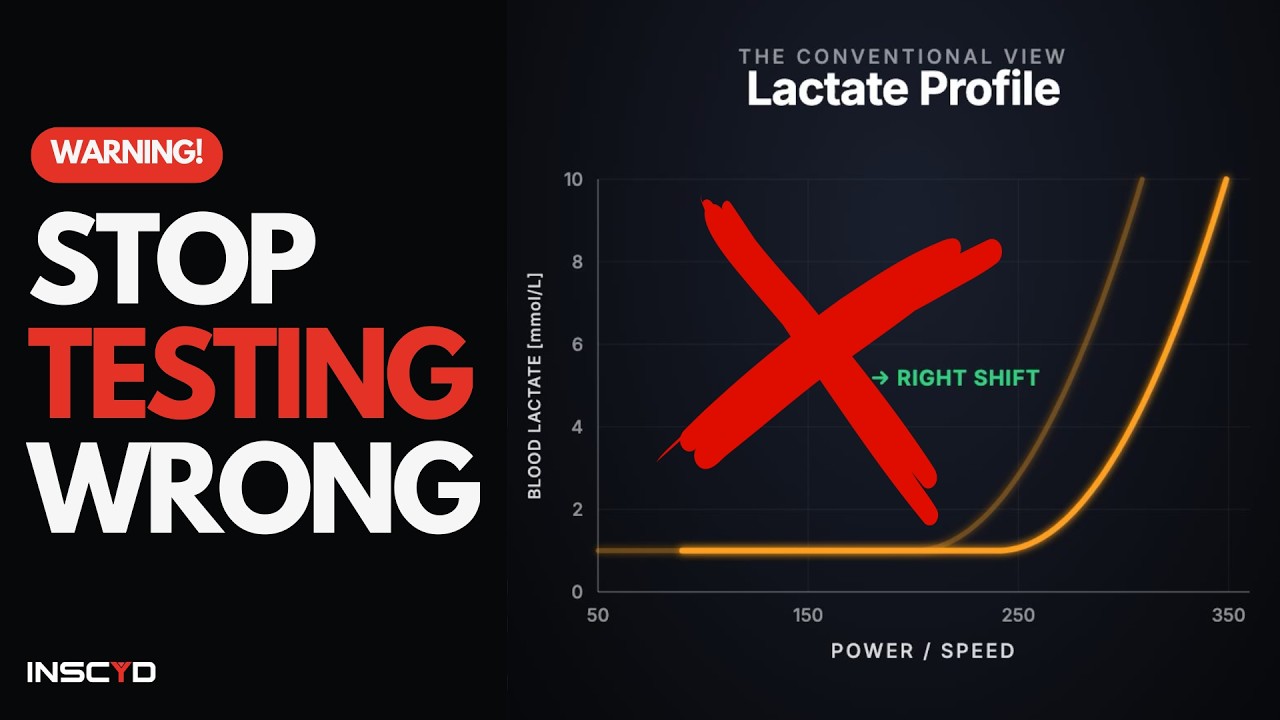
So you would have to take this into account. Error number two: step duration, or duration of an increment. As mentioned, LT1, lactate threshold one, is defined as the first increase in lactate concentration, and therefore it is linked to the testing protocol. Now it's a matter of fact that short step durations, shown here as a blue lactate profile curve, result in not as low lactate concentration. So the decrease in lactate at low intensity will be not as pronounced, and then the rise, the increase, the exponential part in lactate comes later, meaning at a higher speed or power output, and is not as steep.
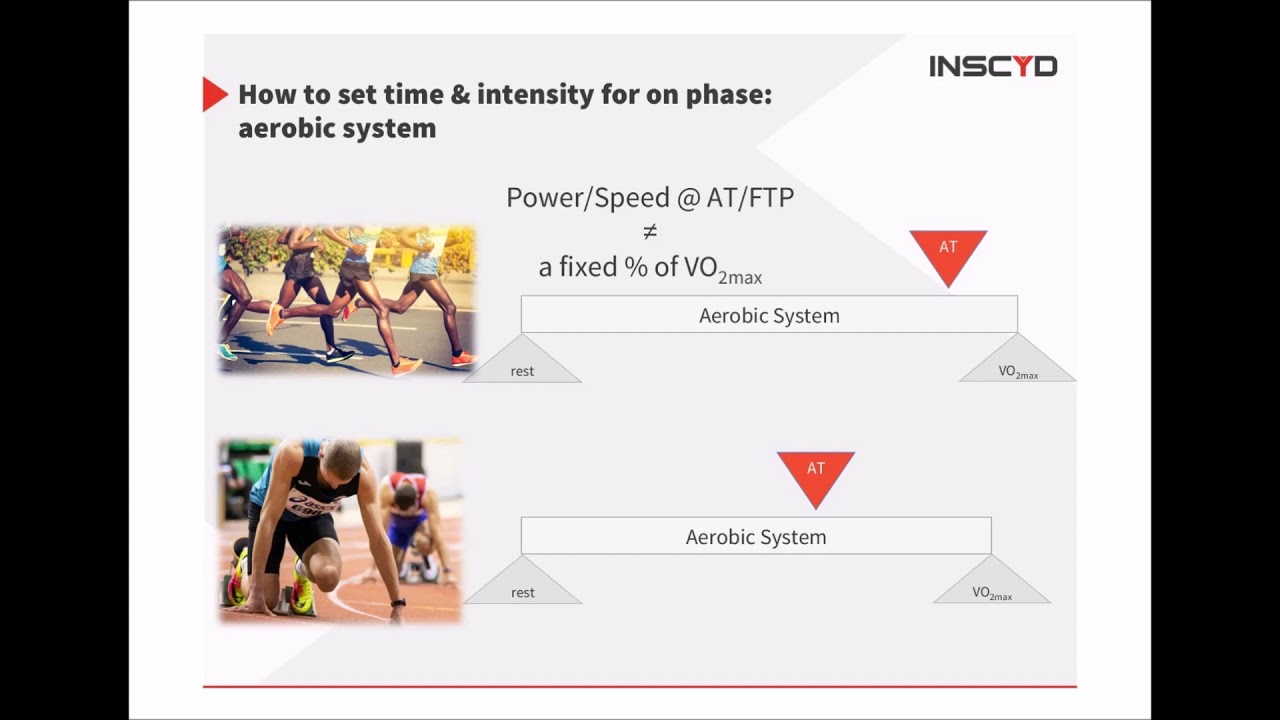
In contrast, longer step durations can result in, or they likely result in, a more pronounced decrease in lactate concentration at the lower intensities, and then a steeper, so earlier and steeper, increase of lactate at the higher speeds or power. Now obviously you can see that this changes whatever you define as the first increase. It changes the power, speed, at which it happened. So LT1 is highly dependent on the test protocol. The other error that most people got wrong is the assumption that LT1 actually is the same as maximum fat combustion rate, or maximum fat oxidation rate, which science tells us it is not.
Okay? First, as mentioned, it depends on the test protocol. Second, the maximum fat combustion happens individually, depending on the metabolic profile of your athlete, at different intensities, and is not related to the first increase in lactate concentration. Another thing that most people get wrong is the assumption that you need a lactate meter, that you need to do a lactate profile test, to actually determine LT1. That's not true. You can calculate lactate concentration curves for any duration using the Power Performance Decoder of INSCYD, and therefore get a lactate profile also if you're actually not doing a lactate test.
So with that you can determine LT1 for any athlete not coming into a lab, just doing remote testing using a power meter or a GPS device like the GPS running watch.





![[Tutorial] Training Zone Builder Update](https://cdn.prod.website-files.com/69fb420749df096c7fb865ef/69fdf1e0d26c1f6fe0d4c945_maxresdefault.jpeg)


![[Tutorial] Virtual Test & Performance Projection: Compare Training Outcomes in INSCYD](https://cdn.prod.website-files.com/69fb420749df096c7fb865ef/69fdf1e2a6495029773d8211_maxresdefault.jpeg)


![Create Training Plans Like Top Coaches [5 Steps]](https://cdn.prod.website-files.com/69fb420749df096c7fb865ef/69fdf1e491172a8381d183ad_maxresdefault.jpeg)