Lactate Threshold: Why a "Good" Test Result Can Fool Your Coaches
Lactate threshold testing is supposed to show you if your training is working. But a right-shift in the lactate curve can mean two completely opposite things, and most coaches can't tell which one they're looking at.


Lactate threshold testing is supposed to show you if your training is working. But a right-shift in the lactate curve can mean two completely opposite things — and most coaches can't tell which one they're looking at.
INSCYD co-founder Sebastian Weber explains the metabolic mechanism behind the lactate threshold curve shift: why the same test result can signal either improved aerobic capacity or quietly destroyed anaerobic power — depending on your athlete's sport.
What you'll learn:
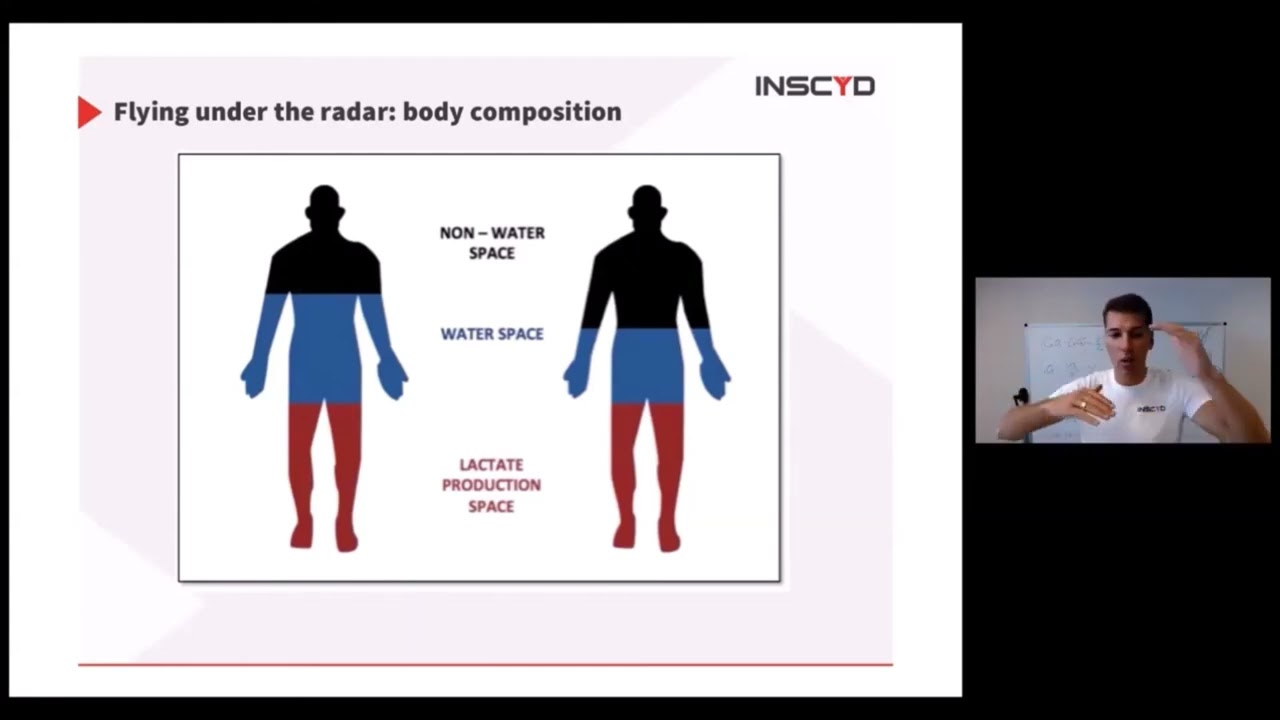
- Why lactate concentration = production (VLamax) + combustion (VO2max) — and why separating them changes everything about how you read a lactate threshold test
- Why a right-shift is good for triathletes but can sabotage cyclists, swimmers, and kayakers
- The Feedback Trap: how coaches unknowingly continue training that erodes VLamax in athletes who depend on it
- The Hidden Decline: how both VO2max and VLamax can drop simultaneously while the lactate threshold curve still looks like progress
- The HIIT Paradox: why your training can work perfectly while your test results appear flat
If you're setting training zones from lactate threshold data alone, this video explains exactly what you're not seeing — and why INSCYD was built to show the mechanism, not just the curve.
- Book a free INSCYD demo: https://inscyd.com/demo → INSCYD website: https://inscyd.com
When you see a right shift in a lactate threshold test — what's your first interpretation? Drop it in the comments.
There's something dangerous about doing lactate profile testing. And when I say dangerous, I'm not saying it's a threat to your, you know, life or health, but there's a threat in doing lactate testing to your performance. Don't get me wrong, I don't want to bash here on lactate testing, but there is actually a point uh which I want to explain, and I've seen it.
I've seen it in professional cycling for myself as athlete as a coach and I've seen it now talking to coaches across the globe in many many sports that this danger is very real. So what I'm going to share with you here is an actual real world case that happened to one of the athletes that I was analyzing performance data for. And more importantly after explaining the problem here I'm going to tell you how to solve the problem.
So let's take a look at the numbers. So the athlete in question is this athlete right here. It's a fairly well-trained athlete.
We see a VO2 max of 64 mls per minute per kilogram. We see a VLA max of 0.55 Mill per second, a moles per liter per second. We see the typical metrics.
And now this athlete did a lactate profile test. And from the lactate profile test and from looking only at the lactate profile test, the coach interpreted the result. And what the coach saw was the right shift of the lactate curve.
So the lactate curve shifted to the right. And the coach went, "Oh, what a fabulous news." The athlete performed great. There's lots of reasons to be very happy with this result.
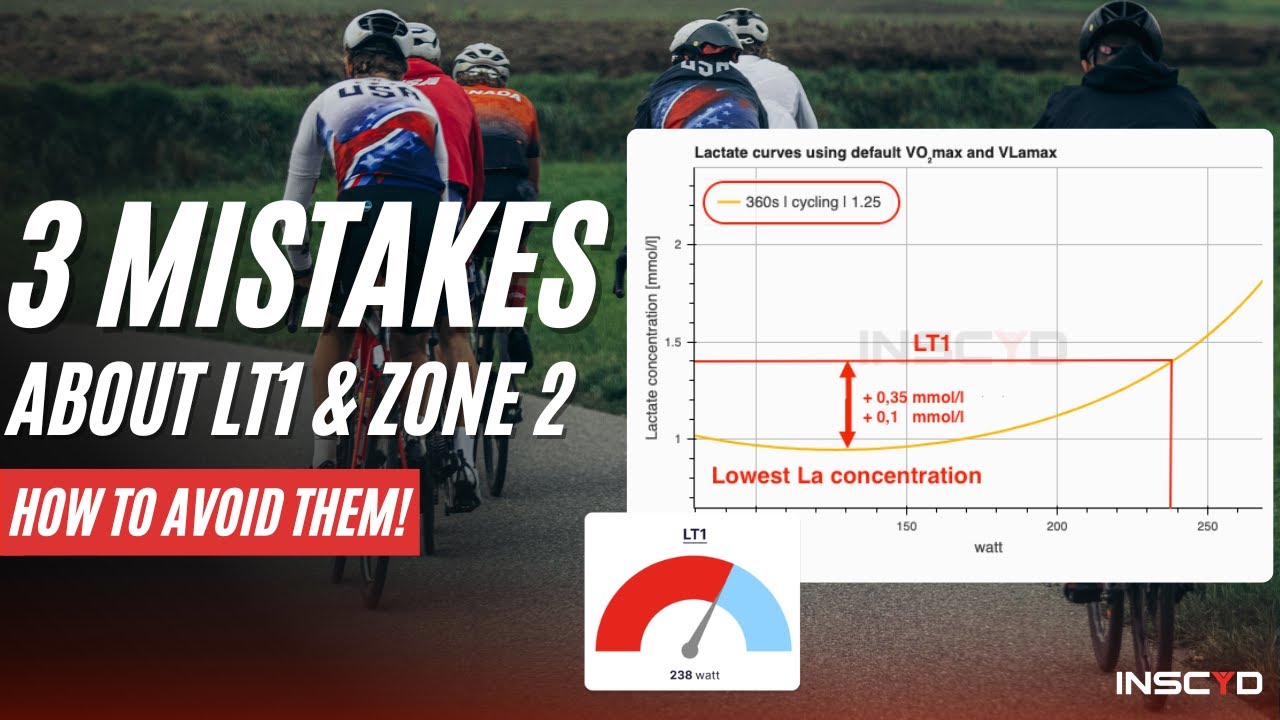
Lactate is lower at every power step, therefore the lactate curve shift to the right, great, athlete improved. Now I'm going to tell you exactly why that is potentially dangerous. Why that interpretation, while not entirely wrong, might be dangerous depending on which kind of athlete you're dealing with and what kind of training you're actually looking at and trying to understand.
So what happened here is the curve shifted to the right. The athlete was training for six months, did a test six months later, and we see it shifted to the right. We also see that the VO2 max increased.
So the athlete increased a VO2 max. From 64.4 to 68.5. Very nice indeed right very significant improvement.
Now, the key question, the key information, is the following: the VLA max changed as well. And the VLA max changed from 0.55 to 0.34. So, the VLA max actually went down significantly.
0.55 to 0.34. And the reason why this is a problem is I want you to imagine for a second you're a coach of a cyclist. And your athlete is in a race where the most crucial part of the race is an uphill sprint or a short sprint or an acceleration or an attack.
And you need this athlete's anorobic system to be firing on all cylinders. Now if the athlete is a triathlete or a marathon runner, you might not care about that. But in cycling, in many cycling races, the key moments are explosive.
Now looking only at the lactate curve and interpreting a right shift as an improvement means you don't see the fact that this athlete's VLA max dropped quite dramatically in these six months. And the VLA max, as a reminder, is responsible for the glycolytic energy, which is the high-intensity sprint power of the athlete. So basically, if you're a cyclist who needs to sprint or attack or accelerate quickly, a drop in VLA max by this magnitude would be very problematic for performance on race day, even if your lactate curve shifts to the right.
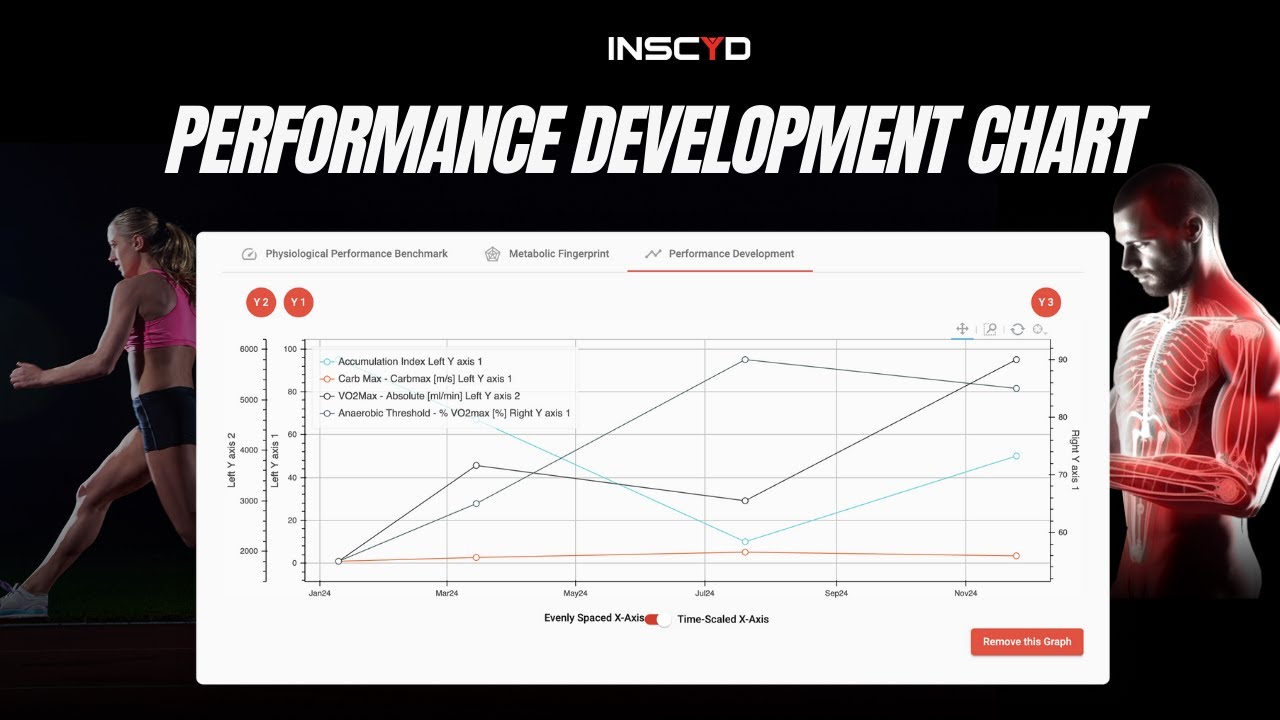
And this is the risk, this is the danger of relying purely on lactate testing without taking into account the full metabolic picture, including VLA max, VO2 max, substrate utilization, and all the other metrics that together tell the complete story of an athlete's fitness. So the takeaway here for the coaches watching is: never interpret a right shift of the lactate curve in isolation. Always look at the complete metabolic profile.
Because in cycling especially, a right shift of the lactate curve can sometimes come at the cost of anaerobic capacity, and that cost can be very expensive in racing situations.





![[Tutorial] Training Zone Builder Update](https://cdn.prod.website-files.com/69fb420749df096c7fb865ef/69fdf1e0d26c1f6fe0d4c945_maxresdefault.jpeg)



![[Tutorial] Virtual Test & Performance Projection: Compare Training Outcomes in INSCYD](https://cdn.prod.website-files.com/69fb420749df096c7fb865ef/69fdf1e2a6495029773d8211_maxresdefault.jpeg)


![Create Training Plans Like Top Coaches [5 Steps]](https://cdn.prod.website-files.com/69fb420749df096c7fb865ef/69fdf1e491172a8381d183ad_maxresdefault.jpeg)