Get VO2max, FatMax & Metabolic Flexibility – No Lab Equipment, Just a Lactate Meter
Learn how to test VO2max, FatMax, and metabolic flexibility without a lab, just a handheld lactate meter. Improve healthspan and endurance with science-backed metrics anyone can measure.
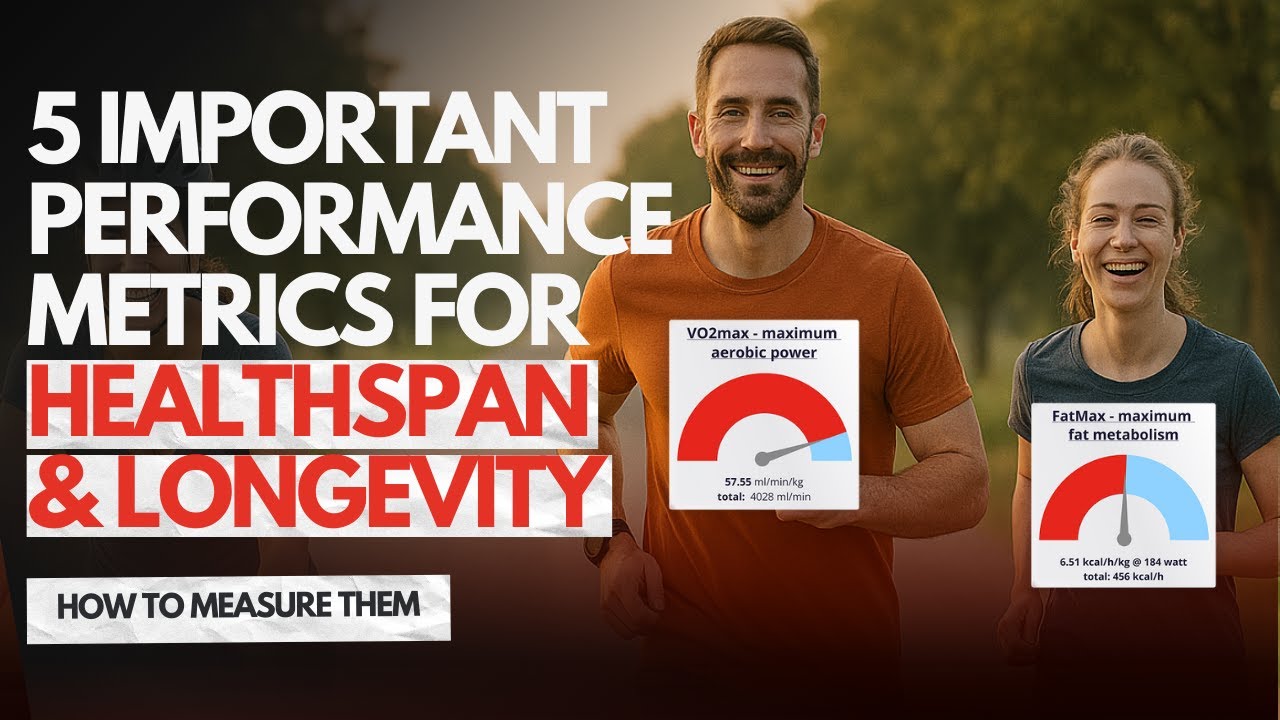

You're doing testing with a VO2 analyzer, maybe with a full metabolic cart, measuring VO2 max, ventilation, ventilatory thresholds, and you use that to advise clients, athletes, patients, but you do feel that you maybe miss something in the whole picture. This video is about showing you how adding one simple metric to your existing protocol can transform your whole performance assessment. That metric is lactate.
Adding lactate concentration measurements unlocks a whole new world of performance assessment because the lactate combustion is proportional to the oxygen uptake that you measured. So when we measure combustion by measuring VO2 and we now measure concentration, we can solve for production. By knowing lactate production rate we know carbohydrate combustion rate and therefore fat combustion rate, which enables fat max, MFO and MLSS.
The total testing time is less than 30 minutes. Lactate measurement costs 10 to 15 euros per assessment. No additional time needed.
Just about 10 to 15 euros additional investment if you use lactate strips. We have partnered with some of the companies which make the most accurate lactate machines so you can even get the machine for free to start. From having your VO2 and lactate data to a full report with substrate utilization curves of fat and carbohydrates, with MLSS, with training zones, fat max, VO2 max: maximum 3 minutes of processing time.
So you get a very smooth workflow and if you feel like you're missing out on something by measuring VO2 only then consider adding lactate into your existing protocol because you will unlock a whole bunch of the most important metrics with minimal additional cost and no additional time demand.
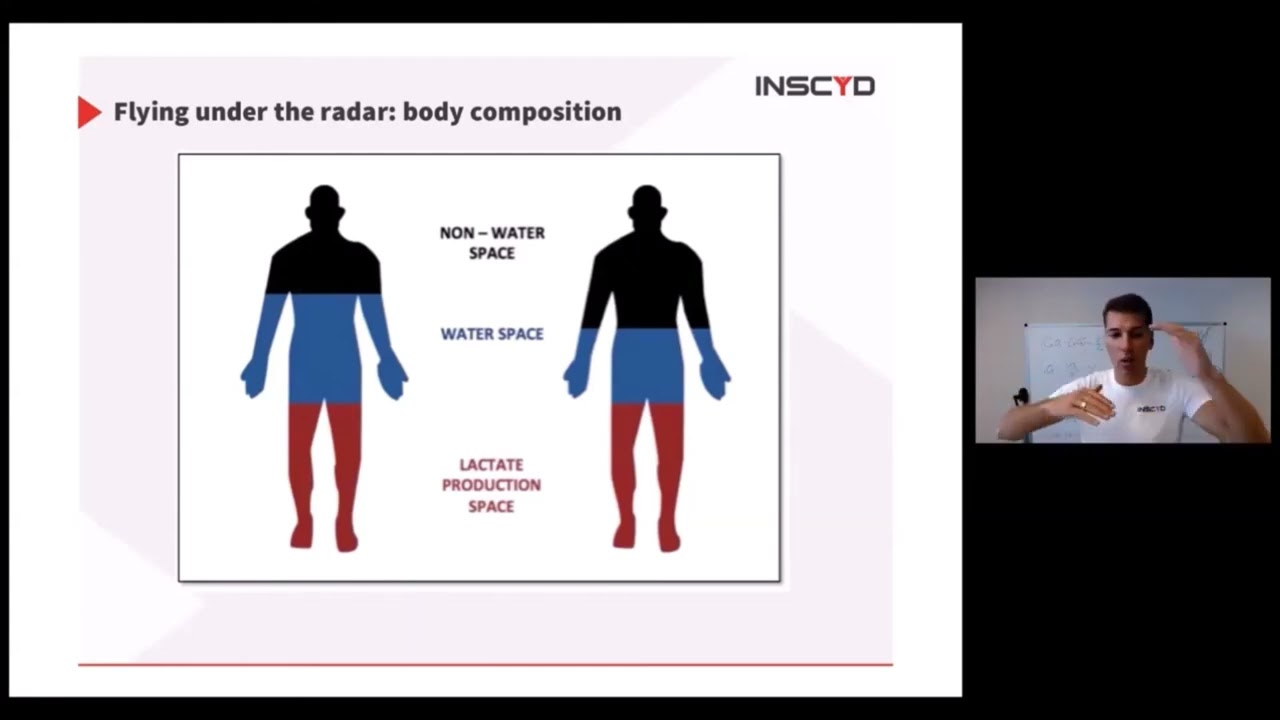
So what we're going to talk about here is some of the most important metrics that you should utilize if you don't do so yet in training in endurance training specifically for increasing health and fitness especially with the aim to increase healthspan and lifespan. So what are those metrics you want to look at from endurance training point of view? One overarching one is body composition specifically body fat visceral body fat. The fat that's around the organs is something you're specifically interested in, but also obviously overall BMI, body mass index, overall body fat, right?
We have a meta analyzis on the most accurate body composition analyzing tools and there's actually one out there that costs just a little bit more than 200 bucks and shows the same accuracy as a DEXA scan or botpod. We deployed these devices in several Olympic federations, in elite sports, with great success, because the data always comes back within a percent or one and a half percent of a more expensive DEXA scan or Bod Pod analysis. And we're going to link that device in the show notes here, into the article.
So that is one thing that's important. The other thing we're going to talk about which is linked it's actually more linked to body composition than you might think is training at the right training intensity. We're going to talk about metabolic flexibility, basically meaning the ability of the body to use fat and or carbohydrates and to switch between those two as a fuel. We're talking about maximum fat oxidation rate training at maximum fat combustion rate, fat oxidation, fat mix zone.
And we're talking of course about aerobic fitness, VO2max, the single most important metric maybe for longevity at health span and lifespan. How to assess it, how to train for it, and how to do so without spending a fortune on lab equipment and without spending several hours in a human performance lab and therefore very limited accessibility. So let's have a look how these metrics are actually interconnected. Okay. So, one important question we should ask ourselves is are we are our clients exercising at the most efficient training intensity in contrast to the goals obviously what they try to achieve.
So, there's one training intensity. The popular name for it might be zone 2 training. However, there's no definition actually. There's been a scientific paper arguing or moaning about the fact that there's no scientific definition of what zone 2 means or how it's determined exactly. Right? The better way to look at it is the most efficient training intensity, which actually zone two was trying to approximate, which is the intensity at which the body burns the most amount of fat, meaning the most amount of the calories are derived from fat oxidation.
So if you look at a graph like this where you plot the intensity, the exercise intensity on the x-axis. So low intensity rest on the very left, high intensity on the very right. The fat combustion rate looks something like this. So it first increases with exercise intensity. Fat combustion rate goes up, then it reaches a maximum, a plateau, an apex, and then it decreases to zero. So at some higher intense harder higher exercise intensity it decreases to zero or almost zero to be precise.
Carbohydrate combustion rate on the other hand shows this curve linear or exponential behavior where it's increasing slowly at the beginning and then rapidly to speak at higher intensities. So training at fat at a high fat combustion rate basically means there's an relatively speaking high oxygen uptake. So fatty acid need additional oxygen to be prepared or be combusted simplified speaking prepared for the metabolism to be produced in the metabolism. At FatMax, relatively speaking, the oxygen uptake is higher, which means there's a higher aerobic stimulus.
There's a higher training stimulus on the aerobic system, right? Which therefore is another reason why training at FatMax is one of the most important training intensity because it's the most efficient one to increase the automatic. We're going to talk about there's other ways how to increase the automax, but one major important one is training at this fatme. Okay, so already two reasons why you want to know this one here. Then there's a carboid combustion and the looking at both these graphs tells you how well the body of the attic, how well the metabolism can shift between fat combustion rate and carbohydrate combustion rate.
And one marker many people look at is actually this crossing point where 50% of the energy comes from fat and 50% of the energy comes from carbohydrate and at which intensity that occurs. Okay. So, metabolic flexibility, this is what we're looking at here. Another major metric you want to monitor, you want to assess, you want to measure precisely in your clients. And then, of course, the big one here is the blue one is the V2X.
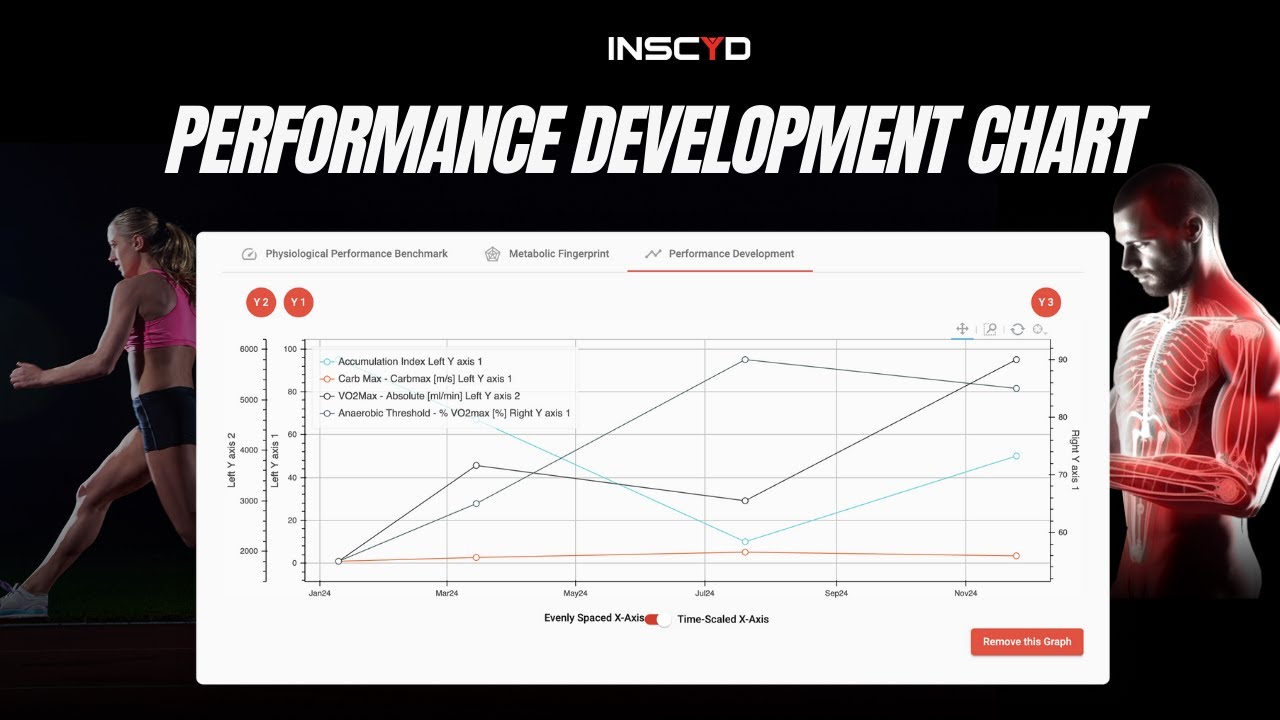
The ability of the body of the athlete of the client to utilize oxygen for energy delivery. The higher that number is, the better. Now, the issue with that one, this is not static. These graphs will look different for every client at every given point in time giving that there are some kinds of development because of training adaptation or deaddaptation. So the VO2max can be at any other intensity right it can be higher or lower and it can change by training and it changes by training relatively quickly within a few weeks you can see changes of five or 10%.
Now the problem is, yes, I know VO2max is estimated by many variables, right? Almost every smartwatch now reads a VO2max value to you. But scientific research tells us that the numbers you see here are good enough, are precise enough, to distinguish between a VO2max of 40 versus 50 or 60. But these are not the differences you're looking for when you coach athletes or clients, people who want to increase VO2. You're looking at much smaller changes. You're looking at people who want to, or can, effectively increase a VO2max from 28 to 31, or from 37 to 40, in this range. And a wearable is not precise enough to detect that.
In order to do that, you would normally need some metabolic cart, some lab device and we are going to show you in a second how you can do it with the same precision but much more inexpensive. So, Vtomax is quite different and changes by training. And the same goes for this fat curve. So, fat combustion curve doesn't always have to look like this. You could also have a client where the fat combustion curve looks like this or where it looks like this.
So basically the intensity at which FatMax occur. So therefore the most efficient training intensity can be quite different even as a percentage or specifically especially as a percentage of max or heart rate max. Okay. So these are the metrics you want to look at combined with the body compositions. You want to look at to monitor the progress of your clients. You want to look at these metrics to understand what is the status quo? How good is the VO2max really?
How much do I need to improve it? How does it compare to peers is the same age, same gender, right? Is it high or is it low? Is there a big room for improvement? Right? This is what you need to know and you need to know that with a high precision. And then you want to know FatMax, metabolic flexibility, all these things along the body composition to understand how can I prescribe the best training.
So these are the tools, the most important pillars, most important metrics for training for longevity and health span. Now the issue is again how do you get VO2 maxables? Not precisely enough. How do you get FatMax? How do you get fat combustion curve metabolic flexibility? If you don't own a human performance lab, if you are not owning university lab, if you didn't have the spare 20 25K in cash to buy a metabolic cart, then likely you don't.
So what I'm trying to say is that accessibility for that is pretty poor. But let me show you now that there's another way to do that. I'm going to show you a way how you can use a very inexpensive way to get all these metrics in a fraction of the time. Because normally to get fat combustion, carbohydrate combustion, you would need to spend a test and you do need to do an incremental test which takes you know half an hourish with like increments of 5, six, seven minutes.
So and then you have a rest and you do a RAM test for VO2max. So you spend two, three hours in the laboratory, right? Which of course also cost time and cost money. So there's a better way to do it. I'm going to show you right now. So here's how you can deliver all these important metrics and all these important insights to your clients. Here's how you can prescribe most efficient endurance training to increase VO2max and increase metabolic flexibility.
One thing I already mentioned is I'm going to give you the device and the science behind it which you can use to have a really accurate and reliable assessment of body composition and therefore you can include that no-brainer pretty straightforward. For all the other stuff, metabolic flexibility, FatMax, Vtomax, how you going to do that? The key to do that in a non-expensive way yet super reliable and as accurate as a lab grade metabolic cart lies in a device like this.
A simple handheld lactate meter which you can buy for 200 300 bucks. Okay, I'm not selling these devices. I don't get any from it. Just telling you that lactate or even named the file chrome of metabolism holds the key to assess metrics like FatMax and VO2max without the need of running several hours of testing and without the need of investing into an expensive metabolic cart. Let me show you why that works and how it works on a high level.
So what you would do, you would do some kind of pretty conventional, I would argue traditional incremental testing. So you have here visualize the time on the x-axis and then four load blocks. Okay? And those load blocks are relatively short. So they can just be like 3 minute each load. So the total time or the net time will only be 12 minutes. You might have a short break in between to take lactate samples, especially if you do it in running or walking, right?
When you do it on a cycling meter, for example, you can actually take the lactate while the athlete or the client is exercising. So, that would be easy. But let's assume here we do a walking or a running test. So, you'd need to stop, let's say, for 30 seconds or a minute to take the lactate. So, net time, super short, super straightforward, just one test. Okay? Now, you would take the lactate samples before that.
And I'm going to explain how this works. And after each step. Okay. And then at the end you see the maximum and you take se several data samples until you see the peak. So you get a total of like six, seven, eight lactate samples and that's it. The whole thing can be done within approximately 20 minutes. The intensity starts so low that you would not actually need to warm up. You can do a warm up.
It's optional, but you don't have to. Okay? You can start with such a low intensity that the first block is so easy. Your first two blocks of exercise are good enough for a warm up. No need for additional warm up if you want to do it this way. Okay, so now you may ask, okay, but wait a second, how is it possible or why is it even possible to use lactate and get something like the VO2?
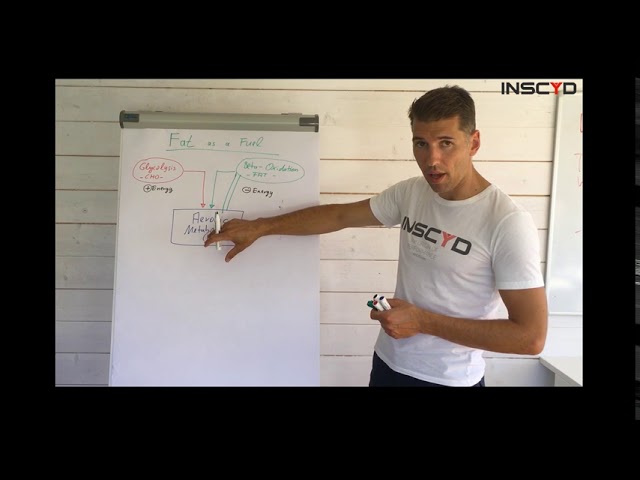
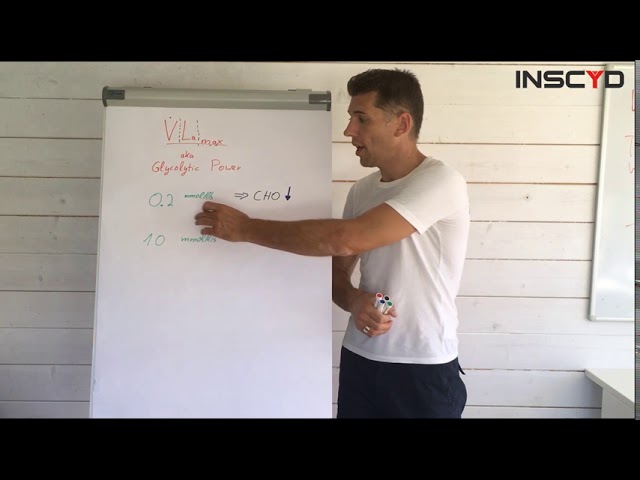
And how does that relate to the fat combustion? How can you do that? Okay, let me explain. Lactate is a metabolite that comes out of a process that's called glycolysis. So glycolysis is several steps anorobic metabolism, no oxygen uptake involved where basically glucose or glycogen is broken down or broken up into lactate. And what is known, what is well established in science is basically that the only way how a cell, how an athlete, how a client, how an organism can produce lactate is by breaking down glucose.
And every time you want to use glucose or glycoline as a fuel, it becomes lactate approximately 98%. So let's forget about the last 2%. So almost all the glucose whenever you want to use glucose or glycine as fuel it becomes lactate. Okay. So what I'm saying is there's a proportional relationship between the breakdown or utilization of glucose and glycogen and how much lactate is produced. Now this is concentration what you measure. This is not production.
But what we actually able to do we are able to decipher to disclose the production rate. So lactate production per time per minute per second what you want to choose we normally we choose minutes okay that actually creates the lactate concentration that you can measure. So we can go from the concentration back to the actual production. And now think about it, that opens up a whole new level, because if you know the rate of lactate production, then you know again, because of what I just explained, it's proportional to glucose or glycogen combustion, then you know how much glucose somebody combusted.
Okay. Now it gets interesting because we know the workload. We know the running speed, walking speed, power, elliptical on a rowing aometer, whatsoever. So if we know the work load, we know the total energy demand. And if we now deduct the amount of energy that comes that is derived that is delivered through glycolysis through breakdown of glucose then we know that the remaining is fat combustion. So this is how we easily get the fat combustion rates.
And then there's another aspect to it. We now know that we can use lactate to get glucose and carbide combustions and therefore we can get fat combustion. Then there's another aspect to it which is if you would look at the oxygen uptake, right? Oxygen uptake during something like this would basically show a kinetics like this one, right? And then at the end you reach VO2max and then it's going down. Okay, so that's approximate VO2 look like.
How does that relate to lactate? How do we get the VO2max? This lab level accuracy. I'm going to show you this is because whenever the body the cell breaks down glycogen glucose and produces lactates that comes in ATP production, there comes an energy production with that and that's also proportional. So once we know the lactate production rate, we know also how much energy is derived from glycolysis. And then the same thing applies if we know the total energy demand because we know the workload.
Then all the remaining energy that's not coming from anorobic metabolism has to come from aerobic metabolism. So therefore it is possible to very precisely get the oxygen uptake for each of those steps and therefore also get the maximum oxygen uptake at the end of the test. Or in other words, think about it this way. If you're coming from an exercise physiology background or you're familiar with traditional VO2max test, putting on a mask, attaching, you know, to a metabolic cart, what's actually happening here?
The athletes, the subject is exposed to a workload that is very high that leads to exhaustion in a few minutes either as part of a ramp test or as part of an allout test. So the workload is higher than the amount of energy, the amount of power that can be delivered by the aerobic metabolism. Therefore maxing out VO2, therefore VO2 keeps going up until it reaches maximum. Maybe reaches a plateau, leveling off, all these kind of things.
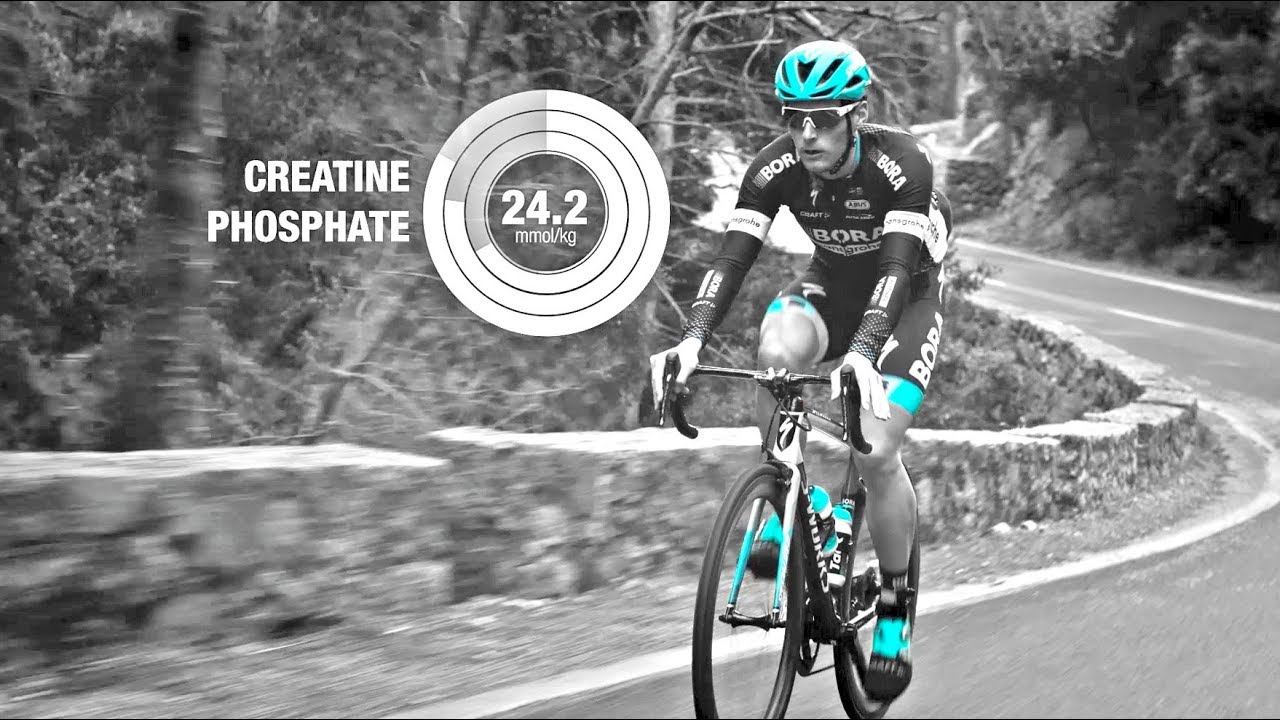
Okay, fine. So, what you could argue is that the area below the blue curve is all the energy. It's everything that is covered by the aerobic metabolism. Okay, then there's a slow component and so on and so forth. So, this here to speak is the O2 deficit that is covered by creatine phosphate. You can ignore that. But basically this amount here would be covered anorobically by the glycol by the glycolysis. So what I'm trying to tell you is that when you do a classic test with a metabolic cart, you impose a load which is higher than what the aerobic metabolism can deliver, again either at the ramp test, at the end of the ramp test, or as a single bout of exercise, and you just measure the aerobic part, and you ignore basically whatever additional energy was delivered by the glycolytic metabolism.
What I'm showing you here is what you can do with lactate is you look at the flip side of the very same coin. You look at how much energy comes from the glycoly from the lactate part and then everything else at the end of the exercise has to come from oxygen uptake and therefore you know the VO2max. So this might sound pretty conceptual to you theoretically. In fact, this methodology is validated by peer-reviewed independent science and it's proven that the accuracy and reliability of that methodology is as good as using a medical grade metabolic cart in a human performance lab.
The difference is you only need one test to get substitute utilization fat and carbohydrates and voax instead of two separate tests which you would normally need. And instead of needing equipment for 20 25K, which is a lab medical grade metabolic cart, you just need this 200 300 bucks duct tail analyzer. So you get more information out with the same accuracy in a shorter amount of time without this overhead of buying the expensive machines. So therefore this methodology could solve the problem for you to prescribe very accurate and therefore efficient training intensities and training programs.
Training at FatMax we did not even talk about prescribing highintensity training which is shown to be very efficient to elicit or to increase VO2max right which you can do with that. You can also get the metabolic flexibility because you get both fat and carbohydrate combustion rate and of course you get a VO2max. Now you link this back to what I also told you. You use this body composition analyzer. The whole bundle is like whatever 500 bucks together with a lactate machine and you're all set to do a complete metabolic assessment lab accuracy as a fraction of the cost, a fraction of the time.
Check out the article below.
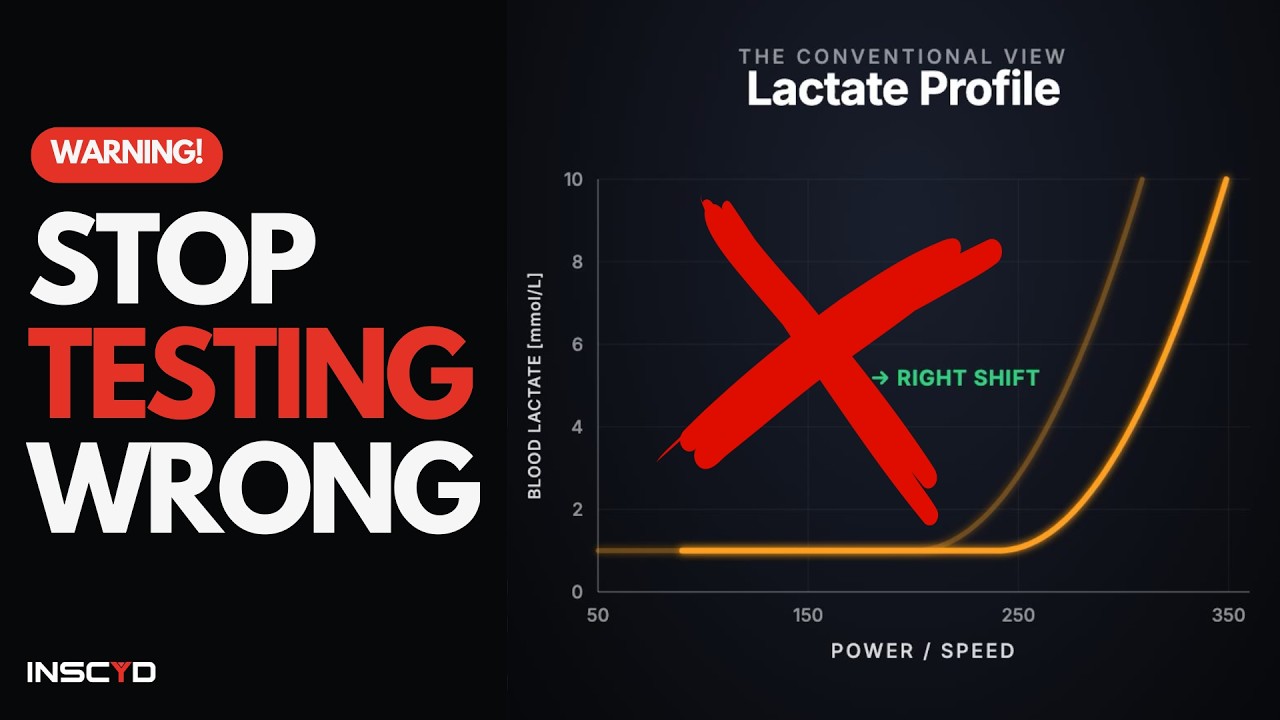

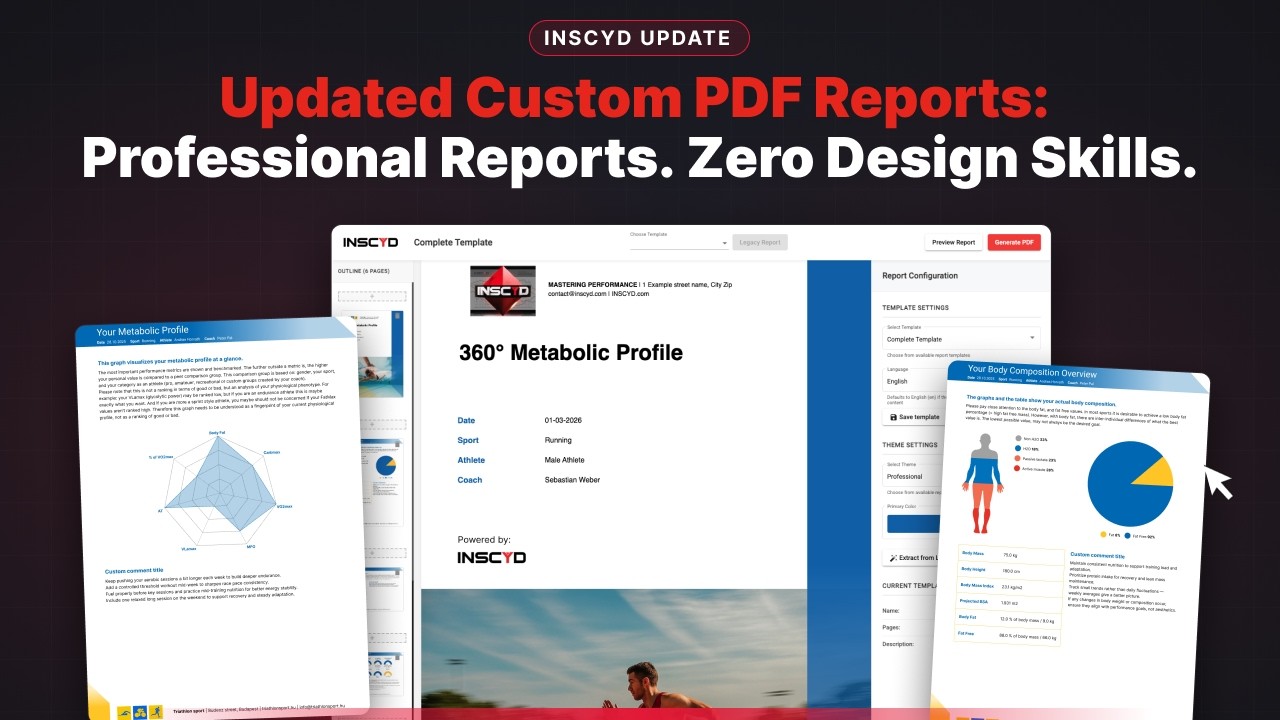



![[Tutorial] Training Zone Builder Update](https://cdn.prod.website-files.com/69fb420749df096c7fb865ef/69fdf1e0d26c1f6fe0d4c945_maxresdefault.jpeg)


![[Tutorial] Virtual Test & Performance Projection: Compare Training Outcomes in INSCYD](https://cdn.prod.website-files.com/69fb420749df096c7fb865ef/69fdf1e2a6495029773d8211_maxresdefault.jpeg)


![Create Training Plans Like Top Coaches [5 Steps]](https://cdn.prod.website-files.com/69fb420749df096c7fb865ef/69fdf1e491172a8381d183ad_maxresdefault.jpeg)