
Cycling outdoors
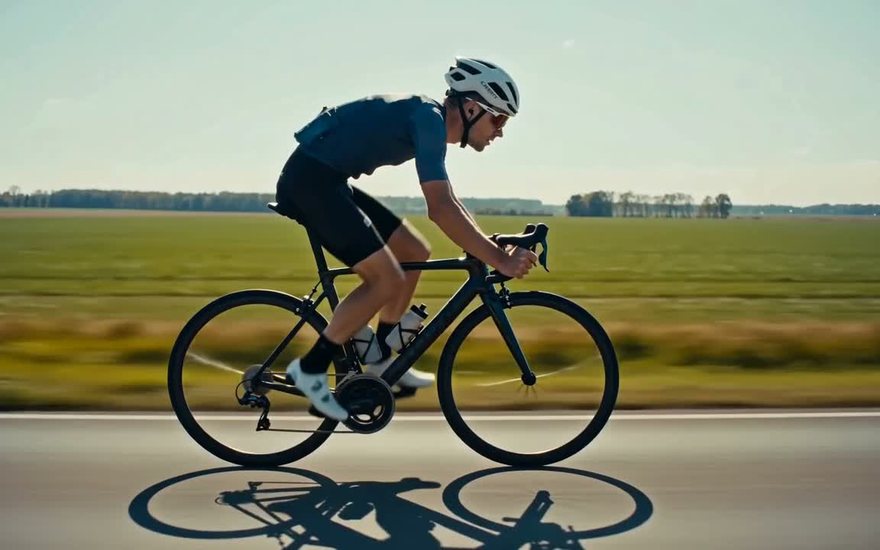
Using the power meter on the bike.
Power meter
Athletes complete test protocols on their own, wherever they are. You receive the data, analyze it in INSCYD, and deliver a complete physiological assessment, without needing to be on-site yourself or invest your valuable time.
Any road, any hotel room, any time zone
From national federations and Olympic programmes to WorldTour teams and professional clubs worldwide.
Remote performance testing can be done in real-world training environments or controlled indoor settings. Athletes simply follow a structured test protocol and send you the collected data for analysis.
Using the power meter on the bike.
Power meter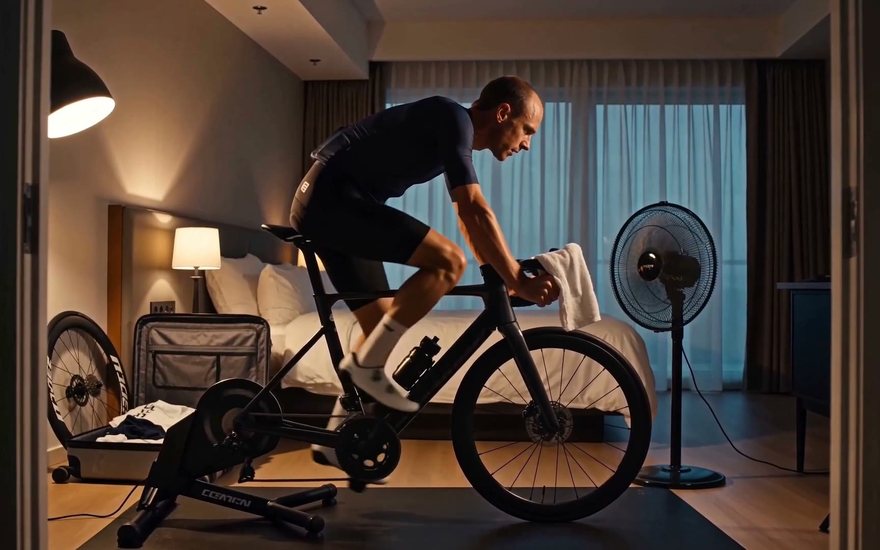
On Zwift, Rouvy, MyWhoosh or just freeride.
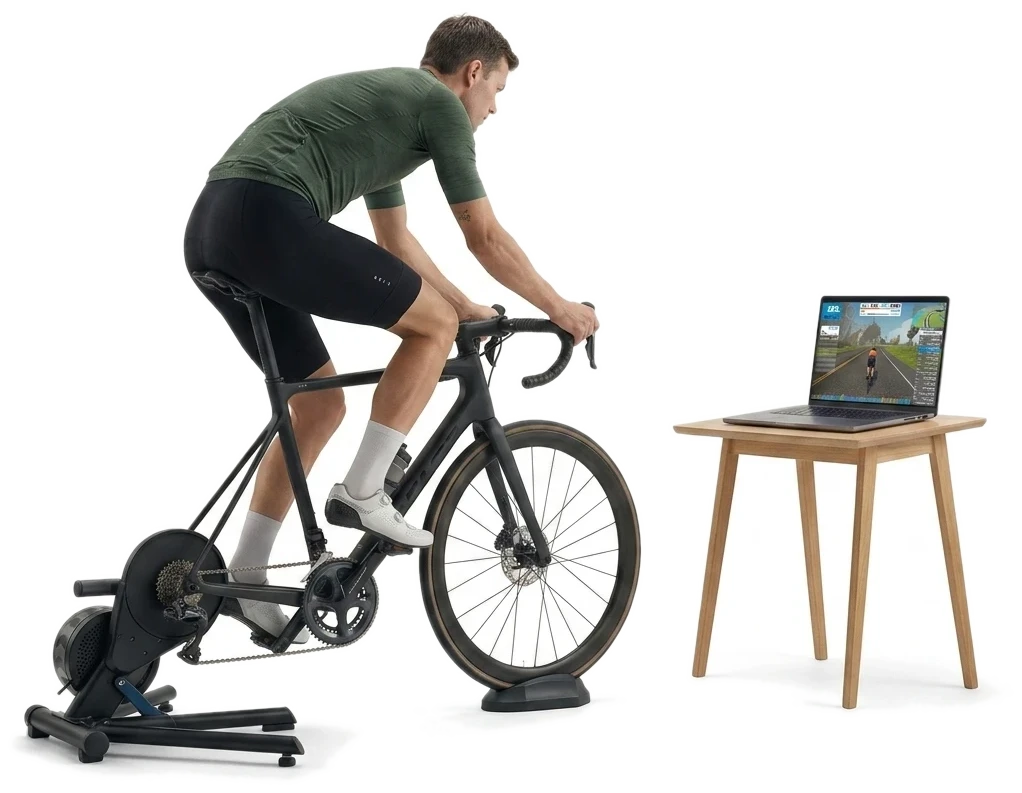
Smart trainer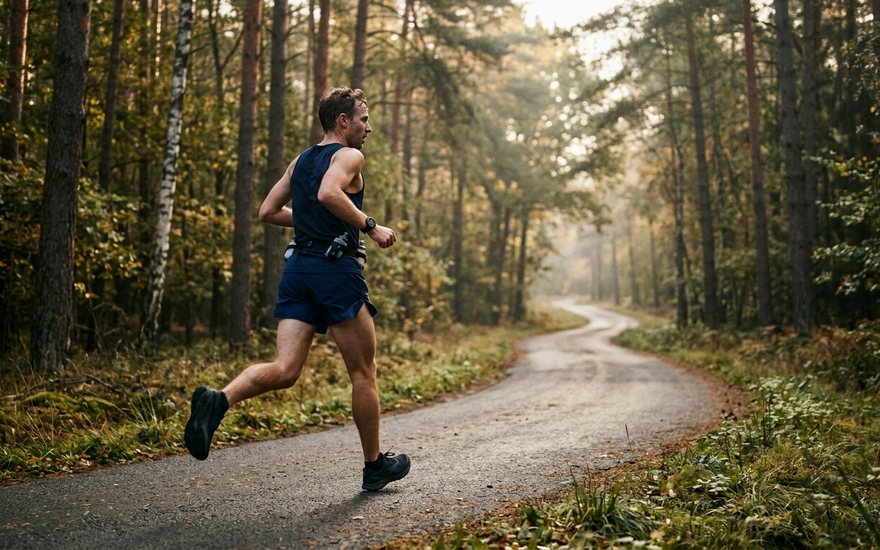
Using the GPS enabled running watch of the athlete.
GPS watch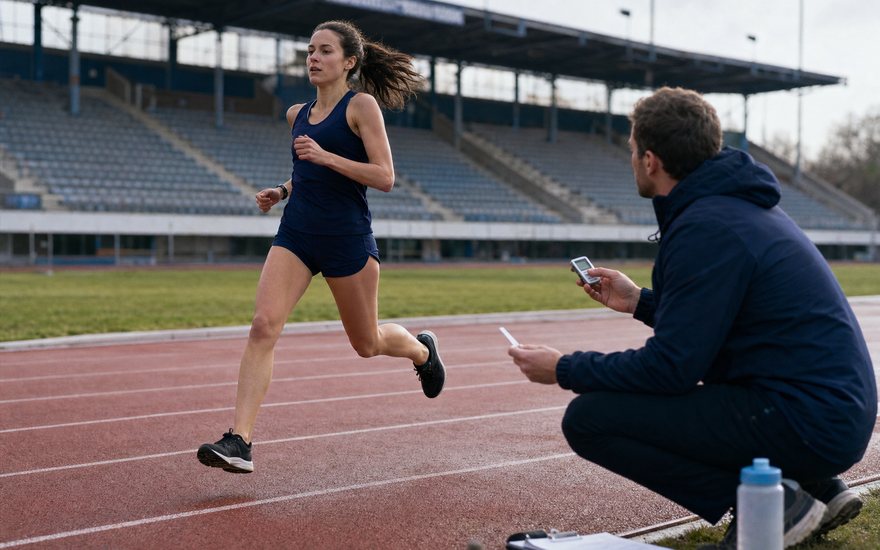
Just using a stop watch. As simple as that.
StopwatchRemote testing allows you to separate test execution from expert analysis, massively reducing your labour time. The athlete performs the test, while you focus on interpreting the data and delivering actionable insights.
Provide the test protocol and instructions to your athlete.
The athlete completes the test and delivers the data.
You analyze the data in INSCYD and create a customized report.
Via email, online meeting or screen recording, and send the PDF report.
Every athlete has a goal. INSCYD helps you identify and even quantify which physiological changes will have the biggest impact on reaching that goal. So before you prescribe a training program you can define the right training focus, zones, intensities, and workouts.
 Test data
INSCYD sits between performance testing and training planning. It turns test results into clear coaching decisions before you write the next training plan.
What we ultimately want to change by training is the physiology of the athlete. So let’s base training zones on this!
INSCYD’s training zone builder allows you to set up custom training zones based on the individual physiology of the athlete. You can now target specific adaptations by training: fatmax training, carbohydrate sparing, % utilization of VO₂max, specific lactate concentrations … the possibilities are endless.
| Zone | Target | Physiological Conditions | ||
|---|---|---|---|---|
| AT | Energy aerobic | Energy anaerobic | ||
| 25% Anaerobic SS | 257 | AT154[%] | aerobic75[%] | anaerobic25[%] |
| 25% Anaerobic 90" | 139 | AT83[%] | aerobic75[%] | anaerobic25[%] |
| 25% Anaerobic 3' | 222 | AT133[%] | aerobic75[%] | anaerobic25[%] |
| Anaerobic Threshold | 167 | – | aerobic92.1[%] | anaerobic7.9[%] |
Without INSCYD most aspects of interval training are not individually specified for an athlete. Sure, there is an idea how to set the intensity for the on-phase. But especially the duration and intensity for the recovery period is mostly guess work.
Now you can solve this problem! Set up precise interval durations and intensity using the physiology of the athlete. Define the intensity and the duration of the off-phase to target specific training adaptations: more complete recovery to get rid of acidosis and full glycolytic activation, or incomplete recovery for higher average VO₂ and reduced glycolytic energy contribution.
Carbohydrate availability in training and racing has huge effect on training adaptations and performance. In contrast to this importance, getting reliable substrate utilization rates has been difficult.
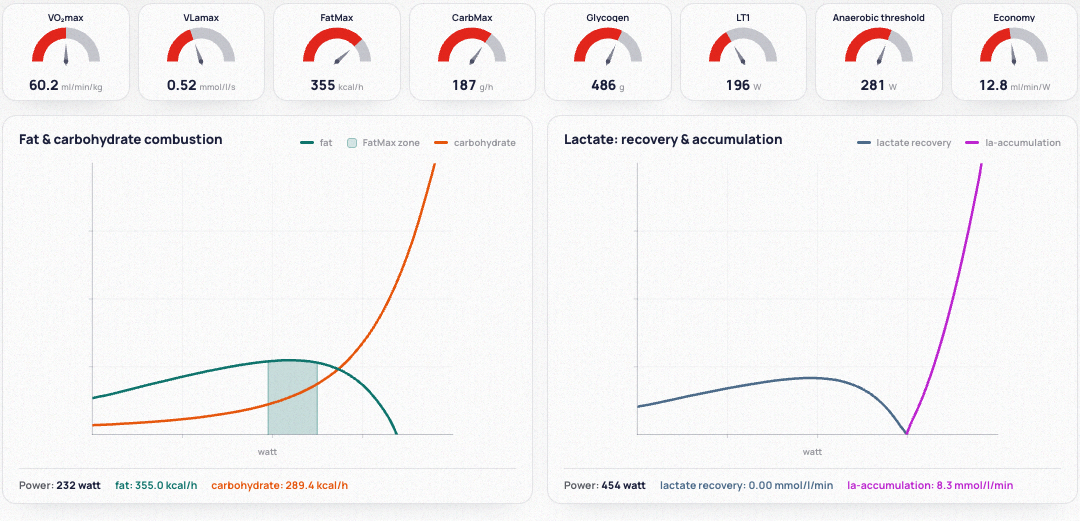
INSCYD provides accurate fat and carbohydrate combustion rates, allowing to: a) provide detailed recommendations in training to amplify certain training effects, such as lowered glycogen stores and glucose feeding to increase fat combustion and aerobic adaptation, or high glycogen stores and carbohydrate fueling for high intensity sessions. b) set race strategies and pacing plans to align with carbohydrate combustion rates and avoid bonking before the finish line.
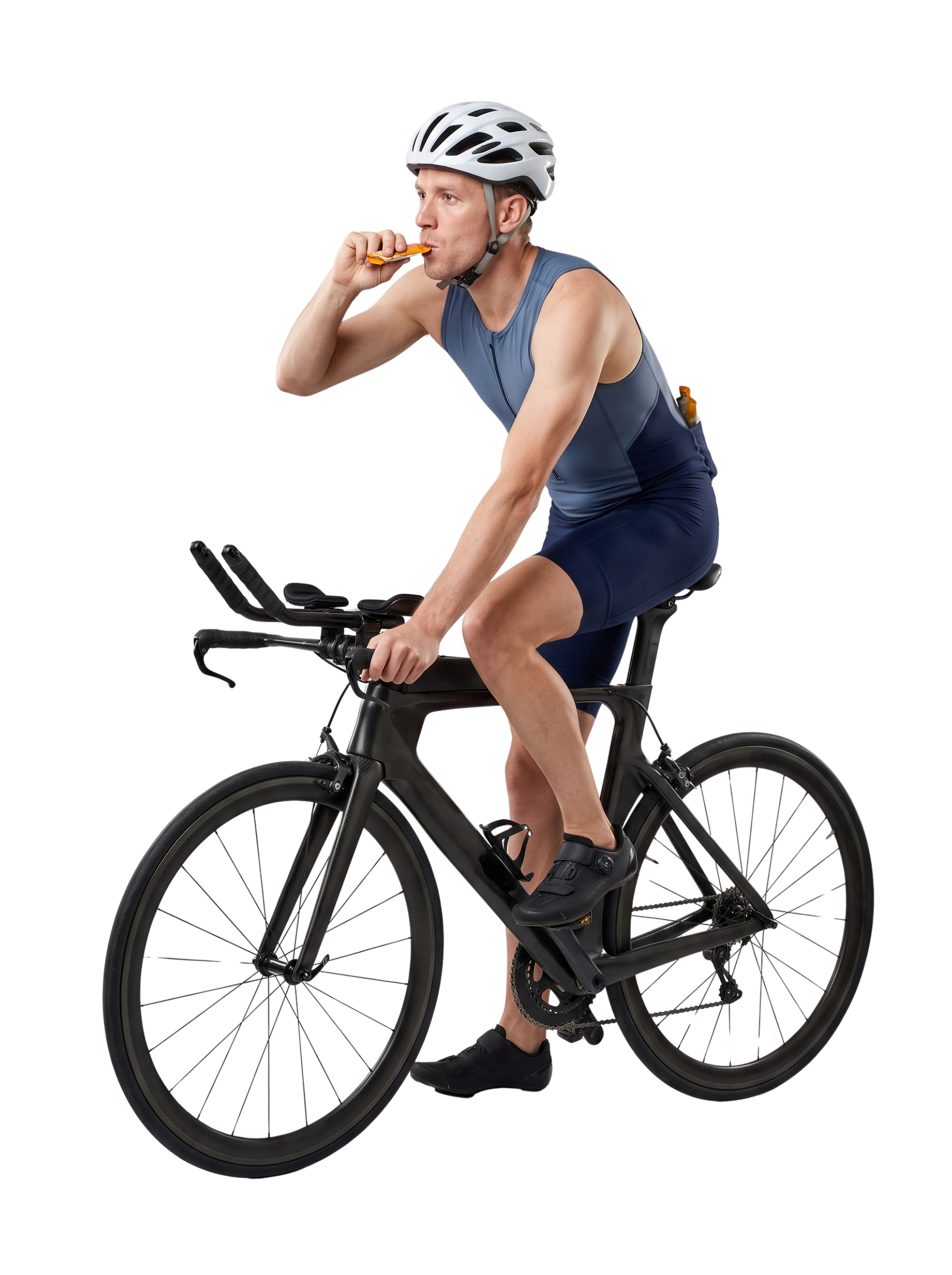
Individual best pacing strategies highly depend on the physiology of the athlete. Especially the fatigue rate at high intensity and the speed of recovery from such efforts is crucial.
With INSCYD it becomes possible to understand not only time to fatigue but also the ability of the athlete as a function of speed or power. With this information it becomes possible to guide an athlete to the best race pace strategy.
VO₂max, VLamax, FatMax, thresholds, fuel use and training zones, from a single test in the lab, in the field or fully remote.

