Why Your VO2max Interval Training Isn't Working (And How to Fix It)
Struggling to improve your VO2max despite consistent interval training? In this video, we dive deep into why your high-intensity VO2max intervals might not be delivering results, and how using FTP-based intervals can sometimes hold you back.

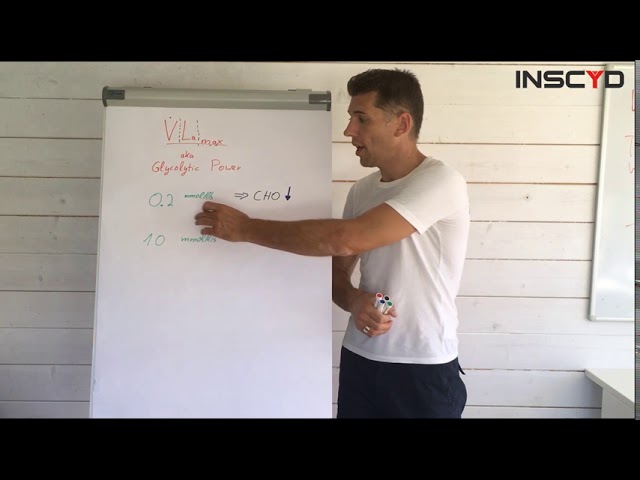
Why isn't your VO2max interval training working? The most common reason is that the training zones being prescribed are based on threshold power or heart rate, and these zones don't account for the athlete's VLAmax. An athlete with a high VLAmax will accumulate lactate much faster at any given intensity above threshold, which means they may be working too hard to stay in the desired physiological zone, even if their power output looks correct.
The solution is to prescribe intervals based on the athlete's actual metabolic profile, not just their threshold. Using INSCYD, you can determine exactly what intensity range will elicit the desired physiological response for a specific athlete, whether that's maximum VO2max stimulus, fat combustion optimization, or lactate tolerance training. For VO2max development specifically, the key is to find the intensity that maximizes time spent at high VO2 utilization while keeping VLAmax demand at a sustainable level.
For athletes with high VLAmax, this often means training at lower absolute intensities than traditional threshold-based prescriptions would suggest, but spending more time in the zone. For athletes with low VLAmax, they may be able to train at higher intensities and still achieve the same VO2max stimulus without excessive glycolytic stress. The bottom line is that one-size-fits-all interval prescriptions don't work because athletes have fundamentally different metabolic makeups.
Personalized interval prescription based on VLAmax and VO2max is the only way to ensure you're getting the training response you actually want.
https://bit.ly/physiology-education
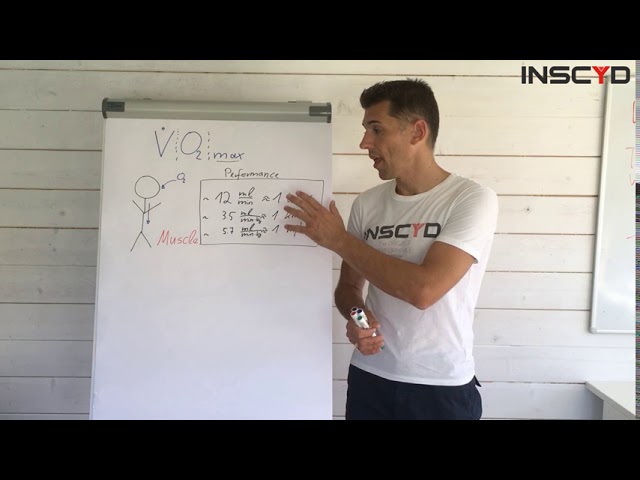
So, you're doing interval training to improve your VO2max, high intense intervals above threshold to increase your capacity, but you're stagnating. Your VO2max is not increasing. Your FTP is maybe also not increasing. You don't see the results. Here's likely why. You set up your training intensity for those intervals using a percentage of your threshold power. FTP or threshold space or lactate threshold base doesn't matter. It's actually about the same issue. Okay. So you have determined your individual threshold power and now you use that to create a so-called individual training zone to train in your 6x4 minutes or 8x4 minutes or 4x 5 minutes whatever you use.
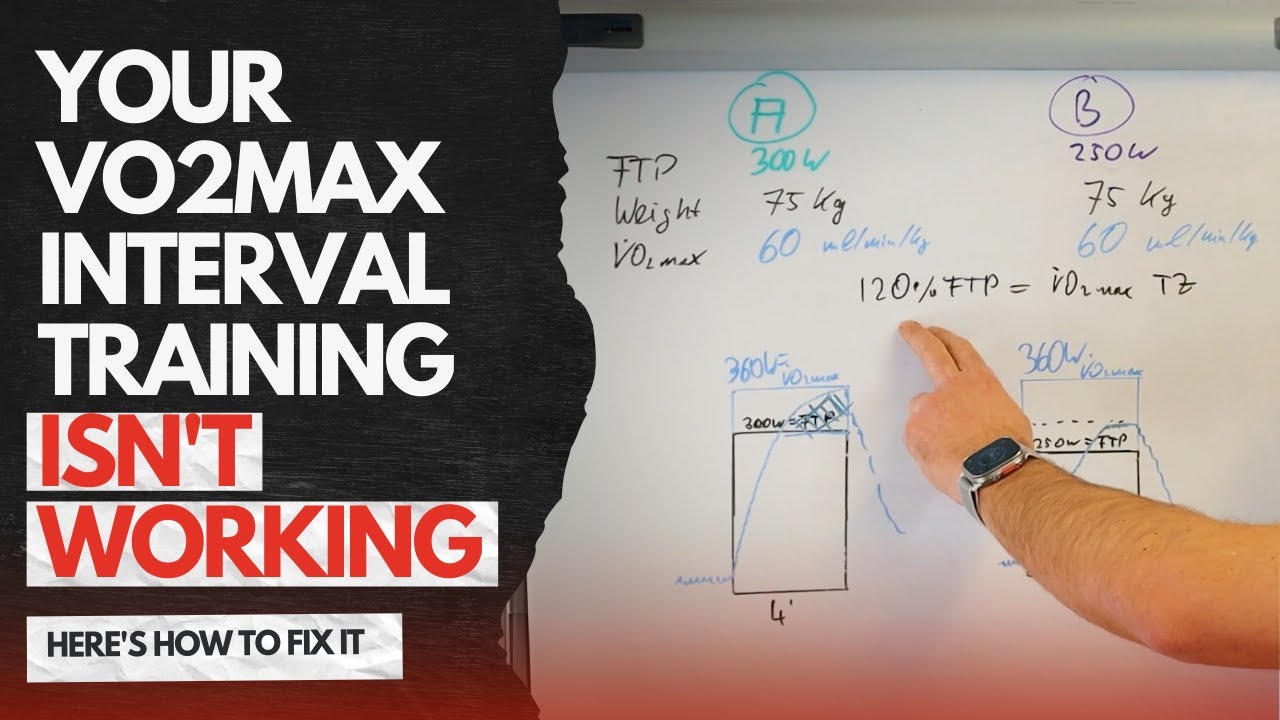
VO2max intervals. Let's have a look at a very typical example of two athletes here, athlete A and athlete B with slightly different training status, slightly different physiology to understand why even though you have individual training zones, you don't see the progress in your VO2max intervals. So imagine we have two athletes here, same body weight, just for the sake of simplicity. Could be different body weights, but it makes it easier here to explain. And let's assume those have different FTP values. So your athlete A has an FTP of 300 W, athlete B of 250 W. You can see it's kind of normal, common numbers for amateur and recreational athletes, right? And now let's assume they both have the same VO2max, which they're trying to improve. Now if you look at that, our FTP value shown here as a, you know, black rectangle, to show how much power there is.
You can see the FTP obviously is lower because he only has an FTP of 250 W in our example. But because they have the same VO2max, now what you can do, you can translate VO2max by body weight and gross efficiency into a power output. So because they do have the same VO2max, their VO2max equivalent power would approximately be the same. This is why you see they have the same bar height here. Okay. Now your literature tells you that your individual training zone for FTP view FTP base VO2max intervals would be approximately right 120% of FTP is what you use as a VO2max training zone.
Right now, what happens if you have FTP of 300 W in athlete A and you go 120%. Now, guess what? That's approximately exactly spot on the power output equaling 60 ml. Why? That is 60 ml multiplied by 75 kg and then divided by 23% of gross efficiency gives you pretty much exactly 360 W of power output equaling VO2max. So this is the power the EOB system can deliver. Now because this athlete has the same VO2max here, he also has the same 360 W of maximum aerobic capacity or maximum power to be more precisely.
Now you go 120% of FTP and now you can easily do the math 300 W 120% that's exactly 360 W. So for athlete A, this athlete actually exercises at 100% of his VO2max power. FTB however FTP of 250 watts 120% brings him only to 300 W but his VO2max power is 360. So he's exercising not at the same percentage of his VO2max. And that's simply because the utilization of VO2max at FTP for athlete A is relatively high, right? And the utilization of this athlete here, because of his training status, physiology, his phenotype and so forth, is lower. And therefore going to 120% of FTP is not cutting it for him, right? This athlete stays at a much lower percentage of his VO2max.
Why does it matter? Well, literature tells us several very goodmade well-made scientific studies tell us that your improvement of actually VO2max the improvement of the aerobic capacity actually scales pretty nicely with the time spent at a high percentage of VO2max. So the more time you spend at a high percent of VO2max the higher your VO2max will be get. Okay. So we said you do the same kind of interval training 4x4 minutes 6 by4 minutes.
So the time is somewhat fixed right you have your kind of training program. The difference is, this athlete here spends most of his time, so spends these intervals, actually at VO2max power, increasing his VO2max, his VO2 to VO2max on the interval, while this athlete does not, because 120% of his power, of FTP, brings him well below VO2max. How would that look like? So if you, just for the sake of an example, let's say this here represents a 4-minute interval. So VO2, you know, we have a resting VO2, is somewhere down here, and then during the interval there's this fast phase, right, it goes up and somewhere here close to VO2max, and then there comes a recovery period. Great. So if you look at the time, for example, if you look at the time, very popular in the literature, above 90% of VO2max, right, you have this area here which is spent at a high VO2max. This is the area you want to increase, you want to maximize.
You want to increase the time spent at a high VO2max. That works pretty good for athlete A. At B, however, VO2max is running 60 W. He's only exercising at 300 because he's taking 100% 120% of 250 W. VO2 down here is, you know, resting value. Then it goes up. It will go up slower. Okay, the kinetics is already slower because the intensity is not that high. Okay, it will go up a little bit slower and then it will only go up here, right?
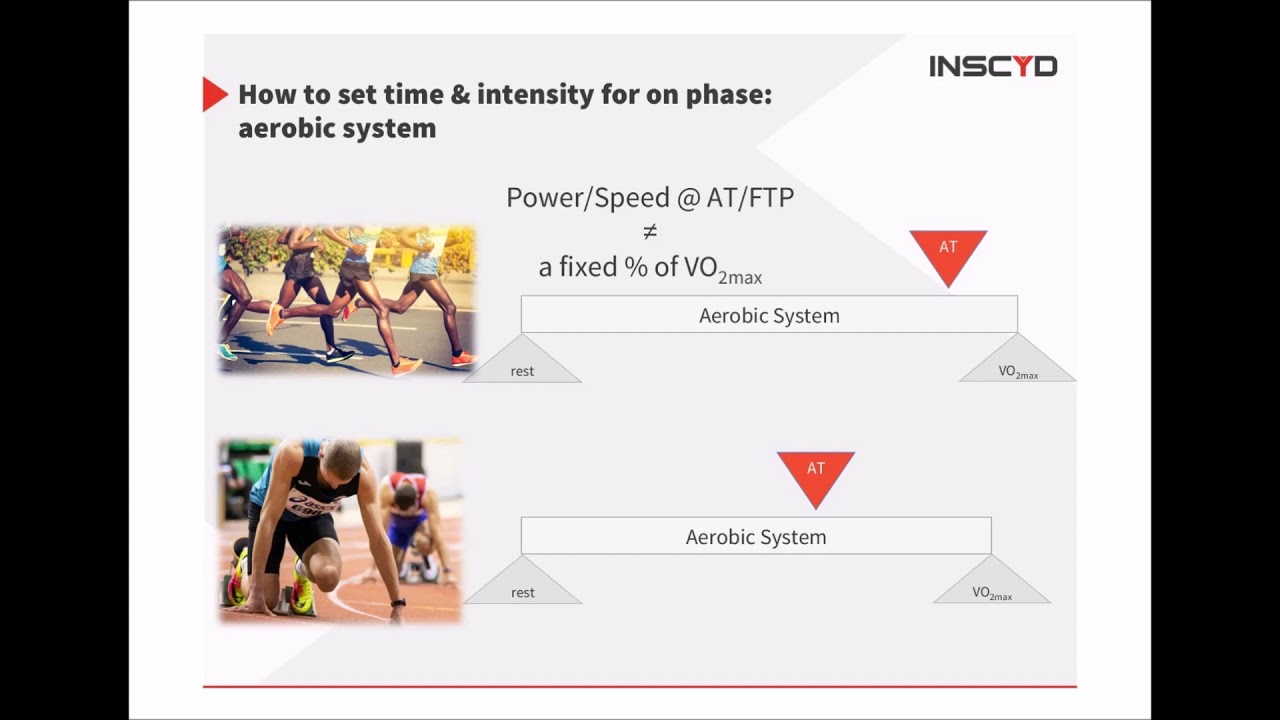
Not all the power zero basically just stay below this equival equivalent of 300 W and then it will drop again. So he's actually not tapping into that high percentage of VO2max utilization and this is again according to peer-reviewed well established literature the key to improve VO2max itself. So long story short, a different threshold power similar or same VO2max means that your individual percentage of FTP to determine your training zone for V2X doesn't cut it because different athletes have the FTP or threshold power at different percentages of the VO2max.
And without knowing your very VO2max, it's basically gambling and finger crossing and hoping that you hit the right training zone. So what you need to do is, you need to know not only your FTP value, but you need to know especially your VO2max value, and understand: what duration do I need of interval, and what especially intensity do I need, to really maximize the time spent at the high percentage of VO2max? Because this is the main KPI, the main trigger, the main identifier that will drive development of VO2max.
So you basically need to know these values individually for yourself to ensure that the training you're doing is actually increasing VO2max because again science is very clear if you're not maximize that and you see very little or no improvements. So if you are doing VO2max intervals using percentage of FTP and you don't see your progress very likely your individual metabolic profile is responsible for that you basically didn't do the correct training intensity.




![[Tutorial] Training Zone Builder Update](https://cdn.prod.website-files.com/69fb420749df096c7fb865ef/69fdf1e0d26c1f6fe0d4c945_maxresdefault.jpeg)


![[Tutorial] Virtual Test & Performance Projection: Compare Training Outcomes in INSCYD](https://cdn.prod.website-files.com/69fb420749df096c7fb865ef/69fdf1e2a6495029773d8211_maxresdefault.jpeg)


![Create Training Plans Like Top Coaches [5 Steps]](https://cdn.prod.website-files.com/69fb420749df096c7fb865ef/69fdf1e491172a8381d183ad_maxresdefault.jpeg)