The Truth About Lactate Gels
Lactate gels list 5 g or 10 g of lactate. Sebastian Weber works out what that is in millimoles, what it becomes in the blood of a 75 kg athlete, and how many minutes of work it fuels at 300 W.
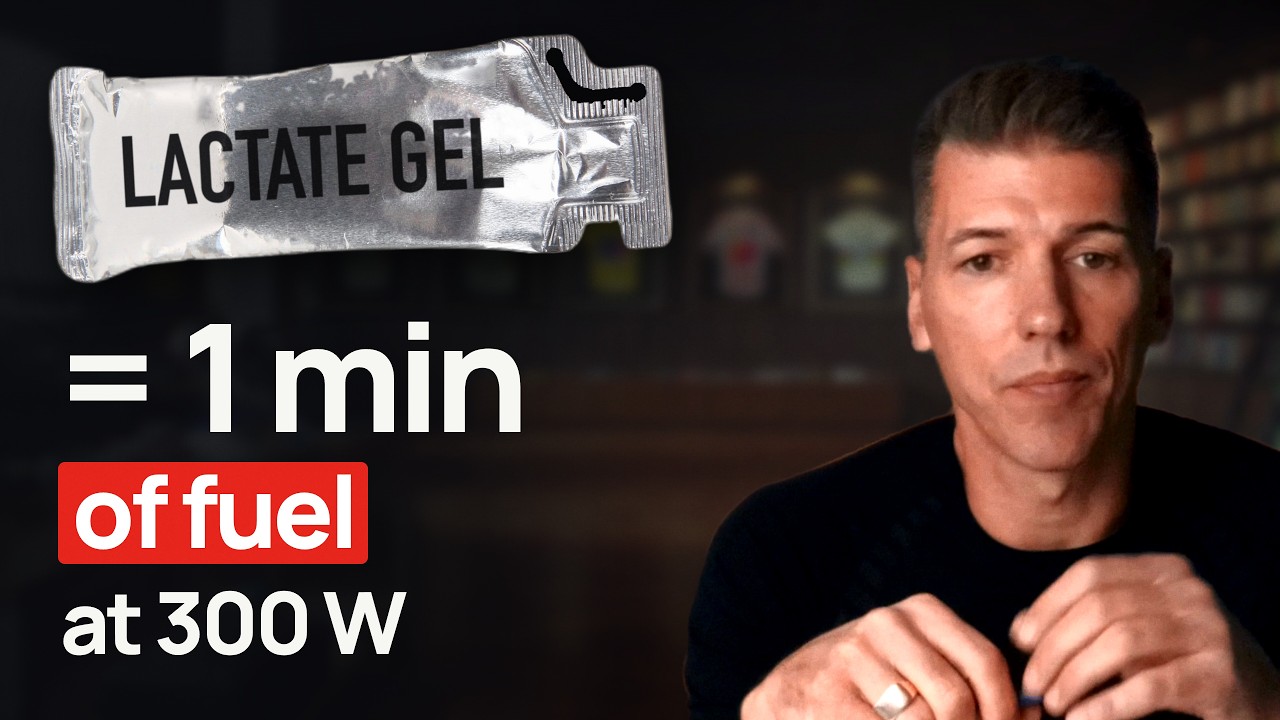

Lactate gels list 5 g or 10 g of lactate. Sebastian Weber works out what that is in millimoles, what it becomes in the blood of a 75 kg athlete, and how many minutes of work it fuels at 300 W.
Book a free INSCYD demo: https://inscyd.com/demo
Chapters
00:00 Cold open: the verdict before the math
01:04 Lactate as a signaling molecule
01:46 Lactate is a fuel for the aerobic metabolism
02:16 Almost all glucose becomes lactate anyway
03:06 The ATP catch and the carbohydrate uptake limit
03:51 From grams on the label to millimoles in the blood
04:52 5 g of lactate = approximately 56 mmol
05:26 Diluted in a 75 kg athlete: +1.5 mmol/L
07:26 300 W for approximately one minute
08:36 Not a lot of fuel: trained vs professional athletes
09:04 What the current scientific literature says
09:37 Recap: what to expect from a lactate gel
Lactate acts as a signaling molecule, and it is a fuel: the aerobic metabolism needs fuel, and lactate is the preferred form of fuel. Carbohydrates when used as a fuel always become lactate during the process. So the idea to add lactate into a gel seems logical. The question is the quantity, and the video does that math: 5 g of lactate is approximately 56 mmol, approximately 1.5 mmol/L once diluted in a 75 kg athlete, and the aerobic fuel demand of approximately one minute at 300 W.
Studies cited in the video
- Zhang et al., 2019, Nature: Metabolic regulation of gene expression by histone lactylation. https://doi.org/10.1038/s41586-019-1678-1
- Schiffer et al., 2011, Neuroscience Letters: Lactate infusion at rest increases BDNF blood concentration in humans. https://doi.org/10.1016/j.neulet.2010.11.035
- El Hayek et al., 2019, The Journal of Neuroscience: Lactate mediates the effects of exercise on learning and memory through SIRT1-dependent activation of hippocampal BDNF. https://doi.org/10.1523/JNEUROSCI.1661-18.2019
- Hashimoto et al., 2007, The FASEB Journal: Lactate sensitive transcription factor network in L6 cells: activation of MCT1 and mitochondrial biogenesis. https://doi.org/10.1096/fj.07-8174com
The physiology behind the math, in INSCYD
- Lactate Production Rate and Lactate Oxidation Rate: https://inscyd.com/metric/lactate-production-combustion
- Carbohydrate Combustion Rate: https://inscyd.com/metric/carbohydrate-combustion
- INSCYD turns any test protocol into a complete metabolic profile, at gold-standard accuracy. https://inscyd.com
Watch next
- Lactate Clearance Explained: https://youtu.be/9di9nMQzisY
- No Lactate Curve: Rethinking Lactate Testing, Clearance & Anaerobic Threshold: https://youtu.be/AM7rpo8P-qk
- Lactate Threshold: Why a "Good" Test Result Can Fool Your Coaches: https://youtu.be/iVTt02GOlR0
Sebastian Weber is a sport scientist and the founder of INSCYD. He coaches WorldTour cyclists and advises elite federations.
Do you use lactate gels with your athletes, and what did you see? Tell us in the comments, and subscribe for the next one.
So the current scientific literature does not support clearly if there is any added benefit from using lactate as a fuel. Supplementation with lactate as a gel is very interesting because lactate acts as a signaling molecule. However, lactate as a fuel is basically what is the center of these supplements of the gels. So the idea to add lactate into a gel, into a supplement, seems quite compelling.
Athletes and coaches have tried to push the boundaries on how much carbohydrates, almost all glucose that you ingest as a fuel during exercise becomes lactate, no matter what the intensity is. Five grams of lactate is the equivalent of approximately, that sounds a lot, it is not that much, right? It is not a lot of fuel and a professional athlete could likely burn through that in less than a minute. How much fuel does one of these lactate gels really provide?
So the first thing that's important to understand.
Supplementation with lactate as a gel is very interesting because lactate acts as a signaling molecule, for example, in activating BDNF, which is signaling molecule that helps with neuroplasticity in the brain. There's also some studies which look at lactate as a molecule to enhance certain training adaptation, signaling to training adaptation, signaling even to influence the aerobic metabolism to increase its activity. However, lactate as a fuel is basically what is the center of these supplements of the gels.
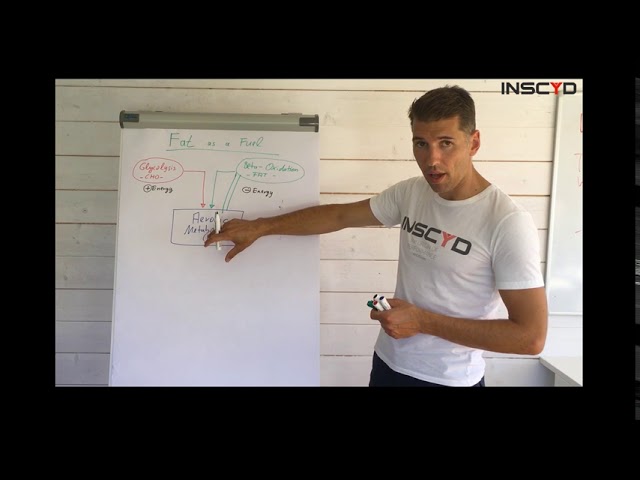
So, let's look a little bit at what does lactate as a fuel mean. So, the first thing that's important to understand, lactate is actually a fuel to the aerobic metabolism. Okay, so the lactate that's produced in the cytosol and glycolysis acts as a primary and you could argue preferred fuel source, for example, even at rest for the heart muscle, and also as a fuel source in the brain, but during exercise, particularly in the muscle, it is a fuel source for the aerobic metabolism.
So, the idea to add lactate into a gel, into a supplement, seems quite compelling in terms of now you have the fuel itself. So, you need to understand that when you take glucose and you take carbohydrate sugar, those carbohydrates first become lactate in the glycolysis, in the cytosol, in the metabolism. Okay, and by the way, all glucose, almost all glucose that you ingest as a fuel during exercise becomes lactate, no matter what the intensity is, no matter if you have high oxygen uptake, high oxygen availability or not. So therefore, the idea to use lactate directly instead of glucose, so lactate as a fuel instead of using glucose, which first needs to be converted into lactate, seems logical.
One difference, which is important to mention,
transforming glucose or glycogen, which is a storage form of glucose in the muscle, into lactate, provides energy, provides ATP for muscle contraction. So, there is an energetic benefit from using glucose as a starting fuel instead of lactate. However, as you might be aware, the ability, the capacity to take up carbohydrates, especially during exercise, is somewhat limited. And athletes and coaches have tried to push the boundaries on how much carbohydrates somebody can take in during training and/or competition.
So therefore, using an additional energy source in terms of lactate instead of carbohydrates seems to make sense.
But let's look at the quantity, so I'm just explaining that from a qualitative point of view, logical thinking, it makes sense to use lactate as an additional fuel source. So let's have a look at how much lactate as a fuel is actually provided in those gels. That's a very important step to do, because most of you will be familiar with lactate in terms of millimoles, right? You might have done a lactate test or used lactate in training and you're familiar with two millimoles, three millimoles, four millimoles, whatsoever.
And then you look on a gel and it reads, for example, five grams of lactate or it reads ten grams of lactate. And what I want to do now is I want to give you the connection between how much grams are in your lactate gel. What does it mean in terms of lactate concentration, in terms of millimole? And then also, most importantly, talking about lactate as a fuel source, how does that translate to fueling actual work of your body, okay?
So you will find gels with approximately five
or ten grams currently on the market of lactate, additional, obviously, to carbohydrates. So what does five grams, for example, mean? Depending on what kind of lactate compound is used, normally it's a salt of lactate, five grams of lactate, is the equivalent of approximately 56 millimoles of lactate, okay? So approximately, depending on what you use, five grams of lactate, approximately 56.
If you're using a lactate gel with ten grams, it's obviously 112 millimoles.
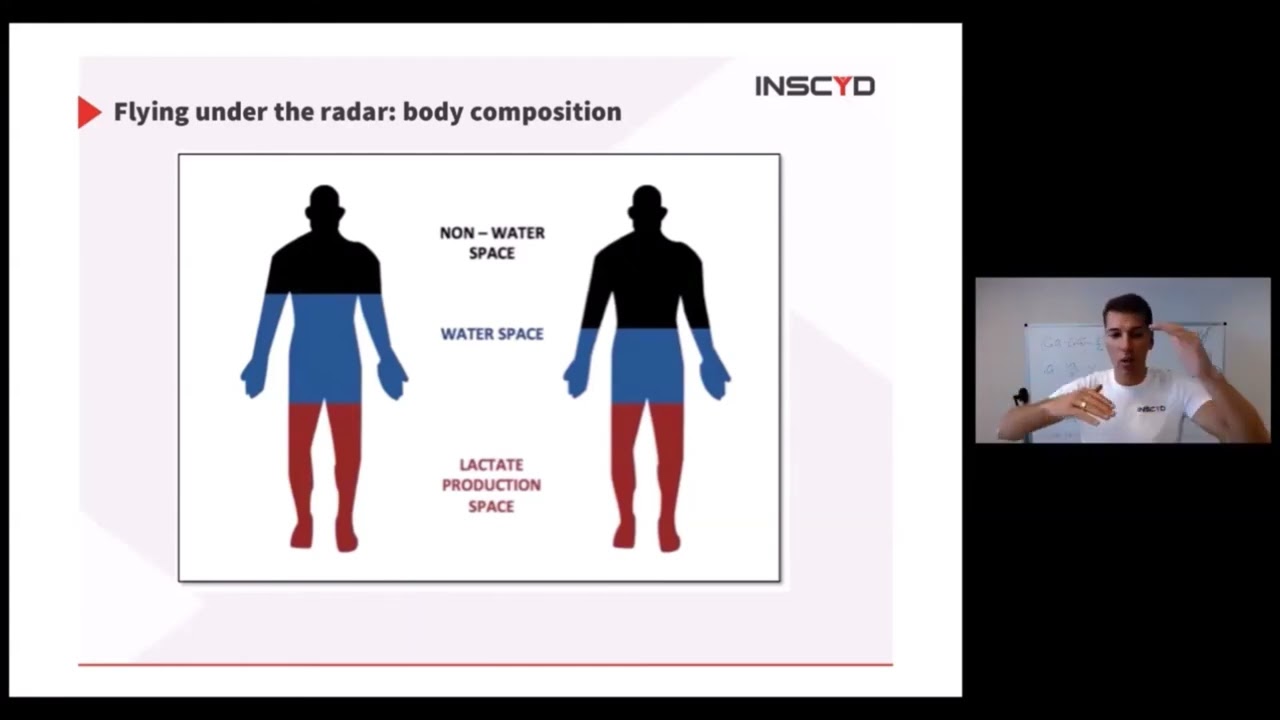
So now these 56 millimoles of lactate, assuming, which we might not know yet based on the available signs, assuming that 100% of this 56 millimoles that you ingest, five grams of lactate, actually arrive in the bloodstream and are available as a fuel for your muscle, this 56 millimoles now need to dilute or going to dilute in the whole body. And for a 75 kilograms example athlete with a good athletic body composition, so body fat somewhere around 12% ish, this 56 millimoles of lactate now would become a lactate concentration or an additional lactate concentration because again, it needs to dilute, it's diluting in the body, right? Everywhere, not everywhere, but where you find water in the body, it's diluting. So the more water you have, meaning the bigger the body is, the more lean body mass you have, the more dilution space is.
So as an example, to get an idea of what that means, let's dilute it in, as I said, athletic body composition assumption of a 75 kilogram athlete. This 56 millimole now would become approximately 1.5 millimoles per liter. So theoretically, if there would be no combustion of lactate, let's assume you have a 1.5 millimoles resting lactate concentration, and let's assume all the lactate that you ingest is actually taken up into the body, and let's assume there's no additional combustion of lactate, then it would make your lactate concentration rise or increase from 1.5 to an additional 1.5, meaning three. That sounds a lot, okay?
Now we've just explained or we now we can understand how many five grams of lactate are in millimoles, and what does that mean to your concentration?
Now we started with the assumption we use lactate as fuel. So the question is, how much fuel is that in terms of power output energy? This additionally 1.5 millimoles per liter, what kind of work can we do with that? Okay.
So to give you an idea, in our example 75 kilogram athletes, at a power output of 300 watts on the bike, 1.5 millimoles of lactate equals the fuel demand of the aerobic metabolism for approximately one minute. So let me say that again, 300 watts of power output, if you translate it and transform that into fuel demand in terms of lactate equivalents, not calories or kilojoules, but in terms of lactate equivalent, that's approximately 1.5 millimoles per liter per minute, okay? So that means if you would have no other fuel source, to burn this gel, which includes five grams of lactate, would take at 300 watts, in our example, approximately one minute, meaning if you have 10 grams, then it lasts approximately two minutes.
So you can see that in terms of providing additional energy, it is not that much, right? It is not a lot of fuel. Also if you would look at the calories, you can see there's not many calories. So a highly trained athlete could easily burn through that within one minute, and a professional athlete could likely burn through that in less than a minute, in terms of that meaning five grams of carbohydrate, right?
So the current scientific literature does not support clearly
if there is any added benefit from using lactate as a fuel. There are some indicators and some trends, but it's not like you have two or three studies and all of them show a huge performance increase. The question will be, can you spread this additional fuel over a longer duration? Can you really use that as an additional fuel and maybe therefore gain a few watts of power output over a shorter time?
But to give you an idea on how much fuel does one of these lactate
gels really provide, again, five grams of lactate at 300 watts, 75 kilogram athlete equals approximately one minute of work. That's all you can expect from it.