🚀 The New Power Performance Decoder (PPD) is Here: Faster, Smarter, More Accurate
🚀 Big Upgrade to PPD Testing: Faster, Smarter, More Accurate We’ve just released major improvements to the Power Performance Decoder (PPD). Testing is now quicker, easier, and delivers more reliable results.
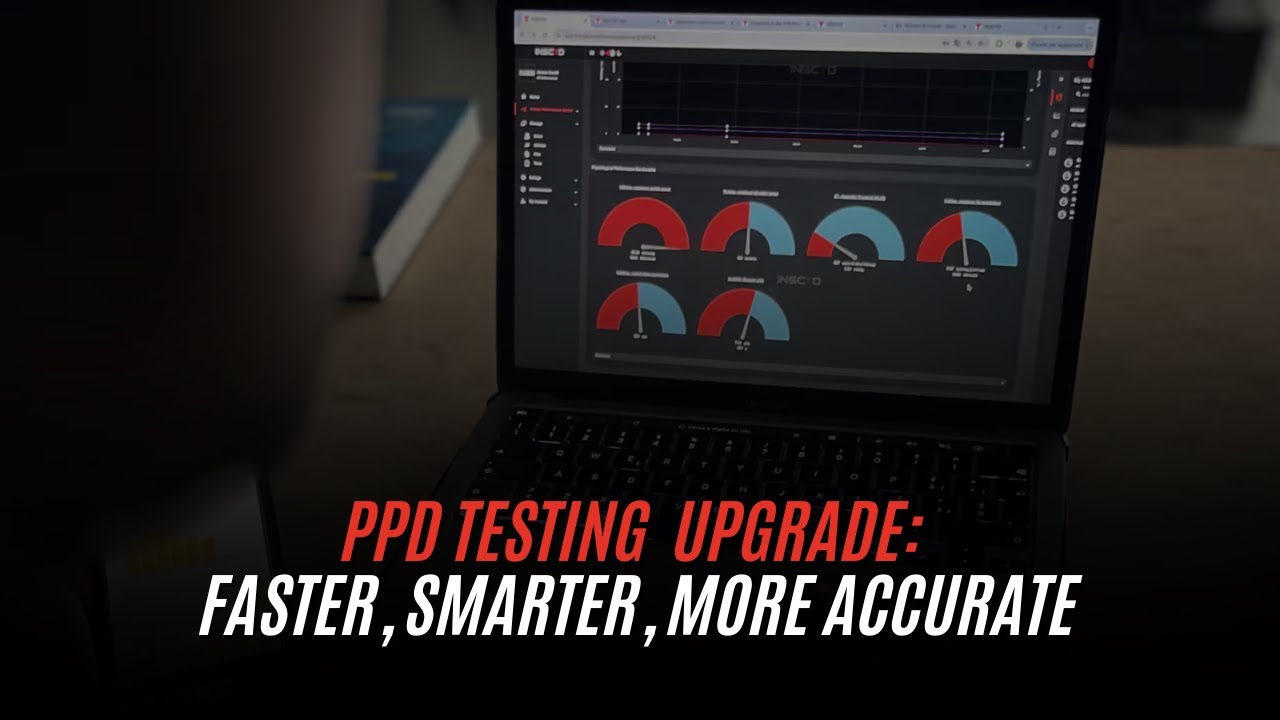

The new Power Performance Decoder is here. Faster, smarter, more accurate. The PPD is INSCYD's non-invasive testing protocol that allows you to determine an athlete's complete metabolic profile from a simple maximal effort test on a bike, without any blood samples, without any lab equipment, just a power meter.
The new version of the PPD brings three major improvements. First, accuracy. The algorithm has been significantly improved.
The new PPD is more accurate in determining VO2 max, VLA max, and all the derived metrics like threshold, fat combustion, carbohydrate combustion, and training zones. Second, speed. The new PPD test takes less time than the previous version.
The athlete can complete the test in under 20 minutes including warm-up. This makes it much more practical for coaches who work with multiple athletes or who need to test athletes in a group setting. Third, reliability.
The new PPD is more robust to pacing errors. In the previous version, if an athlete slightly mis-paced one of the efforts, it could significantly affect the result. The new algorithm is more tolerant of small pacing errors and still delivers an accurate result.
The new PPD is available now in all INSCYD accounts. If you're already using the PPD, you'll notice the improved results immediately. If you haven't tried the PPD yet, now is a great time to start.
You can find the updated testing protocol and instructions in your INSCYD account. As always, if you have any questions or feedback, reach out to the INSCYD team. We'd love to hear from you.
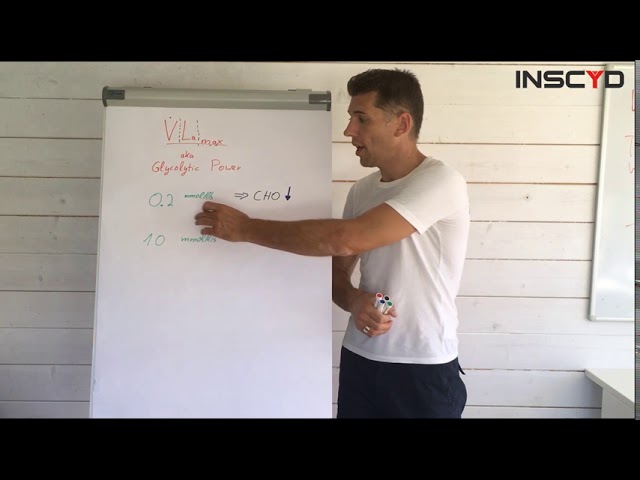
Hey, my name is Sebastian Weber and I'm the founder of INSCYD and today I want to share some exciting news with you about upgrades to our power performance decoder to our PPD testing technology. This video has three parts. If you're just interested in what's changing for you and how to use it, just listen for the to the first two three minutes. Okay? If you want to learn a little bit more what's the value of that so and why we built that, listen two, three minutes longer.
And if you want to know the scientific background on the new technology and why it works and how it works then listen to the full video. Okay. So let's get started. So what's new? Biggest improvement is updates of the protocol. The protocol: if you use a PPD with remote testing, power or speed only, without lactate, without measured VO2, then the efforts did change. The protocol became much shorter. We are now recommending two sprints, not one sprint but two sprints. Okay? This is because it provides better accuracy. On the other hand, we totally got rid of the long effort. No 12 minute or longer effort anymore. The only thing you need now is two efforts, which need to range ideally between three and 8 minutes.
2 and a half is also okay but that's approximately it. Now what is great about it is it's not exactly necessary to hit 3 and 8 minutes or for example the validation study was done using 3 and 6 minutes. You can do 4 minutes 5 minutes 4 minutes 21 5 minutes 33 whatever as long as you stay in this range. Okay two efforts. So, two sprints, approximately 20 seconds, 18, 16, 22, 24, all fine. Two sprints, and those two longer efforts between 3 to 8 minutes: 4 minutes, 5 minutes, 6 minutes, all good. That's the new protocol. So you save a tremendous amount of time doing the protocols, your athletes save a tremendous amount of time. Okay? This is the change if you use a PPD, the primary change. There's one other change I need to address in the UX before we get to the benefits of that. When you mark an effort, okay, we now have an autocorrection function.
So you mark an effort, a certain range of power or speed, okay, and if the software detects, if the algorithm detects a snippet, effort a little bit longer, a little bit shorter, which seems to fit better, the software will tell you and say, "Hey, I found a better effort, slightly longer, slightly shorter, whatever." Okay? And then you can confirm and use that. So what does it do for you? First, you can be a little bit more sloppy selecting the efforts, and you have really security that, and can be content that, you found and marked the correct effort. And even if you don't do that, no worries, we got you covered. Okay? So these are the two biggest improvements. So what's the value for that? How are you going to use that? Second part of the video. One thing is, as I just mentioned, about the auto detection of the effort, and let's start with that. The benefit is, no matter, you know, who you have, several coaches in your business, who marks the effort, who does the test, no matter if you overlooked something, you will always get consistent, same results, because the algorithm is always picking the correct effort for you. So what's about the protocol? Two sprints means the software will automatically detect the better sprint, and the sprint which delivers the more accuracy, higher VLamax. If they both get about the same, then the software will use both. So that's automatically running in the background.
Nothing you need to do about it. Okay. So, what does it does for you? Higher accuracy, better robustness, validity on your VA max. The two longer efforts, 3 minutes, 5 minutes, 6 minutes, what's the benefit beside obviously saving time? The difference to the old protocol is in the old protocol we just had one 3 minute and you really had to be strict on the 3m minute, right? You could be 250 or 315, but not longer or shorter.
Now that changed and that's super important because now you can adapt the efforts to your, you know, your surroundings, your setup. If you have a 1k climb or you have in running a whatever 1 kilometer loop or you run it on the track, whatever, right? You can choose the distance and don't have to worry about the time anymore. It's a huge benefit, especially in running. And I'm going to address this a little bit more.
What it does technically is, we now have two efforts which we use to calculate VLamax, sorry, VO2max. And the calculation of VO2max is entirely updated, the whole math, the whole physiological model behind it is entirely new. I'm going to address this in the third part of the video. Okay? So what it changes for you, what is the value, is instead of just having this one three minute effort for VO2max calculation, what happens with this one if this is off? Same with the sprint, right? I think you get the sense of it.
Why we do two? If this one effort is off, if one sprint is off, not good. This is why one two. If one three minute effort is off, the athlete didn't pace himself or herself properly or you know weren't really accustomed to three minute efforts because they used more like six or longer efforts in training. The old protocol that was a problem. Now that's not a problem because first you have two efforts and second you can choose whatever you want.
This means, and I know it sounds crazy, you can do exactly twice a six minute effort or an 8 minute effort or in running twice a 1,00 500 meter or mile effort. Okay? So, you can do the same effort twice. No problem at all. Okay? Super flexible. I know it sounds weird. The only reason, the only thing to remember is two efforts between approximately 3 minutes and 8 minutes. Any duration, any combination will do.
Two times three minutes, two times eight minutes, anything in between, totally fine. So much more flexibility in terms of processing the data. I promised I wanted to mention something about the running PPD, because what we have learned, and this is one reason why we worked on that, why we bring this improvement to you, is because many people struggle with the PPD and running, because of the GPS watches and the accuracy of your GPS watch.
Okay, so what did we do to solve that for you? What you can now do with a new protocol, you can just ditch your GPS watch. You can just ask the athlete, for example, run a sprint in the on the track, run three laps on the track and four laps on the tracks for the all out. So, you can just give it a distance or if there is no track, just ask your athlete, hey, if you have a known distance, maybe you measured it the day before with your bike, right?
If you have a known distance, you can use Google Earth, right? If you have a straight stretch of road, you can use Google Earth to measure the distance, whatever. The only thing you will need is a distance and a time for running. And there's a new button in the PPD. So, you can start the PPD without a fit file. And you can just use a button and say, "My athlete ran this distance in that time." Boom.
You can do this for the sprints. You can do this for the longer efforts. Really straightforward. Think about group testing, right? You just can take those data from training sessions. No formal testing needed. You know, just have athletes do all out efforts of these distances, enter it, full flexibility, it will work. So, should be a big improvement for you. We have other improvements coming up on the cycling part of it where you can import a meter data from lab test, but that's a different story.
We're going to address it shortly and bring this out shortly to you. Okay. So, these are the benefits. Better accuracy because we have now two measurements for VLMX and two measurements for VO2max. More flexibility, especially in running, make it based on the distance and totally forget about the GPS watch if you don't have accurate GPS data later. No, no problem at all. Okay, so part of the video scientifically, how does it all work? Why does it all work?
Let me just do a quick re recap about the sprint test. So what we do with the sprint test? The sprint test is used to get an accurate VA max. Okay. And what's actually happening in the software and there's one benefit you've been using GPS data or power meter data from the bike if you have it if you have accurate GPS data and accurate power data. So you have a second by- second recording. What the algorithm does, it actually looks at your glycolytic flux rate every second and sees when it's maximum, sees when it's leveling off and therefore identifies this as VLamax.
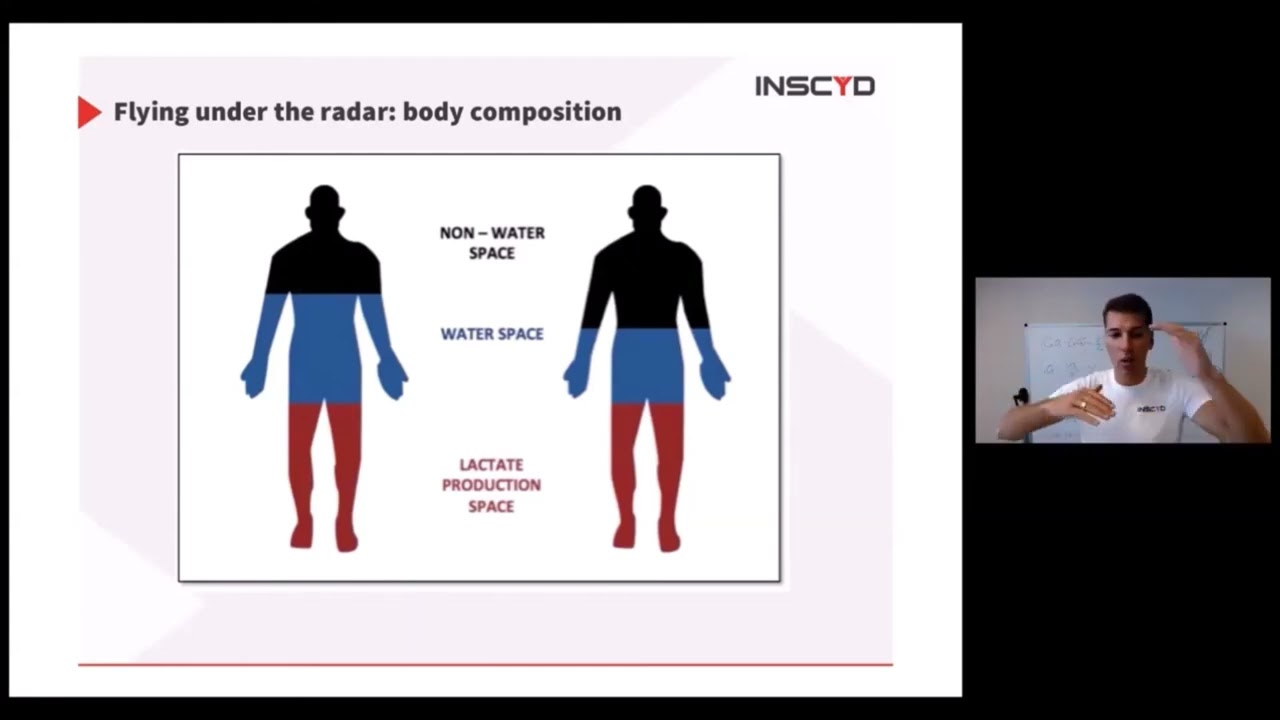
What goes into that? Body composition, gender, sport, economy, estimated VO2max. All this goes in there, okay? Because this is all what is needed to make from a pure power speed value to derive a VA max in terms of mill per liter. If you don't have that, you can just not do the math and you just have to work with approximations from statistics or whatever. And to have more accuracy with that, we ask you to do two.
Okay, I know two sprints is little bit more effort, but we've seen in a practical application, so technically one works, but in a practical application, we just know that it's better. You will have more accurate data if you do two. Okay, so we recommend two efforts. Okay. Why were we able to do the biggest change with this cutting out the 12minute effort entirely and having this great flexibility of 3 minute to 8 minutes whatever you have the key is this new algorithm which we use to calculate VO2max.
What is actually happening inside the software and there will be a scientific publication study coming out soon about that is that we actually calculating the VO2 kinetics. So VO2 time series here is real-time VO2 during this effort inside the software in the back end for you. So that we can see if the VO2 really levels off, what is, you know, the gold criteria to see the real VO2max. And because what science tells you, and what our calculations confirm, is that any effort between approximately 3 minutes to approximately 8 minutes will elicit VO2max.
Can you do it shorter? Yes. The software also works with 2 minutes 45 or 2 minutes 45 fine. But let's try for three. If you put in 245, it will still work. That's no problem. Okay. So this according to the literature will elicit VO2max. And this is exactly what our algorithms show. Why not longer than 8 minutes? Because when you go longer than 8 minutes, some subjects, not all, some athletes will not be able to reach VO2max.
So therefore, it's safer to say not longer than 8 minutes. Okay? And because the VO2max is so important in the whole meta body profiling, this is why we do two. The software automatically picks the higher one. Okay, if the if the two are close together within the area of measurement, the software will do the average. You can also do more. You can do three and whatsoever. It doesn't matter. Okay. Now, the trick or the thing that's maybe not obvious that is very difficult with that.
If you want to do a power duration curve, power, maximum power, time, or speed duration, maximum speed over time, what you might be aware of is, if you use shorter efforts only, and especially if you would use two times the same effort, let's say 2 × 5 minutes and 2 × 20 seconds, you cannot create a valid power duration curve. So this calculation of critical power or FTP simplified speaking out of your power duration curve would fail.
Right? If you use whatever software package you want, whatever algorithm you want, whatever model you want, I don't care, golden cheetah, whatsoever, and put in only let's say 20 seconds and two times of 5 minute effort, you will not get an accurate podation curve. The main problem is the shorter efforts that's described in the literature will result in an overestimated a too high critical power, too high FTP value if you want to oversimplify it.
And we solved that because what we are able to do is using your VO2max and VLamax we're able to calculate for example a 10-minute power output. So I know it sounds a little bit strange and again there's a pure study coming out to show how accurate it actually works and if it would not be as accurate as doing a real effort we would not do it. But again, we calculate, when you put in let's say two × 5 minutes, or two × 6, or three and six, when you put in these shorter efforts, the algorithm calculates longer efforts, a 10 minutes effort, adds this to the power duration curve, and therefore gets a valid and especially consistent critical power value and consistent power duration curve, no matter what efforts you do.
So that means that even if your efforts normally would be too short to get a valid critical power, you still will get a valid critical power value. And this also means no matter what the efforts are because we fill up the data set with the missing efforts with the same accuracy as you can measure it and again it's going to be proven in the literature soon. Because of that, you can do whatever protocol you want and you always get a consistent critical power value as well, which is, you know, obviously huge benefit to your testing because you don't have to worry about it anymore.
So, this is what's going on. All the factors going into the VLMX calculations that I explained, erobic capacity, body composition, gender, so on and so forth. New algorithms which actually mimic the kinetics of VO2, of oxygen uptake, as you would measure it with some mask, with a metabolic cart, with a VO2 analyzer. Calculating those for the efforts that you put in, the algorithm looks for the highest one, then takes VO2max and VLamax, and is able to calculate power output for 10, 12 minutes, for efforts that you didn't do, uses this to fill up the power duration curve, and therefore always gets a valid and especially consistent critical power.
Okay, we've all in internally validated that with a lot of data from experiments in the lab. We on purposely had sprint efforts where we screwed up the gearing and all kind of stuff to make sure that we still get accurate results even though the raw data is a little bit screwed. And we were able to prove and to show, and again the literature is coming out to prove that as well, that it is providing you very robust and repeatable actual data. And this is what's going to happen now, whenever you do a PPD testing.
Okay, if you didn't do PPD testing yet and you want to check it out, you can go to the feature store and activate it. And if you want to get familiar again with it and you know check the protocol we happy to give you a little bit of a runway. So some tests you can use to play around with the protocol and so on. So any question we got the help center here you can use it and find all the materials about it the articles to read what I just explained.
Okay. Recommendations for the protocol it's all in there. So use this resource please. And if you have other questions beyond that then of course please reach out to us please reach out to our team so we can ask your questions.
![[Tutorial] Training Zone Builder Update](https://cdn.prod.website-files.com/69fb420749df096c7fb865ef/69fdf1e0d26c1f6fe0d4c945_maxresdefault.jpeg)


![[Tutorial] Virtual Test & Performance Projection: Compare Training Outcomes in INSCYD](https://cdn.prod.website-files.com/69fb420749df096c7fb865ef/69fdf1e2a6495029773d8211_maxresdefault.jpeg)


![Create Training Plans Like Top Coaches [5 Steps]](https://cdn.prod.website-files.com/69fb420749df096c7fb865ef/69fdf1e491172a8381d183ad_maxresdefault.jpeg)