Advanced methods for increasing VO2max beyond beginner gains, covering HIIT design, training load, nutrition strategies, plateau-breaking approaches, and how to find the correct interval intensity using metabolic testing.
Increasing VO2max can be easy at first, but becomes challenging when you already have a decent training history. In this article we talk about all the advanced methods that improve VO2max. From training to nutrition. We also cover how to overcome a plateau in VO2max and common mistakes to avoid when trying to increase VO2max. Most importantly: after reading this article you know exactly how to find out which strategy boosts your VO2max most effectively. Let’s get started!
In this article
VO2max is commonly referred to as the size of your aerobic engine. It is probably the most well-known and accepted measure of endurance. Coaches and athletes who measure VO2max want to know how well the aerobic energy system is able to produce energy. This makes sense, because the aerobic energy system is highly dominant and performance-determining in most (endurance) sports.
VO2max represents the ability to use oxygen to produce energy in the muscle. The higher your VO2max, the higher your aerobic power, anaerobic threshold and maximal ability to burn fat (FatMax) – all other things equal. In many (endurance) sports, these parameters are crucial. Which is why VO2max is important.
Find out whether your VO2max can use a boost by comparing your VO2max with norm values by age, gender and sport.
Learn more about VO2max in this 6-minute video:
If VO2max is about using oxygen in the muscle to produce energy, how can we improve it?
First of all it’s important to break down the basics. To get oxygen from the air to the muscle cell, you need a good respiratory system. This system takes oxygen from the air and transports it to your bloodstream. In healthy people the lungs are not a limiting factor.
Once oxygen enters the bloodstream, the cardiovascular system needs to transport oxygen to the working muscle. Red blood cells with oxygen carriers (hemoglobin) need to start moving. This is the job of your heart, using its stroke volume and (maximum) heart rate.
Finally, when oxygen reaches the muscle it needs to diffuse into the muscle to enter the mitochondria, which will eventually use the oxygen to produce energy.
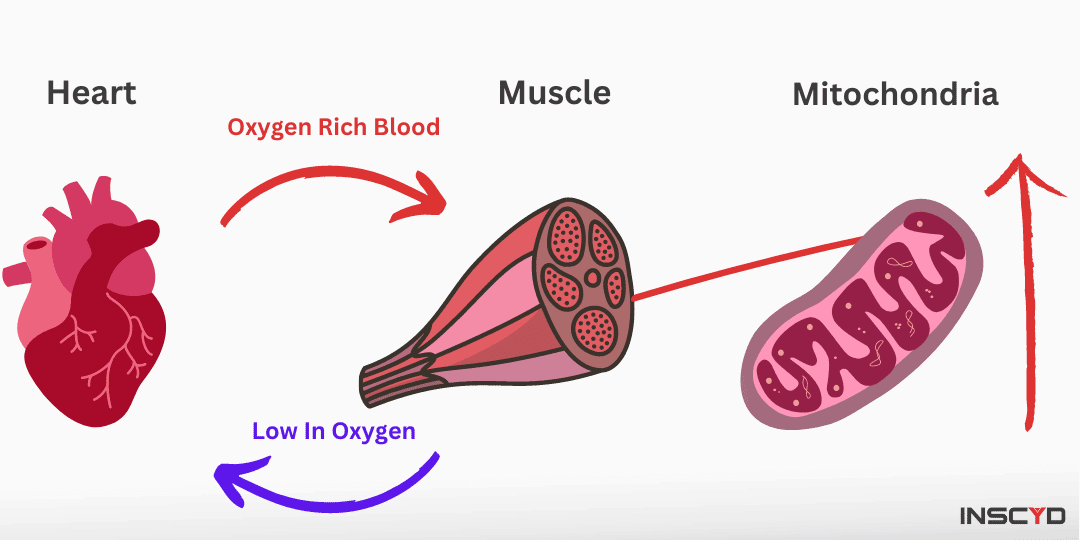
A high aerobic energy production (VO2max) in the muscle requires a good oxygen transport of these systems. In theory, there could be many weak links that would increase VO2max when improved. With training and nutrition you could for instance aim to:
In practice though, the limiting factor often occurs within the muscle itself. In fact, even during intense exercise, the blood that goes back from the muscle to the lungs contains a significant amount of oxygen. Only for sudden change of oxygen demand (power output) oxygen delivery can be a limiting factor for a few seconds.
This means that in training, standard practices for VO2max improvement should aim to improve the ability of the muscle to use oxygen to produce energy.
In general, every workout that raises your oxygen consumption provides a stimulus for your body to increase VO2max. For instance: long slow endurance training or high-intensity interval training (HIIT). Therefore it’s important to do regular exercise, when wanting to increase VO2max. There are also nutrition enhancements that have the potential to increase VO2max. Let’s dive a little deeper into these workouts and nutrition strategies that aim to increase VO2max.
Some people think VO2max is predetermined by genetics. It is true that some aspects are at least partly genetically determined, like:
However, VO2max is also highly trainable… In fact, VO2max is one of the best traininable metrics in endurance sports. It increases with good training and decreases with inactivity (or too hard training).
Let’s talk about the 3 most accepted ways of increasing VO2max with training:
There are many terms describing what we mean with endurance training: continuous training, base training, long slow distance training, moderate training, high-volume low-intensity training. Eventually it comes down to exercising at a relatively easy pace for a relatively long time.
A large scientific review, looking at 28 studies, defined the intensity of endurance training as everything between 60-85% of the maximum heart rate. In terms of training zones, this roughly equals zone 1 in a 3 zone model, or zone 1 and 2 in a 5 zone model.
This type of training is highly dominant in training models like polarized training and pyramidal training. It’s also a large portion of the Norwegian training method.
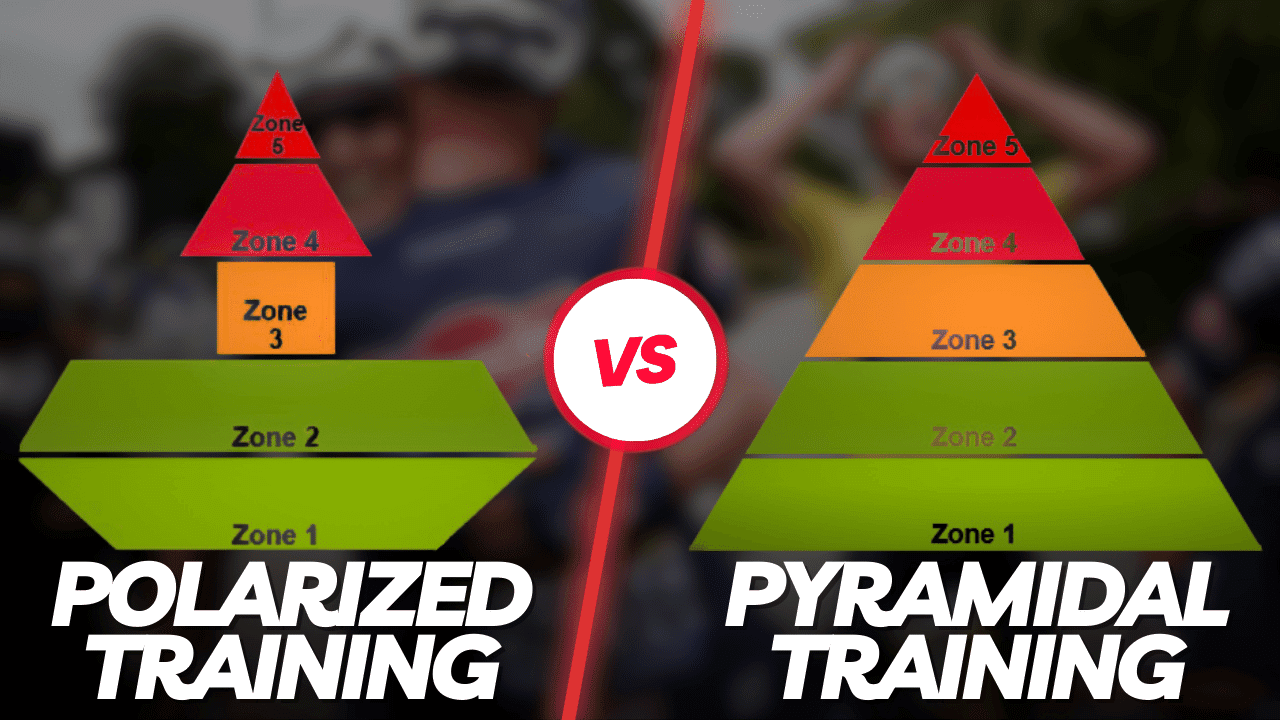
If you want to learn more about the three-zone and five-zone models, or if you’re eager to dive deeper into the polarized and pyramidal training methods, then we have indispensable resources for you.
Download our comprehensive E-Book, titled 'Mistakes You Need To Avoid When Using A Training Method | INSCYD X AZUM', provides expert strategies, insights from elite coaches, and practical tips. You can also watch our insightful webinar that delves deeper into the three-zone and five-zone models, polarized and pyramidal training methods.
The scientific review showed that endurance training increases VO2max by 4.9 ml/kg/min on average, with bigger increases for those who have a lower baseline fitness.
Continuous endurance training is almost monotonous per definition. When choosing the intensity it’s important to keep in mind the duration of your workout and the rest of your training program. This determines at least partly how fast your pace should be.
You could for instance do a long 1,5 hour run on your lactate threshold 1 (LT1) intensity.
If you want to focus more on your fat combustion, you could do a 2,5 hour bike ride on your FatMax intensity. Although you should keep in mind that for well-trained athletes, FatMax might not be the ideal training intensity.
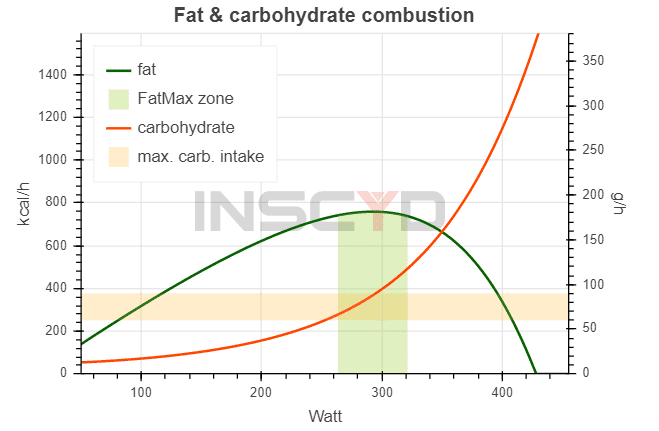
With the INSCYD software, you can easily see what your FatMax intesnsity is by looking at the intensity (x-axis) at your maximal fat combustion (green line).
Want to be sure that your endurance training today doesn’t hamper your performance tomorrow? Pick an intensity at which you burn roughly 40-50 grams of carbohydrates, and make sure you consume the same amount of carbs during training. This way, you don’t empty your muscle energy, which enables you to train hard again the day after.
You can find the carbohydrate combustion rates in the INSCYD’s Fat & Carbohydrate combustion graph (example above).
“One way I have used INSCYD to tailor training plans is by leveraging the insights on fuel utilisation. The information about fat combustion versus carbohydrate combustion during exercise allows me to design training sessions that target specific energy systems and metabolic adaptations.”

With INSCYD, coaches and labs can create a full metabolic performance profile for athletes. INSCYD’s Fat & Carbohydrate combustion graph allows you to create highly individual fueling plans for training and racing, ensuring your athletes never ‘bonk’ again. Furthermore, you can create precise pacing plans for endurance events and prevent overtraining with strategies based on energy availability over time
Coaches and Labs book a free demo with the INSCYD team and discover how you can supercharge your coaching business. Athletes, unlock your full potential with INSCYD. Gain insights into your metabolic performance and create personalized training programs. Find your INSCYD coach or lab.
With interval training we mean “long” intervals, somewhere ranging between 3-20 minutes. These intervals take place at or (slightly) above the anaerobic threshold. The most famous interval training to increase aerobic power are probably ~5 minute VO2max intervals.
A scientific publication showed that an interval training with these intervals increased VO2max by 7%, during an 8 week training program (3 sessions per week), in moderately trained subjects. It also showed that this was a significantly more effective training method than long slow distance training. These findings are in line with the previously mentioned scientific review, which concluded that higher intensity training results in greater VO2max gains than endurance training.
Creating highly individual interval training with the right interval and recovery duration and intensity is easy, using the INSCYD lactate recovery and accumulation graph. Learn more about it via the article: Lactate accumulation & recovery and download our whitepaper.
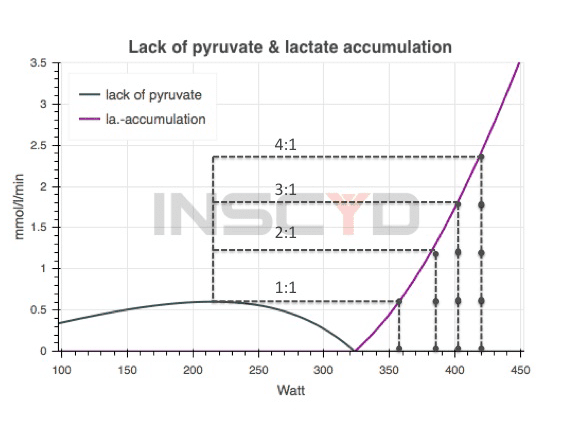
Remember, every athlete is unique, and it’s essential to customize your interval training program based on your athlete’s goals, fitness level, and recovery capacity. Using INSCYD can help you create a more personalized and effective interval training program.
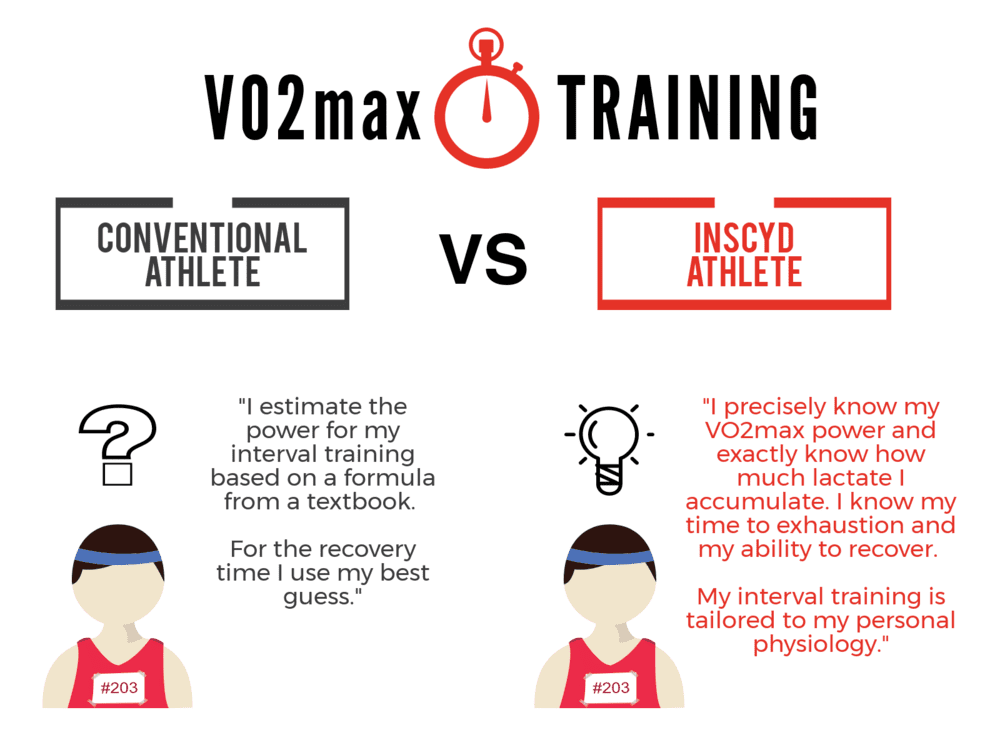
Watch our interval training webinar, in which Sebastian Weber talks about creating physiology based interval training.
The range of these intervals – and therefore workouts – is pretty large. Some examples are:
The typical 5 minute VO2max intervals. For instance, 4 times 5 minutes at VO2max-power, with 5 minutes recovery in between. Or a slight iteration, used in the scientific publication we just mentioned, 4 times 4 minutes at 90-95% of maximum heart rate, with 3 minutes recovery in between.
On the longer side of the spectrum, you could do over-under intervals, that alternate intervals slightly above anaerobic threshold with intensities slightly below threshold, without recovery in between. For instance, 4 times 2 minutes at 105% AT, with 4 times 1 minute at 95% AT in between. You can then recover for 5 minutes between 2 sets.
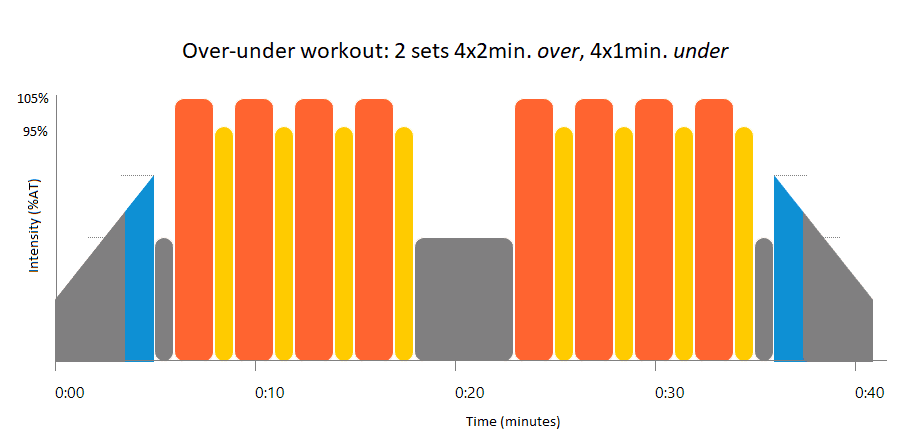
High-intensity interval training (HIIT) is the opposite of continuous endurance training. During HIIT, you alternative short high-intensity efforts with recovery. These workouts typically last less than 60 minutes.
When increasing VO2max is your main objective, science shows HIIT is often best practice for both the average athlete and for elite athletes.
Follow our 4-step guide to create highly individual interval training. You can also download our infographic for a visual guide.
There are many HIIT workout examples, like Tabata workout and 40-20 Intervals. You can vary between submaximal efforts and all-out intervals (sprint intensity training, SIT). You can also vary between active recovery and passive recovery (intermittent training).
Here’s an example HIIT workout of 3 sets with 10 40s intervals at 120% of anaerobic threshold, with 20s active recovery in between.
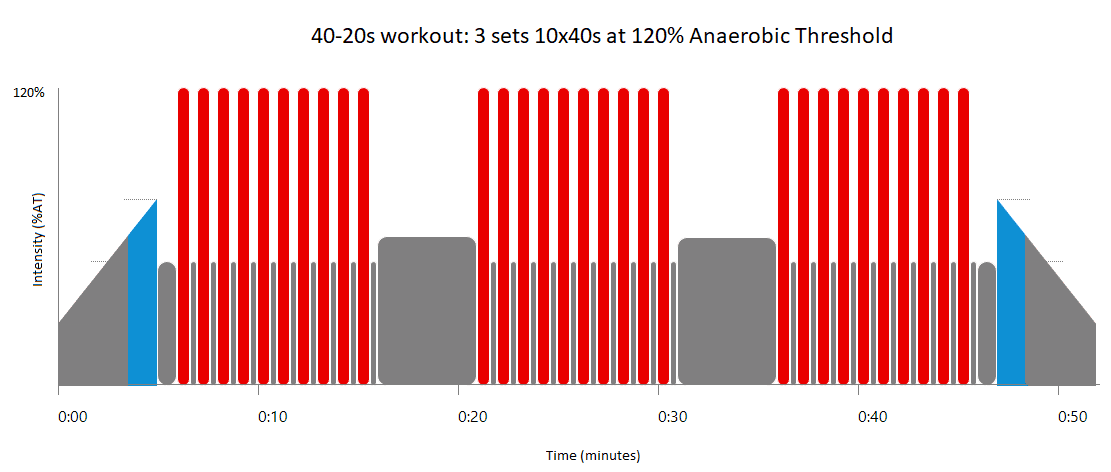
Just because these short high-intensity intervals work best for most athletes, doesn’t mean they also work best for you. Find out whether longer or shorter intervals are better for you via our 6 step plan to answer this question via this article: 5 Most iconic High-Intensity Interval Training (HIIT) workouts for endurance athletes.
To reach a high VO2max during a VO2max test, you of course need enough energy, which can for instance be derived from a carbohydrate rich diet. The well-known stimulant caffeine can also increase your VO2max test results, since it increases time to exhaustion during an incremental test. But are these really VO2max improvements?
Fundamental VO2max improvements are more likely related to improvements in oxygen transport or mitochondrial function in the muscle.
We know iron is important for oxygen transport. It therefore makes sense that if you’re low on iron, adding extra iron into your diet could enhance VO2max. There is no evidence that iron supplements increase VO2max in healthy athletes though.
Another popular supplement is nitrate. Nitrate has shown to increase the efficiency of mitochondria. It also increases blood flow to the muscle. However, nitrate rich beetroot juice does not significantly increase VO2max.
There are several other micronutrients that are essential for mitochondrial function. So far, none of them are proven to directly increase VO2max. A healthy and energy rich diet is of course crucial in training, which does increase VO2max.
Once you start implementing strategies to improve your VO2max, it’s important to be able to see whether they are effective. The only way to do that is to monitor your VO2max over time.
Depending on your current fitness, you can expect VO2max improvements within 1-3 months. If you don’t see changes within this timeframe, your training program might be ineffective, and you better know that sooner than later. Frequently testing for VO2max changes saves valuable time.
Track progress over time, using the INSCYD performance tracking chart.
Fortunately, it’s not necessary to visit a lab everytime you need a VO2max update. You can also accurately measure VO2max outside a lab, using a remote test. With the INSCYD Power Performance Decoder (PPD) test, you can measure all relevant physiological components, using only a power meter (in cycling) or GPS watch (in running).
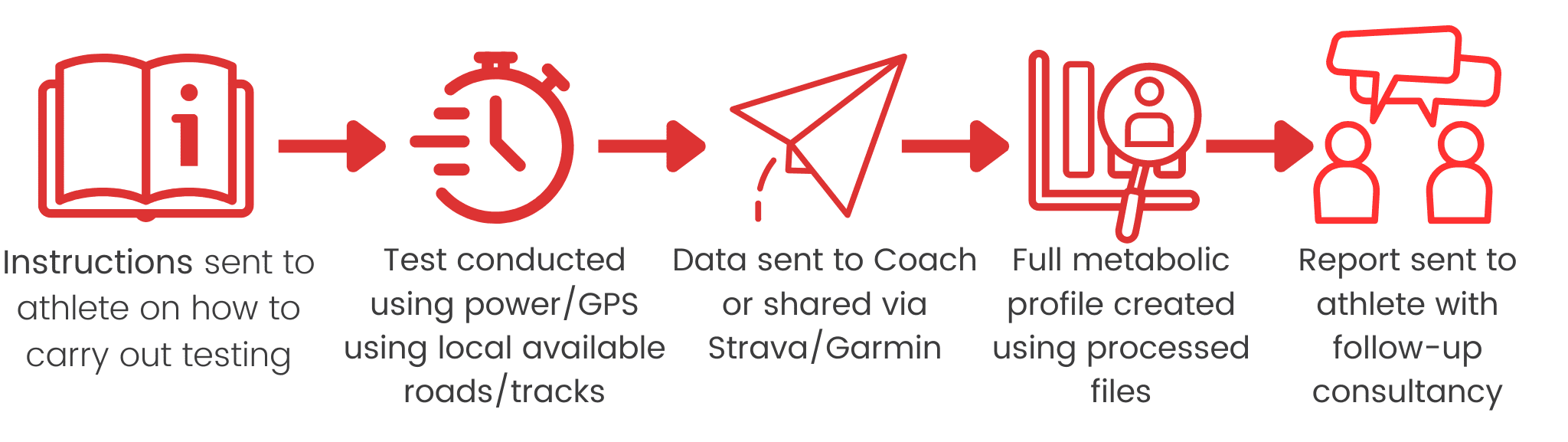
As a result, you get a full metabolic profile report with lab level accuracy. Read more about test results over here. This does require a specifically validated all-out test protocol and INSCYD software.
“With INSCYD you can create this metabolic profile with all the metrics you need as a coach. You can even do remote testing. In fact, we often start with such an INSCYD Power Performance Decoder test.”

Coaches and Athletes, take your performance tracking to the next level with INSCYD’s Power Performance Decoder (PPD) test. This remote test provides a full metabolic performance profile with lab-level accuracy.
The VO2max readings allow you to understand if your training strategies worked. Now you don’t rely on scientific studies anymore, and instead know what works for you.
“Performance Projection helps to show athletes how our approach in training will affect performance.”
INSCYD performance projection feature enables you to not only look at your VO2max trend retrospectively, but also look into the future possibilities.
It shows how your metabolic profile will change if VO2max increases by e.g. 2%. It answers how much additional aerobic power you will have, how much your fat combustion will increase, how your anaerobic threshold will trend, and many more.
It also works the other way around. If you have a specific goal, you can calculate how much your VO2max needs to increase to reach that goal.
Coaches, to discover how INSCYD can revolutionize your work and enhance the performance of the athletes you train, book a call with our performance team. For athletes, find an INSCYD coach to receive a comprehensive and personalized training program based on your unique physiology. Set your goals based on your individual capabilities, not just generic benchmarks. Remember, it’s time to train smarter, not harder.
Learn more about performance projections via this article: Predict future performances and boost your coaching business.
What if your VO2max is not increasing anymore? A plateau in VO2max improvements is pretty common in well-trained athletes who have several years of training experience.
Although HIIT training, described earlier in this article, can even increase the VO2max of professional athletes, at some point there simply isn’t any room for VO2max improvement left.
When you detect such a VO2max plateau, it’s time to shift your focus to other key performance metrics. In fact, increasing or decreasing your VLamax (anaerobic power) is most effective when you already have a high VO2max. That’s why VLamax is the secret weapon of elite coaches and athletes.
Read our case studies of athletes and coaches who successfully balanced VO2max and VLamax:
Before you start aiming to increase VO2max, it’s good to know the most common pitfalls.
Consistency in training is very important when trying to increase VO2max. There are two simple reasons why:
So don’t only focus on training, try to prevent detraining (inactivity) as well. For instance by focusing on injury prevention and making sure busy work weeks or long vacations don’t cause you to fully stop training.
You can’t expect significant VO2max improvements in no-time. It’s better to start your race or event preparations early and slowly add progressive overload to your training, than to suddenly go all-in on your training program a few weeks before your goal.
This allows for proper recovery between workouts and prevents disappointments. If motivation over the course of several months is a challenge, make sure to track athlete progress. This way you objectively see the result of your hard work.
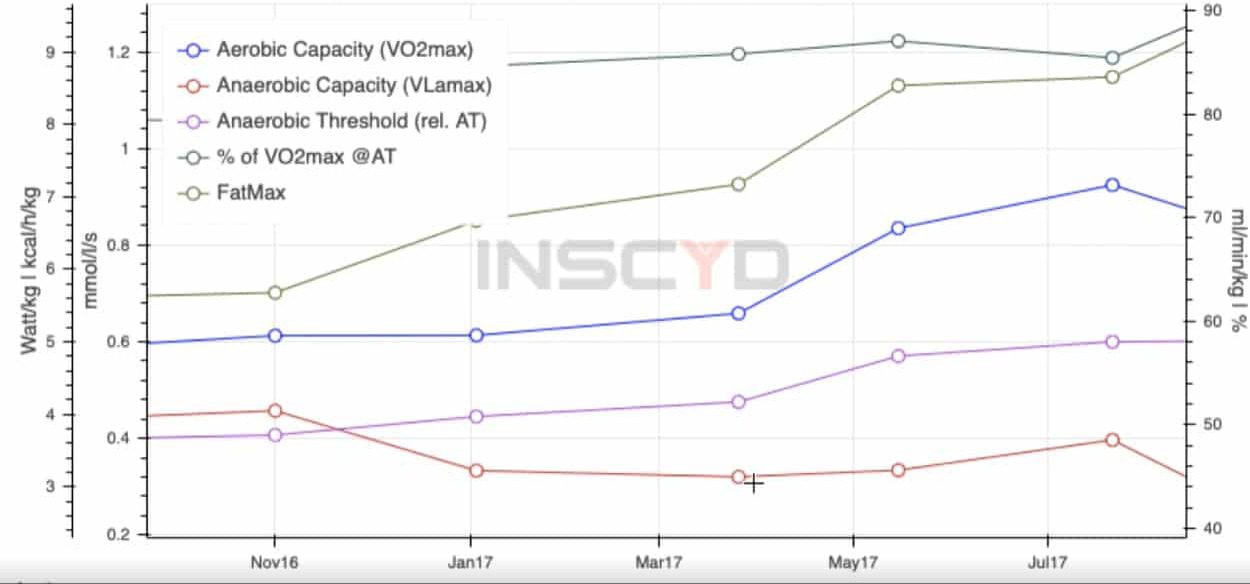
Stay motivated by tracking your progress over time, using the INSCYD performance tracking chart.
One of our INSCYD coach – Peter Pouly emphasizes:
“One common misconception is that performance testing is only beneficial for elite or professional athletes. I emphasize that performance testing is valuable for athletes of all levels as it provides objective data to guide training and track progress.
My decision to work with INSCYD was sparked by my preference for working with lactate tests. Over time, as we collected sufficient data, I realized that we could also obtain accurate numbers without the need for systematic lactate testing. Instead, we (also) use PPD tests.
This has revolutionized the way I monitor my athletes’ development. I can objectively measure their progress over time, track their physiological adaptations, and make informed adjustments to their training plans. This not only enhances their training effectiveness but also allows for early identification of potential performance plateaus or overtraining issues.”
Read the full interview with Peter Pouly here.
Some athletes respond better to several short HIIT workouts per week while others prefer enjoying long endurance training. Don’t just copy the training program of your training buddy and expect similar results.
Instead, aim to learn what works for you. Try a training strategy, stick to it for a couple of months, and test whether it results in the desired VO2max improvements. If not, quickly adapt.
We talked about some advanced techniques to take your VO2max to new heights. According to science, HIIT, interval training and endurance training are effective ways to increase VO2max. HIT training seems to be the most promising training strategy to boost VO2max, both in recreational and in professional athletes.
We showed that nutrition can also play a role in increasing VO2max, but mainly when you have deficits like iron deficiency. It’s not very likely that nutrition directly increases VO2max in healthy athletes.
The most important take home message is that if you want to understand what increases your VO2max, you need to monitor your VO2max improvements.
With INSCYD, coaches can offer lab-level testing to their athletes, no matter where they are. Our Power Performance Decoder (PPD) test provides a comprehensive metabolic performance profile, enabling them to design personalized training strategies. Using INSCYD’s performance projection feature they can predict how an athlete’s metabolic profile will change with specific training adaptations, and set realistic, achievable goals. And monitor athletes’ progress over time.
By integrating INSCYD into your services, you not only enhance your service offerings but also significantly improve your athletes’ performance. Open up new revenue streams and stay ahead of the curve in the competitive world of sports coaching and performance analysis. Don’t hesitate to Book a Free Call and ask any questions you may have about integrating INSCYD into your coaching.
Last but not least: if you avoid the common mistakes when trying to increase VO2max that we mentioned, and hit a plateau in your VO2max improvements, it’s time to look at the brother of VO2max: the maximum anaerobic power, or VLamax.
Coaches and Labs book a free demo with the INSCYD team and discover how you can supercharge your coaching business. Athletes, unlock your full potential with INSCYD. Gain insights into your metabolic performance and create personalized training programs. Find your INSCYD coach or lab.
HIT training vs Endurance training to improve VO2max
Milanović, Z., Sporiš, G., & Weston, M. (2015). Effectiveness of High-Intensity Interval Training (HIT) and Continuous Endurance Training for VO2max Improvements: A Systematic Review and Meta-Analysis of Controlled Trials. Sports medicine (Auckland, N.Z.), 45(10), 1469–1481.
Interval training increases VO2max more effectively than endurance training.
Helgerud, J., Høydal, K., Wang, E., Karlsen, T., Berg, P., Bjerkaas, M., Simonsen, T., Helgesen, C., Hjorth, N., Bach, R., & Hoff, J. (2007). Aerobic high-intensity intervals improve VO2max more than moderate training. Medicine and science in sports and exercise, 39(4), 665–671. [LINK]
Elite athletes improve VO2max with short intervals
Rønnestad, B. R., Hansen, J., Nygaard, H., & Lundby, C. (2020). Superior performance improvements in elite cyclists following short-interval vs effort-matched long-interval training. Scandinavian journal of medicine & science in sports, 30(5), 849–857. [LINK]
Beetroot does not increase VO2max
Perez, J. M., Dobson, J. L., Ryan, G. A., & Riggs, A. J. (2019). The Effects of Beetroot Juice on VO2max and Blood Pressure during Submaximal Exercise. International journal of exercise science, 12(2), 332–342. [LINK]
Caffeine increases VO2max test results
Stadheim, H. K., Stensrud, T., Brage, S., & Jensen, J. (2021). Caffeine Increases Exercise Performance, Maximal Oxygen Uptake, and Oxygen Deficit in Elite Male Endurance Athletes. Medicine and science in sports and exercise, 53(11), 2264–2273. [LINK]
Detraining alters VO2max faster than retraining
Godfrey, R.J. & Ingham, Steve & Pedlar, Charles & Whyte, Greg. (2005). The detraining and retraining of an elite rower: A case study. Journal of science and medicine in sport / Sports Medicine Australia. 8. 314-20. 10.1016/S1440-2440(05)80042-8. [LINK]
VO₂max, VLamax, FatMax, thresholds, fuel use and training zones, from a single test in the lab, in the field or fully remote.

