Whitepaper
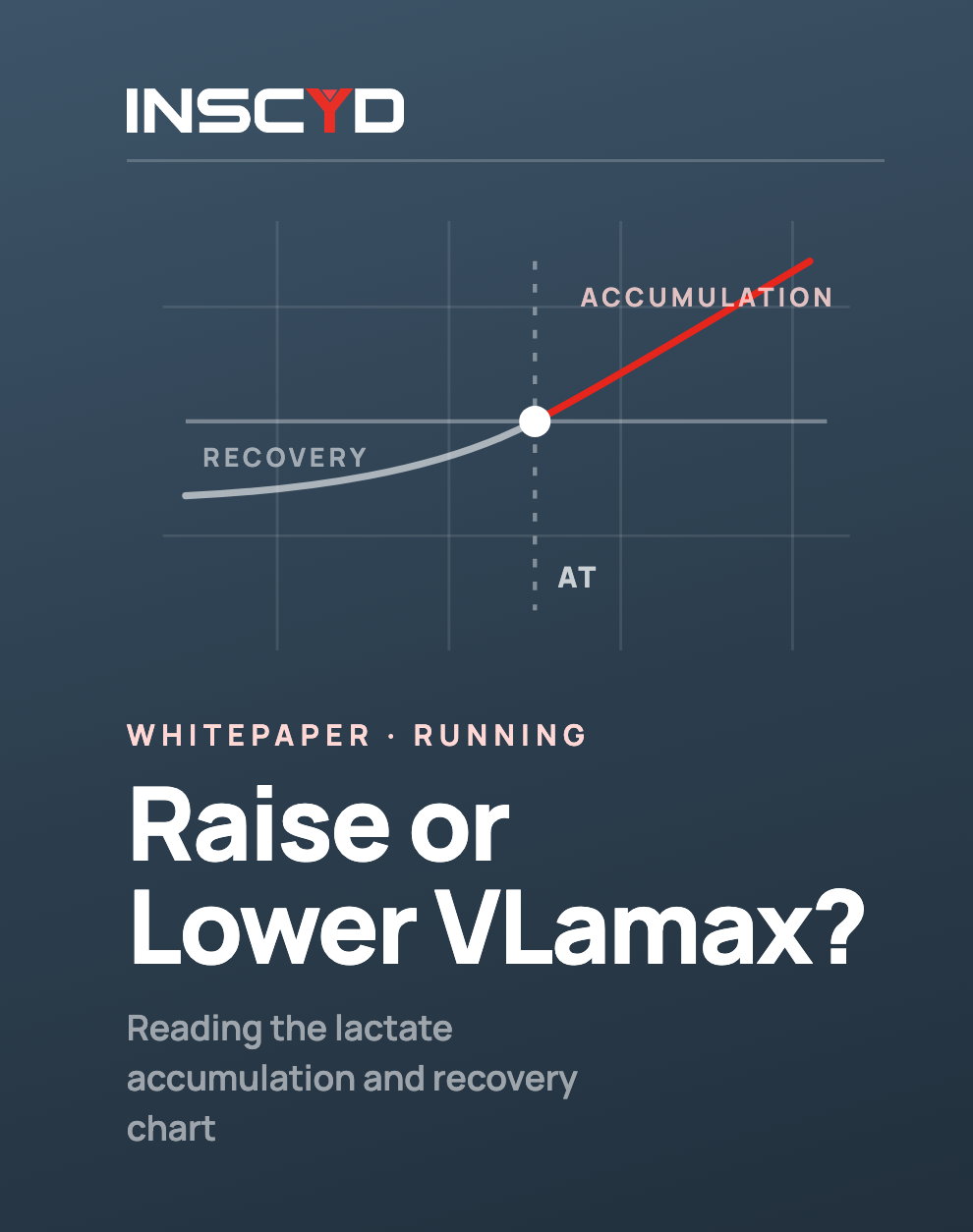
Lactate accumulation & recovery
How fast you accumulate lactate and how fast you clear it decides your interval training. The overview is below, the complete method is in the whitepaper.
How fast you accumulate lactate and how fast you clear it decides your interval training. The overview is below, the complete method is in the whitepaper.
Accumulation of lactate is associated with fatigue and time to exhaustion during hard exercise.
The time an athlete needs to recover from such an accumulation and the intensity he or she can handle during this are crucial for success in some sports like cycling and football.
Furthermore knowledge about accumulation and combustion of lactate allows a coach to create tailor made interval training programs to increase lactate shuttling, combustion and tolerance capacities of an athlete. In this whitepaper we will show you how.
There are many ways to use lactate accumulation and recovery to create highly individual interval training. Here’s an example.
TRAINING TIP: how to spent a large amount of time at high lactate levels, without blowing up.
Some pro’s call this their “new secret training strategy”.
Before you start your interval training, do a longer, less intense bout of exercise above anaerobic threshold. By doing so, you raise lactate levels inside the muscle.
As a result, you start the interval training with higher lactate levels (e.g. 10 mmol/l).
Then, perform an interval training that has a perfect balance between lactate accumulation and lactate recovery. In other words: an interval training that does not increase nor decrease lactate concentration over time.
Use the INSCYD Lactate & Recovery graph to do so. In the example image below you could for instance run:
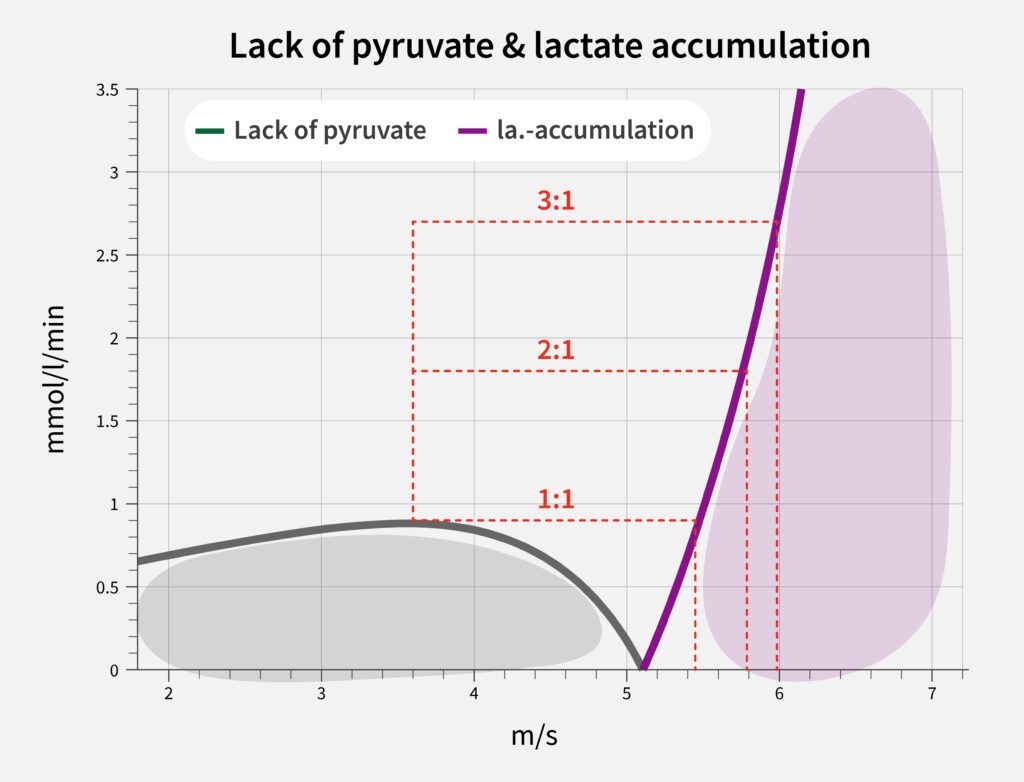
By doing so, athletes can train at a high lactate concentration, without blowing up. This does require knowledge about your lactate accumulation and recovery rate, to prevent underperforming or going too fast.
Learn more about the details, how-to steps and practical examples via our free whitepaper!
You can imagine that using the lactate accumulation & recovery data will not only help you in creating interval training, but can also be your guide in creating pacing strategies for time trials.
Download the whitepaper to fully understand the graph and create your TT pacing. Or schedule a demo and ask for our Time Trial pacing webinar.

Founder of INSCYD and creator of the first test to measure glycolytic power (VLamax) in 2003. His work in exercise physiology and metabolic profiling has helped WorldTour cyclists win 9 World Championship titles, Olympic medals, and Tour de France victories. Consults for German Swimming and Skiing Federations and USA Triathlon.
Fill the short form and the whitepaper lands in your inbox a minute later.
VO₂max, VLamax, FatMax, thresholds, fuel use and training zones, from a single test in the lab, in the field or fully remote.