In 2025, INSCYD focused on making physiological testing more accessible, scalable, and scientifically grounded, lowering barriers to entry while expanding the tools coaches and labs need to grow their business.
Before we move into 2026, we want to look back at 2025 and summarize the year in one place. Here’s our 2025 wrap-up.
In 2025, we focused on three things: access, scale, and confidence. That meant lowering the barrier to start testing, enabling assessments that can run at scale to grow your business 24/7, and strengthening the scientific + educational foundation—so the insights you deliver are practical, reliable, and easier to act on.
At a glance, 2025 was about helping you:
If your goal is to turn testing data into insights athletes value—and use that clarity to drive real performance gains and grow a stronger performance service—this wrap-up shows what’s now in place and what you can start using today.
Let’s begin.
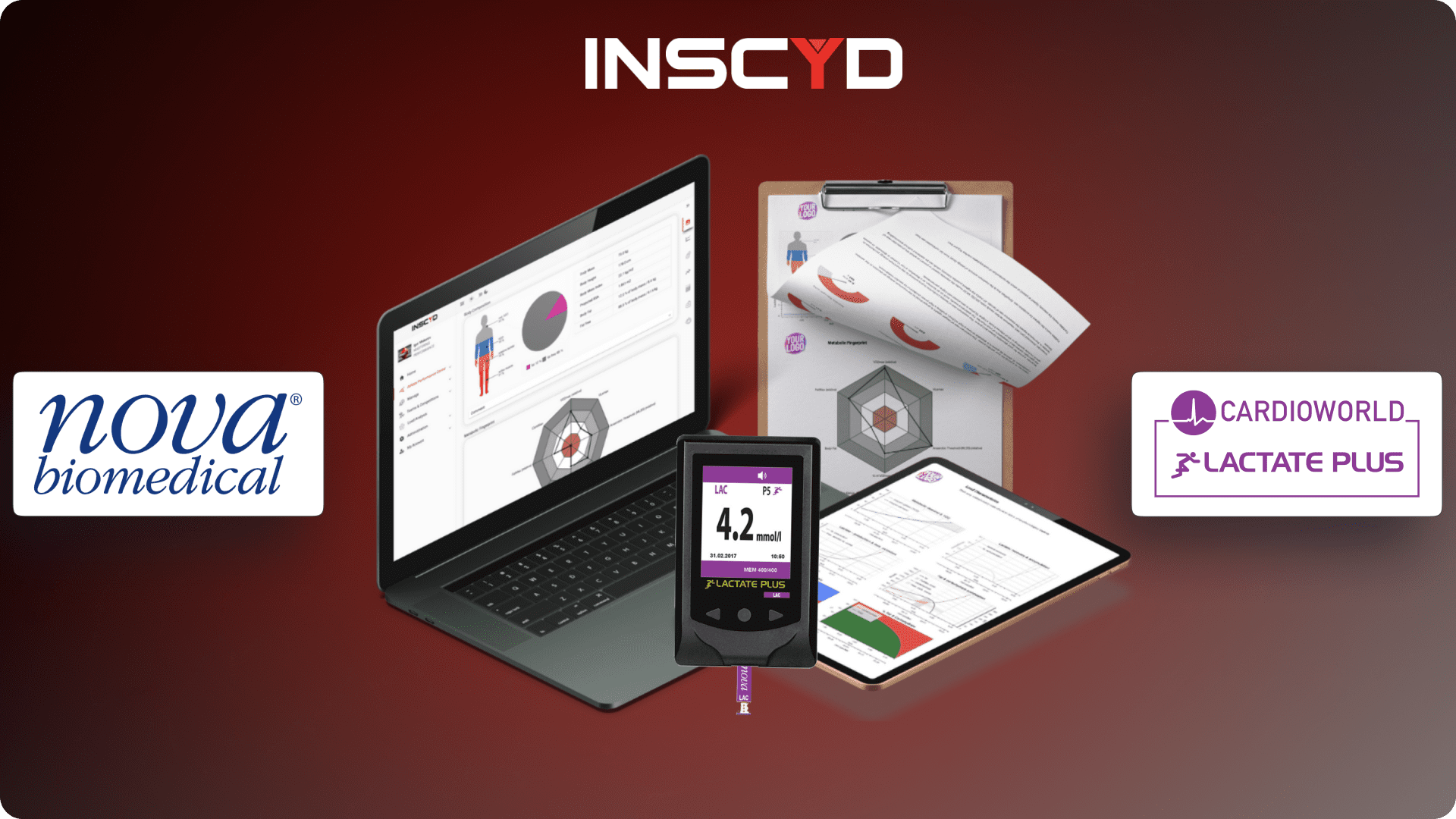
In 2025, we partnered with CARDIOWORLD (Europe) and NOVA (US) to make lactate testing easier and more profitable to run. By bringing the meter, consumables, and INSCYD software together in one place, coaches and labs can get started faster and run testing consistently.
NOVA is the direct manufacturer of the Nova Lactate Plus Meter, supplying athletes, coaches, and labs globally.
CARDIOWORLD is Europe’s exclusive importer of the Nova LACTATE PLUS analyzer and consumables, supporting athletes, coaches, and labs across Europe with fast access to lactate measurement technology.
What you can get:
Why this matters in practice
This partnership makes lactate testing easier to start and repeat—and more profitable to offer—by enabling coaches and labs to deliver a complete, lab-level performance assessment in INSCYD from a lactate test alone.
Want to benefit from the partnership? Book a free call with our performance team.
And learn more about what you can get just from lactate tests.
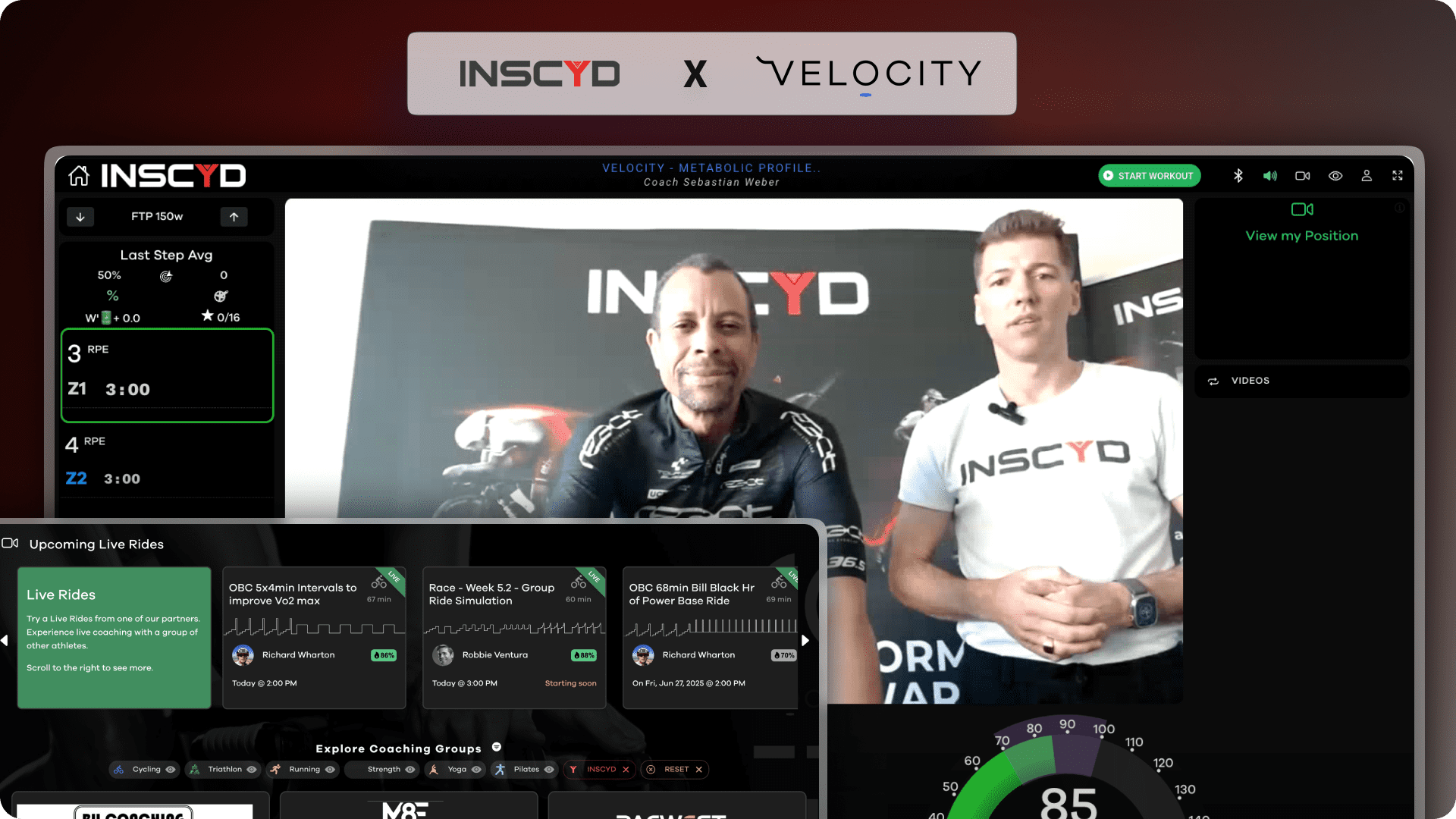
We launched the INSCYD × Velocity integration to help cycling and triathlon coaches and labs move metabolic testing from a time-intensive, manual workflow to a fully automated, on-demand service—without losing the scientific depth of INSCYD analysis.
Velocity is a coach-centric virtual training platform built around video-based, coach-led training, including live instruction and group formats.
What the integration unlocks:
Why this matters in practice
Coaches who are not INSCYD users yet and are interested in implementing the INSCYD x VQ Velocity integration can start by scheduling a free demo with us.
INSCYD users can visit our Help Center article here to implement the integration immediately (please ensure you’re logged in to access the article)
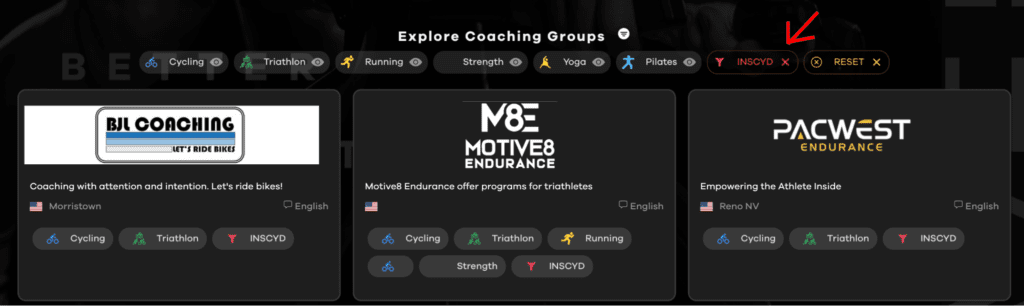
If you’re an athlete interested in INSCYD testing, head over to Velocity, create your account, and go to the marketplace to select the INSCYD coaching group (coaches who can provide you with a full INSCYD metabolic profile)
Five stops. Five sell-outs. In 2025, we ran our 4-Day Coaching & Testing Camps, and every date filled up in Park City, Leuven, Frankfurt, Girona, and Manchester—a clear signal that coaches and performance labs are looking for more hands-on testing practice and more practical application, not just theory.
This wasn’t a “sit and listen” format. The camp focused on testing athletes, applying test data to training, running lactate and VO₂ testing in practical environments, and learning how to interpret metabolic data for better training decisions—working directly with athletes, sharpening testing skills, and bringing the learning back into everyday coaching and lab practice.
What participants gained
The camp program included 10 sessions on core metabolism topics, 7 sessions on adaptation to training, 2 practical testing sessions (VO₂ + lactate sampling using COSMED K5), and 5 sessions on interpretation + application (zones, limiting factors, nutrition).
Because feedback was incredible in 2025, we’ll bring these camps back next year—with even more practical application. Stay tuned for the announcement.
We shipped a major update to our Power-Performance Decoder (PPD) testing technology—designed to make testing faster, more flexible, and more accurate, while adding built-in validation so you can trust results with less back-and-forth.
What PPD is: PPD is INSCYD’s remote performance test that turns power (cycling) or speed (running) into a structured physiological assessment—without requiring lactate sampling or measured VO₂ during the test.
With the update, running tests can also be executed using distance + time (and cycling with time + average power)—so you can run testing with a power meter, a GPS watch, or even a stopwatch when needed.
What’s new in PPD
Why this matters in practice
PPD is built to deliver a remote, lab-level style performance assessment from power or speed—so coaches and labs can assess athletes without requiring lactate sampling or VO₂ measurement during the test.
With new PPD, testing is shorter, more flexible (including manual inputs), and easier to validate with built-in accuracy checks.
Want to see what the workflow looks like and how the outputs show up in INSCYD? Book a demo.
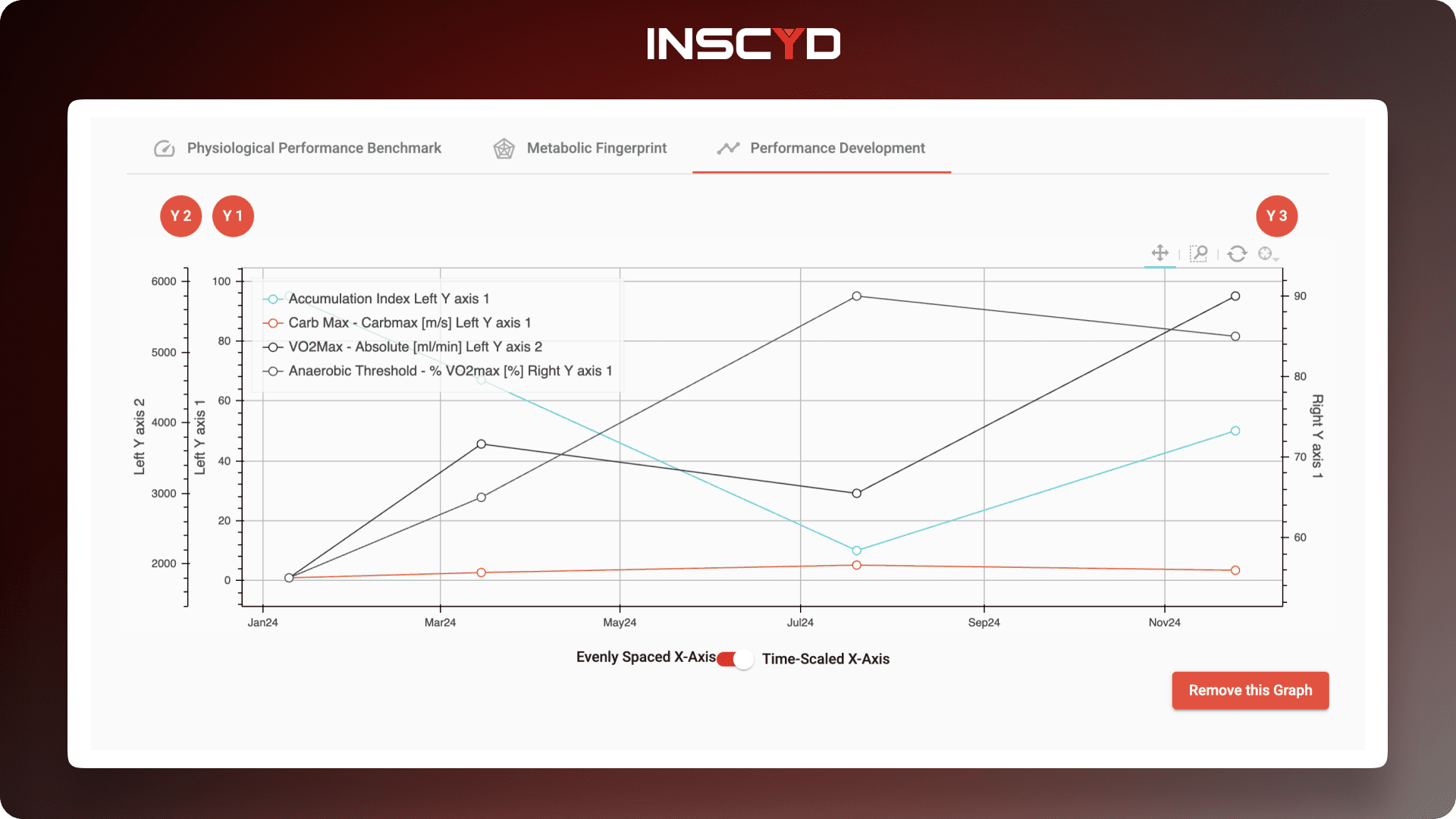
We updated the Performance Development Chart so you can fully customize how you visualize an athlete’s development—easy to compare, and built to communicate progress clearly to athletes and stakeholders.
Performance Development Chart let you track and present development across key performance and physiological metrics—so you can go beyond “single-number” tracking and tell a clearer story of how an athlete is progressing over time.
What’s new (and what it enables)
Why this matters in practice
Performance Development Chart help you turn physiological development into visuals that are personalized, explainable, and report-ready—so your athletes don’t just see “numbers,” they understand their progression.
Get a guided walkthrough of the Performance Development Chart and discover fully custom-branded reports.
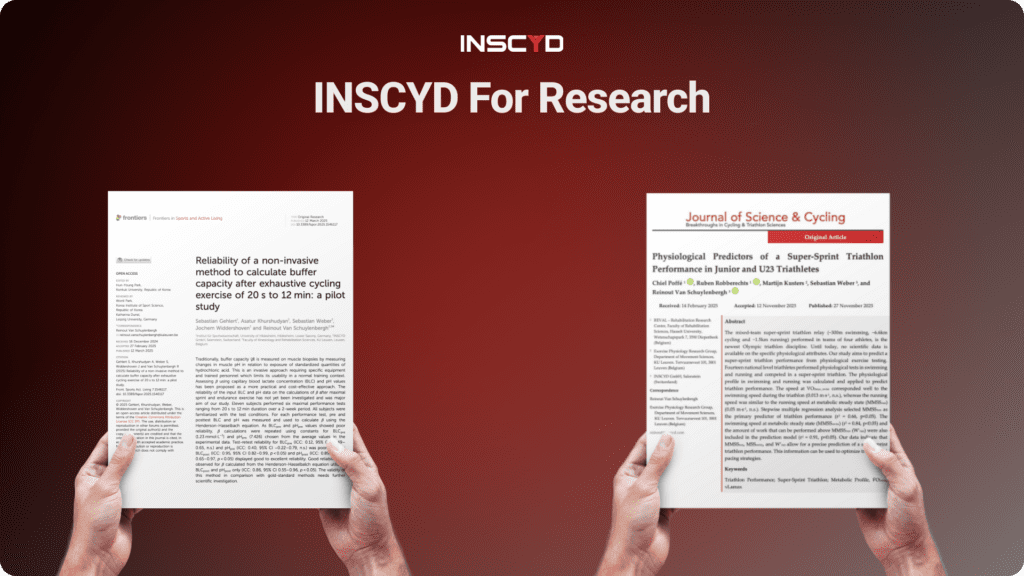
In 2025, INSCYD’s scientific rigor showed up in two tangible ways:
1. Buffer capacity: reliability of a non-invasive approach
Published in Frontiers in Sports and Active Living, this pilot study tested the reliability of estimating buffer capacity from capillary blood lactate and pH measured before/after exhaustive cycling. Post-exercise inputs showed good-to-excellent reliability, while pre-exercise inputs were poor, and the authors note validity vs gold-standard methods still needs further study
2.Super-sprint triathlon: physiological predictors in Junior & U23 athletes
The study built physiological profiles from swim/run testing and applied them to predict super-sprint triathlon performance, identifying metabolic steady-state markers as key predictors in their model. The metabolic profile calculations were performed using INSCYDю
Also we introduced INSCYD for Research—a dedicated way for universities, research groups, and scientific teams to request access to INSCYD for academic and applied studies.
It’s designed to make it easier to evaluate fit upfront by clearly outlining what researchers can expect: scientifically validated analytical software, transparent methodological documentation to support reproducible protocols, and support for integrating INSCYD into study design and data workflows (with optional scientific guidance).
What research teams can get:
“Our goal is to enable researchers to run high-quality, reproducible studies without barriers created by equipment constraints or methodological capacity.”
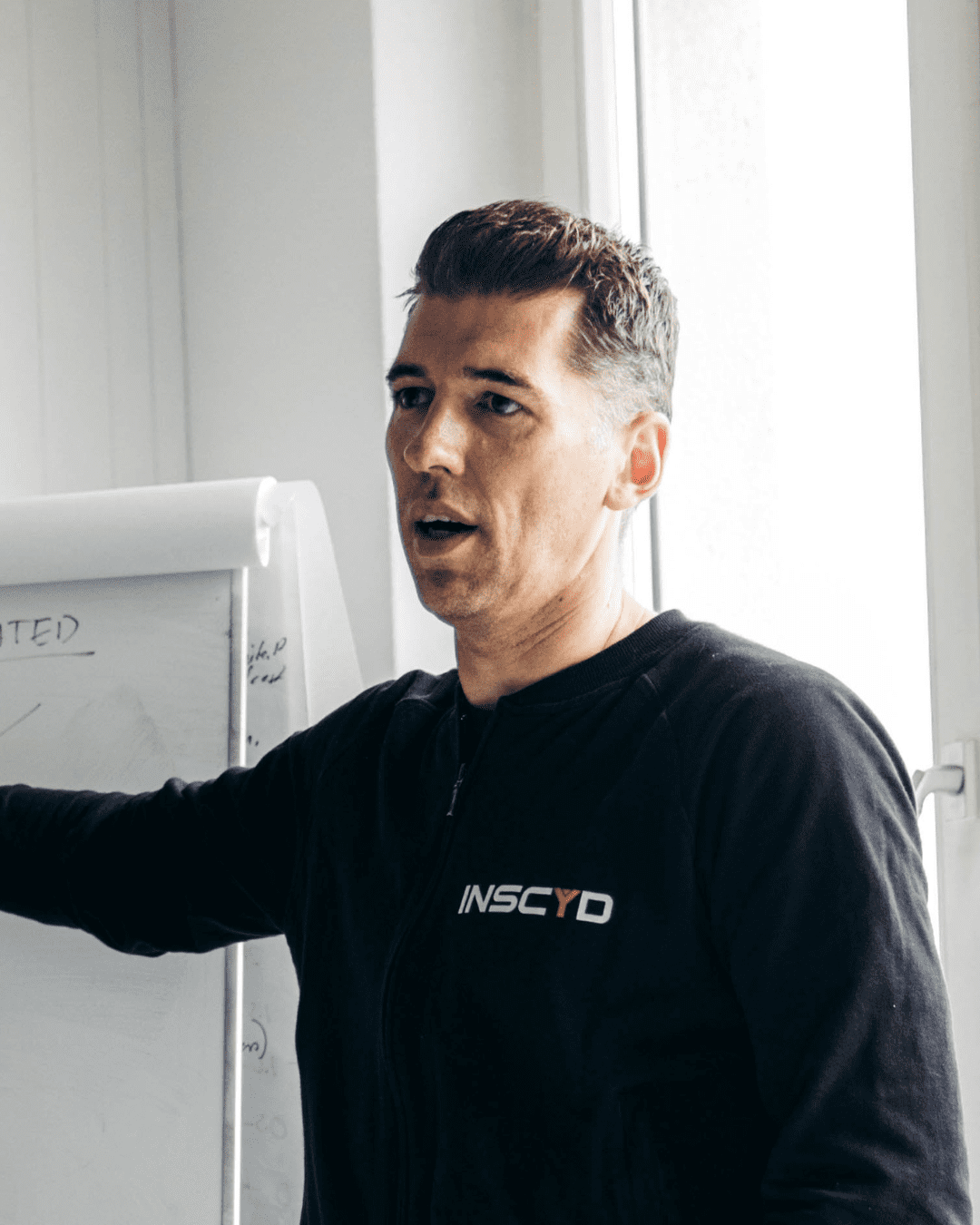
How collaboration works (high level):
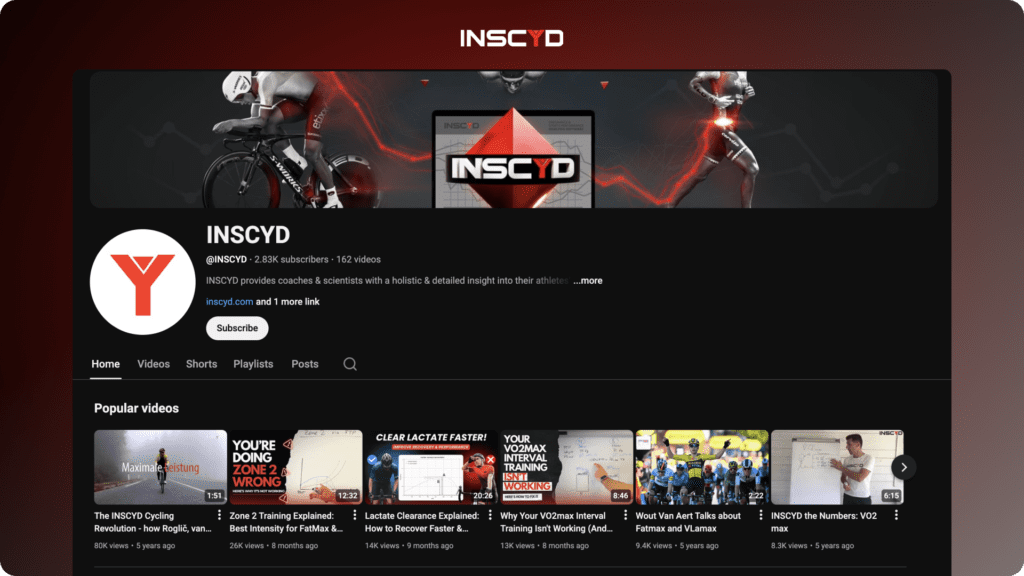
In 2025, we started publishing educational videos consistently on YouTube—and the response from the community has been a big part of why we’re continuing. Our goal was simple—make key performance concepts easier to learn in a format you can consume quickly, revisit when needed, and share with athletes or colleagues.
A big thank you to everyone who watched, liked, and especially commented. Your questions and feedback help us choose what to cover next and where we should go deeper. We’ll keep publishing regularly in 2026—and we’re already preparing a few special releases.
If you don’t want to miss them, subscribe to the channel.
Three of the most popular videos from 2025:
A practical breakdown of why “Zone 2 = X% of FTP” can miss the mark—and why dialing training to fat + carbohydrate combustion is what makes low-intensity work truly individual.
Why recovery isn’t just “easy” or “hard”: it’s duration + intensity—and lactate clearance helps inform both interval sessions and racing demands.
If you set VO2max intervals as a fixed % of threshold/FTP, different athletes can end up training at very different % of VO2max—so results stagnate even when the workout “looks right” on paper.
Subscribe to our YouTube to stay up to date with new videos (and what’s coming in 2026).
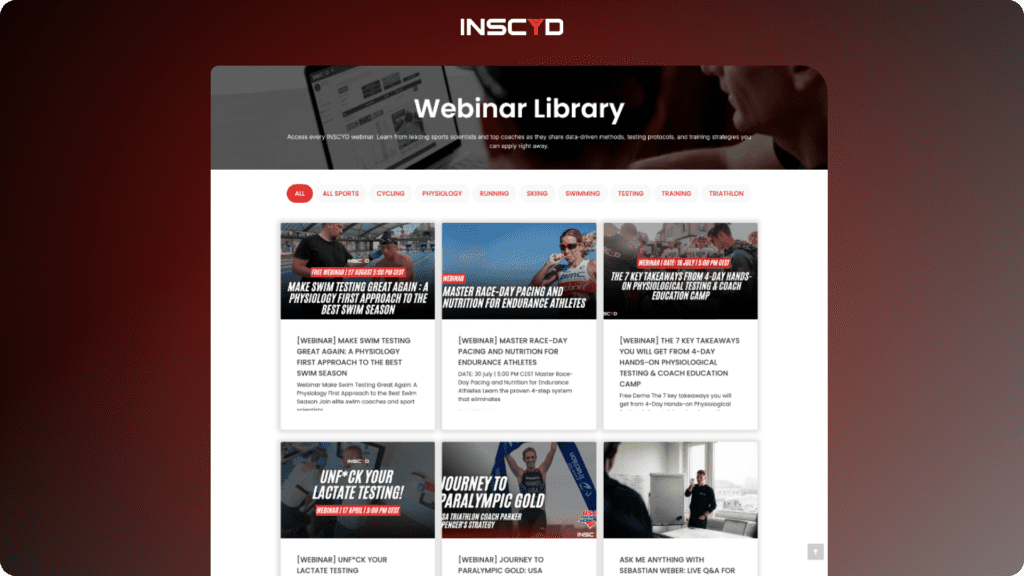
In 2025, we launched our Webinar Library—a dedicated place where you can explore our expert-led webinars and quickly find the sessions most relevant to you, including filters by sport (cycling, running, triathlon, skiing, and more).
What you’ll find inside
Top webinars in 2025:
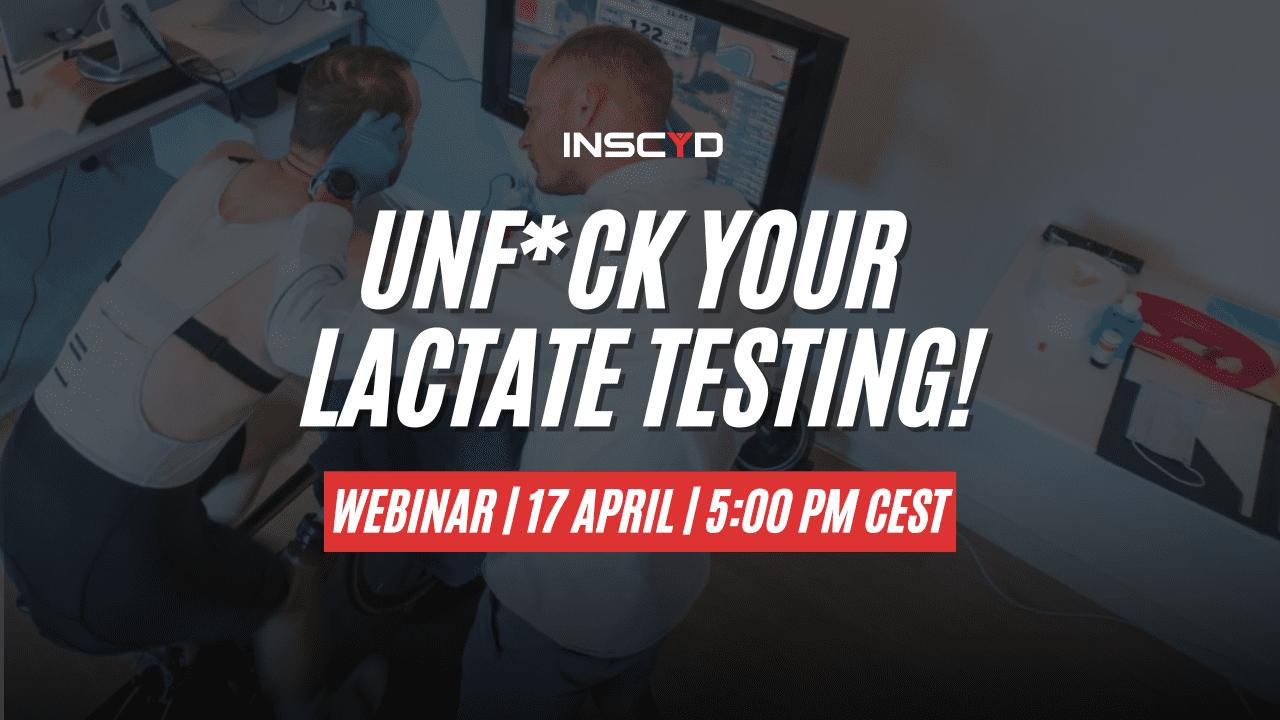
Built for coaches and labs who already test (or want to start), but feel their protocols or interpretation are “fuzzy.” It breaks down protocol choices, lactate dynamics, common blind spots (including body composition + meter accuracy), and how to extract more than “thresholds” from lactate testing.
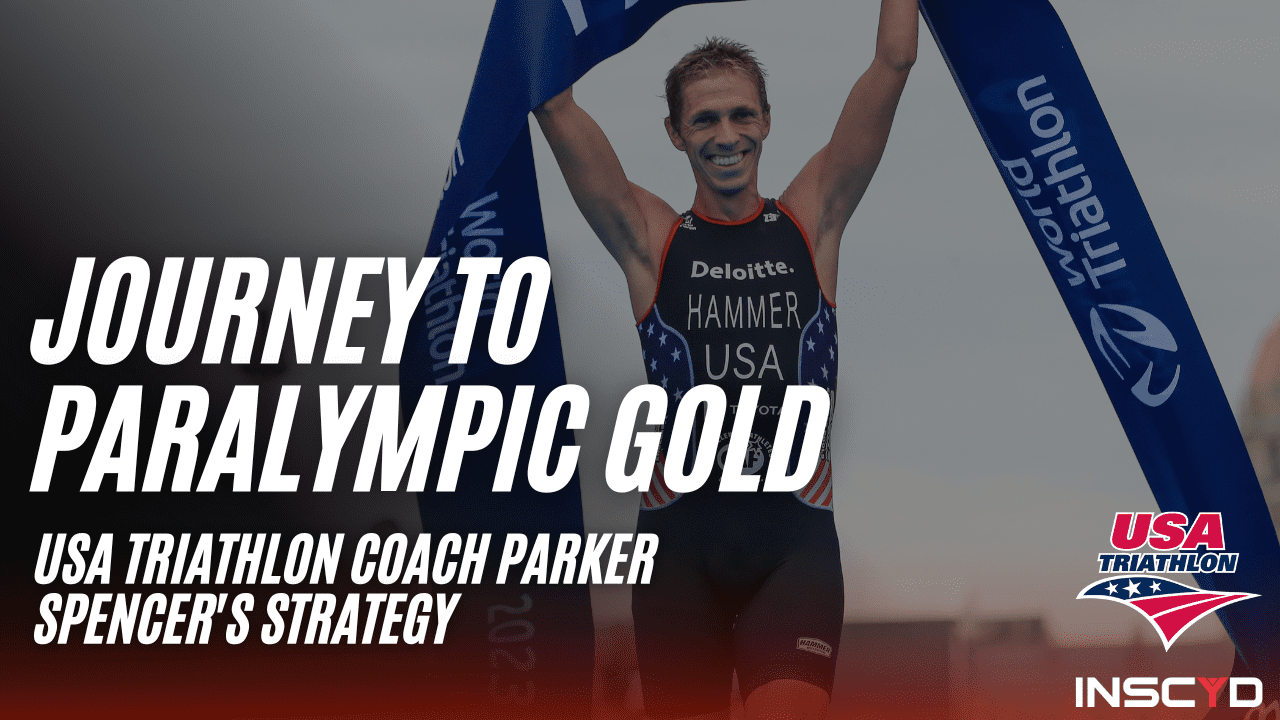
A case-based session featuring USA Triathlon coach Parker Spencer and Paralympic gold medalist Chris Hammer, covering how physiology and performance data informed decisions across swim, bike, and run—plus how metabolic profiling with INSCYD supported the training strategy.
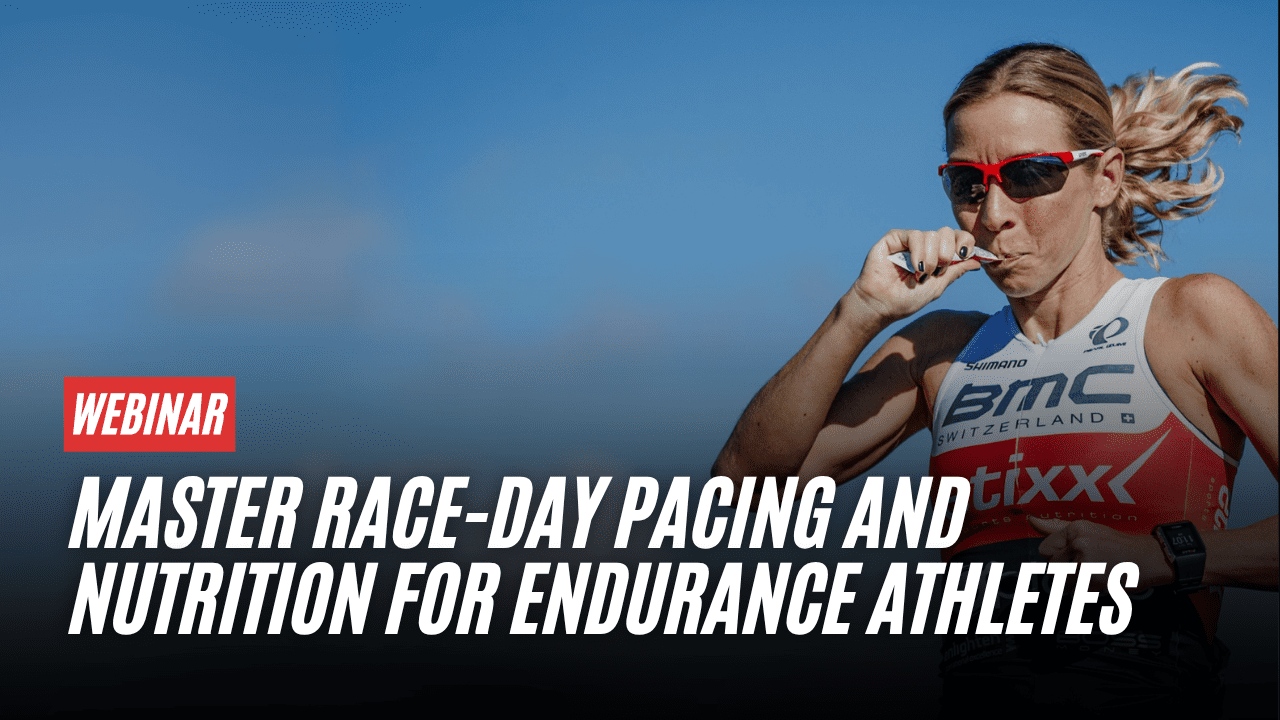
A practical methodology for building individualized pacing + fueling strategies using metabolic profiling—covering race-demand analysis, converting speed to power requirements, and calculating carbohydrate balance for long events. The webinar materials describe a prediction model with 99% accuracy in race time forecasting (as presented in the webinar).
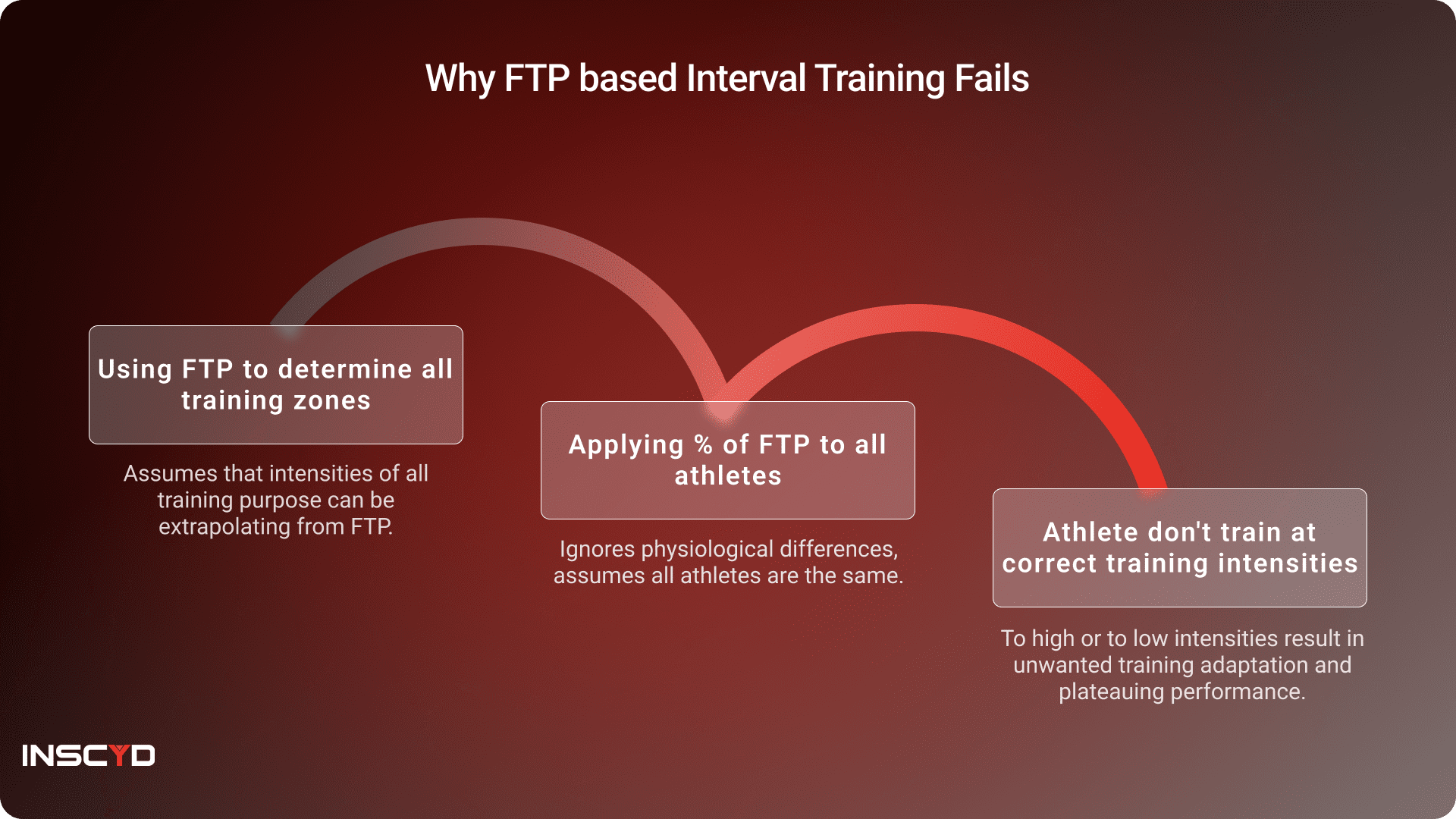
In 2025, some of our most-read educational posts focused on a core coaching problem: using one FTP number to prescribe multiple training goals—and why that often leads to mismatched intensities, stalled progress, and unclear adaptations.
The top topics coaches dug into:
Why “% of FTP = Zone 2” can break down across athlete profiles—and why two athletes with the same FTP can require very different Zone 2 intensities to get the same adaptation.
Why threshold intervals can plateau when “threshold” is treated as a single number—and how a physiology-first approach changes what you prescribe and why.
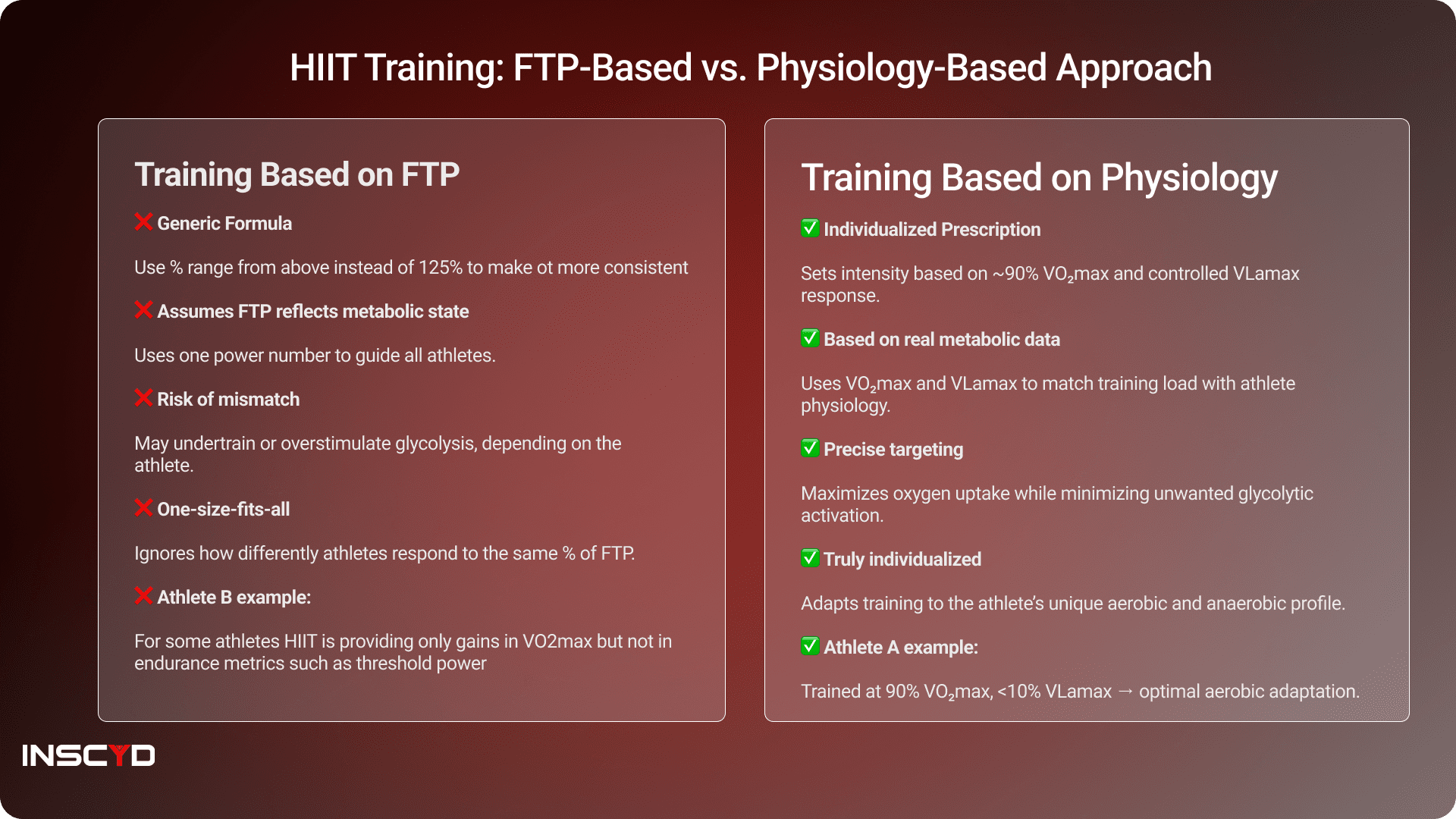
Why prescribing VO₂max/Zone 5 intervals as a fixed % of FTP often produces sub-par VO₂max training effects for some athletes—or unwanted glycolytic activation for others. The post walks through a practical example of two athletes with similar FTP but very different VO₂max/VLamax profiles, and argues for prescribing HIIT based on VO₂max engagement (~90%+) while keeping glycolytic contribution (VLamax utilization) under control.
2025 was about making physiological testing access, scale, and confidence—so you can deliver clearer insights to athletes and build a stronger performance service around them.
If you’re heading into 2026 with any of these goals, the building blocks are now in place:
If you want to see how this looks in your workflow, book a demo. We’ll walk you through the best starting point for your setup (lactate testing, PPD remote testing, or automation via Velocity), and show how INSCYD turns raw data into a full lab-level performance assessment + branded reports.
And if you want to stay close to what’s coming next, subscribe to our newsletter, follow us on YouTube, and keep an eye on new webinars—we’re continuing the education push in 2026.
Book a demo: turn testing into a scalable, client-ready performance service
See how INSCYD helps you move from raw test data to a complete physiological assessment—so you can start testing faster, deliver clearer insights, and grow a repeatable service across athletes.
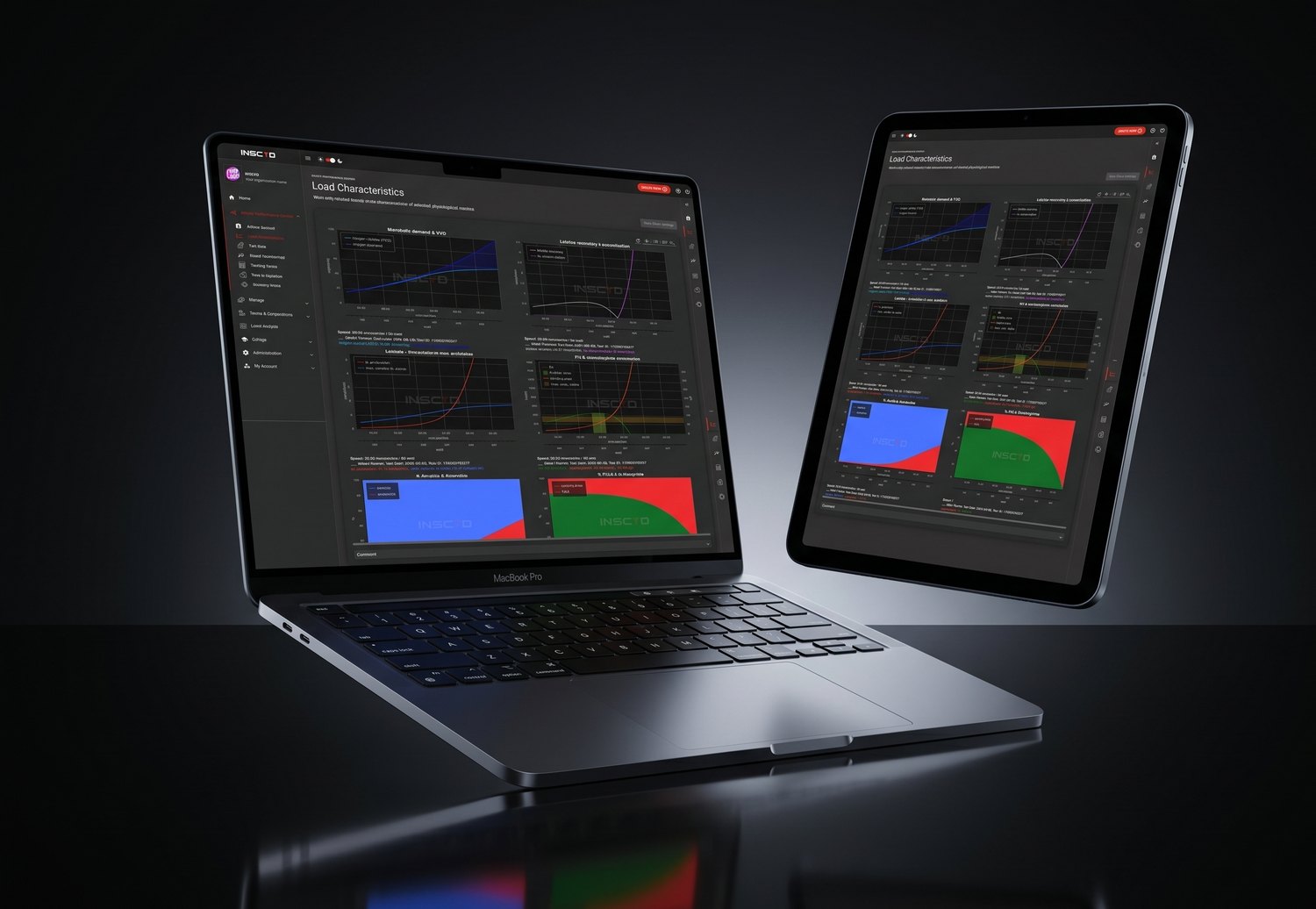
VO₂max, VLamax, FatMax, thresholds, fuel use and training zones, from a single test in the lab, in the field or fully remote.

