How often should you do an metabolic test? And maybe even more important: when should you do such a metabolic test? Read it in this blog or click here to start listening to the podcast!
In the Faster Podcast by FLO, Sebastian Weber talks about how often athletes should perform a metabolic test during the season. The short answer to this question is “approximately 4 times per year, but there is a smarter way of thinking about this”. That’s why we think it’s time to talk about 3 smart reasons when and how often to perform an metabolic test.
Once you have a goal, it’s time to find out what you need to improve to reach that goal. That’s exactly why you should start with performing a metabolic test.
The first test will tell you and your coach where you are right now. What is your VO2max and VLamax? How fast do you accumulate fatigue and how fast do you recover? At which intensity do you burn the most fat and how much carbohydrates do you utilize at higher intensities? How much of your energy is coming from aerobic vs. anaerobic sources? How much room for improvement is there, and how long does it take?
The first INSCYD metabolic test will answer all those questions and many more. A coach is now able to compare your current capabilities with the demands of your goal. He/she can now decide where you should work on.
The training program can start, once you and your coach decided what to work on. The goal of the training plan also determines when it makes sense to retest again. Let’s assume you want to increase VO2max. You can expect to see the first trend of improvement after approximately 6 weeks. That implies it does not make sense to do metabolic test after say 4 weeks already. Simply because chances are low to find significant changes.
The majority of the VO2max adaptation should be visible after 3-4 months of training. That sounds like a good moment to retest. However, if you retest after 4 months, you are being at risk of not seeing the desired effect of the training plan, unnecessarily late.
That’s why the truth is probably somewhere between those 6 weeks and 4 months: yes, you want to check if you are running into the right direction as early as possible (with 6 weeks maybe being a bit too early) and no you don’t want to wait too long (with 3 months being a bit too late). For VO2max, 8-10 weeks should be perfect.
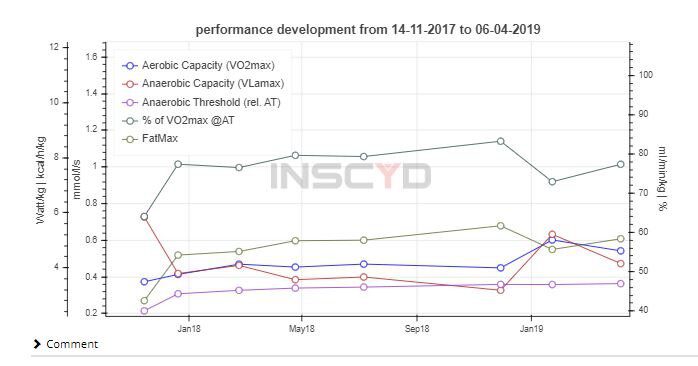
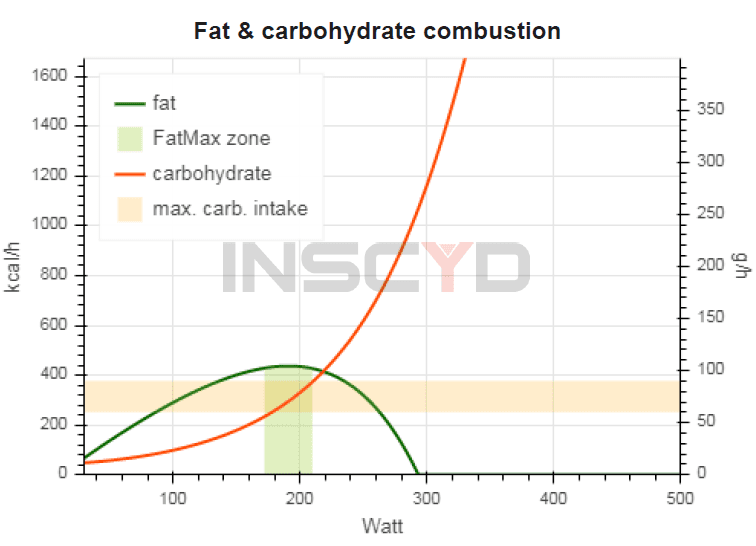
A third smart reason to do metabolic test is when your event is about to happen. Let’s take a triathlon, marathon or century ride for example. You invested a lot of time, effort and money to be in good shape. You don’t want to leave things at chance on race day. A sports performance physiology test prior to the event will now make sure you have a manual to tackle the day. For example:
The lactate accumulation- and recovery chart will tell you exactly how to pace yourself. This will prevent easy to avoid mistakes like going to fast in the beginning. Use the chart to manage your fatigue and race pace.
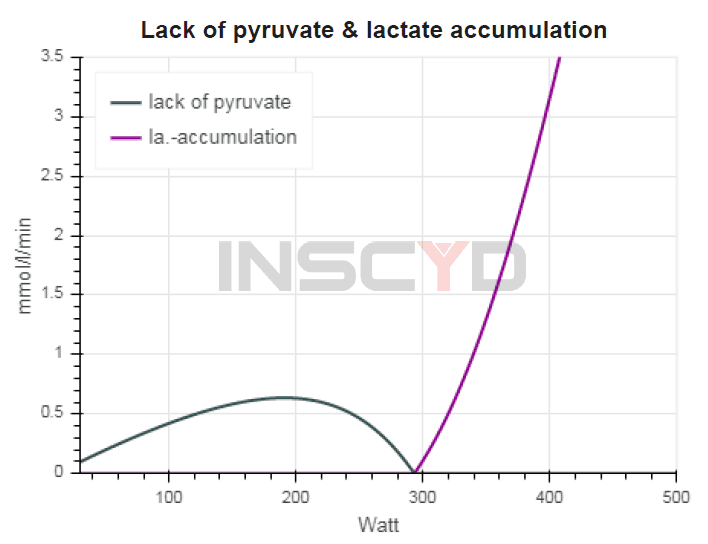
VO₂max, VLamax, FatMax, thresholds, fuel use and training zones, from a single test in the lab, in the field or fully remote.

