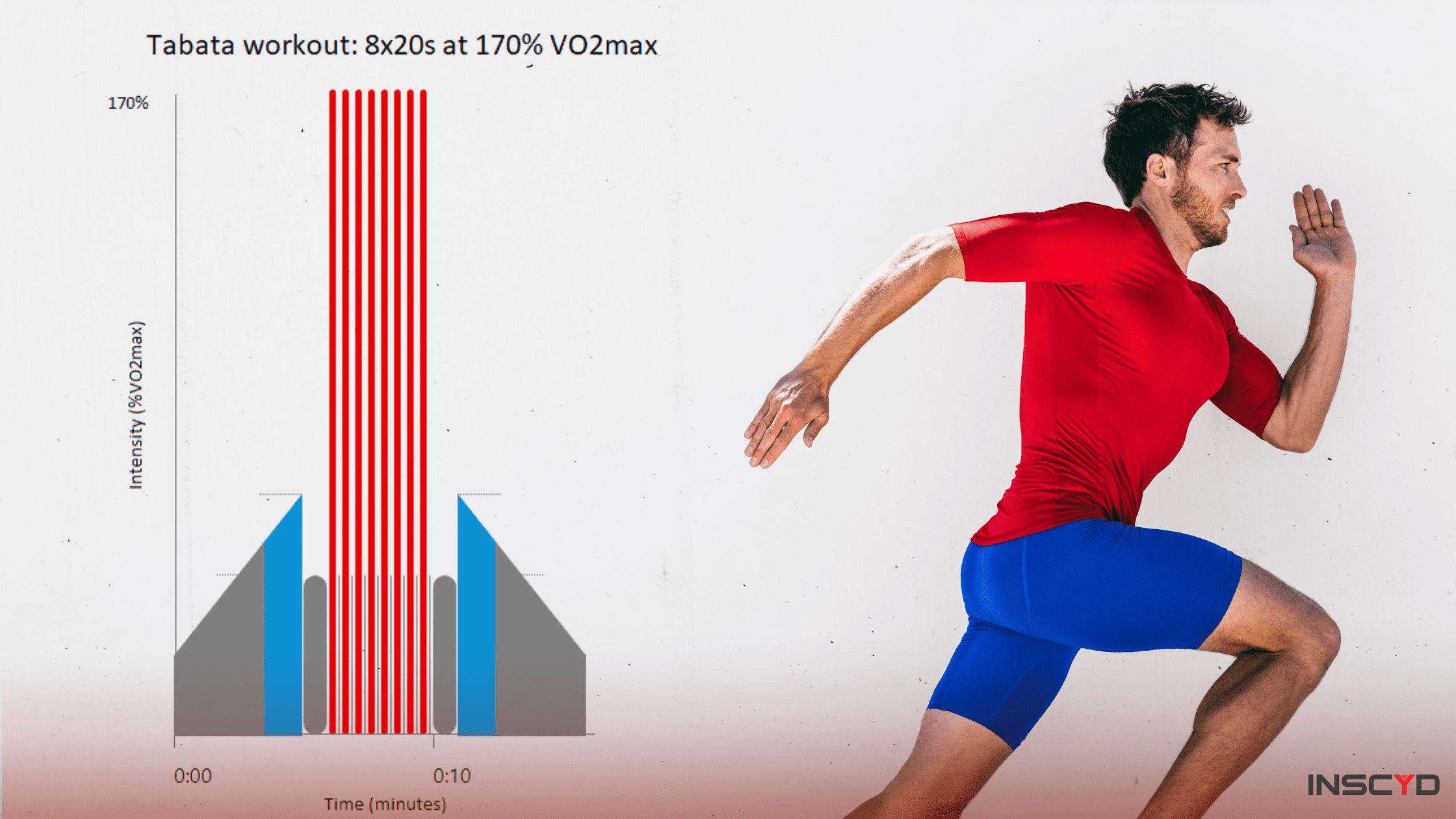
The original Tabata protocol (4 minutes, 8×20s on/10s off) increases both VO2max and anaerobic capacity, this guide explains the science, the correct intensity prescription, and how it compares to longer HIIT formats.
Tabata workouts, a type of high-intensity interval training (HIIT), are named after Dr. Izumi Tabata, who compared the effects of these intervals to moderate-intensity endurance training in a scientific publication (1996). The original Tabata workout only takes 4 minutes and boosts your VO2max and anaerobic capacity. Check out our in-depth guide on understanding and improving your VO2max. Now, let’s dive into everything you need to know about Tabata HIIT training.
Before we dive into the world of Tabata workouts, it’s worth noting that high-intensity interval training (HIIT) is a broad field with various training methods. For a comprehensive understanding of HIIT and its different forms, check out this blog post that guides you through the top 5 HIIT workouts for endurance athletes.
In this article
Dr. Tabata called tabata intervals workout a high-intensity intermittent training. Although this workout is implemented in all kinds of sports – from running to strength training – it was first performed on a cycling ergometer.
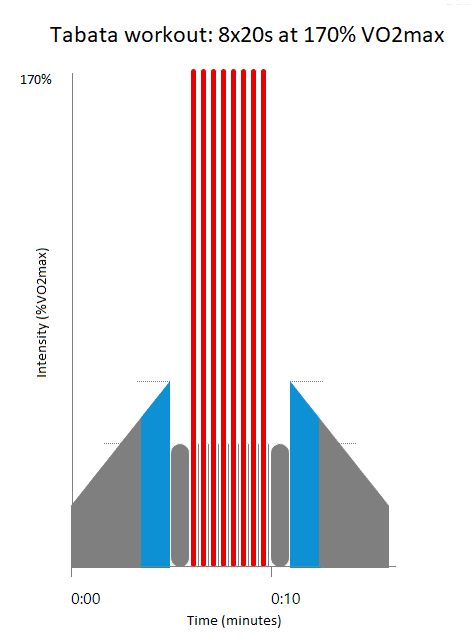
Here’s how the original Tabata workout looked like:
That’s it. Your Tabata HIIT session is done in less than 4 minutes (ex warm up and cool down).
For those interested in expanding their knowledge and exploring other effective interval training, we recommend our in-depth guide on How to Create Highly Effective Interval Training: 4 Steps. This comprehensive guide will provide you with a step-by-step process to tailor your interval training according to your goals.
Because some athletes want to train longer, coaches started to suggest multiple tabata sets with several minutes in between. Note that this is of course something you can consider doing, but different from the original protocol.
If you want to create a workout plan with multiple tabata sets, it’s important to make sure you recover fast between sets. Contrary to the 10 seconds rest between the intervals, you need to keep moving to recover between sets. With the INSCYD athletic performance software, it’s easy to learn at which exercise intensity you recover fastest.
The recovery and accumulation graph shows how fast you recover at low intensities (grey), and how fast you fatigue at high intensities (purple):
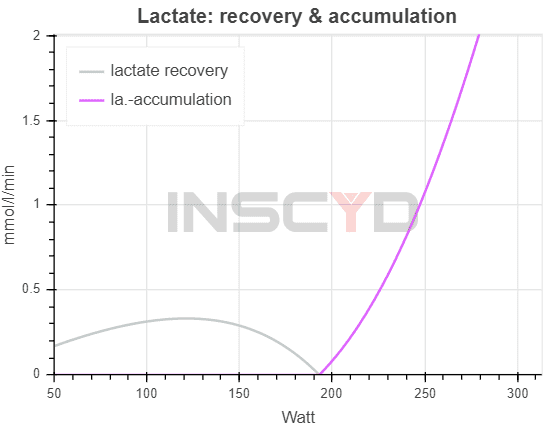
Note that there’s an optimum in exercise intensity when you want to recover. If your intensity is too high, you will not recover. However – as you intuitively understand – you also can’t lay down flat on the ground and expect that you will recover: you need to keep moving to recover in between sets.
Here’s what Toms Skujins who rides for UCI WorldTeam Trek–Segafredo say about lactate accumulation and recovery.
Learn more about Lactate accumulation & recovery, details, how-to steps and practical examples. Download our whitepaper!
Due to its short duration, Tabata training is embraced by time-crunched athletes.
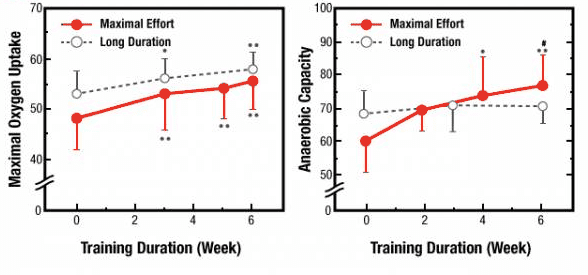
According to the original scientific Tabata research paper, the HIIT intervals were more effective than the moderate-intensity endurance training, which lasted 60 minutes per session instead of only 4 minutes.
Tabata intervals increased VO2max by 7 ml/kg/min and anaerobic capacity by 28%, after a 6 week training program with 5 sessions per week. The endurance training showed similar effects on VO2max, but no effect on anaerobic capacity.
Understanding the benefits of Tabata training on an athlete’s VO2max is one thing, but being able to measure VO2max can give you a more personal insight into athletes progress. You might be wondering how you can do this without a professional lab setup.
The good news is that there are methods available that allow you to calculate and measure VO2max outside a lab. These methods are explained in detail in our guide on how to calculate and measure VO2max outside a lab. This guide can be a valuable resource for you to track your athletes progress and see the impact of Tabata training on VO2max.
In addition to boosting your VO2max and anaerobic capacity, Tabata workouts offer a range of other benefits. They can improve your cardiovascular health, helping to reduce your risk of heart disease.
Do a performance test before and after this program to understand your progress. Many coaches and athletes use the INSCYD power performance decoder test for these kinds of progress tests, since it gives you all the information you need (from VO2max to Anaerobic power and beyond), but only requires a power meter in cycling or GPS watch in running. Here’s how:
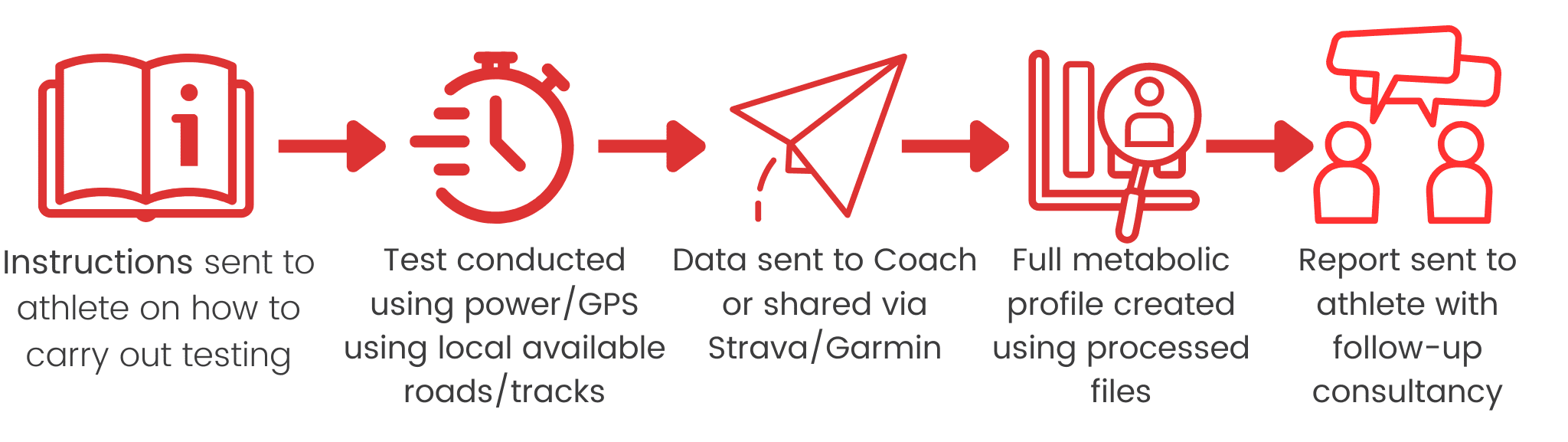
As a result, you get a a full 360 degree physiological performance profile of an athlete with lab level accuracy. The report includes all the INSCYD metrics like: body composition, metabolic capacities, load characteristics, metabolic fingerprint, performance development and training zones.
Want to see an INSCYD test report? Coaches, labs and working professionals can schedule a video call in which we can show you and explain to you the INSCYD metabolic report.
It is important to stick to a specific Power Performance Decoder test protocol. There are 2 protocols: one for cycling and one for running.
Download PPD cycling protocolDownload PPD running protocol
Whether Tabata workouts are beneficial for you depends on your current fitness and your goal. That’s why it’s important to first understand your so-called metabolic profile via a metabolic performance test. This test measures your current fitness in detail.
Once you have your metabolic profile metrics (like: VO2max, anaerobic power, fat combustion and carbohydrate combustion etc.), you can compare your profile to the physiological demands of your goal (e.g. cycling race, running marathon etc.).
This comparison will tell you exactly what to work on, and whether Tabata interval training is the way to reach your goal. Schedule a free 1:1 call to explore how our advanced metabolic performance testing can revolutionize your training and your athlete performance. Our experts will guide you through the process and help you unlock the full potential of your athletes.
We’ve already mentioned the most important findings of the first scientific paper from Tabata which was published in 1996:
However, Tabata workouts remain a topic of interest to this day. Also in science. In 2019 Dr. Izumi Tabata published a new scientific review paper about his Tabata training method:
This paper dives a bit deeper into misunderstandings that have arisen over the years. For example: the intervals in the original protocol are not all-out sprints, but constant load (170% VO2max) near all-out intervals. It also shares an update on the effects of Tabata training.
It goes beyond the scope of this article to cover it all, so let’s finish with answering some common Tabata questions.
For a deeper understanding of the science behind Tabata high-intensity interval training and other forms of HIIT, you might want to explore this comprehensive guide on the 5 HIIT workouts for endurance athletes. It’s a perfect resource to expand your knowledge and choose the training methods that suit your needs the best.
Ready to implement personalized Tabata intervals into your training routine? Coaches and labs can book a free 1:1 call with our experienced INSCYD team to discuss how our advanced training methodologies and performance analysis can help you optimize your training and achieve your athletes’ goals.

VO₂max, VLamax, FatMax, thresholds, fuel use and training zones, from a single test in the lab, in the field or fully remote.

