
The recovery index quantifies how fast an athlete clears lactate below anaerobic threshold, enabling coaches to calculate work-to-rest ratios, predict repeated high-intensity capacity, and design smarter interval sessions.
In endurance training and competition— efforts can oscillate between high-intensity surges and low-intensity steady paces—an athlete’s ability to recover is a defining factor of repeated, high-quality performance. Whether you coach elite cyclists seeking to outlast the peloton in repeated breakaways or you lead a running club preparing for intervals, an informed approach to recovery during exercise can distinguish the winners.
That’s precisely where the Recovery Index comes in. Grounded in well-established exercise physiology and validated through real-world observations in sports science, the Recovery Index is a powerful metric that quantifies how quickly, and at what intensity, an athlete can clear lactate and return to an optimal performance state.
Watch this short video for an overview of how lactate clearance works and why it matters in training and competition.
This article provides a deep dive into what the Recovery Index is, why it matters in today’s coaching and performance environments, and how you can integrate it into everyday training and testing. By the end of this article, you’ll have both a solid understanding of the Recovery Index and a practical toolkit for real-world application.
Over the last few decades, the science of endurance performance has primarily focused on metrics like maximal oxygen uptake (VO2max), lactate threshold (LT), and maximum lactate steady state (MLSS). These measures have undoubtedly propelled many athletes to new heights. However, in interval training but especially in competitions that require repeated surges or short bursts of high power—think road cycling, olympic triathlon, and team sports—there’s another crucial piece to the puzzle: how quickly an athlete can bounce back from a high-intensity effort.
Success in endurance sport events no longer hinges solely on the capacity to maintain a pace; it also depends on repeating that pace (or short intervals of high power) multiple times with minimal degradation. In a road cycling race, for instance, you might see repeated attacks. After each attack, successful cyclists recover quickly to be able to initiate or cover the next move. Athletes with this metabolic agility perform better as the race or match goes on, because a fast clearance of lactate goes hand in hand with clearing hydrogen ions and therefore get rid of acidosis, the fast phase of replenishment of creatine phosphate, and readiness for the next surge.
Recent developments in applied exercise physiology further emphasize that having a standardized measure of an athlete’s ability to recover from lactate accumulation clarifies training decisions and helps coaches isolate which physiological levers to pull.
That’s where the Recovery Index emerges as a unifying measure, showing how fast and at what intensity recovery occurs—factors essential to real-world performance. The Recovery Index is normalized in such a way that you can compare across body weights, genders and even across sports, eliminating guesswork around the confounding effects of efficiency or technique.
Many sports, especially ones with intermittent load patterns—soccer, basketball, or cycling—athletes need to shift repeatedly between lactate-producing efforts and rapid lactate clearance. Traditional threshold metrics help identify sustainable intensities but do not, by themselves, quantify how quickly and effectively an athlete removes lactate after exercising above threshold.
Coaches, sports scientists, and labs often piece together a partial view by analyzing:
These partial solutions tend to lack the standardization to compare across individuals.
Additionally, focusing on the net drop in blood lactate concentration while at rest after an effort misses out on the all-important dimension of the intensity at which the best clearance occurs. Recovery from lactate after an effort at a recovery of zero load is simply not relevant in competition. Indeed, an athlete who recovers quickly only at extremely low intensities is far less prepared for real-world demands than an athlete who recovers almost as quickly but can maintain a midrange intensity while doing so.
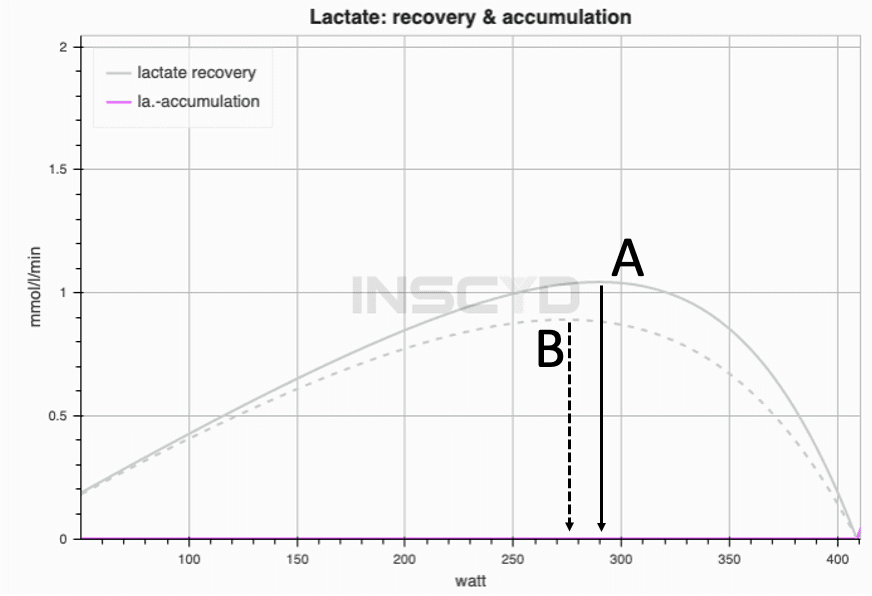
Hence, the gap: a single, sports-agnostic metric that captures both the maximum clearance rate and the work intensity (normalized for body weight) at which clearance is highest. The Recovery Index meets this need.
The Recovery Index is a single, standardized metric that captures both the speed of lactate clearance and the intensity at which clearance is maximized. It eliminates confounding factors like running economy or cycling efficiency, making it possible to compare athletes across different sports.
Watch the short video below for an overview of how the Recovery Index works.
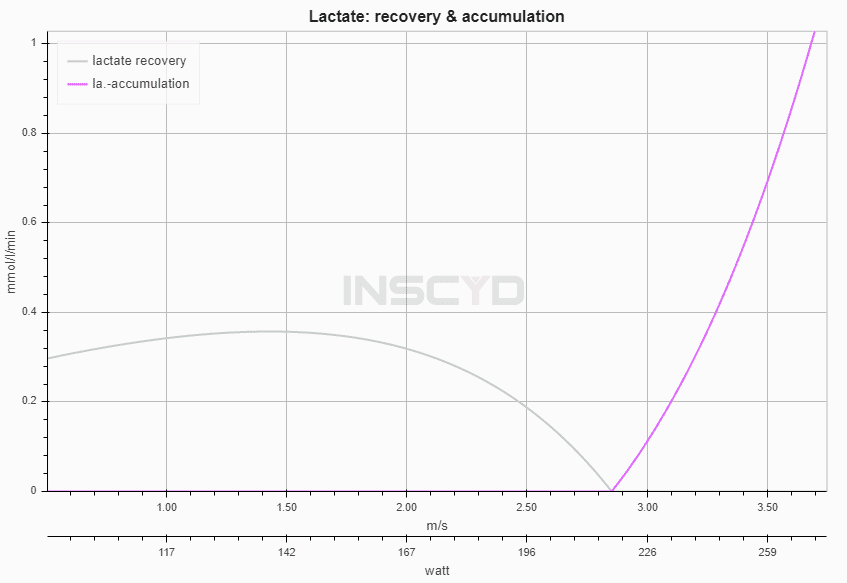
When athletes engage in high-intensity exercise, their reliance on glycolysis: the breakdown of glucose or glycogen to lactate, whilst producing energy, ramps up. Under lower-intensity conditions, the rate of lactate appearance in the blood (coming from muscle) is balanced by the rate of lactate combustion, which is governed by aerobic oxidation primarily in active working muscle but also to lesser extent in other tissues.
Key confirmations from the Literature
Recovery in this context refers to the process by which the body returns to a state where it can generate new surges of power or speed. Clearing lactate is a marker of reversing the associated acidosis as lactate shuttling and clearance is proportional to the clearance of hydrogen ions which cause acidosis. It further links to several other factors of recovery:
The Recovery Index captures and combines two critical data points on the lactate recovery curve:
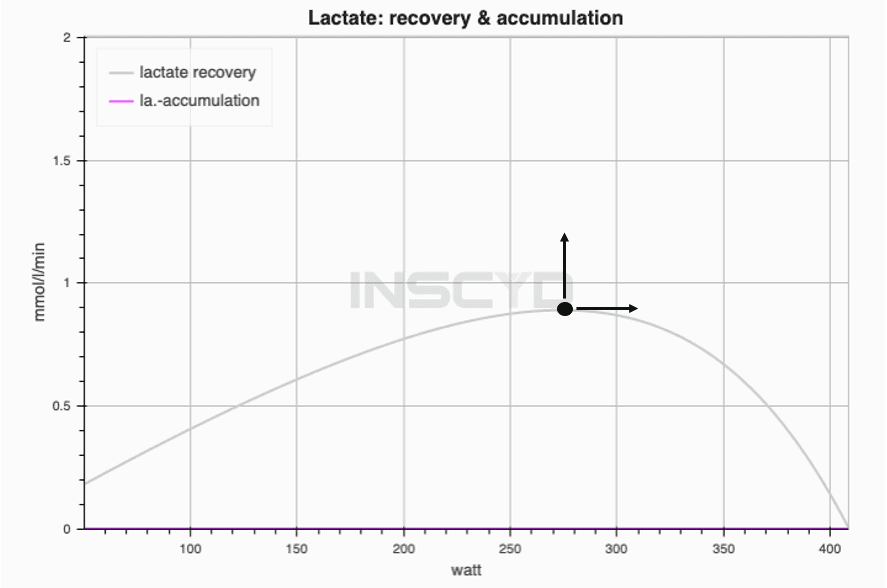
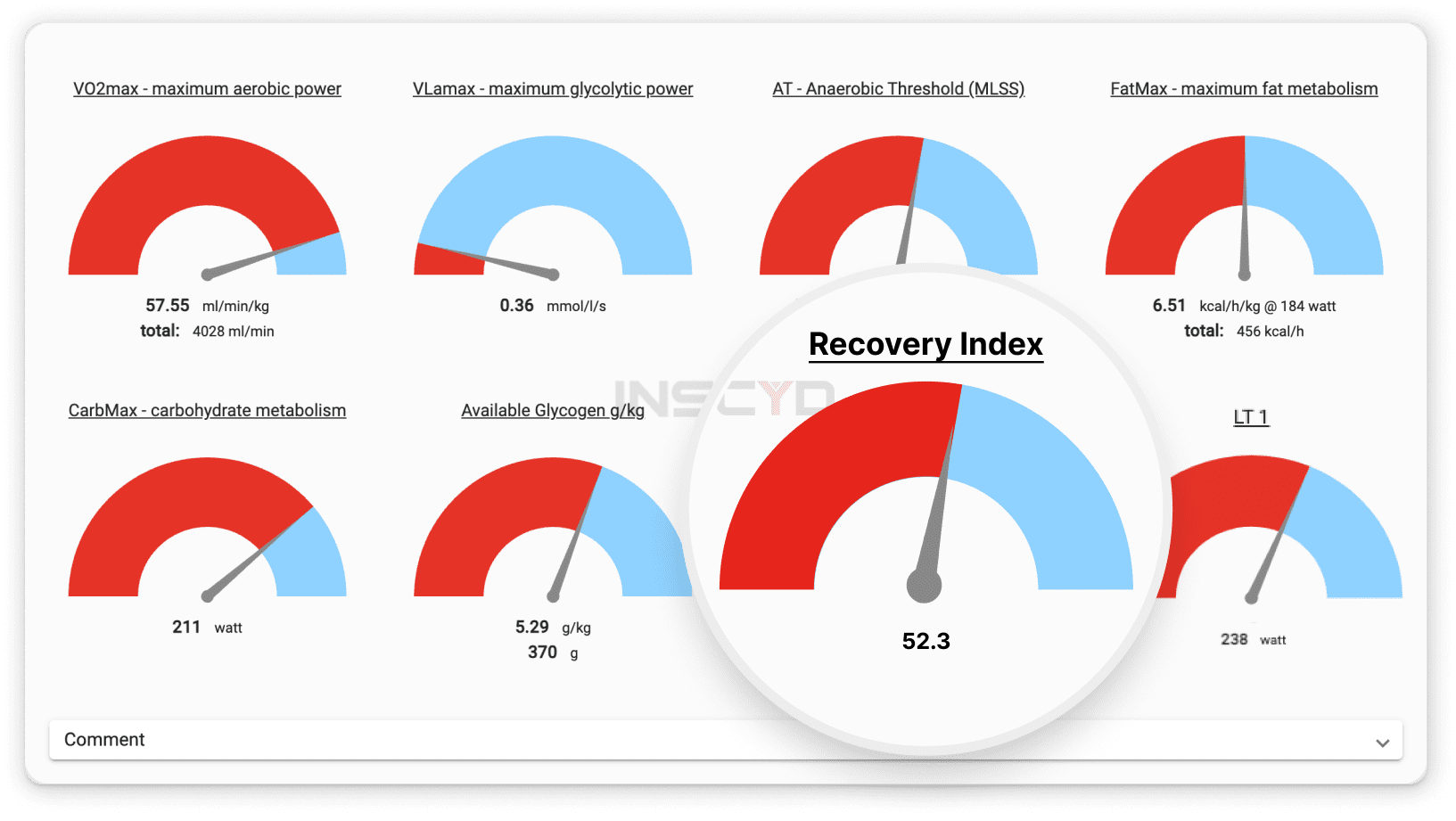
Because it includes the intensity dimension, the Recovery Index is said to reflect, more holistically, an athlete’s metabolic capability: not only do we see how fast lactate can be combusted, but also we see whether the maximum clearance rate occurs at a relevant power or speed. The final numeric value is normalized on a 0–100 scale, making it straightforward to interpret:
1. Holistic Performance Insight
Athletes in many sports do not simply hold one steady threshold-based pace. Instead, they must perform repeated intervals or surges. The Recovery Index is a metric which effectively monitors how this crucial skill develops by training and compares to other athletes.
2. Sensitive to Small Improvements
Because the Recovery Index includes both the clearance rate and the intensity at which this clearance rate can be observed, it can detect subtle changes—often even smaller differences than can be found in MLSS or VO2max. That helps coaches and labs pick up on incremental gains, verifying whether a training block is working, even before conventional threshold changes are detected.
3. Comparable Across Sports
Recovery Index is independent of sport and even of the sports-specific economy (e.g., running vs. swimming economy). This means that a triathlete’s cycling recovery can be compared to their running recovery using the same scale, or a cross-country skier’s results can be compared to a soccer player’s in relative terms.
4. Targeted Training Interventions
Seeing a higher Recovery Index means not only can the athlete clear lactate quickly, but they can also do so while still working at a moderate or moderately high intensity. This opens the door to monitor the progress induced by specialized training to shift either that apex to higher intensities or further increase the absolute clearance rate, depending on the athlete’s sporting demands.
5. Guiding Star for Program Progression
Many of the adjustments in body composition, VO2max, and VLamax are also reflected in the Recovery Index, either as a direct improvement in the apex or the ability to sustain a higher intensity. Thus, coaches can monitor a single metric—the Recovery Index—to see if the athlete’s profile is shifting in the desired direction.
A crucial step that sets the Recovery Index apart is factoring out differences in economy (e.g., running vs. cycling) or body size. Two athletes at the same absolute power may not be equally good at clearing lactate if, for instance, one weighs 75 kg and the other 55 kg, or if one is an exceptionally efficient runner. Because the Recovery Index is anchored to the internal measure of metabolic energy expenditure, the final reading—0 to 100—becomes comparable across a range of body types, speeds, or equipment.
Finally, the Recovery Index produces a single number from 0 to 100:
Unlike a single threshold test, the Recovery Index can reveal the synergetic effect caused by interconnected subtle changes in one or more key metabolic markers:
All can manifest in a better or higher apex. By combining these physiological changes, the athlete reaps not just a higher threshold but also an improved capacity for repeated high-intensity efforts—a fundamental competitive advantage.
5. Ongoing Assessment: Revisit the Recovery Index over time to ensure that targeted interventions—whether they’re high-intensity intervals, aerobic base training, or changes in nutrition—are pushing lactate recovery capabilities in the desired direction.
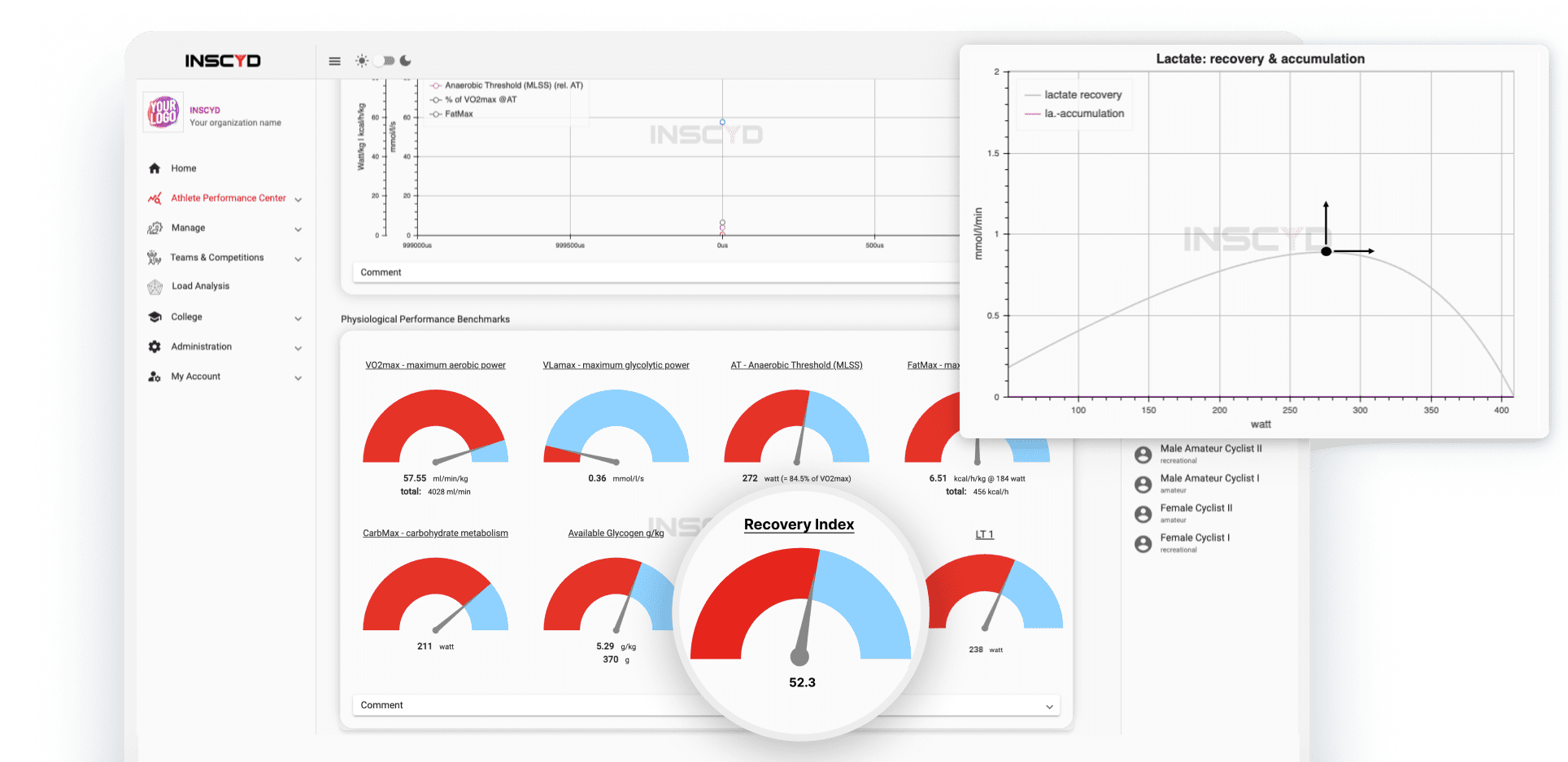
Whether you coach professional athletes, conduct lab tests or manage a local triathlon club, the Recovery Index is a robust next step for bridging the gap between conventional threshold metrics and real-world demands of repeated, high-intensity performance.
It’s a single standardized measure that unites rate-of-combustion with intensity-of-work. That unique combination yields enormous clarity: you’ll see not just how well an athlete recovers from one hard effort but whether they can do so at a meaningful power or speed.
In a training landscape flooded with analytics, the Recovery Index stands out. It captures essential physiological insights about repeated efforts—insights that are often overlooked when focusing exclusively on threshold or VO2max. By integrating this metric, coaches, athletes, and human performance labs can unlock an extra edge in everything from short-burst intervals on the soccer pitch to full-throttle climbs in a mountainous road race.
Ready to begin? If you’re not yet using INSCYD, book a free demo to take the first step toward integrating the Recovery Index into your performance testing and coaching.
If you’re already an INSCYD user, you can try the Recovery Index for free.
And if you’re an athlete, find an INSCYD-certified coach or lab to get your Recovery Index.
Recovery Index quantifies both the speed of clearance and the exercise intensity at which it occurs, giving you a single, standardized score to measure to track and compare athletes’ ability to recover – across sports, athletes and training periods.
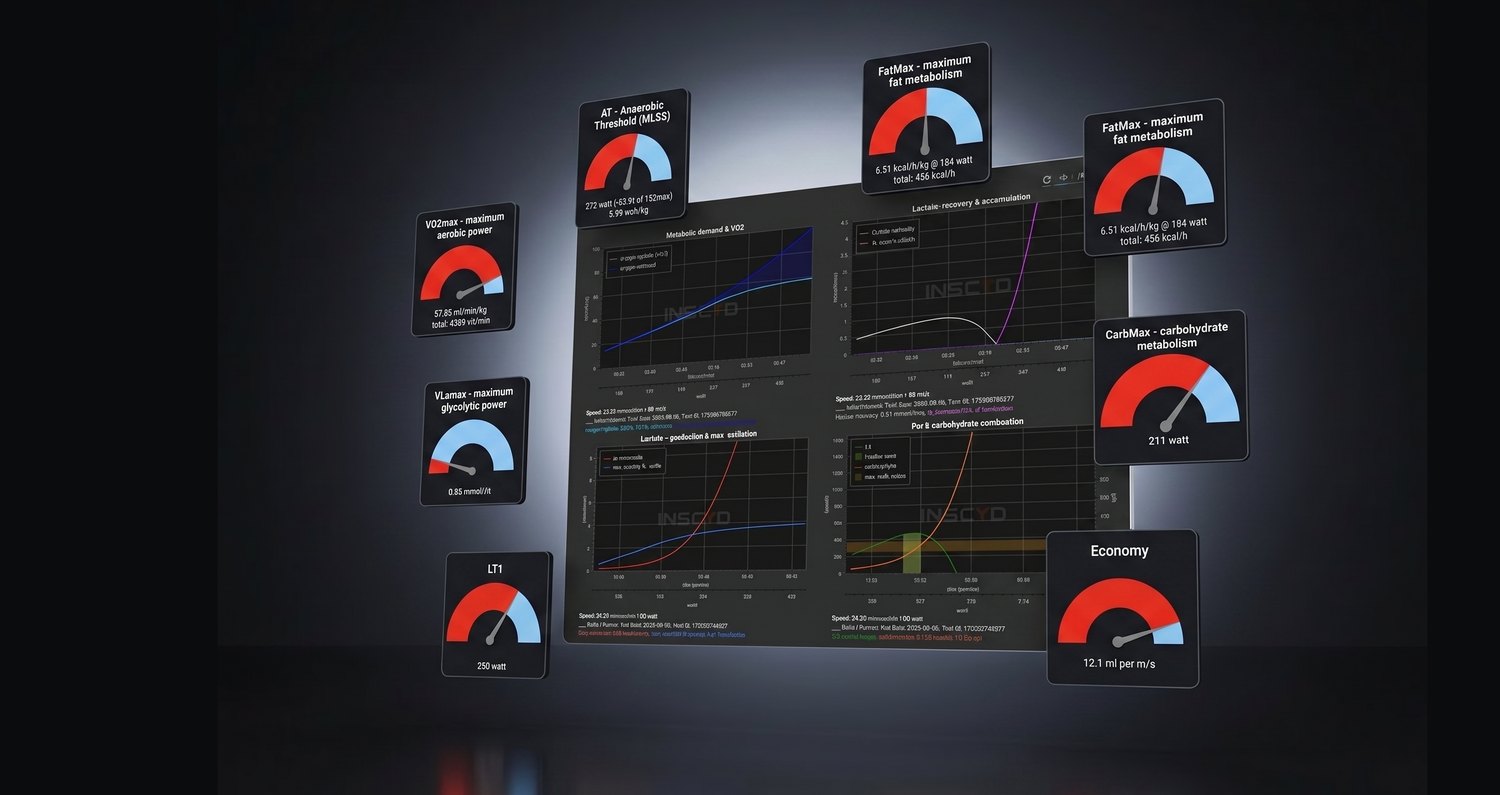
VO₂max, VLamax, FatMax, thresholds, fuel use and training zones, from a single test in the lab, in the field or fully remote.

