LT1 is widely used but poorly understood, this article unpacks the five most common mistakes in identifying Lactate Threshold 1, including protocol errors, body composition effects, and lactate curve misinterpretation.
If you’ve worked with endurance athletes or run tests in a performance lab, you’ve likely come across Lactate Threshold 1 (LT1). In this article, we’ll delve into LT1 by unpacking the most common misconceptions and pitfalls about it and how to avoid them. Plus, don’t miss the video where Sebastian Weber explains these common mistakes in detail.
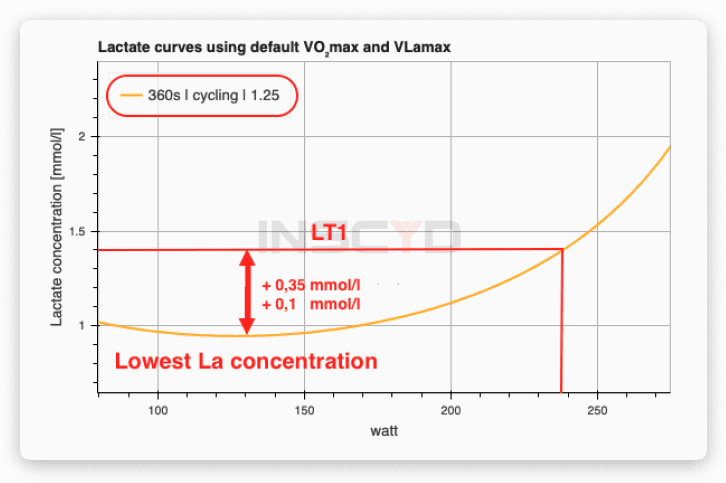
LT1 is traditionally defined as the first increase in blood lactate concentration above a baseline level. Lactate threshold 1 is most commonly determined during an incremental exercise test—where you gradually increase speed or power in steps, measuring lactate at the end of each stage.
However, as straightforward as “first rise” sounds, practical challenges arise:
One of the most overlooked aspects of determining LT1 is how long each stage in the test lasts:
Shorter Steps
Longer Steps
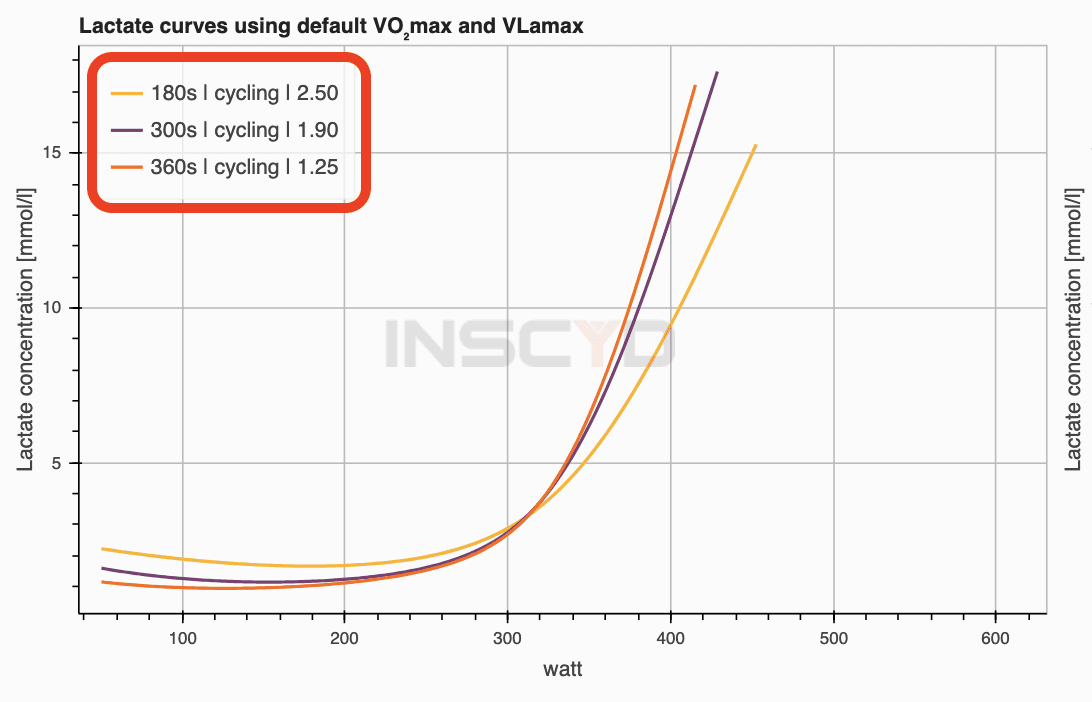
In practical terms, if you’re comparing two lactate profiles from different labs or different testing protocols, you may well be comparing apples to oranges.
A common misconception—especially among athletes diving into Zone 2 training—is to assume that LT1 perfectly aligns with the intensity where you burn the most fat (often referred to as “FatMax”). While both occur below the anaerobic threshold (LT2), they do not necessarily coincide.
Because the intensity at which FatMax occurs is highly individual—depending on factors like VO2max, glycolytic rate (VLamax) —it rarely lines up precisely with the first lactate surge.
Below, we present a standardized method that addresses inconsistent protocols, lactate meter inaccuracies, and the need for lactate testing itself. By unifying these factors, you can ensure your LT1 determinations remain reliable and comparable across different test settings.
INSCYD applies a fixed reference step duration (6 minutes), resting lactate value, and measurement tolerance within its software’s algorithm! That means:
This is especially beneficial when combining lab testing (with or without lactate samples) and field testing—LT1 remains comparable, thanks to the internal standardization.
Handheld lactate meters can be invaluable, but any small jump (e.g., 0.1 or 0.2 mmol/L) might be smaller than the device’s margin of error:
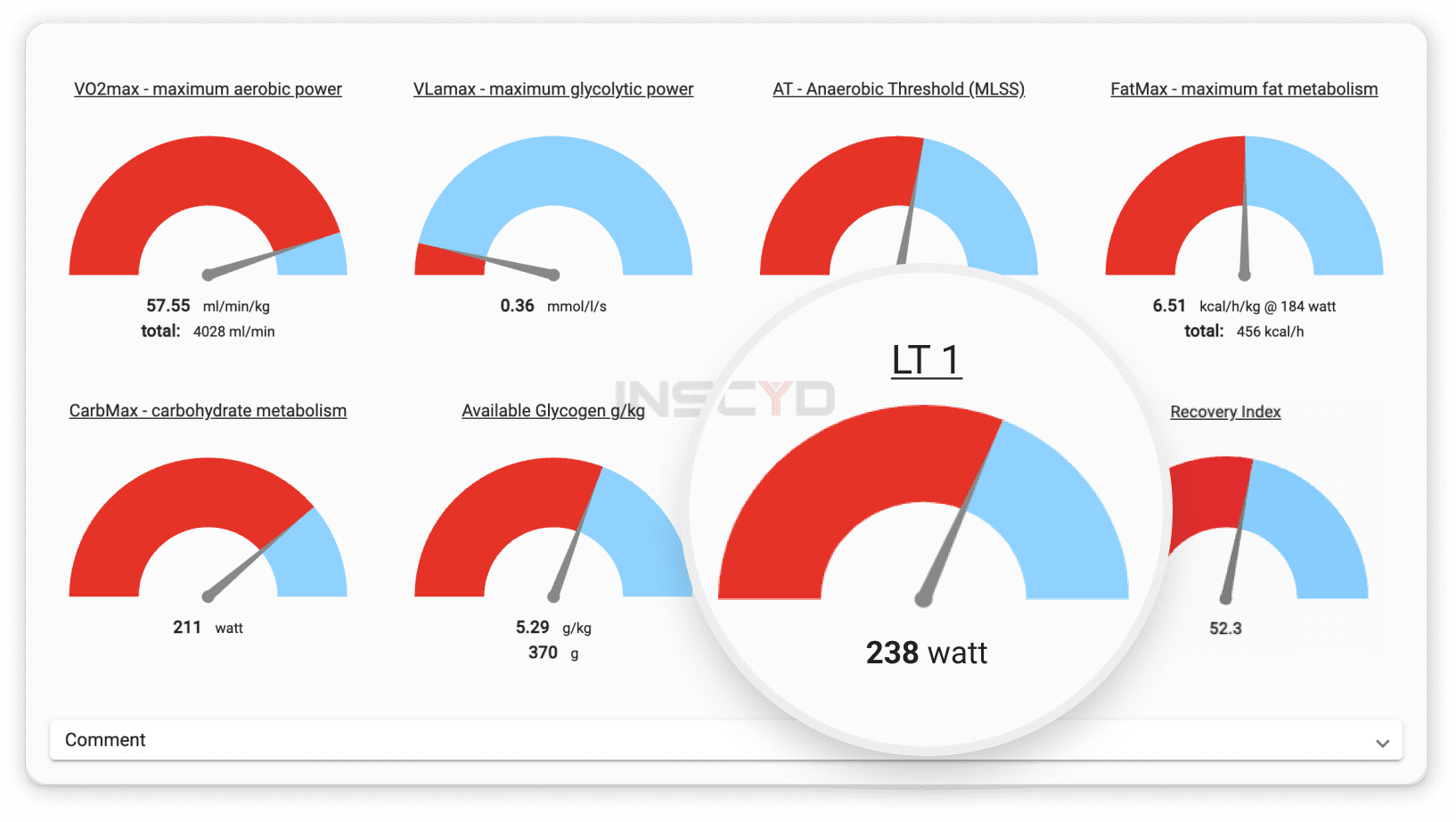
No separate test needed—INSCYD analyzes your data (lab or field, with or without lactate) to produce:
—all from the same test. This ensures you see how LT1 correlates (or not) with FatMax, while also forming a complete metabolic profile.
LT1 offers a foundation for zone-based training, yet it’s more than a single number. It’s part of a bigger metabolic puzzle that includes VO₂max, VLamax, and other physiological markers.
INSCYD provides you with a 360-degree view of the athlete’s performance, ensuring you capture all the metrics needed to enhance aerobic efficiency or shift your fat-burning capabilities. By planning training around these collective metrics, you can tap into the full potential of your athlete’s metabolic profile.
Before, LT1 was only accessible by measuring blood lactate. If you weren’t doing lactate tests, you simply couldn’t obtain this critical metric. This creates challenges when:
As a result, many coaches and athletes who can’t perform lactate tests end up without any LT1 data at all—leaving them with no reliable benchmark for lower-intensity training zones and missing out on key insights that could guide more effective endurance development.
Now, for coaches who lack easy access to lab equipment or prefer remote testing, the INSCYD Power Performance Decoder generates a lactate curve from: a series of three short maximal efforts in cycling or running – using Power output (cycling) or GPS speed (running) only. Here’s how it works:
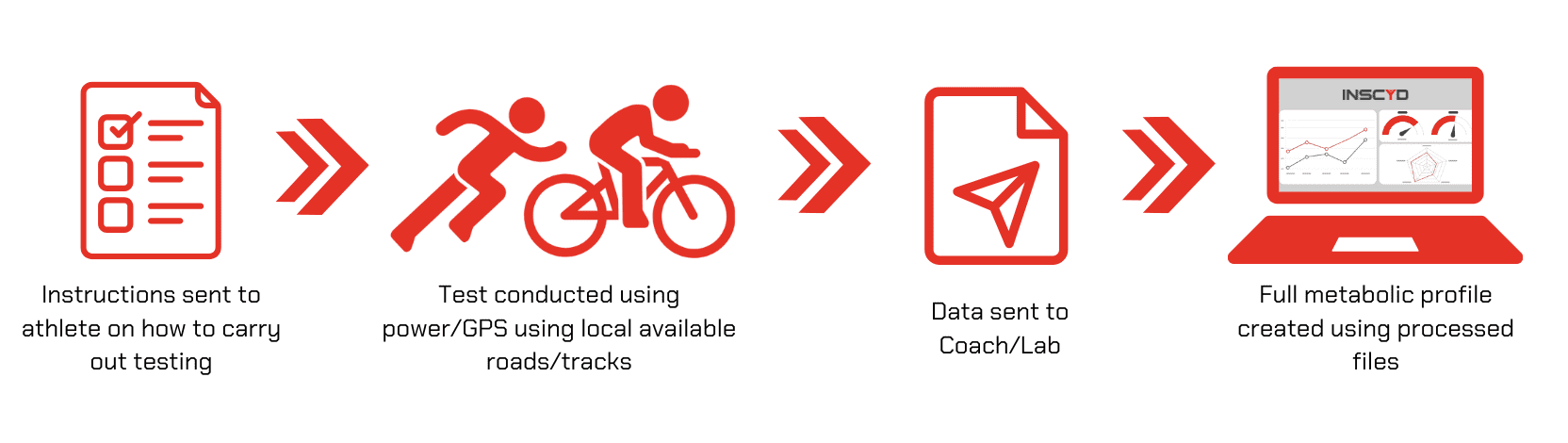
Because the algorithm is standardized internally, you’ll receive an LT1 determination plus the other vital metrics (VO2max, VLamax, FatMax) without taking any blood samples. This uncouples LT1 from invasive testing or specialized lab gear, reducing cost and logistical hurdles.
LT1 remains a valuable benchmark in endurance training, but—like every metric—it has nuances and limitations
The “first increase in lactate concentration” depends on baseline assumptions, test protocols, and measurement error. It also doesn’t perfectly overlap with maximum fat oxidation, nor does it require invasive testing if you use the right performance analysis tools.
By recognizing these intricacies, coaches and lab professionals can:
Most importantly, a clearer understanding of LT1 empowers you to guide athletes toward smarter, more efficient endurance training—where all the puzzle pieces fit together.
👉 If you’re interested in learning more, download our free whitepaper: A Unified Definition of and Determination of the First Lactate Threshold (LT1).
If your coaching or lab environment needs a more consistent and physiology-backed definition of LT1, try INSCYD.
By leveraging a standardized protocol—complete with explicit factors for measurement error—coaches and labs can provide athletes with an accurate, actionable and reproducible measurement – which is the foundation to create training prescriptions and monitor progress.
By refining how we determine LT1, we not only reduce confusion but also open the door to more targeted and productive training interventions. Ultimately, understanding LT1 is about helping athletes train smarter—and seeing tangible progress where it matters most: in their performance.
Access this critical metric not only through lab or field lactate tests but also using remote testing measuring power or speed-only—no lactate sampling required!
VO₂max, VLamax, FatMax, thresholds, fuel use and training zones, from a single test in the lab, in the field or fully remote.

