
Training zones based on %FTP, fixed lactate values, or maximum heart rate produce inconsistent stimuli. This article introduces master metric-based zones, built from VO2max, VLamax, and FatMax for each individual athlete.
The way training zones are determined and used hasn’t changed for decades, as if nothing happened in sport science lately. It’s time to throw them out of the window and start creating training zones that actually matter. Let’s start right away.
Currently, most coaches create training zones based on…
For example, a typical endurance heart rate training zone could be between 70% – 80% of maximum heart rate. A VO2max training zone could be between 105% – 120% of anaerobic threshold / FTP.
Let’s quickly look at the most important reason why you should not use these kind of training zones.
This is best explained with an example. Let’s use the VO2max training zone based on a percentage of anaerobic threshold / FTP (for some known as training zone 5).
The thing is: at a training intensity of 120% of FTP, one athlete can be 10% below his/her VO2max intensity while another athlete can be 10% above his/her VO2max intensity. In other words, the relationship between FTP and VO2max is not a fixed relation that can be expressed in a percentage. It differs per individual:
Athlete A
Athlete B
In this example, it becomes clear that athlete A and B will have a different training stimulus on the aerobic energy system when they both ride at the same percentage of FTP. So if you want to create a VO2max interval in which the athlete exercises at an intensity close to the VO2max power, the intensity should not be based on a percentage of FTP / anaerobic threshold.
A VO2max training zone based on %FTP is just an example of how you should not plan training. Other examples could be: a FatMax training zone based on a lactate concentration; a VLamax training zone based on pace/speed; an endurance training zone based on a percentage of maximum heart rate.
It only takes a small step to improve those training zones.
Now that we’ve seen how we should not create training zones, it’s easy to understand how we should. Simply use the master metric (the physiological value that is used to calculate the intensity) that is related to your training goal:
Do you want to create VO2max intervals? Base the training zone intensity on a percentage of VO2max.
Do you want to create intervals in which the athlete burns a lot of fat? Base the training zone intensity on (a percentage of) FatMax.
Do you want to create a training zone that elicits a high energy contribution from the anaerobic energy system? Base the training zone intensity on a percentage of anaerobic energy contribution.
Last example: do you want to create an endurance training zone that your athlete can sustain? Base the training zone intensity on a carbohydrate combustion rate of (e.g.) 60 grams per hour.
In other words, describe training zones based on the master metric that you want to focus on, instead of some unrelated parameter. To be clear: you still want the unit of intensity (reference) to be in speed, pace or power.
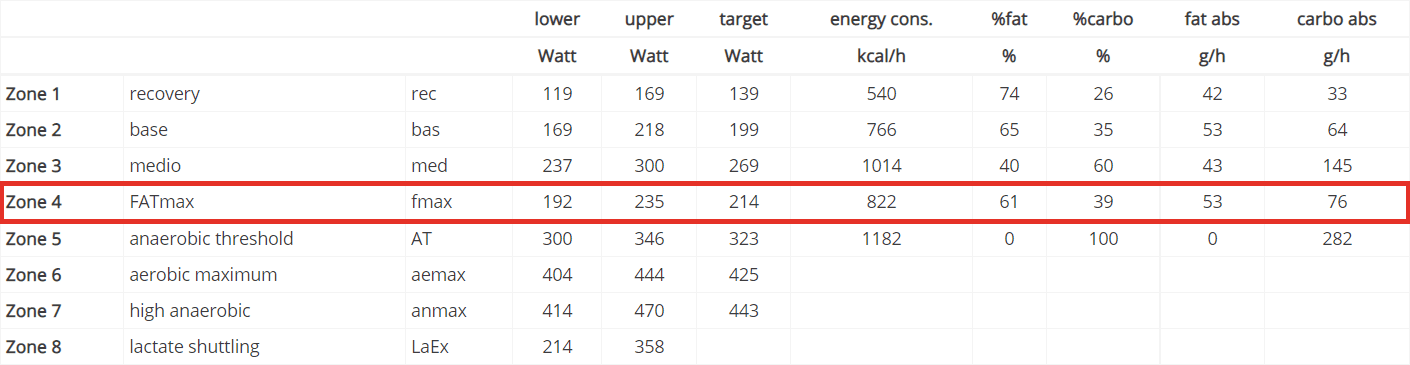
Since the INSCYD software provides you with many master metrics after performing an exercise test, it’s easy to create your own training zones based on a master metric of your choice. But wait, there is more! Even if you want to stick to your current training zone…
Having training zones based on master metrics is great, but do you really know what actually happens in the body of your athlete when exercising at that intensity? Now you can!
With the INSCYD Training Zone Builder, you can add additional information. For instance, when you create a FatMax training zone (like the famous training zone 2) based on the actual FatMax intensity, you may also want to know:
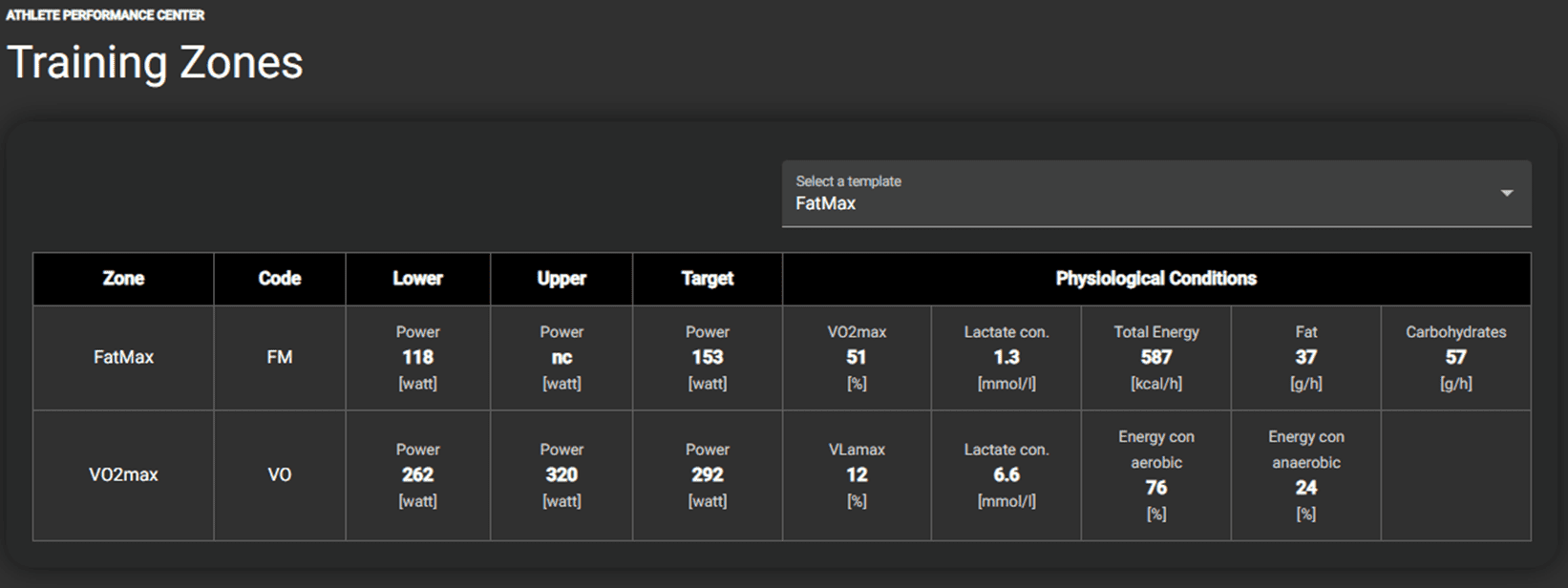
The training zones and additional output metrics are all based on the metabolic profiles of one athlete. Therefore they are highly individual.
Here’s a video example of how easily you can create such a training zone:
For training zones that do not cause a steady state, like VO2max intervals, you may want to add:
This enables coaches to know exactly how much impact a training session has on the athlete. Even before the training is executed.
Ready for a step-by-step guide to start creating these kind of training zones? Check out this article: INSCYD launches a revolutionary training zone builder. Current INSCYD users can also use our help center.
There are 2 webinars available in which Sebastian Weber talks about training zones and the INSCYD Training Zone Builder. You can now watch both webinar recordings for free. Click the button to see a summary of the topics we covered and start watching the webinar.
TZB webinar part 1TZB webinar part 2
VO₂max, VLamax, FatMax, thresholds, fuel use and training zones, from a single test in the lab, in the field or fully remote.

