
VO₂max measures the body’s maximum aerobic capacity: the maximum amount of oxygen the body can utilize. The amount of oxygen utilized is directly related to the amount of energy the aerobic system can produce. A higher VO₂max therefore means more aerobic energy is available to produce power, run faster, swim faster, or perform other exercise.
VO₂max has a direct influence on other key physiological performance metrics such as lactate concentration, fat combustion rates and thresholds.
From national federations and Olympic programmes to WorldTour teams and professional clubs worldwide.
VO₂max is relevant to performance in most sporting events lasting longer than approximately 30 seconds. As exercise duration increases, so does the contribution of the aerobic system: around one minute, a substantial share of energy is already produced aerobically, while during prolonged endurance events, aerobic metabolism provides almost all of the required energy.
The relationship is straightforward: oxygen uptake is closely related to aerobic energy production. The more oxygen an athlete can utilize, the more energy the aerobic system can provide to produce power, run faster, swim faster, or sustain a given intensity. Because most sporting events last several minutes or longer, aerobic metabolism is the dominant energy-producing system in a large proportion of sports.
For a given efficiency or economy, oxygen demand is closely related to power output or speed. This means that producing more power in cycling, or moving faster in running or swimming, requires a corresponding increase in aerobic energy production, and therefore oxygen uptake.
VO₂max therefore sets an important upper limit to the power or speed that can be supported aerobically. At a given economy, a higher VO₂max allows a higher aerobic power output or speed.
If the goal is to increase sustainable power output, running speed or swimming speed, VO₂max is essential for understanding how much aerobic energy is available to support that performance.
For a given efficiency or economy, higher speed or power requires greater aerobic energy production, and therefore greater oxygen uptake.
VO₂max is one of the strongest physiological predictors of long-term health and all-cause mortality. Higher cardiorespiratory fitness is consistently associated with a lower risk of premature death and cardiovascular disease.
This becomes increasingly important with age as VO₂max declines. As a result, everyday activities such as walking, climbing stairs or carrying groceries require an increasingly large percentage of a person’s aerobic capacity, making them progressively more demanding.
Importantly, the age-related decline in VO₂max is not inevitable at the same rate: regular training can preserve aerobic capacity and substantially slow its decline over time, as illustrated in our Annual Physiological Performance Report.
If longevity, healthspan, lifespan or all-cause mortality are relevant outcomes, VO₂max should be part of the physiological assessment.
Your VO₂max score at age 50: 60 ml/kg/min (Excellent range)
Lactate is continuously produced and removed, with lactate oxidation representing a major pathway for lactate disposal during exercise. Lactate oxidation increases with oxygen uptake and is thereby closely related to VO₂.
A higher aerobic capacity therefore increases the capacity to utilize lactate oxidatively. With other relevant factors being equal, a higher VO₂max shifts the lactate-profile curve to the right, while a lower VO₂max can contribute to a shift to the left.
If lactate profiles are used to evaluate training adaptations or compare athletes, VO₂max provides essential context for correctly interpreting why the lactate curve has shifted.
Maximal lactate steady state represents the highest exercise intensity at which lactate appearance and disappearance can remain in equilibrium. Because lactate oxidation is a function of oxygen uptake, the VO₂ or oxygen uptake rate is a major determinant of the power or speed at which this equilibrium can be maintained.
A higher VO₂max increases the capacity for lactate and therefore increases power or speed at threshold.
If the goal is to increase maximum lactate steady state (MLSS) or threshold power or speed, VO₂max is one of the key metrics that needs to be assessed and developed.
Fat oxidation requires aerobic metabolism and therefore oxygen. A higher aerobic capacity increases the potential for producing energy from fat at higher absolute exercise intensities.
If the goal is to increase fat combustion and spare carbohydrates during prolonged endurance exercise, VO₂max is therefore an important part of the physiological profile that needs to be assessed.
During recovery, lactate is predominantly utilized through the aerobic metabolism. Higher VO₂ means higher rates of lactate removal and with that, because of the co-transport of lactate with H+, removal of acidosis. Furthermore creatine phosphate stores are also replenished only by the aerobic metabolism. Greater aerobic capacity therefore provides a greater capacity to recover faster between repeated high-intensity efforts.
In sports such as football, cycling or other disciplines requiring repeated high-intensity efforts, VO₂max is therefore important for understanding an athlete’s capacity to recover between efforts.
The traditional way to measure VO₂max is through indirect calorimetry using a metabolic cart or VO₂ analyzer.
In conventional testing the athlete performs a relatively short incremental or ramp protocol designed to reach exhaustion within approximately 8–12 minutes rather than during a conventional long-duration lactate step test.
Many athletes struggle to achieve criteria of a “true” VO₂max which is defined using: i) a plateau in oxygen uptake despite increasing workload is considered the primary criterion, ii) a RER ≥1.10 and iii) reaching a certain percentage of predicted maximal heart rate.
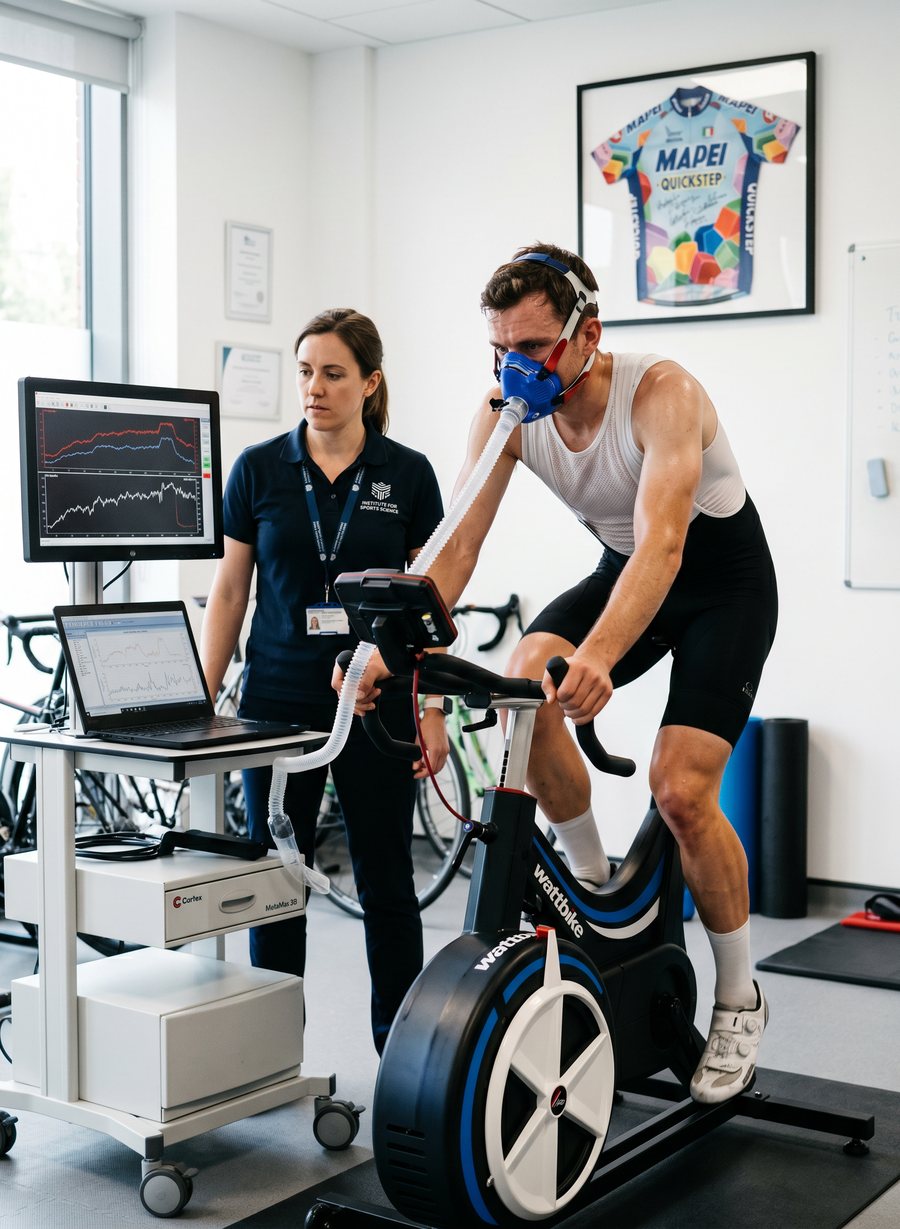
Even when the athlete performs the test correctly, VO₂max is only as accurate as the metabolic cart measuring it.
A large 2026 field-validation study tested 57 metabolic carts from six manufacturers across 30 facilities against a metabolic simulator. Absolute errors in measured VO₂ ranged from 3.29% to 10.6%, while variability between individual units of the same model reached as high as 12.7%. Importantly, substantial inaccuracies occurred even though the devices had passed their manufacturers’ standard calibration procedures.
Measuring VO₂max with a VO₂ analyzer does not automatically mean measuring VO₂max with laboratory-grade accuracy.
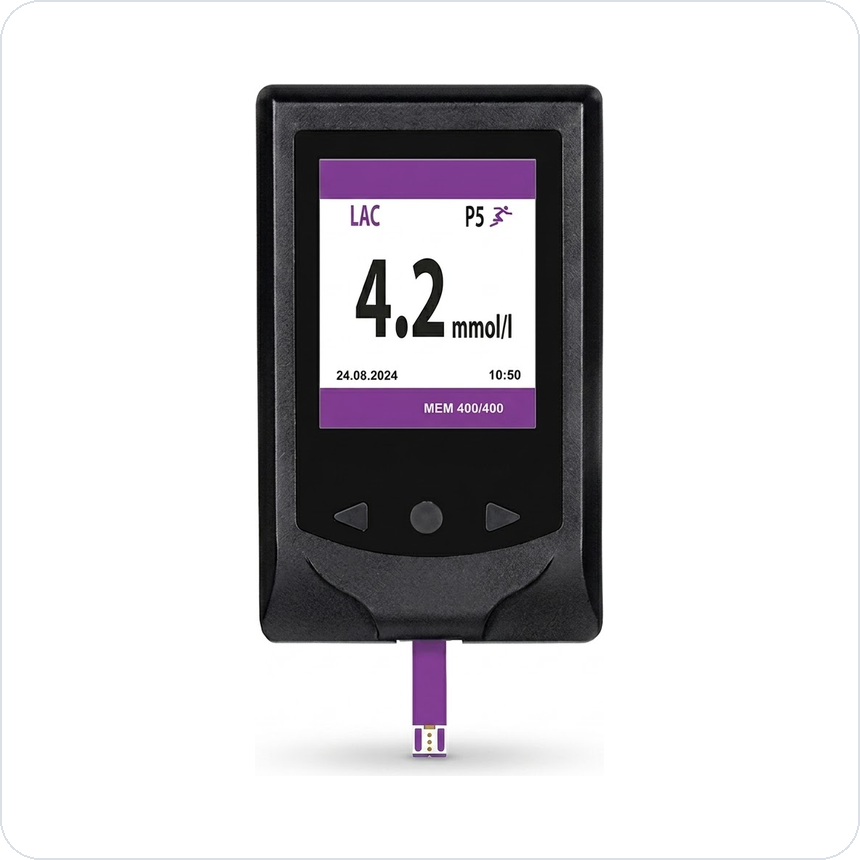
VO₂max can also be determined without directly measuring respiratory gases. INSCYD calculates VO₂max from a short physiological testing protocol using power or speed, blood lactate and body composition.
This means that an existing lactate-testing workflow can be used to determine not only thresholds, but also VO₂max, VLamax, fat and carbohydrate combustion and other physiological metrics, without adding a separate spirometry test.
The method has been validated in peer reviewed science against laboratory-measured VO₂max showing no statistically significant differences.
In a nutshell: the same testing time can provide VO₂max plus the additional metabolic parameters required for performance analysis, without a metabolic cart and at a fraction of the equipment cost.

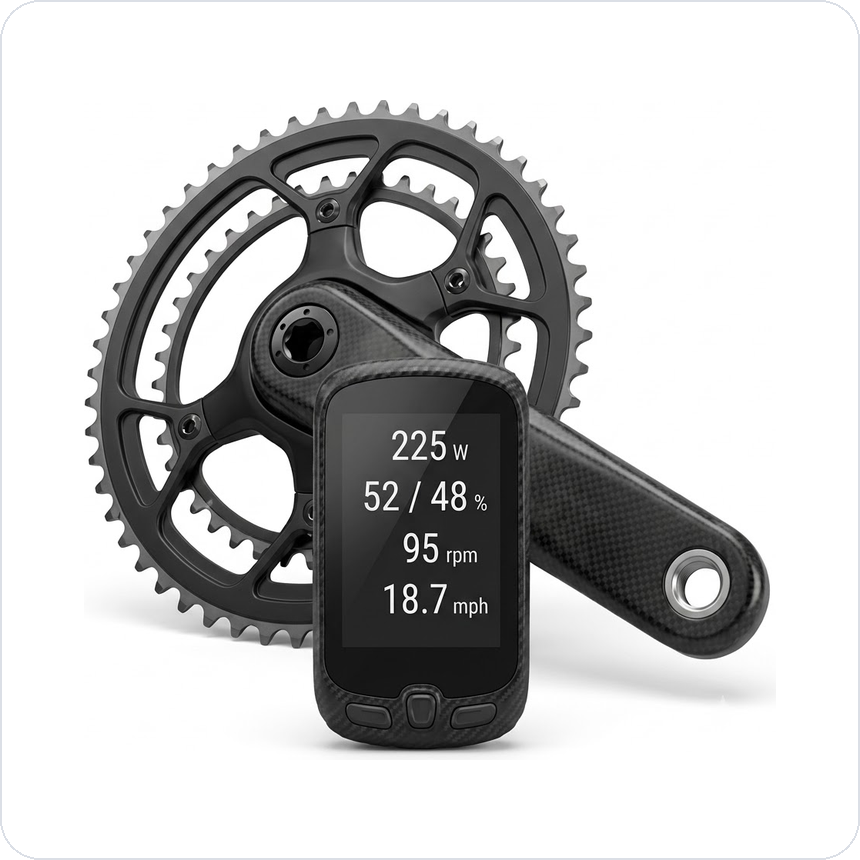
VO₂max can even be assessed without blood lactate measurements or a laboratory visit.
Performance during maximal efforts lasting several minutes is predominantly supported by aerobic energy production with a smaller portion derived from anaerobic energy sources.
INSCYD separates the aerobic and anaerobic contributions, making it possible to calculate VO₂max from field-based performance data such as cycling power, without directly measuring oxygen uptake.
This approach has been scientifically proven to provide a VO₂max as accurate as with a lab level test using a metabolic cart.
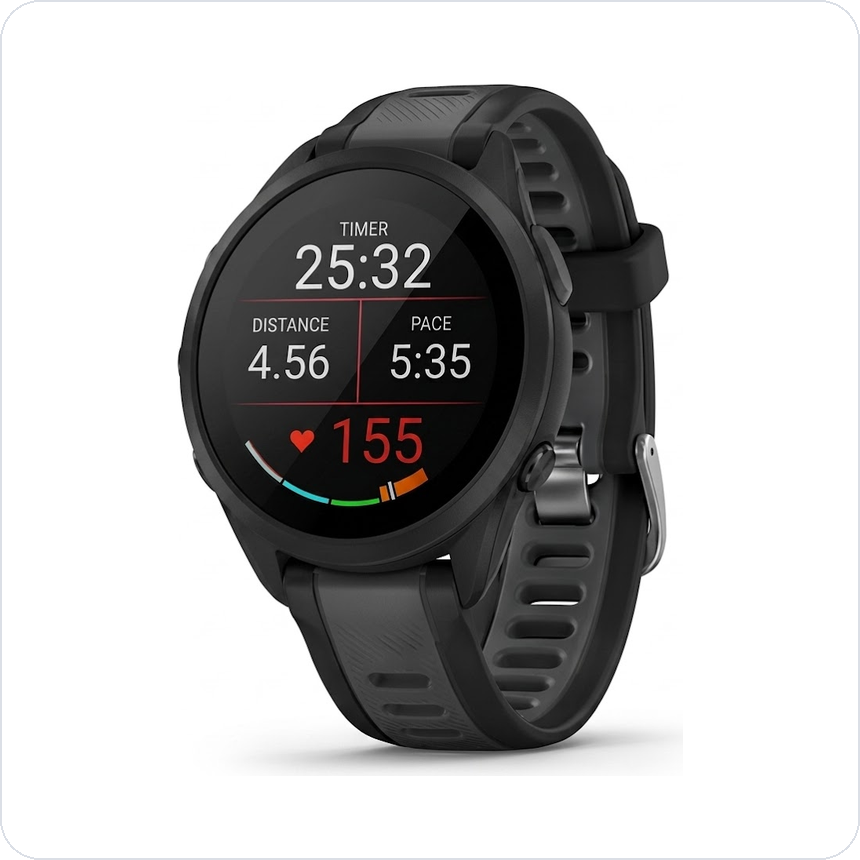
This allows athletes and practitioners to assess VO₂max using testing that can be performed in the athlete’s normal training environment, with a power meter, GPS or stopwatch rather than a metabolic cart!

The sprint system. The counterpart that decides how much of the engine survives to the finish line.
Read more Anaerobic Threshold (MLSS)Where lactate production and combustion balance: the highest sustainable intensity.
Read more Fat Combustion RateHow much fat an athlete burns at every intensity, in kcal/h.
Read moreVO₂max, VLamax, FatMax, thresholds, fuel use and training zones, from a single test in the lab, in the field or fully remote.