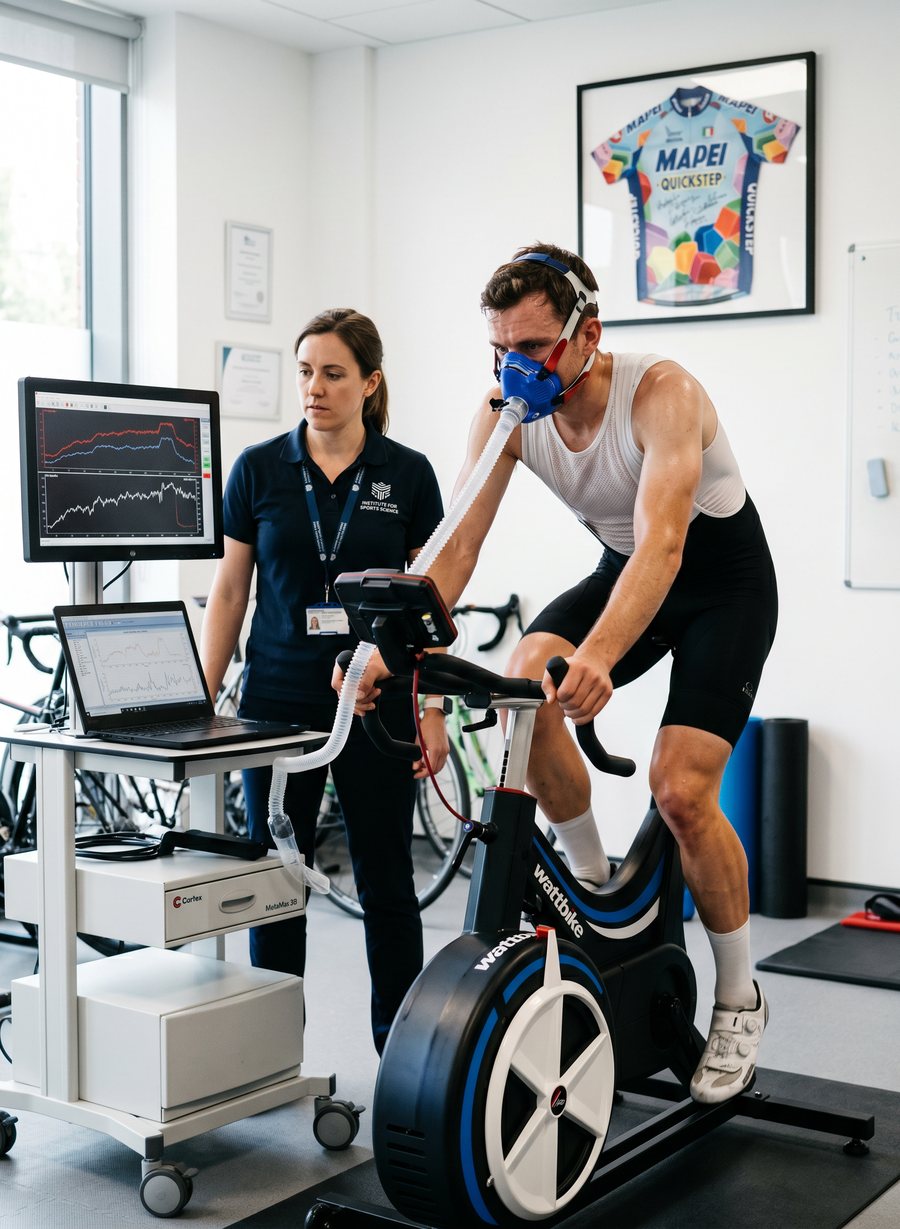
Conventional FatMax testing using a metabolic cart.
Conventionally, FatMax is determined during a graded exercise test: the subject gets connected up to a metabolic cart which measures oxygen uptake and carbon dioxide production, from which carbohydrate and fat oxidation are approximated.
However it is often overlooked that this kind of testing requires careful standardization of diet and acute nutrition. This is because carbohydrate availability, insulin and other hormones substantially affect the fat utilization measured via a metabolic cart.
The exercise protocol also matters: a minimum of five-minute increments or even longer should be used to acquire sufficient gas-exchange values. This rules out to measure accurate fat combustion rates and a valid VO₂max in the same test, as a VO₂max test requires short increment and quick exhaustion.
Accuracy of the metabolic cart is another critical issue: in real world conditions aka in human performance lab recent studies found absolute errors of up to 133% for calculated energy from fat.
A metabolic cart can measure FatMax, but the quality of the result depends on nutrition standardization, test protocol and the accuracy of the gas-analysis system, not simply on wearing a mask.
FatMax with INSCYD, without requiring a metabolic cart.
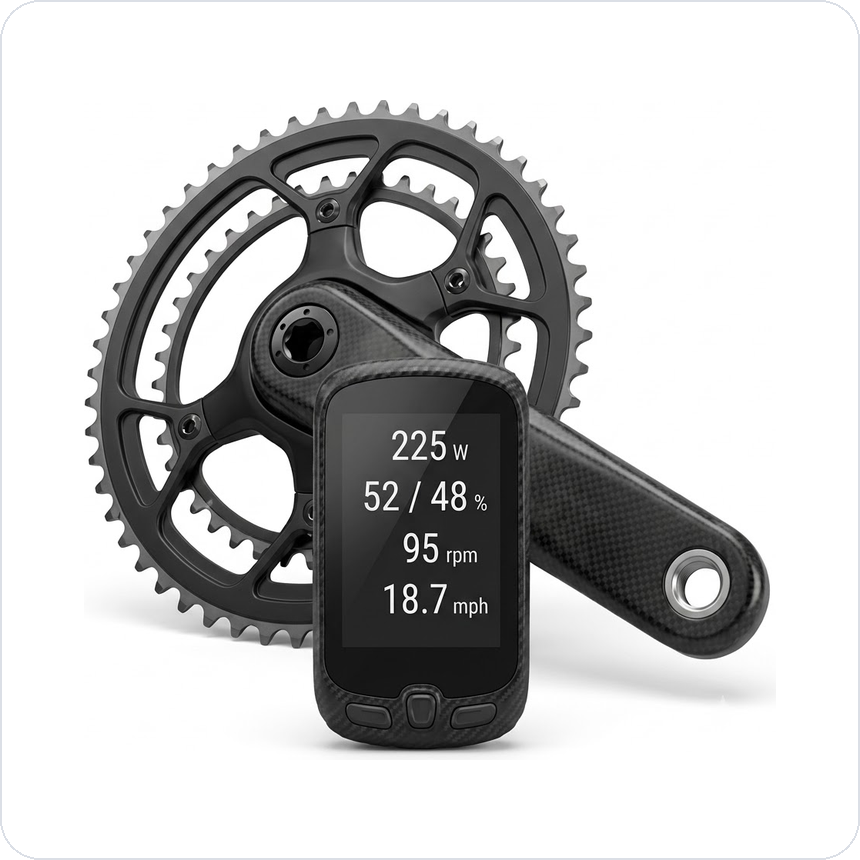
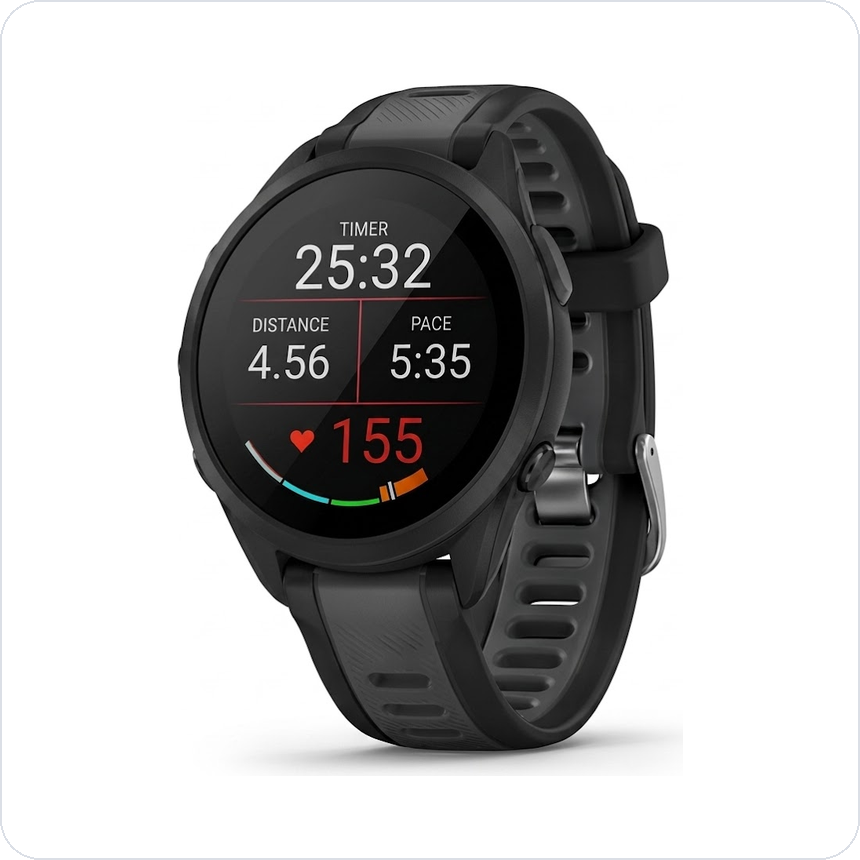
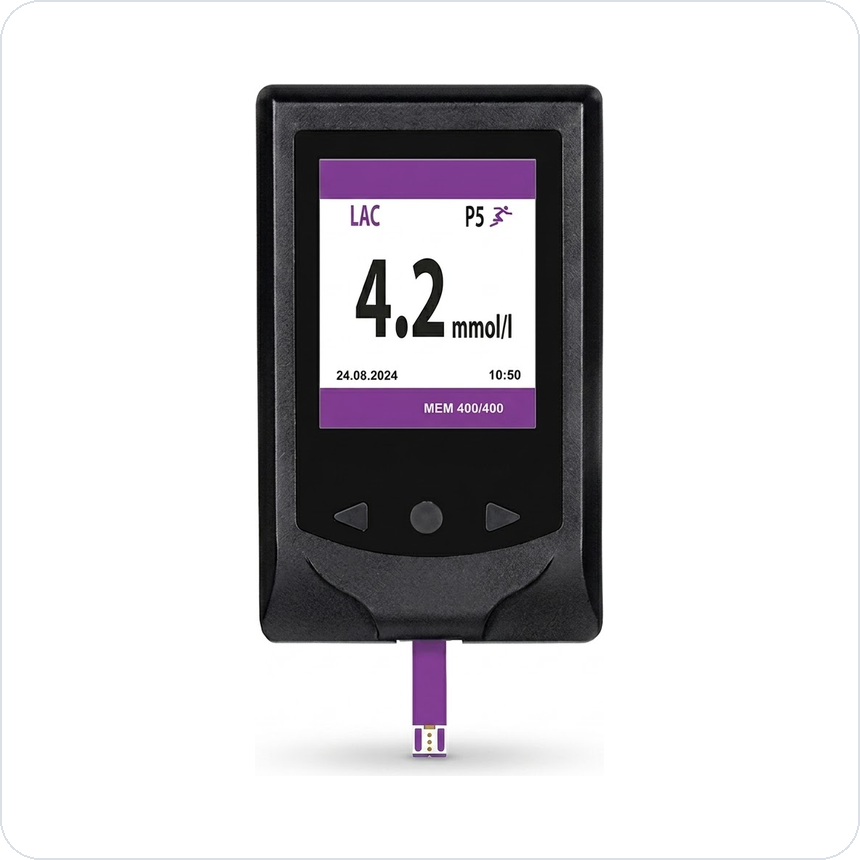
INSCYD determines the athlete’s FatMax and complete fat-combustion curve from the very metabolic systems that shape substrate utilization. This means a metabolic cart is not required for a FatMax assessment, dramatically reducing the barrier of entry and cost for testing FatMax.
INSCYD combines load (speed or power), total energy demand, lactate data and the athlete’s metabolic profile to accurately calculate fat and carbohydrate utilization at any intensity. This allows FatMax to be integrated into remote testing as well as simple lactate field testing and laboratory testing rather than requiring a dedicated indirect-calorimetry protocol.
If respiratory-gas data are available, they can also be incorporated into the assessment.
The practical result: FatMax and the complete substrate-utilization profile can become part of the athlete’s existing assessment workflow, without making a metabolic cart or an extra exercise test a prerequisite.
Two workflows, one output
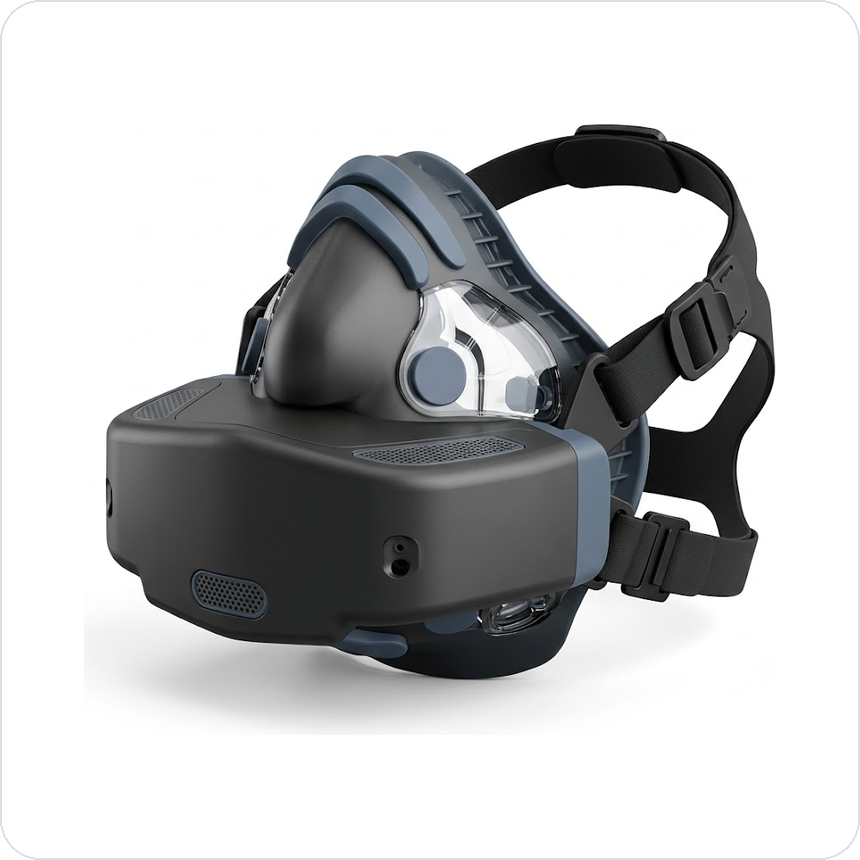 Laboratory onlymetabolic cart and mask, a dedicated protocol with five-minute stages