The 7 key takeaways you will get from 4-Day Hands-on Physiological Testing & Coach Education Camp
If you are not sure if the 4-Day Hands-on Physiological Testing Camp is for you, join this free webinar and learn 7 key takeaways covering metabolic profiling, lactate testing, and performance application.


- Coaching & Testing Camp
- Product
- Customer Stories
- Science
- Resources
- Contact
- Login
- Coaching & Testing Camp
- Product
- Customer Stories
- Science
- Resources
- Contact
- Login
If you are not sure if these camps are for you or if you just want some key takeaways summarized – we have you covered. Join our free webinar and learn 7 key takeaways from the upcoming 4-Day Endurance Camp for endurance coaches and performance labs
Here are the 7 selected learnings highlighted in the webinar:
- Create a full metabolic profile of your athlete in only 30 min time
- How to measure economy in running and swimming and its implications for training
- Creating physiology-based training zones: why using a % of FTP or % of critical power doesn’t trigger the training effects you wanted
- Go “long & easy” or “short & hard”: how the physiology of an athlete determines which training approach works best – and why!
- Designing recovery periods in between intervals to decrease or increase anaerobic power (and therefore anaerobic threshold and fat combustion)
- Increasing aerobic capacity aka VO2max: what are the limits ?
- Fat metabolism in training: everybody wants it – (almost) nobody understands it: mechanics how to improve fat combustion in training
0:00 Good afternoon, good evening, or good morning, everyone, depending on where you are. Nice to see so many familiar names on here. That's great. People I've known for quite some long time and I've seen in several webinars, also some new names. That's great. Thanks for joining for today's webinar about the upcoming physiological testing and coaching camps in fall this year. Before we start, I'm going to give you some housekeeping information about today's webinar. One thing is that you should see the chat here. And if you could give me some feedback, if you can hear and see me, but especially also
1:03 see my screen. The slide here, the opening slide, that would be awesome so that I can understand if technically everything works for you. That would be already some good tests, so to speak, that you can also see and hear what I'm presenting. That would be great. Simon Arne, thanks. Great. Okay. So that means if you don't see me or you don't hear me, then sorry to say that it's likely on your end. Thanks for the great feedback. Okay. Before we dive into that, some housekeeping items, we're going to record this session.
1:43 And we're going to have this chat here, which I hope you guys discovered by now. This is where you give me feedback. And I would ask you, I would almost urge you to ask questions in this chat. I might not answer them during the webinar, but more in a Q&A afterwards. Okay. But I would ask you to put the questions in during the presentation because the questions that you have might trigger another follow-up question from someone else. And therefore, you know, it's often very productive to ask these questions.
2:28 Okay. And then we will have time afterwards. Presentation is going to be, I guess, relatively short, 30 minutes, 40 minutes, so that we should have enough time. We have still people dropping in, so I give it another 30 seconds-ish for you guys to arrive here. So bear with me if you are here from the very first moment. 30 seconds more patience, please, for others to arrive. And then we're going to start. I'm going to start to first give you an overview about the schedule and the general idea.
3:01 And then I'm going to give you some background where this idea for this camp came from and what has been the experience so far. And then I'm going to give you some examples of what we are going to do so that you have hopefully something more tangible to understand if that is for you. Okay. Hey, Kurt. Good afternoon. Good to have you here. So let's start with that. Again, everybody who's coming a little bit later, thanks for joining. Good evening. Good morning. Good afternoon. Depending on where you are.
3:38 So key takeaways, giving you some information about these upcoming camps and fall. I'm going to start with the overview of what we want to do. And I was, as you can see here, maybe lazy. I just copy pasted what we have on the website so it is consistent. Okay. So instead of reading, obviously, what we have listed, I'm just giving you the overview to explain in my own words what we want to do. And so therefore, hopefully, that's the first trigger for you to ask questions. Okay.
4:12 So day number one, building blocks of power. This is a purely, so to speak, lecture day, but I'm going to explain what this means, about energy metabolism. So we're going to dive into everything from creatine phosphate, ATP, glycolysis, fat oxidation, threshold, all these things. Okay. Now we might say, oh, okay, that sounds like biochemistry and ADP goes to ADP, blah, blah, blah. No. It's going to be very much a practical application. So for example, they're not talking, saying, oh, creatine is a, creatine phosphate is a fast
4:52 energy source. We're going to talk about, okay, how much work can you do with that? Right. You're emptying, you're creating phosphates door to how much power or energy does this translate? Right. Inhibition of glycolysis by acidosis, going to have one example later on, what does that mean? Okay. So really, I would argue the basics in terms of energy metabolism. If you have, if you have done our college course on energy metabolism, a lot of the stuff will be familiar. However, the way how you will learn it is quite different.
5:28 So it's not going to be me standing in front of you the whole day and lecturing you so that you can fall asleep, especially after the lunch break or something. No, that's not going to happen. We are going to have it interactive. So we are going to break up the whole group into breakout groups. Each group is getting a topic, okay, to work on. And then this is, so to speak, then the, you know, the storyline or the theme for the day is that each group has a topic.
5:56 Like for example, glycolysis, erotic metabolism, fat oxidation whatsoever. And then this workout group has to, or breakout group has to, has, has to work on the topics and we're going to discuss in the group, bring practical examples, so on and so forth. So it's very interactive. And also what is nice about this is very engaging. You're going to learn from other people, which I think is tremendously, of tremendous value from other people of different sports with different backgrounds. Let me give you an idea. When we did this camp in March, we had people there from cardiologist physicians,
6:37 remote triathlon coaches, people from the industry developing devices like VO2 analyzers, nutritionist coaches from National Football League, so NFL, Super Bowl kind of level, everything. And I know, and also looking at the list of participants here, we are going to have similar mixtures. Okay. Similar mixtures in the camps coming up. We already have people signing up from professional sports, from, you know, signs, people who work in, you know, heart failure to, again, to high performance sports, rehabilitation. So it's going to be really, I'm very sure it's going to be a nice group.
7:20 Okay. Sorry, I'm getting into the rabbit hole. That's day number one. And a little bit overview of what you can expect. Day number two, likely, depending on the weather, we might switch it with day number three. That's some flexibility in here. Day number two is going to be all about testing. So basically, we're going to do lactate testing, VO2 testing, at least in running and cycling, very likely. We aim for also do it in swimming. So you're going to learn to measure running economy, VLA max, VO2 max.
7:51 If you're unsure about how to take lactate sample, tricks and tips how to do that, that is the whole day. Okay. What we want to make sure is that you leave from the scam and, so to speak, somebody can wake you up in the middle of the night and you know how to take a lactate sample within 10 seconds, error free. Okay. So that's, so to speak, what you can expect. Day number three, the second, you know, more lecturing day, similar setup as day number one in terms of breakout groups, is all going to be about training adaptation.
8:27 And honestly, for me, this is the most exciting day of the whole camp. Why that is, I'm going to bring you a few examples. Why that is, because you're going to learn the mechanisms of training adaptation. And this, for me, is the reason why it's the most exciting. When I say mechanism, I'm not saying that you will learn something like, hey, you know, I was this great coach in professional cycling. My experience is if you do this kind of interval training, all your athletes will improve. No.
9:00 You will also not look at something like, oh, some researchers found if you, you know, whatsoever, do this kind of training, speed sport training or zone two, blah, blah, blah. This is what came out in a group of blah, blah, blah, blah, blah. No. What we are going to do is, and this is why this is so fundamental. We are going to learn and discover what are the mechanisms of this adaptation. So what you will walk away with is a framework that you can look at a certain training regime, on the one hand, and look at a certain athlete type, sprinter type, marathon type, professional athlete, recreational athlete, whatsoever.
9:48 And say, ah, because of this athlete phenotype, based on this kind of training, this is likely the outcome of training. This is likely what's going to happen because this and this is a mechanism. Because of this muscle fiber types, because of this training volume, this is what's going to happen in terms of adaptation. So that is why it's so key, because you will learn basically to say, ah, I understand what is the mechanism. It is not a black box anymore, right? Training will not be a black box anymore.
10:23 We will learn if I put this training stimulus on this phenotype, that is a mechanism. That's what's going to happen. You will not be able to unthink that, okay? That's why, for me, the most important day of all, honestly, by far. Day number four is basically putting it all together. We put it all together. We will take the data from the practice session. We will also have example data. I will bring real-world cases of different athletes, professional cyclists, amateur swimmers, recreational triathletes, whatever you can imagine, okay?
10:59 And we will then apply that. We will look at it and say, okay, this is the metabolic profile. This is the V-Automax. This is the phenotype. This is the training hours. This is the goal, running a marathon, finishing a triathlon, winning a football match, whatsoever, okay? This is the goal, and this is the phenotype, and what kind of training should we do? So it's like a checkbox, so to speak. And we do this in a group, and that's super interactive, right? Because, again, experience is the group is great, and it's really interactive to work on this, and somebody says, yeah, we should do this, because I learned that this is a mechanism.
11:35 So this is where it all comes together. Okay, now I talked a lot only on this one slide, but I hope I was able to give you a good understanding what's going to happen. If that's not entirely clear, then please ask questions. But seriously, it has been great, okay? Honestly, it was great fun because it was so, so successful. One more thing before I move to the next slide, to give you an idea how great it was in the past, it was like when we scheduled, and that's, by the way, in terms of housekeeping, every day starts at around 9 a.m. in the morning, and we plan to finish around 5, so it's a full day.
12:17 Don't schedule to arrive on day one and leave on day four. It's going to be difficult, at least if you have a long travel. But people were so excited when we say, oh, we're going to, you know, be finished at 5. It's, it was like every day that we stayed until like 6.30, just because there were so many additional questions, so many additional use cases and practical examples, and so much more people wanted to know. They were so engaged that everybody just stayed longer. So just to give you an idea.
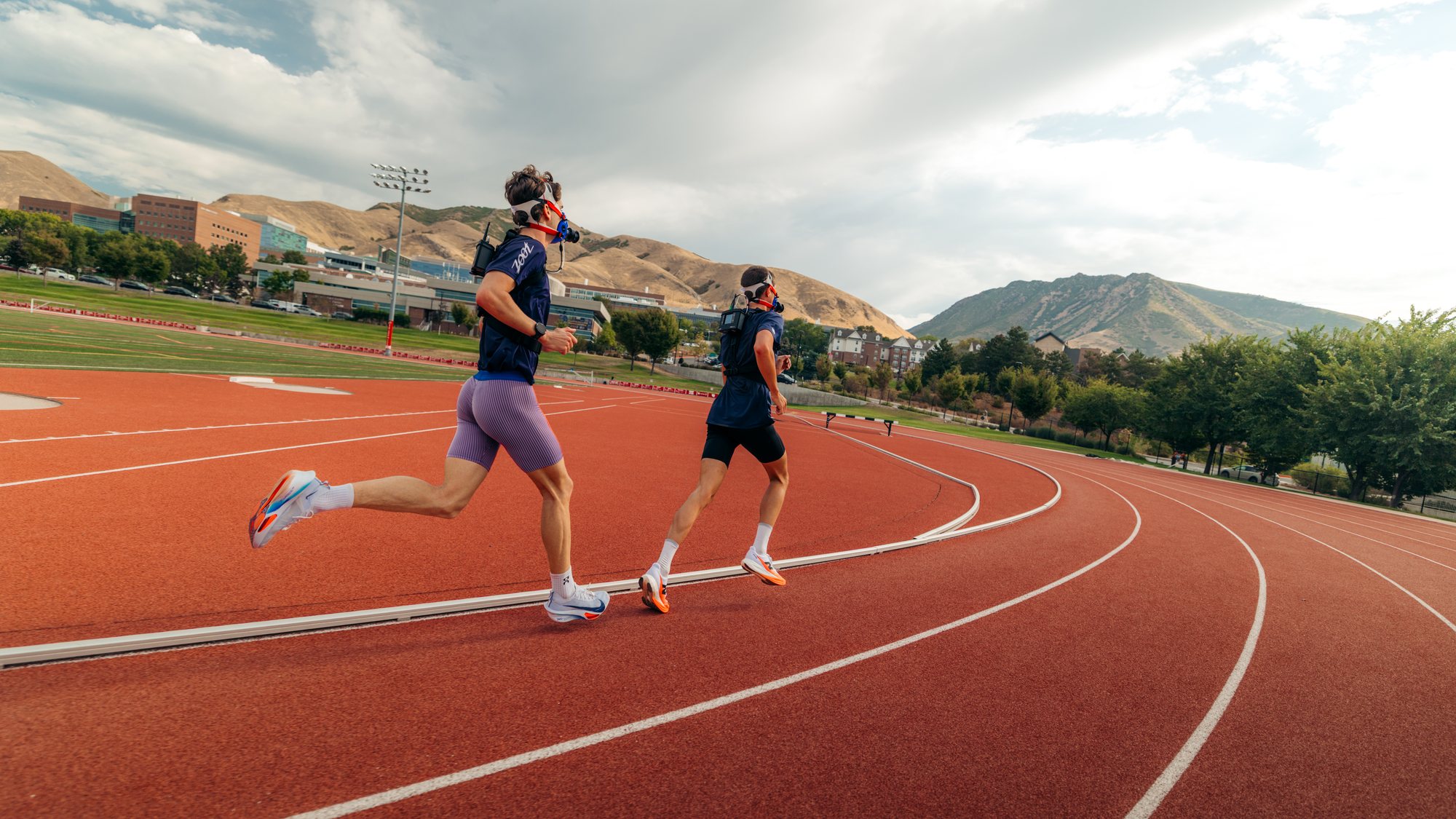
12:47 Okay, enough. Why we do this clinic? Where does the idea come from? The idea actually came from my fellow here, Parker Spencer, you can see on the left-hand side here in the left-hand image, who is a coach of, you know, Project Podium, which is USA Triathlon's, yeah, you know, program aiming for developing athletes for LA 2028 Olympic Games. And we basically had this idea to combine testing camps, which we would do anyway, said, okay, you know, there's a lot to learn in the testing camps. And now let's combine that this is theoretical knowledge.
13:25 And this will mean that depending on which location you choose to go, you will have a great chance to actually test, for example, professional athletes in a professional setting, something that in the past many, you know, participants really enjoyed doing because it's, it's a very rare, you know, very rare situation. And we're also going to use that as an opportunity to share, you know, some experience, especially in the U.S. camp, it will be Parker. In other camps, it can be someone else who also then comes in and additionally towards a program, which I just explained, which I just explained, will share some, you know, additional insights, some experience from his sport.
14:10 It will be likely mostly triathlon and cycling specific, you know, we might have a professional athlete coming in, for example, or professional coach to share some additional experience. This is a guest speaker role, which we are currently filling. So this is why we're doing. So this is why we did it to combine or why we, why we're doing it because we, you know, we want to combine the practical application of the testing with some practical experience.
14:39 And then additionally, you know, all the theoretical knowledge.
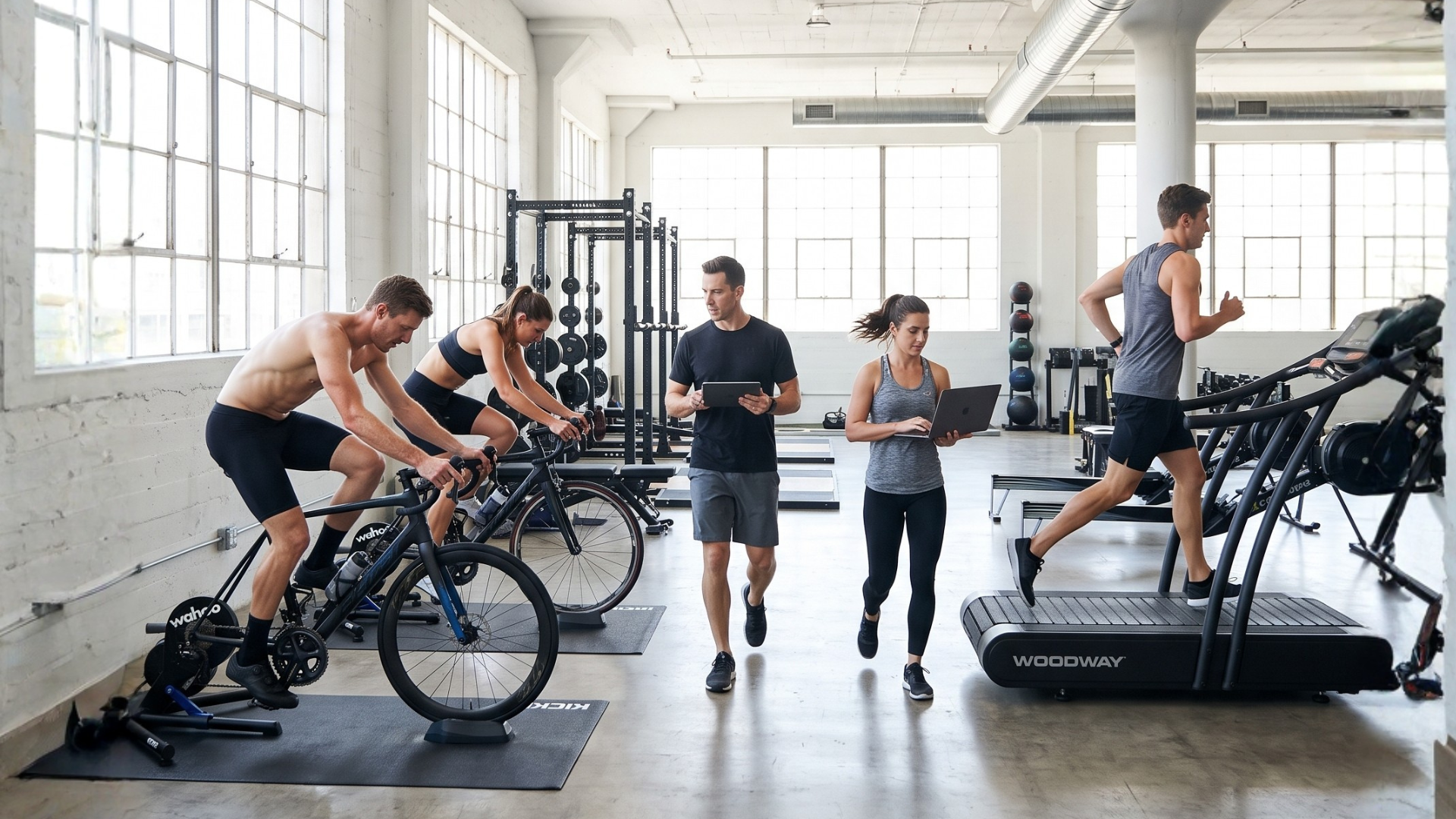
14:45 So what to expect? Now we're going into the, we're going into the examples. So one thing is, excuse me, one thing is testing. We're going to do full metabolic testing. We're going to have athletes there. We're going to have lactate meters and equipments there. We're going to have a mobile VO2 analyzers there. So you can learn about, you can learn about this. So as I just mentioned, ticks and trips, how to become an expert in lactate samples. No squeezing, no messing around with the blood, no, you know, sweat and dirt.
15:25 And it just really, really good work. I don't want to promise anything. In the last camp, everybody received a free lactate meter thanks to, thanks to Nova. Don't want to promise that this happens again. But, you know, you will walk away with at least the experience. And maybe there's a good deal. Maybe there's free devices we will see. So again, this was the case for the U.S. What I mentioned here, it might be, again, the case for the U.S. But don't necessarily expect that in the European countries.
15:59 Okay. So it takes us with a grain of salt here. Okay. What are we going to do? We are going to use a new protocol, which we're going to launch likely next month with INSIDE, which is a classical, so to speak, stepwise incremental test, which ends early. So it ends, as you can see on the screen, and it ends when the tests, when the lactate concentration exceeds like, you know, three, four, five millimole. So somewhere around threshold. So it's all from warmup to threshold. Then there's a rest, and then there's an all-out step.
16:35 So you will learn this new protocol. It's quite cruel because it decreases the testing time to approximately 20 minutes to half an hour. We did 25 minutes-ish in average in swimming, including the VO2 measurements. Same for running, and cycling is a little bit less. So expect around testing time, half an hour for athletes. There's this new protocol. That's also what you're going to learn. Again, three to four submaximum loads, just incremental, three minutes, five minutes. We will do outdoor testing on the bike. So you will learn the ability how to do outdoor testing on the road with flexible protocols.
17:21 So, you know, just give people a rough outline, do approximately this power, this power, that power. And, yeah, that's going to be the protocol of the test. We're going to have pre- and post-lactate measurements, as always, several samples afterwards. And, again, because we have several athletes there and several participants, everybody will have the chance to take lactate samples and learn that if you're not familiar with that. Okay. Okay. Yeah, total time I mentioned that, less than 30 minutes, new protocol. You're going to learn that. You're also going to see the latest advances of the app, basically simulating and calculating the, you know, the lactate concentration.
18:08 To answer the question from Simon here along the way, yes, new protocol works for outdoor testing. It's even more flexible than the old one. The key is, the key is you're really using the low lactate concentration. So you don't have the recovery times.
18:25 You don't have the recovery times in between the efforts, which tremendously saves time, obviously. Okay. So, yeah, that should be fine. Bill, sorry that you are late. You missed maybe 10, 12 minutes, 15 minutes. But we have a recording, which you can watch afterwards. You missed the overview of the camp. Okay. For everybody who's late, by the way. We have a recording and you're going to be able to view that afterwards and get my overview, my personal take of the camp. And how, what to expect and what the experience is going to look like.
19:06 Okay. Then we are going to discuss, obviously, the interconnection of the metabolic profile with the lactate concentration. And a big thing as well, we are going to address accuracy and reliability of lactate testing. That's a big thing. That's also part of an update, which you will see in this camp already. Integrated checking of the accuracy. So, you will not only do a lactate test. You will also see when you upload the data, what is the accuracy of my result compared to gold standard lab testing. And based on the equipment you're using.
19:43 So, that's something new you're going to learn in this camp as well. So, just as I mentioned, for all most important markers, which are VO2 max accuracy, VLA max accuracy thresholds, so maximum lactate steady state and fat max. It's going to be what you can see in every test that we do there. Okay. Okay. If you're not familiar, I know most or many of you who are here are. Some are not. This is why I'm showing it. What you will learn is how to use this lactate testing to create a full metabolic profile.
20:15 So, a full picture of the performance metrics of the athlete. And, of course, I didn't mention that explicitly, but, of course, you're going to learn all about that. So, if you are a user or you're not a user, it doesn't matter. Okay. That's maybe something to be very clear on, which I didn't mention beforehand. If you're here today and you're not an Insight user, don't be turned away. We had non-Insight user in the past in this camp, and they really enjoyed it. They had a lot to learn from it.
20:49 It doesn't really matter. You will get your Insight account for the time of the camp. You will learn everything of all the graphs, everything that you see and how to apply it. So, if you're not an Insight user, no worries. That's totally cool. You don't have to be. Most of the things you're going to learn, you can apply and use without having an Insight account. It's maybe easier to do it, and some things are better applicable if you do. But if you do, for example, full lab testing, most of the stuff you might be able to do without Insight as well.
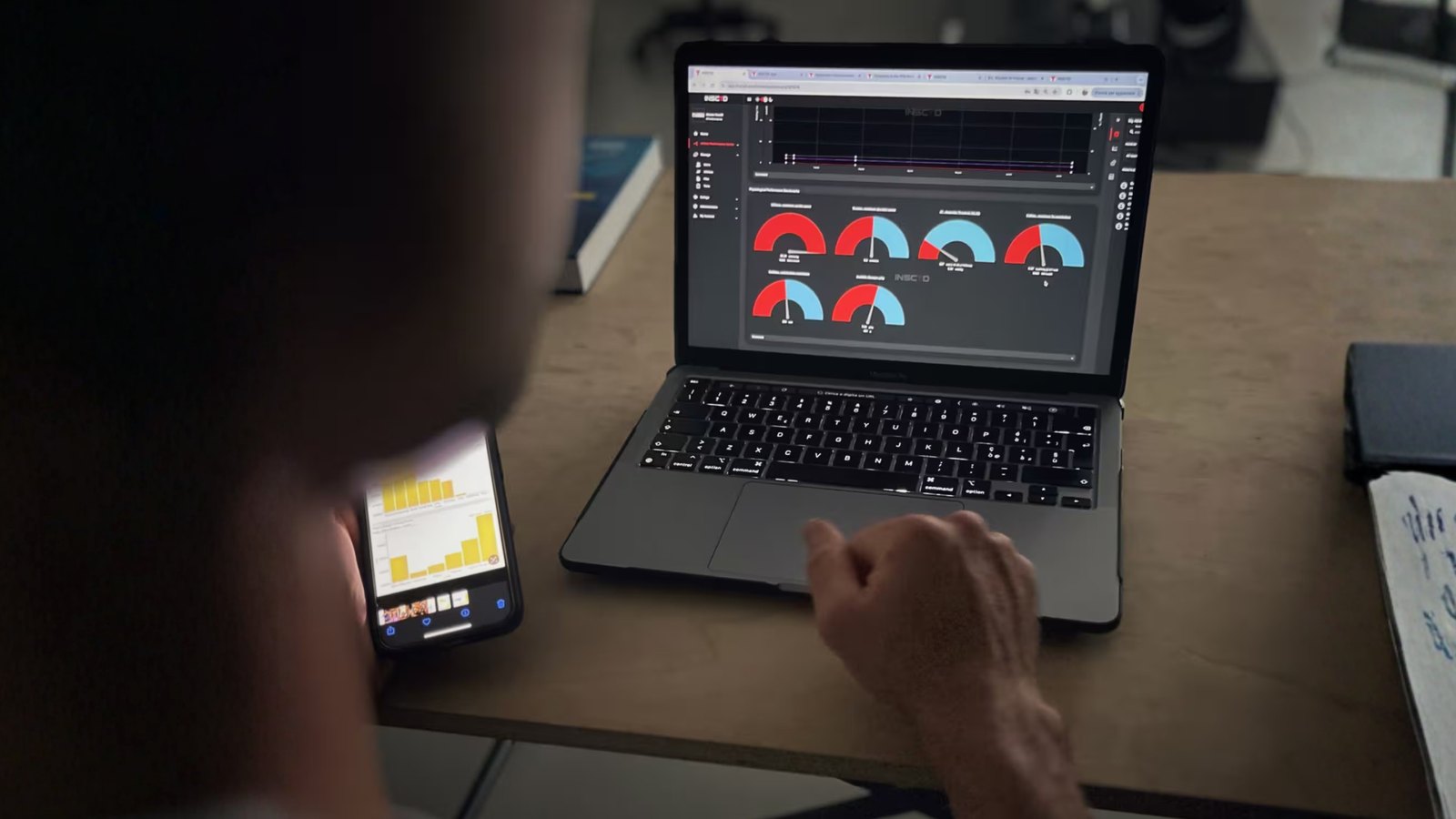
21:22 If you are an Insight user and you say, oh, you know, I know these graphs, but I'm maybe, you know, not super familiar with that element or that element, that is gone after you leave. Okay. So, after your camp, you will understand everything that you see here. And, of course, there's time to answer all questions and details and learn from others how they use it. So, we will, of course, process the data in Insight accounts. Again, we're going to have demo accounts there. And you will be, as I just mentioned, be able to understand the physiology behind each data point if there are some questions.
21:56 And then, as mentioned in day number four, we're going to use that for training implications. Okay. Now, let me give you a few examples. What is quite rare? And there's an argument saying, okay, why do you guys do swimming and running economy in the camp? Because many people will not be able to do that at home, so to speak. And that's a valid point. But I would argue that's actually one reason why we do it. Because that offers you the ability to learn it. Maybe, you know, you do it in the future.
22:34 Or it is just an additional point of knowledge for you to better interpret and understand and read performance data. So, we will look at, and you will learn, economy and running, economy and swimming. What do I mean with economy and running and swimming, and why does it matter? So, now we are going into the examples. Economy means energy demand versus velocity of movement. So, energy demand versus, you know, running speed or swimming speed. And when I say energy demand or energy expenditure, I'm not talking about oxygen uptake.
23:11 I'm talking about, you know, the whole energy, no matter if it comes from aerobic or anaerobic metabolism. Okay? So, we are normalized for substrate utilization. That's something you're going to learn. It's a big, big issue in the practical application. And also, sometimes in the literature that, you know, you will learn why it is important to not neglect, for example, fat oxidation rates. And how they influence running and swimming economy. Okay?
23:39 And as I mentioned, you will also learn about the aerobic and anaerobic energy contribution. Why is that important? Okay? And how we do that? So, we are going to use a Cosmit K5, which is arguable, maybe the most accurate mobile VO2 analyzer out there. And the most comprehensive methodology, I mean, in running, it's relatively straightforward. In swimming, it's a little bit more complex. Is to actually measure oxygen post-exercise. Okay? I'm going to stop here for a second because I have two people complaining about the voice. I'm going to do something really quick that hopefully fixes it.
24:28 Okay? So, give me three seconds. Sorry for the interruption, guys. But I really want to make sure that you guys have the best experience here.
24:46 Okay. So, let's hope that this made my bandwidth here, what I just did, a little bit better. Okay. So, back to this topic, why that is an important one and why we do that. You will learn to measure oxygen uptake, so VO2 data in swimming. And we use a technology which is called reverse extrapolation, which means that the analyzer gets on the athlete after an effort. And then we use something which is, you know, we look at the post-exercise VO2, which is, you know, the most difficult way how you can measure economy.
25:24 And I would argue this is why we do it. Because when you learn that, then you will learn something that is absolutely top-notch Olympic-level swimming federation methodology. And if you learn that, everything else is easy and straightforward. Why does it matter? Why does it matter? Because the economy in swimming can be vastly different. What you see here is the energy demand on the y-axis and the swimming speed on the x-axis. The black dashed line is economy from the literature. So, what the energy demand should look like as a function of speed based on literature on high school or college freestyle swimmers.
26:07 And you can see the differences are very big, right? So, you can look at the purple curve and you can understand there's an oxygen demand or if it would be aerobically oxygen uptake of 50 milliliters. So, purple athlete swims 1.2 meters per second. The yellow 1.3 and the blue one 1.45. And that is, you know, on different planets, so to speak, right? To give you an example, in the use a triathlon project podium program. So, all athletes in the same training group aiming to qualify for the next Olympic Games, there's a twofold difference in energy demand for a given speed or almost twofold, 1.9 or something.
26:54 Okay. So, what does it mean? So, what does it mean? It's huge implications to either work on training, to either work on technical improvements or work on more like, you know, increasing the engine, so to speak, like, you know, higher VO2 max, for example. Okay. And that is super important because the effect of change in VO2 max is not even as big as a change in economy. So, what I hear, if you're coming from a triathlon background, this is related to Ironman, so long distance swimming performance.
27:32 Okay. On the Y axis, you see the time saving over 3.8 kilometers swimming, so long distance swimming. And on the X axis, you see the improvement in performance. Yeah. Orange improvements in technique. Okay. And blue improvements in aerobic performance. So, for example, if you would be able by training to improve VO2 max, VO2 max, the aerobic capacity, obviously, at least by 20%, which is a big ask for an amateur athlete in terms of training volume and how often he or she needs to go to the pool, you would only see six-minute improvements.
28:14 If you do the same amount of improvements in technique, you would see easily double 12-minute improvements. Okay. So, this is part, again, I'm just giving examples. This is part of what you will learn in the camp in terms of learning, you know, what to target on, what to target on training, what to concentrate on, where you get the most effect out of it. So, just one example. I'm running two examples. Another one, very important one, is doing training zones. So, we are going to look at training zones from a physiological point of view, and I'm going to give you one example here.
28:49 Classic training zones as a percentage of FTP or threshold value. What you see here, 70% maximum lactate steady state, just steady state, 110% in an eight-minute effort, and 125% off threshold in a four-minute effort. Very classic training zone, right? 70% threshold, base training, long, slow distance trainings, might people call it zone two training, 110% threshold, eight minutes, a long interval, not a high intense one, 125% threshold for most people, so-called view to max thresholds. Okay. And so, like the shorter ones. And here is things that you are going to learn and why it is so important.
29:36 This is one athlete. This is one athlete with one phenotype, one metabolic profile. And for this athlete, 70% threshold means a carbohydrate combustion of 84 grams per hour, which is manageable if the athlete does two hours of training or something. But, you know, if the training would be four hours, a long Sunday ride, that's hardly manageable, right? Hardly. So, when you look at the eight minutes, 10% above threshold interval, the view to max utilization is only 72%, which is not super high. And it's a so-called view to max interval, four minutes, 125%.
30:26 It's just 80%. In contrast, you can have another athlete with another metabolic profile where this training zones would fit, right? You can see base training, 60 grams carbohydrate, the long interval, 84, view to max utilization. The view to max interval 90%. This is what is great based on the literature, right? Because the literature tells you the higher the utilization of view to max, the better in terms of aerobic rotation. But then you run into another problem. You run into the problem that athlete A has a very low utilization of VLMX, only 5 and 7%, as you can see here, which means VLMX will not adapt or decrease.
31:13 And if this is what you want, great, then you achieved it. Athlete B, however, has a super high training stimulus on VLMX, especially in the view to max interval, 90% view to max, but 21% VLMX trigger. So what I'm saying is that the athlete uses in this interval 21% of this glycolytic capacity, which we know, and this is what you're going to learn in the camp, is almost guaranteed to increase the VLMX of the athlete. So if that's your aim, that's great. If, for example, athlete B would be an Ironman or long distance triathlete or marathon runner, you don't want to increase VLMX, then yeah, you would have an increase in VO2 max, but also an increase in VLMX.
32:02 So no increase in threshold of head combustion rates. Okay. So that is, you know, some things you're going to learn. Okay. Jens, I've got your message here. I will come back to that. Okay. So these are the examples, how you can, how you can make this better. You will learn, you can make this better by, for example, doing a four minute interval at 100% VO2 max power, eight minute intervals at looking at the percentage of VLMX and base training based on carbohydrates. And then you get training zones, which ensure that the VLMX stimulus is not too high, depending on what your goal is.
32:44 And that's, by the way, one seems that is really a big part of this camp because we have a lot of questions about that. How to set up the training to drive VLMX adaptations in one or the other direction. Okay. And this is the same, this is the same, same thing here for those athletes. John, thanks for your message. I will come back to that in a second. Okay. So that's the same thing. You will learn how to set up training zones based on the athlete phenotype and based on what the goals are, which partly answers the question here from Jens and John.
33:22 But let me come back to that. Okay. Bear with me. The other thing you're going to learn and here, maybe we can already make a bridge to John's question here about coaching ice hockey players. If we're going for example, and again, I'm just giving an example about the camp. We're going to look at how to design recovery periods. So I showed you on the first slide day number one is energy metabolism basics. You're going to learn something like this. Very exciting, very important thing. This is a 30 seconds all out effort.
33:59 Okay. High intense effort. Maybe comparable a little bit to, you know, you know, 30 seconds of high intensity ice hockey playing or something else, MMA or fighting or something. And you can see here, for example, the white bars pyruvate production. So basically glycolytic flux rate. Okay. Lactate accumulation pyruvate production is all markers for glycolytic energy production. And what you can see is that after 15 seconds, this is already reduced by 75%. So during this effort, you know, glycolytic energy production decreases. So at the end of the effort, it's not as anaerobic as you might think.
34:42 Okay. That's an important point. More important. And this is like, you know, eye opening for most people. This is the same 30 seconds effort after four minutes rest. Same 30 seconds all out. Same markers. And what you see here, what you learn is that the anaerobic energy production is a fraction 20, 25%. In this case, the third interval. So three times 30 seconds. Left picture, first one. Right picture, third bout of 30 seconds. Four minutes recovery in between. Okay. Why is that? This is because the 30 seconds was so high intense that the pH level dropped and low pH inhibits glycolysis and therefore inhibits anaerobic energy production.
35:39 And you can use that and you need to understand that in order to be able to design the right training, because depending on what you want to achieve as your athlete, you either want to on purpose shut down anaerobic energy production. So, for example, for example, for example, maybe ice hockey players or football players or sprinters, you know, where you basically saying sports where you need a certain amount of anaerobic energy production. Maybe you don't want to do that. So if you set up the recovery period wrong, no matter how good the on phase, what I mean, the interval itself, the intensity and duration, 20 seconds, 30 seconds a minute, whatever you do, high intense interval training.
36:30 If you don't get the recovery period right, all the training effects that you're looking for is basically diminished. And that's exactly what we're going to learn here. Okay. Because again, insufficient recovery shuts off anaerobic energy supply. If you want that, great. Use it. If you don't want that, avoid. That's exactly what we're going to address. And maybe that already answers a little bit the question of Jens and John here, you know, can I apply this to other sports and just cycling or triathlon? Yes, you can. And I will answer the question for the testing itself as well.
37:08 Okay. There's a graph and insight which you can use for that, which is looking at lactate recovery, lactate accumulation. We also have a prototype tool which can do it more precisely, where you can actually enter a specific effort and it calculates the recovery scenarios for you. So that's also something we can use in the camp, but I hope that you get that you get the point of it. Okay. Another thing you're going to learn is fat metabolism training. Okay. Fat metabolism training. Yes, of course, we are going to discuss things like high fat diet and faster training and that this is going to change your fat combustion.
37:55 And so the general pictures. But again, what is really the fun and key part about these camps is that it's really about applying knowledge also on a, so to speak, micro level, meaning on a specific training session, not just the overall training regime or training strategy level. And this, if we take this to the fat metabolism, and this is my example here. Okay. So what you will learn in more detail is a mechanism how air quotes carbohydrates and fat compete to enter the aerobic metabolism. Okay. So aerobic metabolism runs as you will know or learn either on carbohydrates or on fat.
38:44 You may know this. You will learn a little bit more details, not too much biochemistry. Again, really applied. Okay. So you can have one of those two energy sources in a certain mixture. That's great. That's what you likely know already. What most people don't know and where it really becomes important for application and training is what is the actual mechanism that decides if you burn fat and carbohydrates. And remember what I said in the opening slides, what I really want you to take away from this camp is to learn the mechanisms.
39:20 I don't want you to learn, you know, five or 15 or 500 different studies what they did. I just want you to learn one thing. And that is a mechanism. So you can look at the training schedule and understand, ah, this is what happens. Okay. So let me show you something. Okay. This is actually some old article. Sorry, I've been lazy. There's a new one that came out just last month about how lactate drives and I can put the link in here later. How lactate drives and effects fat combustion rates.
39:53 Okay. And we're going to drive into that. Why? Because lactate measurements, either calculating lactate using inside during a training session or measuring it is something pretty accessible. Right. It's at least more accessible than putting on a metabolic card, for example, during an ice hockey game. Right. Sorry to always come back to that, but it obviously applies to other exercises and trainings as well. Okay. So here's one thing which we're going to learn how to use that. This one shows you on the y-axis, the saturation of PDH, pyruvate dehydrogenase.
40:32 You can forget the name until the camp, so to speak. This is the one enzyme that, so to speak, rules if the fuel comes from fat or the fuel comes from carbohydrates. And it's affected by lactate. So your actual lactate concentration in an actual training scenario drives or decides if the athlete is using more fat and more carbohydrates. So this curve is going to look a little bit different for different athletes. That's something we're going to discuss and discover. But if you, you know, if you just want to have a better idea on, you know, the benefits you're going to learn and give you that example, look at how steep it is.
41:17 Look at how steep it is between one, two, three, four millimoles. So what I'm trying to tell you is if you move from two millimoles of lactate concentration and base training. So you do a base training, maybe with your ice hockey player. Maybe you do it with your MMA fighter or your marathon runner. Doesn't matter. Which what kind of athlete, a high-rex athlete, CrossFit athlete, doesn't matter. Let's say you do a base training zone two, right? Because you want to train fat metabolism, right? That's the aim of the training.
41:49 You say, hey, today we know we had to fight. We had to game. We had some interval trainings, whatsoever. Today, it's an easy day. We do some fat combustion training. Okay. If in this training, for whatever reason, athlete is, you know, joking around with another athlete doing some sprints or it's a cyclist or some cycling exercise and do some high efforts. And if they go, because of that effort from two millimoles just shortly, especially if it's a high anaerobic athlete like a fighter or team sports player or sprinter or maybe a CrossFit athlete, they're doing one effort.
42:24 10 seconds, 20 seconds. The lactate concentration is going to increase from two millimoles to six. And that means your fat combustion goes from 60% to 20%. And now we are going to put the puzzle together. And again, I'm going a little bit into rabbit hole, but I want you to understand, to have an idea of what we are going to do when I say we're going to do things apply to training. Look at this one. This one here told you how much lactate one can recover as a function of intensity.
42:57 Gray curve. That's lactate per minute. 0.5. So just remember this number. Let's say the ability to decrease a lactate again is 0.5 millimoles per minute. Okay, great. So back to our example. If our athlete, because of a short intense effort during this recommended low intensity training jumped from two millimoles, let's say to six millimoles. Fat combustion is going to plummet. And to get rid of that amount of lactate is going to take him or her 10 to 15 minutes. So this is what you're going to learn.
43:35 You're going to learn that you need to look at the heart rate or GPS data or whatever you have or advise your athlete and say, hey, wait a second. You are this anaerobic high lactate phenotype. So really, if I want to really make sure that my base training, fat combustion ride, fat max training works, I need to tell this athlete to be super sensitive and aware to not do a heart acceleration at a traffic light on the bike or to run up this bridge just for fun or to sprint in between or something.
44:13 Because it will mess up the training and you will understand the mechanism why. And this is just one example of what I'm saying is it's going to be beyond just, hey, eat more fat and then you burn more fat. Okay. So sorry for the rabbit hole. We're going to look at VO2 max improvement. Main thing, that was a topic for my PhD studies back in the day, looking at molecular cellular adaptations, mechanisms, that trigger VO2 max. Okay. We are going to look at, like you see here, chronic training load.
44:49 Okay. We're going to explain more in detail what this means, chronic training load and the percentage of chronic VO2 max utilization. And how this affects the training. So for example, you can see here, and this is one athlete. Okay. This is one athlete, longitudinal, many weeks of training. And you can see that increasing the chronic training load from three to six, seven percent-ish, blue line, VO2 max increases. Okay. And then what you would expect, if the training load is too high, 10 percent, 9 percent, 8 percent in this range, then the VO2 max decreases again.
45:29 So we are going to look at, and again, we are going to learn the mechanism why that is. We're going to look at what is actually the sweet spot based on the phenotype. How much load can the athlete handle to optimize aerobic adaptation? Okay. Very important. I'm going to have a few more examples of that. We're going to look at a lot of fiber types, fiber types changes. If you want your athlete, again, this is why it applies to different sports. If you want your athlete to have more type one fibers because you want him to run a marathon, it's important.
46:03 If you don't want him to have more type one fibers because you want him to be explosive and fast and reactive, it both applies. It's just two sides of the same coin. And for example, if you're going to look at rest days, you're going to look at the mechanisms and the physiology, why more rest days or less rest days lead to more or less type one fibers and fiber type shift. And again, the mechanism is important. I don't want you to learn any results of any study.
46:34 I just want you to understand the mechanism. And it doesn't matter if it's how many rest days it is. It's important to understand, okay, if I increase number of rest days, this is the effect. Because obviously this is one element of a training program, right? Do I do 10 hours of training per week in three days? Or do I do 10 hours of training on five days? There's a difference in the adaptation and we're going to discuss that. So that when you set up training program, as an athlete, you can say to that, maybe better, you know, can we find another day where you can make time for training?
47:10 So that you can have this discussion or you can say, I know what phenotype you are because we tested you. And therefore I can tell you, you can train five times per day per week. It's great. Or it doesn't really matter. Or it's super important. That's what I want you to learn and walk away first. I think two more to go. I've saved the best for last. One of my favorite ones. I think this is the second one here. That's a great one. And I know it goes a little bit into a rabbit hole.
47:39 We're going to obviously take more time in the chem to discuss it. You will learn it. So I hope you want to follow me on this one because I think it's pretty exciting. What do you see here on this red box graph? The y-axis, you don't need to go into the details. Same for the chem. It's a marker for mitochondria. So simplified speaking, y-axis on the left side tells you amount of mitochondria. So the capacity of the muscle to produce energy aerobically, aerobic capacity of the muscle.
48:14 Okay. On the y-axis. And it was a constant training and you can see it over approximately two months, right? 50 days, 60 days. So you can see that at the beginning of the training, the increase is faster, right? There's faster gains. And obviously as the training continues because the training is not changing, it's the same amount of training, same kind of training, same intensity, everything is the same. The training effect levels off. Which is most of you would say from a practical experience, of course. Of course, if I always do the same training, this is my athlete.
48:51 This is what I would expect. It's a beginning. There's a big effect. And then the effect becomes smaller and smaller. So rate of adaptation gets slower. This is what you see here. What you're going to learn. And again, this is then how you can use this is why that is. So this one here, the right box is the actual molecule that tells the muscle to produce more mitochondria. And you can see, you could almost flip this curve around, right? If you take the curve on the right hand side and flip it around, like mirror it horizontally,
49:27 you would have the training adaptation of the mitochondria. So if you are going to look at why that is, what do you need to change in training to keep this, what do you need to trigger this marker, this molecule, which tells the muscle, hey, produce more mitochondria, how to keep this on a high level. To avoid this leveling off, this is the mechanism that you're going to learn here. Okay. And then I think I have my last one for today. I'm going to be fast on this one.
49:59 Sorry, I was wrong. This is the second last one. We're going to look at fiber types and fiber utilization at different intensities. That is going to be vital. It's a key understanding. If you have taken the college courses on muscle physiology, a lot of this will be familiar, but we will take it to the next level in terms of application. Okay. Because I'm a little bit short on time, I really want to answer your questions. Let me go to the last one, which is the most important one or whatnot, maybe not, but
50:30 one of the most important, one of my favorite ones, a great study. What we're looking at here is different fiber types in terms of different muscles. White vastus, the low curve means a fast-fitch fiber type. This is your sprinter type. Your, yeah, you know, high anaerobic athlete, weight lifter, you know, maybe a fighter, you know. Then you have the middle ones, the soleos type. This is your marathon type, long distance, so on and so forth. And then you have the top one, red vastus, is your intermediate guy, right?
51:04 So maybe a fighter, maybe ice hockey player, a football player for sure. A cyclist who does classic rides or can sprint a little bit. So it's this mixed aerobic, anaerobic athlete. So we will work a lot in these categories, anaerobic athlete, aerobic athlete. We will use the performance testing with VO2max and VLMX to understand what kind of athlete we have. And then we can apply something like this. So what do you see here? What do you see here is, again, a marker for mitochondria. So Y axis means, you know, how much mitochondria there is.
51:39 And you can see the exercise intensity. The intensity of running exercise. And so what do you see? You see the anaerobic athlete. The anaerobic athlete, the white vastus, the anaerobic muscle type, okay, has almost no reaction at the low intensities. So either you exercise this muscle at 62% or 73% of VO2max, which is basically like base training or threshold, no reaction. Don't expect this muscle to grow more mitochondria. Okay. But when you then increase the intensity to high intense interval training, this is by the way, what you're going to learn why high intense interval training is so effective, especially in non-elite endurance athletes.
52:24 You can see it's an exponential shape. The more intensity, the more mitochondria. Great. This middle one here, this is our long, slow distance athlete, marathon runner, Ironman kind of, this is our slow twitch muscle. What happens here? What your triathlon coaches, you know, know, you increase intensity and you see a better effect, right? If I do a little bit more of threshold training instead of base training only, I see higher VO2max values. That's great. But what coaches in elite cycling and elite triathlon also know, if you bring it up to high intense interval trainings, 100% VO2max, close to VO2max, the training effect levels off.
53:12 And if you go too high of this intensity, it actually decreases. So the athlete is losing performance. They are losing mitochondria mass and therefore losing ability for oxygen uptake by too high intensity. And this is so key. This is why I said this is one of the most important graphs because it tells you based on your athlete, which intensity you should be choosing. And hence down, this is maybe one of the most common questions coaches ask, right? Should I do more zone two training, more threshold training, more high intense interval training?
53:48 Okay. And I want to give you one more thing and then we'll come to the questions here. Now go back a few slides and look at, we said, oh, we're going to look at muscle fiber shifts. You're going to learn how and why and how long it takes that a fiber types becomes more white and are more red. So what this means is that picture that you see here is not static. It changes. It changes by training. And this is something that you will also see, right?
54:24 You might get an athlete in where you do a lot of high intense interval training this or some intense intervals in the beginning. And the athlete might not be very trained. So we have a certain amount of fast-twitch fibers and those fast-twitch fibers, as you see here in this example down here, react very, very good to this high intensity. So you see a big improvement in aerobic capacity. You see better threshold values, better fat combustion, better view to max. But then the fiber types shifts. And then you are here in the middle curve.
55:01 You're here in the middle curve on the Seleos one, we actually have a lot of high intensity. We actually have higher intensity do not yield improvements anymore. And all of a sudden you ask yourself, hey, wait a second. This training I was doing last month, last year, last season, which was so successful, is not working anymore. And you will learn here the mechanism why that is. Because of course, there must be a reason for it, right? There's a reason why a certain training first works and then has diminishing effects.
55:32 And why changing the training can yield to better improvements. That's, you know, this is where it comes all together. And this is what you're going to learn. So I guess this was my last example. Sorry for the rabbit holes. Come to the questions now. So you have these, these camps, which you can visit if you haven't booked yet. Igor asked me to create a code. So you get no matter where you book as a webinar special, 100 bucks off. And yeah, I think, I hope I was able to give you an idea on what to expect.
56:16 I'm going to walk my work, my way through the questions here now that you guys have. And hope you have more questions coming in. Okay. And based on what I, what I said. So I want to address the question of Jens and John here to start with. It's a little bit just like, you know, I'm not coaching triathletes. I'm not coaching. I'm not coaching cyclists. Is that for me? Okay. So of course, I will not argue that if you coach MMA fighters or ice hockey players, testing
56:55 and swimming doesn't feel like that you really need that. However, I would argue, as I just tried to explain, if you are able to test in such an environment and swimming, where you have to deal with water and so on and so forth. If you learn to test there, you can test everywhere. That's one point. Second point is, even if you have a sport, again, like a team sport, like football, ice hockey, basketball, I just mentioned in the previous camp, we had somebody from American football. Even though the sport is not running or cycling, it is very likely that you're testing sport.
57:34 So the discipline, the type of movement you're testing will be running, right? Football players, for example, are tested and running. Higher rocks athlete should be tested and running because it is a majority of their movement type. And so this is where it applies. And even if it doesn't, even let's say you coach kayakers, okay? So the testing protocol is the same. The processing of the data is the same. So you will still learn it even though you don't learn it in a boat. Okay? So I hope this makes sense.
58:05 And then from the training adaptation, I hope, and from the application, we will always use these examples of this is what it does. This is why it's called phenotype training, right? We will always look at the example. This is what it does to a high anaerobic athlete. This is what it does to a hybrid athlete. This is what it does to a, you know, endurance athlete. So yes, what you will learn is applicable for, I would really argue, whatever sport you do. I would even argue that it's often more exciting than just, for example, pure triathlon.
58:40 Because pure triathlon, you know, all these anaerobic stuff, yeah, an Olympic or sprint distance different, but if you coach, you know, long distance athletes, most of these things about creatine phosphate, for example, which I mentioned, right? That is really like learning about creatine phosphate, how it's used as an energy source, how fast it does it take to recover, how you can improve or speed up the recovery of creatine phosphate in between high intense effort. This is not marathon running, right? This is not triathlon. This is ice hockey.
59:17 This is football. This is American football. This is high rocks. This is CrossFit. All these intermittent sports, right? There's a lot you will learn. I'm not saying this to market it to you. That's, you know, that's like I showed with the recovery times. That's really, you know, where the complexity comes in. So what else do we have? I hope I answered this question. If not, Jens and John asked me again. Tim is asking, can you explain the recommended testing frequency and how you determine retesting timeframes? Well, it's a little bit off scope maybe for this camp, but let me say that something that
59:53 we will discover in the camp. So because you're going to learn the mechanisms of training, you will also learn what is the likely timeframe. So how long does it likely take for a certain adaptation? And that actually then is a smart decision of when to retest. So what I mean with that, if the training intervention should show an effect on whatever metric, VLA max, VO2 max, whatever you measure or interested in, if the training intervention, because of the mechanism should show an effect in 30 days, then it's good to test again after
1:00:30 30 days, at least to, you know, maybe like do a spot check. And we're going to discuss how you can do a spot check without running a full test sensor software. And if the training application you're looking for takes two months, three months, four months, then it makes more sense to test later, so to speak. Right? So yes, that's what we're going to discuss. And this would be my general advice here. There's another question for you, Tim. I'm coming back to that in a second. Bogdan is asking, wouldn't VO2 max be more of a power measure than a capacity?
1:01:09 Yes. Great. Actually, right. Technically VO2 max is a power because it's a flux rate. So you can translate it using caloric equivalent, certain liters, certain kilojoules over time and kilojoules over time is basically power because power is joules per second. So energy over time. So totally right. Yes. I may use the word, if I've used the word capacity here, my apologies. That's because I'm so influenced by that wording, I guess. We call it in the software aerobic power, not aerobic capacity because of that. But especially in the English speaking or US world, it's often referred to aerobic capacity.
1:01:56 And it doesn't really make sense because capacity would mean you would multiply it for the time again. But that's going a little bit into a rabbit hole here then maybe. So second question from Tim here. How essential is the portable med card to accuracy of what you teach at camp? So the accuracy of the med card is important so that you have, when you use it, if you have a reliable data, you can believe in, right? So what I'm saying is if you measure the VO2 and you say, ah, I measured that and therefore I know my swimming economy is good or bad.
1:02:29 And therefore I'm going to concentrate and training on, for example, swimming technique, then you need to make sure that the data is reliable. Otherwise you run in the wrong direction, obviously. That is the only aspect why we're using VO2. We do not need VO2 in running and we do not need VO2 in cycling. We also not necessarily need it in swimming. But I want to do it anyway in the camp because again, but I tried to explain it. It is a little bit of a rare opportunity to showcase how it works.
1:03:07 So it's more really like, hey, if you never had the chance to do, especially mobile med card testing in like field tests, which is not very common. Like even let's say at university, you would likely not learn that because most universities just don't have the equipment. I mean, this med card is about 35 to 40 K. And in the last camp, we even had two of those. So that's why it's there. So it's more for you to be able to learn it and experience it. And I would even argue more experience it even to have a tangible, to understand what's going on, how sensitive the data is, how difficult it is to get good data with a metabolic card, to learn that and be more aware of that.
1:03:53 It's not that you need it, not at all. And it is the cases we are going to discuss. I would argue the training cases and real-world examples are 90, 95 percent not med card dependent. But again, to have this opportunity to learn it, that's why it's there. John, a rabbit hole question and maybe for Kem, but do you take into account an athlete's blood lipid panel serum insulin levels, given that elevated insulin is associated with increased lactate concentrations? No, not directly. So we are certainly going to discuss the influencing factors on lactate, but we are not directly jumping into a blood panel question.
1:04:36 We had this a little bit in the last camp, I would argue because we had a few handful of physicians there. But this is more like a clinical question than a performance question. This is not going to be directly in there. What is related to especially testing with athlete is, and this obviously links to the insulin question, is glycogen depletion and carbohydrate fueling. So it's going to be discussed in this way because again, it's about practical application. And this means, you know, that we are going to talk more about the influence of food without taking the intermediate step or the steps that lies in between, which is the insulin one.
1:05:24 Okay. Okay. Okay. So this is asking how much of the lectures will be done by you and Lerven in percentage. Oh, so yeah. Hope you like it, but most of the lectures, so to speak, all of the lectures are going to be done by me, except for the guest lectures. So experiences and practical sessions will be not only me, but what I presented here today about the energy metabolism, about the phenotype and like mechanics of training adaptation. So that is, that is, that is, that is going to be me.
1:06:05 Mathieu, can I combine CPAD testing with use of insight? Yes. That's what we're going to do. We're going to run VO2 data with lactate. We're going to run lactate data without VO2 data. That's exactly what we're going to show you. And you will learn what are the differences. We will learn a lot about the accuracy or reliability of CPAD testing and how it affects the results and how it's used. And especially you will learn how it's interacting with lactate. So for example, high lactate concentration indicate anaerobic energy contribution, which is obviously per se, not captured.
1:06:49 Bio VO2 analyzer. And you will learn how you, when you combine these two, the CPAD with the lactate, how you get a more complete picture. So these interactions definitely are in there. Yes. Okay. So seems like I'm running a little bit out of questions here. I'm going to give it a little bit more time and wait another minute in case somebody is typing or if you want to start typing now and give you a question, do so, please. Jens, would you talk into the PPD testing at the camp?
1:07:24 Well, I mean, as I mentioned, you know, the camp is really hands on. If you have questions, PPD testing related, we will certainly address that. We are working on a PPD update, which I'm super excited about, which is coming the next week already. The camp is primarily about lactate testing, but yes, we will have example of PPD testing as well. And again, it's like always, right? If the group or someone in the group demands it, like whatever it is, right? If you have questions, then as long as I can cover it, which was the case, I would argue almost often in the past, we will cover it.
1:08:04 So PPD testing could be a part of it. And if, you know, for example, it's something that you want to dive into and just imagine you would be the only one. If you want to go to the next one, everybody says, oh, no, Jens, don't go there, then, you know, it would be set up in a separate one-on-one meeting. That would be no problem. Tim is asking impact of fueling strategies. Yes. Fueling strategies, I didn't cover it today, but not even or only in racing, but yes, I didn't cover it.
1:08:36 Thanks for asking, Tim. That's a good heads up. We are going to spend quite some time as actually, now that you say that, a big mistake for me to not mention it, maybe. We are going to spend quite some time on understanding the mechanisms of fueling, macronutrients, fat and carbohydrates in training, how it affects the adaptation, how it affects muscle fiber shift, how it affects, you know, an extreme scenario, an edge case scenario, everything you're trying to do with your training. Not only for fat combustion, but also for VO2 max adaptation.
1:09:15 You're going to learn why, you know, low carbohydrate diet may increase or does increase in some cases VO2 max better than high carbohydrate training. And I would argue, and this, this is really on me that I didn't mention that. So if you're still here, listen closely. What is going to happen and what happened in the past is that when we are on day four and we are designing example training programs, what is going to happen? You will not be able to unthink the fueling. So you will make training recommendations and you will actually say, Tim, I want this athlete to do this training to achieve this.
1:09:55 But only if he, she, if he or she feels like this or that, because it's, it's a part of the puzzle that always needs to be there. I would argue that when you leave chem, you will very unlikely prescribe a training program without at least, let's say one sentence on, Hey, take care that fueling looks like this and not like this or vice versa. Yes. Michael, would the camp also make sense for an athlete? Great question. We had athletes in the past, which was great because it, you know, it always adds to the mixture, right?
1:10:34 So we had ambitious athletes, age group winners, you know, some very ambitious athletes in the past. And so my short answer would be yes, but you would need to have some hunger and maybe, you know, some pre knowledge of it. So basically I'm saying if you are an athlete who has some knowledge, some base knowledge about physiology and you know whatever lactate a little bit, or you know what a Viotamax is, you've heard the term creating phosphate before, you know, you have some basics. Then yes, then definitely yes.
1:11:12 And if you don't, or you are unsure about it. And that's not only for athletes, that's for everybody here. I would argue that then, you know, we would send you one of our college courses or give you some, some of our college courses to prepare. If you're like, Oh, you know, I would like to join, but I'm a little bit afraid. It's a little bit too much. Then in terms of the step, right? From where you come from and where we want to take you. Then I would offer, reach out and say, Hey, you know, I want to join.
1:11:44 And when you book your ticket, we would give you, you know, free access to some of the college courses, which would help you prepare. That is, yeah, actually a good point. That's something I would say. If you are, it doesn't matter if you're a coach or an athlete or a scientist, scientist, not you will have some basics, but long story short, if you feel like, yeah, I'm interested, but I'm a little bit afraid. You know, the step from where I come from and where this is, is a little bit too much.
1:12:13 Then I would argue, if you want to invest two, three hours beforehand on learning, then I would give you our college content and you can use that to repair. Tom, is it possible to recover in some ways as extra one-on-one discount for the people who purchased a ticket before this webinar? Tom, it is the same discount we offered before. So we gave discount to users. We stopped that as the early bird. And basically now, you know, we give the same discount. So you like with most purchases, you cannot have two discounts, so to speak.
1:12:55 Right? So that's how this work. I hope this answers the question. So Falk is asking about cross-country ski testing. Falk, I'm not quite sure if you mean outside of this webinar, meaning the next 24 or 48 hours, or if you can cover outside the camp. And to answer both scenarios, if you ask me a question outside of this webinar about cross-country ski testing and I haven't answered, then I apologize. And please just send it again to Sebastian at insight.com. If you are asking, can we do something cross-country skiing specific outside of the camp?
1:13:45 I would say no. I would say likely it's more interesting to bring it in the camp because as I explained, this is what really makes a group strive to learn from so many different sports. And also what I also explained is the camp is normally so busy. The only possibility where we would chat about cross-country skiing would be over a pizza, beer, wine whatsoever in the evening after the lectures, which is, by the way, also what happened in the past that, you know, basically you go out of the lecture room or go out of the lab or swimming pool.
1:14:25 And then people meet in smaller groups somewhere and keep chatting about it. Okay. During camp. Okay. Yeah. Then Tom, sorry, this would be the case. This would be bring it to the group and we answer it or we chat over lunch break or in the evening. That's normally what happens. So yeah, it's, it's almost 24 sevens, you know, so we either, at least for myself, I either sleep or I do something related to like either lecturing or in the breaks chat about these individual cases, happy to do so.
1:15:03 Marcello. Marcello. Another question. If you have a lactate plus meter, do we have to take it? No, you can bring it for sure, but you don't have to, of course, you would not need to use your own lactate strips or something, right? We got you covered there. You don't need that. Marcello. Marcello. Mature. Recovery metrics over days with the use of insight regarding creatine. I have to admit, I don't understand your questions. So you are asking for metrics of recovery in insight. If you're going to look at creatine kinase in the blood.
1:15:46 I'm not sure if I understand it right. Right. Creating kinase in terms of a blood marker on a day to day variation is maybe something that comes up as part of the camp. It's not in there per default. But it's one of these topics where I would say, yes, I have data. It's likely something that would pull out data from training camps of different kind of athletes and so on. And we can discuss. And, you know, this is where the dynamics of the camp comes from. Like it comes to questions like this and then, you know, we might dive into that.
1:16:26 But it's not necessarily key part of it because it's not, you know, so to speak, this direct related to if you do this kind of training, expect this adaptation. And this is really the main thing we want to cover. So I hope I understood your question right. Okay. There was a bunch of questions after I waited a minute. So I wait for another minute. If you want to leave because you're tired of these questions, do so. I hope you enjoyed the webinar. If you have more questions, reach out.
1:17:00 Okay. This is what I'm going to do. I'm going to put my email address here in the chat. And so you can reach out if you have further question. So I'm not sure if that worked. I think wait a second. There's some kind of auto correction. So now you should have my email. So if you have other questions, then please reach out. I'm waiting for more questions to drop in here. So if you want to stay and listen to those, feel free to do so. Again, those are the camp dates.
1:17:42 If you plan to join, that would be great. Don't expect to have time to travel day number one or day number four, unless you live in the area. Because we're going to start like at 9 a.m. We are going to finish at like five or six. And therefore don't expect to be able to travel too far. If you travel from further away, then you would need like in my case, and I think all of the cases arrive a day earlier and leave the day after. So John is asking how many attendees per camp.
1:18:31 Last time we had around 20 and I felt like we could handle maybe up to 25. But I think this is where the cap off is. It will depend a little bit on how many athletes we have and how many people we are, but approximately that. And that is also a good number because I mentioned earlier, we do these breakout groups and work groups together. And this would allow us to have four to five groups or four to five people each, which is a good working size.
1:19:06 So that's approximately what we're going to do. Tim is asking, do you have a goal for future training if the current schedule doesn't work? I would argue, I would argue very likely spring 2026. Very unlikely to do something else in 2025. But, you know, if you guys like it and if it's people like it as much as they did thus far in spring, then I think there's a higher likelihood that we do it again in spring 26. That would be my answer to this one. Okay. Tim.
1:20:00 Can we be tested as an athlete during the camp? Hey, Tom, feel invited. Likely, yes. Yes. If you are an attendee and you want to be one of the gimme pigs, so to speak, to be tested, in most cases, feel invited. The only location where that might be difficult is Park City. In Park City, the venue is already sited. It's a big complex where you have like training facility on the one wing of the building and seminar lecture rooms and hotel on the other side. And we stay there with the national team.
1:20:41 And therefore, it's more unlikely, I would argue, if you signed up or you want to sign up for one of the other locations, I would say it's more likely that we can accommodate that. Thanks, Jens. Go coaching. Good luck with that. And again, I'm going to give it another 30 seconds to see if there's another question. And if not, then I guess we are going to hit the stop button here for now. Okay. Tom Graves, and I see you in Girona.
1:21:19 Great location, by the way, and great timing, I guess, end of October. We did a pure testing camp there last year around that time. Okay, guys. Then thanks again for watching. Thanks again for joining. If you have more questions, please reach out. You got my email. You can use the form on the web. You can use the form on the web. You can use the form on the web. You can use the form on the web. You can use the form on the web. You can use the form on the web.
1:21:43 You can use the form on the web. You can use the form on the web. You can use the form on the web. You can use the form on the web. You can use the form on the web. You can use the form on the web. You can use the form on the web. You can use the form on the web. You can use the form on the web. You can use the form on the web. You can use the form on the web. You can use the form on the web.
1:21:56 You can use the form on the web.