[Webinar] From raw test data to training plan
Sebastian Weber builds a complete metabolic profile from a conventional lactate test: VO₂max, VLamax, FatMax and MLSS. He then changes single physiological markers to project performance, and turns the result into a training strategy.
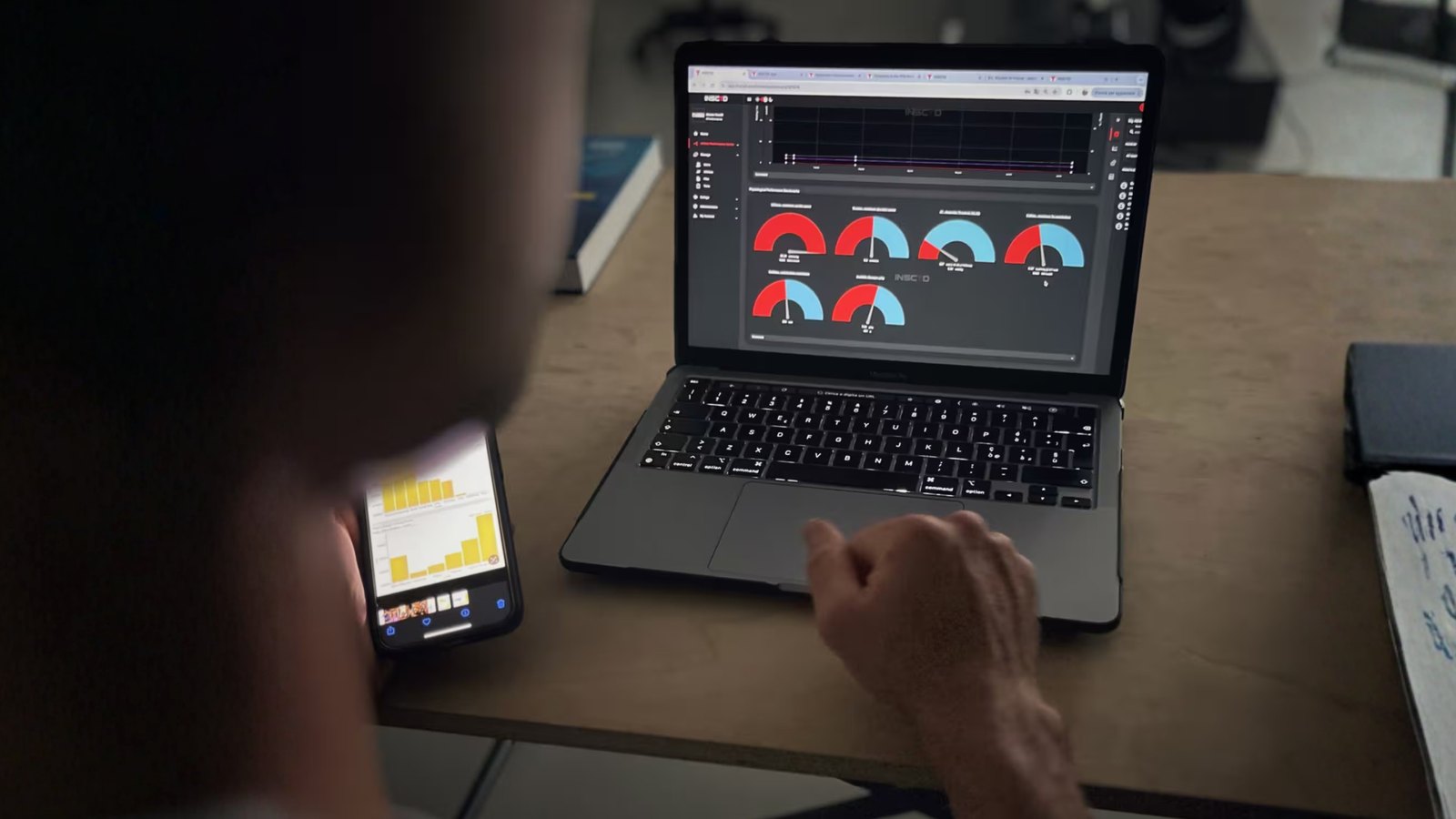

Sebastian Weber, INSCYD's founder, builds a complete metabolic profile from real test data: VO2max, VLamax, FatMax and MLSS. He then projects possible performances by changing specific physiological markers, and turns the result into a training strategy.
Conventional lactate curve testing gives you an outcome, the lactate concentration, but not the physiology that produced it. This session closes that gap.
He starts from a conventional lactate profile test and decodes it into a complete metabolic profile: VO2max, VLamax, FatMax, MLSS, carbohydrate utilization and more. No new protocol, no new equipment, no extra time. The same raw data you already capture, with a far more differentiated outcome.
The full circle, from raw test to training:
- Data capture: which testing protocols can be used, and what determines whether a protocol produces usable data.
- Processing: how to decode the raw data into a complete metabolic profile of an athlete.
- Interpretation: reading the metabolic profile against what the athlete is trying to achieve, and identifying the single metrics that limit performance. Then building a digital physiological twin and changing its physiology to quantify how aerobic and glycolytic metabolism shape that performance.
- Translation: building custom training zones from the individual physiology of the athlete, rather than extrapolating intensities from a threshold number.
0:00 And why we ended up here and how we ended up here, you might be familiar, you might have seen that we're doing this coach education camp. Sarah just said hello. She was in one of our camps just recently. And in those camps, one day we're doing only or primarily use cases. So we look at all different use cases from different sports, different athlete levels, and look at different metabolic profiles and what to do with the data in terms of developing a training strategy. And this format from these on-site educational camps, this is what inspired us to do this kind of webinar.
0:41 So likely you will be going to see more of those webinars in the future. Today is heavily on the lactate testing side. We will have other ones more on the PPD testing side, which is a testing which doesn't require lactate measurement.
0:58 For everybody who came a little bit late, before we start now in just a minute, let me explain again. I'm going to start with a short overview about what we do in general with lactate testing data. And then we are going to dive into two test cases, two pretty different ones. I, on purpose, selected different sports and different goals.
1:21 And we're going to, you know, I'm going to show you a few things, what we do with the data and how we can use the data to make training programs and interpretation of the data and so on and so forth. And I would love to have you ask questions along the way. Okay. I know it will distract me because I have to read the questions. But as again, as I said, it's not primarily me just talking for 45 minutes and then taking your questions. I think we should try to make it pretty interactive here.
1:52 Okay. That's the whole idea about this format. So with that, I will start explain what we do with the lactate testing, the data that you send in. Again, if you, today, I just select the lactate test data. And next time, I will select also data from PPD testing, from remote testing using speed or power only. So either resend or send data for the next session, or I'm going to select of the existing ones. So if you have sent data already, we might look at it this next time as well.
2:26 Okay. So with that, I have confirmation that you can see my screen and you can see this presentation here. And therefore, I'm going to use a few slides to explain a little bit what is going on with lactate and why it is such a center molecule in the metabolism. And this is not because it has been around for ages and everybody knows that and knows for minimal threshold and lactate testing and so on and so forth. And that's maybe also a little bit difficult sometimes to explain because people often see lactate as something that has historically been there always in like sports science or for a long time.
3:10 And therefore, it's a little bit difficult sometimes to shift the mindset and shift the framework to put lactate into another bucket than from just this molecule that I measure and to make like a training zone to something more. And that more is becoming more and more popular in the scientific literature, but also in the sports science community. The understanding that lactate really is a center molecule of the metabolism. Why? Because it connects, as this picture here is supposed to show you, it connects the glycolytic metabolism, which basically produces lactate out of carbohydrates, glucose or glycogen.
3:51 So the stored form of glucose in the muscle. It produces lactate out of that fuel. And it does that always. That is very important and often a misunderstanding. It's always when you are using, while I'm speaking here, while you listen, whatever you do, if you're sleeping, walking, running, sprinting, whatever. Whenever you use carbohydrates as a fuel, those carbohydrates are formed into lactate in the glycolytic metabolism. Almost 100%, 99%-ish become lactate. And then this lactate is used as a fuel, as an energy source in the aerobic or more precisely oxidative metabolism.
4:33 And this is why lactate is so central, because looking at lactate gives us information about both sides. On the glycolytic side, how much is produced, and on the oxidative side, how much is burned. And this is also what makes it so complex and so misunderstood. So how does it look like and how we utilize that? What I show you above here in the two upper black and white graphs is two graphs from the literature showing us on the left-hand side the oxidation of lactate. So how much lactate can be oxidized as a function of oxygen uptake.
5:14 And basically, I'm showing that because it's pretty well understood, which seems to be obvious, right, that the more you want to oxidize something, the more lactate you want to burn, the more oxygen you need. So therefore, if you plot oxygen uptake in terms of VO2 against lactate oxidation, you get an almost linear relationship. Because basically, the more oxygen you have, the more lactate you can burn. That is the one part. That is, so to speak, if you wish, this red part here of the oxidative metabolism. The lactate production, however, looks quite different.
5:49 The lactate production looks exponential. So when you increase intensity, lactate production also increases, but not linear, but exponentially. And this is what you can also find in inside. Mark, yeah, not full screen, then I don't know where I am, but I can make it a little bit larger. How about this? So that's also what you've seen inside because you can see, for example, the lactate combustion here, blue line, right, as a function of intensity, power output, running speed whatsoever. And so gross lactate production. And both is in millimoles per minute.
6:33 So make no mistakes. This is not basically the lactate concentrations, the red ones. This is a real production, how much is produced per minute. This is why it's not steady. It's a low intensity. Why it's not decreasing down here. But why it is constantly curve linear exponentially increasing. Okay. So that means that the concentration that you measure is going to be the result of those two. It's going to be the result of how much lactate has been produced in the glycolytic metabolism and how much lactate has been oxidized, combusted in the aerobic metabolism.
7:14 And that basically is then the result of these two is what we can measure. So the lactate concentration that we do measure is the result of those two, how much lactate is produced. And I just put some other screenshots here of the literature, for example, from Rogatzky and Gladden already 11 years ago. I think it was when they published a paper saying lactate is always the end product of glycolysis. It's just, again, reassuring. It's nothing to do with pyruvate, nothing to do with oxygen, lack of oxygen or something, right?
7:50 Lactate is always the end product of glycolysis. And lactate combustion is a function of the oxygen uptake. Again, also very well described in the literature. And the concentration is the result of both. So what I'm going to show you here today and what we did with the data that you sent in is we are deciphering, we are, so to speak, disclosing the lactate production and the lactate clearance behind the concentration. So I would like you to read this graph here from the right-hand side. So from right to left to understand how we, so to speak, reverse engineer the metabolism of your athlete based on the lactate concentration.
8:39 So what we are doing, what I'm going to show you is we are going to use the lactate concentration to calculate what was the lactate clearance and what was the lactate production that actually created that concentration. And then the lactate production, again, because it's always the end product of glycolysis, the lactate production informs us about the glycolytic flux. So it informs us about the speed, so to speak, simplified speaking, at which the glycolytic energy metabolism is exercising, is working, is running. And that means we also understand how much carbohydrate is used because, again, lactate is only produced out of carbohydrates.
9:18 It also informs us how much energy comes out of the glycolytic metabolism, right? Because there's a certain amount of energy in terms of ATP, if you want to view it this way, that comes with a certain lactate production. And then the lactate clearance, as I explained, is directly related to oxygen uptake, right? The more oxygen you have, the more you can combust. Therefore, higher oxygen uptake means higher lactate combustion, okay? So, and there you can see that we are basically from the right-hand side, from the lactate concentration side, can reverse engineer, so to speak, everything that's going on in terms of carbohydrate combustion, fat oxidation, because the fat oxidation is basically how much total fuel you need to combust via how much comes from carbohydrate.
10:07 So, and then the fat oxidation is basically what you need to do, and then the fat oxidation is basically how much you need to be able to do that. So, and then the fat oxidation is basically how much you need to be able to do that. So, and then the fat oxidation is basically how much you need to be able to do that. So, and then the fat oxidation is basically how much you need to be able to do that. So, and then the fat oxidation is basically how much you need to be able to do that.
10:19 So, and then the fat oxidation is basically how much you need to be able to do that. So, and then the fat oxidation is basically how much you need to be able to do that. So, and then the fat oxidation is basically how much you need to be able to do that. So, and then the fat oxidation is basically how much you need to be able to do that. !
10:37 So, and then the fat oxidation is basically how much you need to be able to do that. So, and then the fat oxidation is basically how much you need to be able to do that. So, and then the fat oxidation is basically how much you need to be able to do that. So, and then the fat oxidation is basically how much you need to be able to do that. So, and then the fat oxidation is basically how much you need to be able to do that. So, and then the fat oxidation is basically how much you need to be able to do that.
10:43 So, and then the fat oxidation is basically how much you need to be able to do that. So, and then the fat oxidation is basically how much you need to be able to do that. So, and then the fat oxidation is basically how much you need to be able to do that. So, and then the fat oxidation is basically how much you need to be able to do that. So, and then the fat oxidation is basically how much you need to be able to do that. So, and then the fat oxidation is basically how much you need to be able to do that.
10:49 So, and then the fat oxidation is basically how much you need to be able to do that. So, and then the fat oxidation is basically how much you need to be able to do that. So, and then the fat oxidation is basically how much you need to be able to do that. So, and then the fat oxidation is basically how much you need to be able to do that. So, and then the fat oxidation is basically how much you need to be able to do that. So, and then the fat oxidation is basically how much you need to be able to do that.
10:55 So, and then the fat oxidation is basically how much you need to be able to do that. So, and then the fat oxidation is basically how much you need to be able to do that. So, and then the fat oxidation is basically how much you need to be able to do that. So, and then the fat oxidation is basically how much you need to be able to do that. So, and then the fat oxidation is basically how much you need to be able to do that. So, and then the fat oxidation is basically how much you need to be able to do that.
11:01 So, and then the fat oxidation is basically how much you need to be able to do that. So, and then the fat oxidation is basically how much you need to be able to do that. So, and then the fat oxidation is basically how much you need to be able to do that. So, and then the fat oxidation is basically how much you need to be able to do that. So, and then the fat oxidation is basically how much you need to be able to do that. So, and then the fat oxidation is basically how much you need to be able to do that.
11:07 So, and then the fat oxidation is basically how much you need to be able to do that. So, and then the fat oxidation is basically how much you need to be able to do that. So, and then the fat oxidation is basically how much you need to be able to do that. So, and then the fat oxidation is basically how much you need to be able to do that. So, and then the fat oxidation is basically how much you need to be able to do that. So, and then the fat oxidation is basically how much you need to be able to do that.
11:13 So, and then the fat oxidation is basically how much you need to be able to do that. So, and then the fat oxidation is basically how much you need to be able to do that. So, and then the fat oxidation is basically how much you need to be able to do that. So, and then the fat oxidation is basically how much you need to be able to do that. So, and then the fat oxidation is basically how much you need to be able to do that. So, and then the fat oxidation is basically how much you need to be able to do that.
11:27 So, and then the fat oxidation is basically how much you need to be able to do that. So, and then the fat oxidation is basically how much you need to be able to do that. So, and then the fat oxidation is basically how much you need to be able to do that. So, and then the fat oxidation is basically how much you need to be able to do that. So, and then the fat oxidation is basically how much you need to be able to do that. So, and then the fat oxidation is basically how much you need to be able to do that.
11:51 So, and then the fat oxidation is basically how much you need to be able to do that. So, and then the fat oxidation is basically how much you need to be able to do that. So, and then the fat oxidation is basically how much you need to be able to do that. So, and then the fat oxidation is basically how much you need to be able to do that. So, and then the fat oxidation is basically how much you need to be able to do that. So, and then the fat oxidation is basically how much you need to be able to do that.
11:59 So, and then the fat oxidation is basically how much you need to be able to do that. So, and then the fat oxidation is basically how much you need to be able to do that. So, and then the fat oxidation is basically how much you need to be able to do that. So, and then the fat oxidation is basically how much you need to be able to do that. So, and then the fat oxidation is basically how much you need to be able to do that. So, and then the fat oxidation is basically how much you need to be able to do that.
12:09 So, and then the fat oxidation is basically how much you need to be able to do that. So, and then the fat oxidation is basically how much you need to be able to do that. So, and then the fat oxidation is basically how much you need to be able to do that. So, and then the fat oxidation is basically how much you need to be able to do that. So, and then the fat oxidation is basically how much you need to be able to do that. So, and then the fat oxidation is basically how much you need to be able to do that.
12:15 So, and then the fat oxidation is basically how much you need to be able to do that. So, and then the fat oxidation is basically how much you need to be able to do that. So, and then the fat oxidation is basically how much you need to be able to do that. So, and then the fat oxidation is basically how much you need to be able to do that. So, and then the fat oxidation is basically how much you need to be able to do that. So, and then the fat oxidation is basically how much you need to be able to do that.
12:21 So, and then the fat oxidation is basically how much you need to be able to do that. So, and then the fat oxidation is basically how much you need to be able to do that. So, and then the fat oxidation is basically how much you need to be able to do that. So, and then the fat oxidation is basically how much you need to be able to do that. So, and then the fat oxidation is basically how much you need to be able to do that. So, and then the fat oxidation is basically how much you need to be able to do that.
12:27 So, and then the fat oxidation is basically how much you need to be able to do that. So, and then the fat oxidation is basically how much you need to be able to do that. So, and then the fat oxidation is basically how much you need to be able to do that. So, and then the fat oxidation is basically how much you need to be able to do that. So, and then the fat oxidation is basically how much you need to be able to do that. So, and then the fat oxidation is basically how much you need to be able to do that.
12:33 So, and then the fat oxidation is basically how much you need to be able to do that. So, and then the fat oxidation is basically how much you need to be able to do that. So, and then the fat oxidation is basically how much you need to be able to do that. So, the other downside of this dataset here, which we are going to use is that there was no post-exercise lactate measurements. And you do lactate testing, you will be aware that if you go to a high lactate concentration
12:53 during an effort that post the effort, one minute, two minutes, three minutes after whenever, you will see lactate is still increasing. And then order to make a correct and accurate analysis, we need to understand what is the real maximum lactate concentration. So, not what was measured immediately after the end of the test, but it's important to understand what was actually measured a minute, two minutes after. So, what was the real maximum concentration? So, therefore, this 5.3 is a second last step here, 20 kilometers per hour is, you know,
13:29 likely a little bit off because if you would have stopped the test and continued measuring, then maybe we would not have measured 5.3, but 5.5 or 5.7. And also the 7.9 is likely a little bit higher, right? It's likely more like 9 or something because the lactate would have creeped up. So, there are some uncertainties, but still we are going to use this data because it's a great example of just a very classical, you know, incremental test. Okay. So, that's the data that we got. And with that, I'm going to try to change my screen here and basically walk you through that.
14:08 So, this is, and let me know if that is in terms of zoom, if that is good now. So, this is a test data, how we ran it, 71.8 kilograms, 6.6% body fat. With that, we can calculate the, or estimate the different body compartments, how much body water, how much body muscle, and so on and so forth. And then we use this data, uploaded it to Insight, and created this whole analysis. How does this work? Let me take you through that. So, these are the different steps.
14:46 This is the visualization of the protocol. And you can see the measured lactate. You can see the measured lactate as dots. And you can see the calculated lactate as a software is recalculating in a red line. And you can see that, you know, it's a little bit overestimating here. Again, maybe because we didn't have maximum post-exercise lactate. And the same here. But if you zoom in, you see, we're talking about like 0.3, 0.4 millimole. That's approximately the error of measurement of a device. So, we have to be fair and say, assuming a hunt had lactate meter, the best one, the Nova, the EKF lactate scout, they have approximately 0.35 millimoles off.
15:31 If you use a lactate pro 2, it's even 10%. So, what we see here is within, you know, what kind of makes sense. Quick question here. Byron is asking if it's better to do three-minute steps or five-minute steps. Great question because you've seen this one here, three-minute steps. Again, this is not an original insight test. So, this is just a random three-minute test from somebody who is not testing with insight. Therefore, it's likely to be three minutes. If you, but to answer your question, if you do use a VO2 analyzer, VO2, VOCO2 metabolic heart, this kind of stuff, then it's better to have five minutes or longer.
16:18 Because you can see here, we also calculate the oxygen uptake, which is a blue one. And you can see that it takes some time until it levels off, right? It's similar to a heart rate, right? It takes up to two minutes or something to get to the steady-state condition. And if the step is only three minutes long, then you don't have enough, so to speak, meat on the bone where you can average the data. So, basically, for that reason, if you do a VO2 analyzer, it's better to have longer steps.
16:50 With insight, currently, we are still recommending five to six minutes, but we are working on a new protocol. And that new protocol, maybe, or likely, as if you would ask me today, likely is as good working with three-minute steps only. So, likely, we will be coming out, hopefully, fingers crossed. This protocol recommendation where you can do only three-minute steps, therefore have a shorter test protocol.
17:22 Rodrigo is asking, to be clear, we run the protocol with a Lactate meter, and then we fill up the info and the tests, and we get this graph. Yes, you get this graph and all the other graphs that I'm going to walk you through now. This graph is maybe, I would say, the least exciting one, so to speak, because this is just a visualization of the test data. And then Roy is asking here about the body fat. I would give you a short answer in this lactate testing.
17:51 The error sensitivity, so the error that you get in VO2max and VLmax are, it's not too bad if you're off with the body fat. So, if I'm saying, what I mean is that if you, instead of 10%, you put in 15% or something. It's not that bad. You will have, like, decimals of change. The PPD is different. When we talk about the PPD in the next session, you have to be a little bit more precise. But the error sensitivity in the lactate test is not that bad.
18:21 So, basically, when you're off 5% in body fat, you are likely less than one milliliter off in VO2max. Remember, metabolic cart is at least 2.5, so that's not a problem. We do have recommendations for that, Roy. We do have a few bioimpedance scales, which we pulled from a meta-analysis, looking at validation, which we deployed to several elite sports organizations with awesome results. So, I just would ask you to reach out and we can send you the scientific paper and the device.
19:00 Stefan, for your question, which Excel template to use, I would ask you to reach out to customer support. We have a few beta testers with a new one. And hopefully, like, we are currently running the last beta test with a new protocol, and then we are going to have just one version of it. Stefan, for the interruption, guys, with the question. I hope this was relevant for the others as well. So, we get this graph. We get an understanding on basically this graph is there to understand for you what is going on inside the algorithm.
19:37 Okay? That is, you know, important for us or helpful for us. That you have an understanding of what is happening to the data. And that is the same reason for the graph here below. Whereas in the graph below, we show you the measured data as dots and then the calculated data as a lactate curve. This is not a fitted curve. So, to be precise. Of course, we could do mathematically a better job fitting the data. What you see here is lactate concentration calculated using the specific VO2max and VLmax and body composition and so on of the athlete.
20:21 Okay? That is important. What is also important going back to Rodrigo's question here real quick, that there should be one all out effort. Here again, I did not have this information. I just assumed that the last step of the step test was all out. It was still fatigue. Okay. The other option to explain about a little bit of the protocol real quick would be to just stop the test. The faster and more accurate option would be to stop the test around here. So, in this effort where we've seen three point something close to four millimoles or at the latest here where we've seen above five close to six millimoles.
21:00 Stop the test and do a separate all out effort. Always lactate. Rodrigo, going back to your question real quick. We can do 95% the same of everything that I'm showing here, but without any lactate measurement. Then it just has to be all out test. That's what we call the PPD. And that's what we're going to show as we use examples from this kind of testing in the next session. In this session, we are going to use data from lactate test because then it's easier for me to explain the methodology and otherwise we would be all over the place.
21:37 So, that's what we do with the data, right? That's, so to speak, a glance into the algorithm what happens to the data. Then what is the output? The main output I'm going to get quickly over those graphs. This is just visualizations. You can customize it and visualize whatever you want. I want to jump here. This is what I'm more interested in. So, again, you can customize these dashboards however you like. You can add metrics. You can remove metrics, so on and so forth. But this for me and also explaining what we do here in terms of interpretation of data is the main part where I wanted to go.
22:16 This is, we get the results in terms of VO2max, in terms of VLmax, threshold value, FEDmax. The calculated available glycogen. So, how much glycogen is stored. It's going to be very important in this case here. LT1 if you want. And then we have other metrics which look at how, what is the ability of the athlete to combust lactate, which is what we call the recovery index. I'm going to show and the accumulation index, which is basically looking at how quickly the athlete accumulates its lactate. So, what are we looking at here?
22:54 What do we see? We have a VO2max of almost 77, which is honestly speaking pretty high, right? That, if you've seen it before, that's an 18-year-old athlete. So, pretty fit, right? But what we see in terms of a phenotype of the athlete, we see somebody with a low VLmax. It's also no surprise if you might remember the raw test data, the maximum lactate was a 7.9. So, don't get it wrong. I'm not saying that you can just take the maximum lactate and say, oh yeah, this is a VLmax.
23:30 But it speaks the same language here, right? It speaks the same language. The guy has a relatively low VLmax. And the high VO2max, meaning going back to my graph here, right? The lactate concentration that you measure is the result of the combustion of the production. Because he has a high VO2max, he can combust a lot and therefore have, relatively speaking, a low lactate concentration if it's not balanced off this lactate production, right? So, we look at an athlete, obviously very highly trained. So, there's a relatively low VLmax.
24:16 So, more like an aerobic guy, you could call it like a diesel, it's not an aerobic guy. He will not likely be the fastest sprinter or whatsoever, okay? So, that's why also, you see a pretty high threshold value. Like a little bit below 310 per kilometer, I would say, is decently fast, right? There's a VO2max of, or at threshold, he utilizes approximately 88%, 87% of his VO2max. Also, his fat max, so maximum fat oxidation rate is pretty high, with almost 700 kilocalories. So, a very fit athlete.
24:58 Real quick, because I have some question here for Mathieu, VO2max is estimated by the software, depending on what wording you want. Some people prefer the word modeling, some people prefer the word calculated. Yes, it is a calculated one. Happy to go into this discussion. If you use a V metabolic card, it's also calculated from, you know, flow and basically from chemical reaction at a cell. If you're interested, or everybody who's interested in that, we do have a lot of internal and external peer-reviewed validation papers on that.
25:40 For example, that's proven several times that, as coming back to this example, but we can also talk about the threshold or whatever. For example, this VO2max that you get here only from lactate measurement is as accurate as the one that you get from a metabolic card. What I'm talking about is, there was a study, for example, doing two metabolic card tests on the same athlete. And the difference between the two metabolic card tests in the laboratory was bigger than the difference from the lactate-calculated VO2max to each of the two tests in average.
26:13 So, again, if you're interested in that, reach out. There's a lot of stuff on our website about the science and the papers. If you have questions, bring it on. Grill us for that. Happy to answer anything about that. And MLSS, there was a question of Yiri. Why is it all to the left here? That's basically because how I set it up. You can customize these graphs and you can have your own, so to speak, benchmarks. What is a high VO2max? What is a low VO2max? What is a high MLSS?
26:46 And just how I set it up, this will drive this meter. Okay. Let's go a little bit to what the athlete wants to do, because I'm seeing we are running super long here on time, which is great for me. I just want to be mindful of your time. So, the guy who sent in, the coach who sent in this data, basically said, okay, the guy wants to run a half marathon. And this is a very interesting case for a half marathon. Why that is? I want you to look, please, at his glycogen store and remember this number.
27:23 So, if you estimate the glycogen store on a stunning 600 grams, this is available glycogen, which means this is only the glycol engine in the working muscle. At 600 grams is really a lot. This is also because, remember, based on the data that we got, the guy supposedly has less than 7% body fat. Meaning, out of these almost 72 kilograms, there's a lot of muscle mass. Therefore, a lot of glycogen can be stored in total. So, even if you say, well, you know, not so sure about the body fat calculations.
27:55 Yeah, even if it's 10%, right? Even if it's 10%, then, you know, it's a little bit less maybe here than 550 grams. But what you're going to see, it is still enough for a half marathon. So, with that, I want to look at this one. So, this is the metabolic profile, so to speak, of that particular athlete. So, there's one thing I would like you to look at specifically, which is the fat and carbohydrate combustion curve. Again, where do we get this? We know the lactate production rate, which you see here, lactate in millimoles per minute.
28:35 We know the lactate production rate, red curve, from the lactate measurements. And lactate is produced, as I just shown from the literature, just from carbohydrates, glucose, or glycogen. So, if you know how much lactate is produced per minute, you know how much glucose or glycogen has been used per minute, and therefore, you can make a curve like this. This is also why the curve looks so very similar to the lactate production curve. Okay, how does that relate to half marathon? Let's think about what limits the performance of an athlete.
29:07 It's either the intensity is so high that the athlete will fatigue because of acidosis, because of hitting VO2 max, running out of creatine phosphate, or so on and so forth. Or, for longer events, a limiting factor like an Amerisone and a half Ironman, whatsoever, a limiting factor can be running out of glycogen, coming out of carbohydrates. So, the threshold of this athlete, you can read also here, if you're not familiar with the graph, the gray one is the ability of the athlete to clear lactate. So, imagine you do an all-out effort.
29:45 You do a hard interval, and you want to recover afterwards from the lactate that you accumulated. This is this graph, lactate clearance per minute. And then you can see that runs to zero is per definition maximum lactate steady state. And there's also no accumulation. So, accumulation you can read is zero, and recovery is also zero. So, threshold, again, MLSS approximately at 0.3 minutes, 8 seconds, or let's say 3.10. And again, there's a lot of literature which shows how accurate that it is. There's some papers showing that this is 97, 98 percent accurate compared to, you know, 30 minutes constant load test.
30:30 So, now if you go here down to the fat and carbohydrates chart, and we just go a little bit below threshold, you can see that at that speed, let's say 3.10, 3.15 per kilometer, the athlete is burning approximately 276 grams of carbohydrates. So, where I'm trying to go here is that even if we overestimated the glycogen part, and even if you give an error of measurement in the carbohydrate combustion and say, yeah, it's not 275, it's 300. At that speed, a half marathon lasts approximately one hour, 10 minutes.
31:14 So, this is a guy who can run a marathon, should be able to run a marathon from a metabolic point of view. I don't know about posture and running economy and, you know, these kind of things. But from a metabolic point of view, from the data that we have here, that's a guy who can run a marathon sub 2.5 hours. And therefore, the half marathon easily is in the range of one hour, 10. And with that speed, the athlete is not running out of carbohydrates. So, this whole topic for him to train the gut to feed more carbohydrates, so on and so forth, is not really so relevant.
31:58 Because again, even if you would include a huge margin of error, this guy would basically run his half marathon at anaerobic threshold. Cannot run significantly above from a carbohydrate combustion point, he can, right? Carbohydrate at threshold would still be 330 grams. Technically, he can do this for one and a half hours. He cannot because then he would start to accumulate lactate, which you can read from this one. Okay. So, therefore, it's an interesting case, I think, because we might be inclined to immediately jump just to the conclusion and say,
32:35 ah, yeah, you want to run a half marathon, marathon, whatsoever. We need to think about fueling and so on. And yeah, that could be interesting. So, from a racing perspective, it's more the problem that already he can basically run or should be able to run a half marathon at threshold. And that's something that's, you know, normal, so to speak, for highly trained athletes. It's just not, I would say, common knowledge or typically known. So then, what do we do with that athlete or can we do with that athlete in terms of training?
33:09 I'm going to make this very short. Sorry for that, because I want to jump to the second case, which will be faster because we don't have to explain everything about the test and so on. I want to show one thing in training, which would be interesting. And I'm pretty sure most of you, it would resonate with most of you guys. From this profile, we have little interest in increasing his VLMX. There's little interest in making this guy anaerobically, glycolytically stronger, because he doesn't need to sprint really.
33:48 And the only thing that would happen is, he has a stronger glycolytic metabolism, therefore burns more carbohydrates. Additionally, on the way to try to increase VLMX, not necessarily he can improve VO2 max. So this kind of athlete that we are looking at here, this more like diesel low glycolytic guy, more like the slow twitch kind of guy, so to speak. We have to be very careful with a too high training intensity, because if the training intensity is relatively high, then we easily end up at a training intensity where we produce a lot of lactate.
34:33 So again, we have no interest in a high lactate production in a high glycolytic system. We don't have an interest in making him anaerobically stronger. He wants to run half marathon. So therefore, you know, I'm here in this graph where you can see the lactate production. If you would do intervals above threshold, remember threshold is this crossing point between lactate production and combustion. If you would do intervals above threshold, you go into a very, very high lactate production rate. And there is a nice, let's say, I wouldn't say threshold, but there's a north star, so to speak, you can use.
35:17 And this is, you want to be below 10% utilization of VLMX. So this lactate production should be below 10% VLMX if you want to not increase it. And this is the last thing I want to show you with that example, because I'm going to put it into a training zone. Okay, so here I've created two training zones for this athlete. And I want you to focus on this one, please, which is this 8% VLMX. So what, how does this work? You do have something like the training zone builder, which allows me to create training zones.
35:57 And I went in here and created a training zone, which I defined as the definition of the zone, so to speak, if you come from percentage of threshold or fixed lactate concentrations. I created the zones based on, I want the software to calculate the speed at which the athlete is only using 8% of his VLMX. Because better safe than sorry, I wanted to be, you know, safe that I don't give him a high glycolytic stimulus. And because this is already high intensity, that's not like continuous two hour run or something.
36:37 I set it up as an interval, and I set it up as an interval of 300 seconds. If it would be track training, I can also set it up, for example, for 1,200 meters, like three laps, doesn't matter. Okay. So I'm setting it up in this example as a five minute interval of 300 seconds. And then I'm asking the software for other metrics that I would like to see what happens during this five minutes at 8%, 8% VLMX. And the two things I'm primarily interested in, I'm primarily interested in the lactate concentration afterwards, and I'm primarily interested in the VO2 max.
37:14 So which percentage of VO2 max is utilizing, because you will likely be aware that a high percentage of VO2 max utilization is a good marker to understand how good the aerobic adaptation is going to be. So I did that, and I set up this graph, or this table. So here's my 8% VLMX, right? The athlete would end up with a lactate concentration of just 3.4. So just three and a half millimoles after five minutes. He would exercise at approximately 80% VO2 max in average, because there's a time kinetics of VO2 and takes time to speed up.
37:59 And that would be a pace of 3.10. Okay, and why did I pick this, or why do I think that's interesting for you? Because remember, his threshold was already 3.08. So this means that if this athlete runs at threshold, he's already utilizing a relatively high percentage of his VO2 max. Meaning if that athlete would exercise significantly above threshold, this percentage would be much, much higher. And remember, it is an exponential curve. So just running a little bit faster would already mean easily exceeding the 10%. And again, it's just a north star.
38:48 Maybe you want to go with 9 or 11 or 8. So this athlete is just a range. But it tells us, which is a phenomenon which is by the way widely known in elite training, that if you have somebody who's highly endurance trained, meaning high VO2 max, low glycolytic system, professional long distance triathletes, professional marathon runners. Those guys, if you look in the elite world, they don't train like HIIT training at 140% threshold or something. And if they do that, they do it in a very, very small dose.
39:24 The primary training is lower intensity. And especially in triathlon, it sits somewhere around MLSS, somewhere around threshold for most people. And if you would exercise higher, and this is what we see in this example, you would see that the utilization of VLA max is higher. And yes, it could drive up VO2 max. Don't get me wrong, right? I could run, I could, you could have this athlete run faster and have a higher VO2 max utilization. Cool. But it would come at the cost of a greater glycolytic stimulus.
39:58 And depending obviously on the whole training concept, this could potentially drive up VLA max. Not necessarily a bad thing, but for somebody who wants to run half marathon a marathon, not what you want, because in this case, you would lower the threshold. And again, this threshold for him is, is the kind of the boundary. It's not the carbohydrate combustion. The boundary for his half marathon is, is his threshold because he has a relatively high glycogen stores. And again, even if you take account, if you take into account some error in measurement, he's not going to run out of carbohydrates in a half marathon, no matter what.
40:43 So that's the first use case. I'm a little bit shocked how long I'm already going here. And this was supposed to be the shorter use case. So maybe we can look at the swimming one. If you have questions about this running one, then bring it on. Otherwise I would be jumping to the swimming case, which I have, which is quite a totally different use case. Okay. So here we have a swimming case. Similar in terms of test setup, I'm going to just be very quick. You can see some data is not fitting that great.
41:34 We have, we have one, we have two efforts here, which looking at the raw data seem to be a little bit off. Um, because you can see the athlete is swimming faster, but the heart rate is not changing and the lactate is not changing, but the speed is changing. So we don't know exactly what's going on here. However, I pointed, I'm pointing this out because that is something that can happen. Swimming sometimes you have like threshold. Don't quote me on the word, but you have speeds at which an athlete, for example, um, makes more, um, you know, using the legs more something.
42:11 And then because you change how much, which muscle mass is involved and so on, uh, things can change a little bit. But here's the interesting thing. Why I brought this case. Um, I brought this case because I need to tell you the background story real quick, uh, for this, uh, for this one here. And the background story is here. So it's a backstroke swimmer. It's a backstroke swimmer. And we had two tests. One was in January and the athlete has a view to max of 55 and a relatively low, low VLMX of 0.33.
42:47 And then the coach tried to increase the VLMX. I'm going to show you how, and going to comment on that. Um, try to increase the VLMX and then retest it approximately three months later, January 20th. And you can see it was successful. It was successful. The athlete got a higher VLMX and also the view to max. But again, going back to the question of what you hear, Hey, you know, accuracy of that. There's a tendency for higher view to max, but 1.8 milliliters. Uh, you know, it's a little bit more of a, let's say, was in the error of measurement for, for any methodology use for VLMX.
43:33 But so there's a tendency, maybe a little bit higher view to max, which was not be coming to a surprise. People do sprint training, sometimes increase view to max, but the VLMX, uh, significantly, right. To be clear, this doesn't look a lot, but from 0.33 to 0.46, it's pretty much a 30% increase. 30% increase in VLMX in about three months. It's not uncommon. That's what we also see in professional cycling and in other sports. Okay. Um, so that is the case here. The problem that becomes interesting is the athlete focuses on 50 meter backstroke.
44:11 So sprint swimming, this was a background why we wanted a wise a coach wanted to increase VLMX, uh, and 100 meter backstroke. Okay. Um, so, and the times did, so 50 meters did not really change. If you look at it this way, this is, you know, within test reliability. So 27, 26.7 seconds. Um, and in the 100 meters, there's a very clear tendency. And there's even more than a tendency, one second and 100 meters at the, it's lower. However, what you can see is a splits. The athlete got faster in the beginning of the race.
44:51 So the first half of the race always increased in terms of speed, but then the athlete is not able to hold it anymore. Down here and down here. So the question which we try to explore and then looking a little bit into training. It's a question here, which we try to explore is what is a theory? Why is it happened and what is going on? Okay. Before we dive into that, I want to dive into the methodology. What's the coach did. So in this period where they increased VLMX, they did two to four to six times 10 to 30 seconds.
45:29 Effort with six to 10 minutes rest in between several times per week. In general, this is a pretty good approach. Okay. I'm going to show you. Um, I'm coming back to the questions. Okay, guys. Sorry. I'm going to show you the activation of glycolysis over a 30 second period or 25 seconds period. So this is glycosyl flux. So this is the flux of the glycolytic system in an all out effort. And you can see it peaks around 15 seconds. This is why the original VLMX sprint test was 15 seconds.
46:10 And afterwards, it already starts to decline. So I'm bringing this to inform you that the 30 seconds is a little bit on the longer end for a most sufficient VLMX training to increase VLMX. You want more to stay more in the range of 20 seconds ish. Okay. So that's one thing to consider to look at. The other question to consider is the recovery time. That is one of the most overlooked, one of the most overlooked aspects of interval training is not taking into consideration the duration and intensity of the recovery period.
47:00 Let me show you what I mean with that. Here's our sprint swimmer again. This guy maxed out at 14 millimoles. By the way, almost double the runner, right? Maxed out at 40 millimoles of lactate. And by the way, going back, one reason why he maxed out, even though the VLMX was not that different, because he has a lower VO2 max. Lower VO2 max, less ability to combust lactate. Therefore, you see a higher lactate concentration. But what I wanted to bring your attention to is this lactate recovery curve, right?
47:38 So we talked about it briefly. The gray curve, the light gray curve here is showing you at which intensity can the athlete clear additional lactate. So for example, here at let's say one meter per second swimming speed, the athlete can clear additional 0.6 millimoles of lactate per minute. Which means if the athlete clear 0.6 per minute and exercises there for six minutes, which was, you know, the shorter end of the recovery pyramid, the athlete would have cleared 3.6 millimoles. And this could not be, potentially is not enough to clear all the lactate that has been accumulated.
48:24 But for VLMX training, and this is going a little bit too long to explain why, but in short, for VLMX, efficient VLMX training, you want a full recovery. And six minutes, depending on the ability of the athlete to clear lactate, six minutes is a little bit on the shorter end. Okay. So this training here is great. It's good. If you would want to optimize it, you would go more to 20 seconds and you would go to a little bit longer recovery, depending on how good the athlete can clear lactate, right?
49:01 So this athlete here, it is a little bit shorter. If we go back to our, to our runner, our runner could clear almost one millimole. So he clears faster. Therefore, you can have a shorter recovery. Trying to say that how long the recovery effectively has to be highly depends on the metabolism, on the metabolic profile of the athlete. Okay. So, sorry for jumping back at four. So this was a training what they did. Now, what happened here? Why, you know, why is the overall speed is not getting better?
49:40 Likely because of the higher VLMX, the athlete has the ability to start faster, to accelerate faster. The athlete is more powerful in the beginning. But then again, because the VO2 max did not really improve a lot. And especially in a one minute effort, not 59 seconds, more than 50% at the end already comes from the aerobic metabolism. So without increasing the aerobic metabolism here, it is literally almost, you know, impossible to benefit from this increased VLMX. Remember, remember, the lactate that you produce in the glycolysis is used in the aerobic metabolism as a fuel.
50:30 So you get more ATP here on the green side when you increase VLMX, which is great, but it also leads to higher lactate accumulation. And with that, not necessarily because of that, but with that, you get more acid doses, you get the lower pH, which then causes more fatigue. So if you don't have the oxidative metabolism here, then the increased VLMX, as I always say, is not that much fun. Okay, so higher VLMX is more fun, the bigger your aerobic engine is. And that's a little bit of the problem here.
51:07 Okay, so a little bit of the problem with this kind here, with this athlete, is that the VO2 max does not go up in the same time as the VLMX. Okay, so what do we do in training here? A little bit different, and I guess you will like that because I've always seen the question for the high VLMX, okay? So one thing else, sorry for jumping back and forth, one additional thing which we need to take into account here is in the second half of the race, the time drops.
51:51 So the other thing I just explained is likely because there's a lot of lactate production because of the higher VLMX, but we lack the aerobic metabolism to combust it. That would be less of a problem if the athlete had more buffering capacity. Okay, buffering capacity means how much acidosis, oversimplified speaking, how much acidosis in the muscle you get from a certain amount of acid, a certain amount of hydrogen ions that you add. So one methodology for this athlete could be to increase buffering capacity, which is basically one very popular or appropriate method for that is HIIT training.
52:31 And the good thing is HIIT training, as you know, because you had the questions already here, allows you to go to a high percentage of VO2max and therefore likely has the effect that you also increase the aerobic metabolism, that you also increase the VO2max. So, how would we do that here? How would we do that here? I created three training zones specifically for that purpose. I created a training zone which elicits 5 mm of lactate after 200 meters. That's what you can see here, right? Why did I take 5 mm?
53:08 Because I was thinking of the lactate accumulation. Again, if I want to increase buffering capacity, I want to expose the athlete to high lactate concentration because they come with lower pH levels, which is a nice trigger or marker to understand if there is a trigger or push for the muscles to increase buffering capacity. Okay. Now you can use the same mechanics here. So I created 5 mm 200 meters. It is a speed in this athlete of 129 meters per second or 117. It elicits 82% VO2max. It only elicits 10% VLMX.
53:49 So rather on the lower end, remember, for what we try to achieve in this athlete, we don't try to keep VLMX low as a sprinter, right? We want to have it higher or at least maintain it. So I created another training zone, which I set to 90% of VO2max power. And then in average, because again, VO2 needs time to go up. In average, I'm getting to a VO2max of 85. The pace is 115. I'm getting to a VLMX of 13. And then the lactate concentration at the end is 6.6.
54:21 And then I'm looking at the recovery. So I set up a training zone for 100 meters. And I'm using the maximum clearance rate. So how fast the athlete can clear. And this athlete that gives me a speed of 145 for 100 meters. And it only clears 0.63. That's important. In this case, you don't necessarily want to clear the lactate, right? Because again, you want to have the athlete stay at high lactate at low pH level, because it's a great trigger for buffering capacity. How did you do that?
55:00 So I'm going into my training zone builder. Here you can see how I set it up. Five millimoles of lactate 200 meters. Maybe you say it's a little bit too low. Same maybe for the VO2max. You only ended up at 85% VO2max average utilization. So maybe you don't want to go to 100% VO2max power, but maybe 110% and see what happens. And maybe here you were not happy with the five millimoles. Or you want to play around with, let's say, different durations. So now here, let's say this is 110%.
55:43 And maybe we do 110%, but maybe only for 100 meters. So then I go in here and I change this to 100 meters. Maybe give it a little bit different color. So it's easier to distinguish. So now I have two zones, both at 100% of VO2max power. So the energy that comes from VO2max over 200 meters, over 100 meters. And then I just need to reload my training zones. It can take a little bit longer while I'm sharing my screen. And then you can see the comparison.
56:21 So obviously it's the same speed, 112, because I set it both to 110%, same speed. But one is for 100 meters, one is for 200 meters. 200 meters obviously takes longer. Therefore, average VO2 is higher because there's more time for the VO2 to go up. VO2 to go up. VLMX, 18%, so much better glycolytic stimulus. But I end up at 9.6 millimoles. So 9.6 millimoles, remember the athlete had a maximum of 14. So now I might run into the problems that I cannot do many of those, or I need to have a longer restoration.
57:01 But again, if you want to know the restoration, you can use the clearance intensity and understand, okay, I'm clearing 0.63 per minute. So for example, if I do that for four minutes or three and a half minutes, which would be 200 meters, then this is the amount of lactate I've cleared. And then I start the next one with approximately five millimoles. So sorry for speeding up a little bit at the end. I want to be mindful of your time and mindful of your questions. But I hope that you get an idea on how you can, so to speak, start with analyzing the physiology.
57:39 And again, we're going to have more examples of those. Start analyzing the physiology. Look at what kind of athlete you have in front of you. Higher VO2 max, higher VO2 max. You can make projections. I didn't show this. You can also like play around and change the VO2 max and see what effect there is and so on and so forth. And then set up these training zones. We had two different aspects here. One guy was a low VO2 max runner, primarily looking for half marathon. And yeah, I'm coming back to the questions now about the VO2 max improvements.
58:15 Here, it's a different story. We had an athlete where as a coach increased VO2 max on purpose. But because the aerobic system and the buffering capacity did not increase, it did not reside in an overall improvement, just an improvement in the first 25 to 50 meters. Which is, by the way, common. There are studies that show that the higher VO2 max goes along with a faster start and then some athletes with a faster end. But this was a longer race. Now we set up training zones here which trigger a high utilization of VO2 max.
58:49 Again, this is average. So at the end of the effort, the athlete will be above 90% if you're interested in that. And the high utilization of VO2 max. And we get the lactate concentration which we can then use to inform how long the recovery should be. And with that, I'm looking for more questions. I will dive into the questions here that you had. So what is the significance of LT1 here? Difference between LT1 and LT2. Now, I would not pay any attention to the difference in LT1 or LT2.
59:30 There's a fixed way how we calculate LT1, but it's based on lactate concentration. LT2 or maximum lactate steady state is not based on lactate concentrations because the concentration depends on, for example, body composition, how much muscle mass you use. Now, I would not read anything informative into that difference between LT1 and LT2. It's highly influenced by the methodology that you use as well. Great question from James. So if the water temperature has an effect on the lactate, maybe it does. Potentially a little small one. The recommendation here is, as always, in swimming and in other sports, to test at the intensity in which you test in the environment, in the same environment in which you want to use the data for.
1:00:21 So that's kind of the assumption. So if you want to use the data to make better decisions in training, you should test in similar conditions as you use it there. So, Brian, Byron is asking about this one session per week with a high VLMX. So is that a problem, so to speak? Is that sufficient? It depends on the overall training. Just by one session is a high VLMX. It's not necessarily going to change a lot, but it really depends on where you come from. If you come from a very low VLMX, like this athlete, one session could be enough to move the needle a little bit.
1:01:04 Will you see, like here, 30% in three months? Likely not. For that, you would have to do, like we've shown here in the swimmer, you would have to do many, many more sessions like the coach did several times per week, the sprints. So, Philip and Mohamed have the great question, which I promised to come back to, about this running case, where what triggered the question was that we created a training zone here, 80% VLMX, which just ends up at an average VO2MX of 80%. So the first question is, hmm, isn't that too low to boost VO2MX?
1:01:50 That's a great question. I want to come back to that because, with no offense, reading in between the lines of these questions, it tells that there might be a few things which we want to clarify. So one thing is, this VO2MX percentage here is not at the end, right? This is the average over the five-minute effort. So, if you have a slow component in VO2, of course, it can be above VO2MX, above 80% towards the end of the effort, right? But, yeah, you don't have, in this intensity, you don't have time spent above 90%, which is likely where the question comes from.
1:02:29 So to the question, is 80% of VO2MX barely going to boost VO2MX? No, totally not. Totally not. For example, you can have, and you will have, huge VO2MX improvements by just training low intensity but more. This is the primary, the primary driver for higher VO2MX is just training more and that comes then with low intensity. So, it is not correct that VO2MX is only improved by intensity training. The opposite, almost, let me take this with the grain of salt, almost the opposite is the case because if you look at people with the highest VO2MX, they spend 90% of the time in the low intensity.
1:03:16 Okay, and the VO2MX that they have doesn't come from this 10% at the intervals, but it comes from the 90%, primarily from the 90% at the low intensities. Where this comes from is from two things. One thing, there's a lot of studies which show that high intense training, high intense interval training is very effective or more effective to increase VO2MX. Yes, but also, as I'm always teaching in these, you know, or I'm teaching in more detail in the coach education camps, it's also based on the phenotype.
1:03:48 These studies are not done with elite athletes. The other thing is that the studies which show, if you really look at the studies which show that you have to go to 90% or above of VO2MX, there's not a lot. There's one study, and it doesn't have a great correlation. It's basically a cloud of data around 80% or 75%, 85% VO2MX, and then there's one data point up above 90, and that makes it a positive correlation. So I would be very careful with that. There's better studies which basically show, which makes more sense, that combination of high percentage of VO2MX and the time spent at a high percentage, this combination is it.
1:04:27 So therefore, no, please don't get hung up with magic 90% and like at 89% and nothing happens and at 91% all the magic happens. That's not the case. Ibarro, can you go over the general methodology you use to calculate aerobic and anaerobic calorie? I'm not sure what you mean by calories. Ibarro, can you go over the general study? Ibarro, can you go over the general study? Ibarro, can you go over the general study? Ibarro, can you go over the general study? Ibarro, can you go over the general study?
1:04:54 Ibarro, can you go over the general study? Ibarro, can you go over the general study? Ibarro, can you go over the general study? Ibarro, can you go over the general study? Ibarro, can you go over the general study? Ibarro, can you go over the general study? Ibarro, can you go over the general study? Ibarro, can you go over the general study? Ibarro, can you go over the general study? Ibarro, can you go over the general study? Ibarro, can you go over the general study? Ibarro, can you go over the general study?
1:05:06 Ibarro, can you go over the general study? Ibarro, can you go over the general study? Ibarro, can you go over the general study? Ibarro, can you go over the general study? Ibarro, can you go over the general study? Ibarro, can you go over the general study? Ibarro, can you go over the general study? Ibarro, can you go over the general study? Ibarro, can you go over the general study? Ibarro, can you go over the general study? Ibarro, can you go over the general study? Ibarro, can you go over the general study?
1:05:18 Ibarro, can you go over the general study? Ibarro, can you go over the general study? Ibarro, can you go over the general study? Ibarro, can you go over the general study? Ibarro, can you go over the general study? Ibarro, can you go over the general study? Ibarro, can you go over the general study? Ibarro, can you go over the general study? Ibarro, can you go over the general study? Ibarro, can you go over the general study? Ibarro, can you go over the general study? Ibarro, can you go over the general study?
1:05:30 Ibarro, can you go over the general study? Ibarro, can you go over the general study? Ibarro, can you go over the general study? Ibarro, can you go over the general study? Ibarro, can you go over the general study? Ibarro, can you go over the general study? Ibarro, can you go over the general study? Ibarro, can you go over the general study? Ibarro, can you go over the general study? Ibarro, can you go over the general study? Ibarro, can you go over the general study? Ibarro, can you go over the general study?
1:05:42 Ibarro, can you go over the general study? Ibarro, can you go over the general study? Ibarro, can you go over the general study? Ibarro, can you go over the general study? Ibarro, can you go over the general study? Ibarro, can you go over the general study? Ibarro, can you go over the general study? Ibarro, can you go over the general study? Ibarro, can you go over the general study? Ibarro, can you go over the general study? Ibarro, can you go over the general study? Ibarro, can you go over the general study?
1:05:54 Ibarro, can you go over the general study? Ibarro, can you go over the general study? Ibarro, can you go over the general study? Ibarro, can you go over the general study? Ibarro, can you go over the general study? Ibarro, can you go over the general study? Ibarro, can you go over the general study? Ibarro, can you go over the general study? Ibarro, can you go over the general study? Ibarro, can you go over the general study? Ibarro, can you go over the general study? Ibarro, can you go over the general study?
1:06:06 Ibarro, can you go over the general study? Ibarro, can you go over the general study? Ibarro, can you go over the general study? Ibarro, can you go over the general study? Ibarro, can you go over the general study? Ibarro, can you go over the general study? Ibarro, can you go over the general study? Ibarro, can you go over the general study? Ibarro, can you go over the general study? Ibarro, can you go over the general study? Ibarro, can you go over the general study? Ibarro, can you go over the general study?
1:06:18 Ibarro, can you go over the general study? Ibarro, can you go over the general study? Ibarro, can you go over the general study? Ibarro, can you go over the general study? Ibarro, can you go over the general study? Ibarro, can you go over the general study? Ibarro, can you go over the general study? Ibarro, can you go over the general study? Ibarro, can you go over the general study? Ibarro, can you go over the general study? Ibarro, can you go over the general study? Ibarro, can you go over the general study?
1:06:30 Ibarro, can you go over the general study? Ibarro, can you go over the general study? Ibarro, can you go over the general study? Ibarro, can you go over the general study? Ibarro, can you go over the general study? Ibarro, can you go over the general study? Ibarro, can you go over the general study? Ibarro, can you go over the general study? Ibarro, can you go over the general study? Ibarro, can you go over the general study? Ibarro, can you go over the general study? Ibarro, can you go over the general study?
1:06:42 Ibarro, can you go over the general study? Ibarro, can you go over the general study? Ibarro, can you go over the general study? Ibarro, can you go over the general study? Ibarro, can you go over the general study? Ibarro, can you go over the general study? Ibarro, can you go over the general study? Ibarro, can you go over the general study? Ibarro, can you go over the general study? Ibarro, can you go over the general study? Ibarro, can you go over the general study? Ibarro, can you go over the general study?
1:06:54 Ibarro, can you go over the general study? Ibarro, can you go over the general study? Ibarro, can you go over the general study? Ibarro, can you go over the general study? Ibarro, can you go over the general study? Ibarro, can you go over the general study? Ibarro, can you go over the general study? Ibarro, can you go over the general study? Ibarro, can you go over the general study? Ibarro, can you go over the general study? Ibarro, can you go over the general study? Ibarro, can you go over the general study?
1:07:06 Ibarro, can you go over the general study? Ibarro, can you go over the general study? Ibarro, can you go over the general study? Ibarro, can you go over the general study? Ibarro, can you go over the general study? Ibarro, can you go over the general study? Ibarro, can you go over the general study? Ibarro, can you go over the general study? Ibarro, can you go over the general study? Ibarro, can you go over the general study? Ibarro, can you go over the general study? Ibarro, can you go over the general study?
1:07:18 Ibarro, can you go over the general study? Ibarro, can you go over the general study? Ibarro, can you go over the general study? Ibarro, can you go over the general study? Ibarro, can you go over the general study? Ibarro, can you go over the general study? Ibarro, can you go over the general study? Ibarro, can you go over the general study? Ibarro, can you go over the general study? Ibarro, can you go over the general study? Ibarro, can you go over the general study? Ibarro, can you go over the general study?
1:07:30 Ibarro, can you go over the general study? Ibarro, can you go over the general study? Ibarro, can you go over the general study? Ibarro, can you go over the general study? Ibarro, can you go over the general study? Ibarro, can you go over the general study? Ibarro, can you go over the general study? Ibarro, can you go over the general study? Ibarro, can you go over the general study? Ibarro, can you go over the general study? Ibarro, can you go over the general study? Ibarro, can you go over the general study?
1:07:42 Ibarro, can you go over the general study? Ibarro, can you go over the general study? Ibarro, can you go over the general study? Ibarro, can you go over the general study? Ibarro, can you go over the general study? Ibarro, can you go over the general study? Ibarro, can you go over the general study? Ibarro, can you go over the general study? Ibarro, can you go over the general study? Ibarro, can you go over the general study? Ibarro, can you go over the general study? Ibarro, can you go over the general study?
1:07:54 Ibarro, can you go over the general study? Ibarro, can you go over the general study? Ibarro, can you go over the general study? Ibarro, can you go over the general study? Ibarro, can you go over the general study? Ibarro, can you go over the general study? Ibarro, can you go over the general study? Ibarro, can you go over the general study? Ibarro, can you go over the general study? Ibarro, can you go over the general study? Ibarro, can you go over the general study? Ibarro, can you go over the general study?
1:08:06 Ibarro, can you go over the general study? Ibarro, can you go over the general study? Ibarro, can you go over the general study? Ibarro, can you go over the general study? Ibarro, can you go over the general study? Ibarro, can you go over the general study? Ibarro, can you go over the general study? Ibarro, can you go over the general study? Ibarro, can you go over the general study? Ibarro, can you go over the general study? Ibarro, can you go over the general study? Ibarro, can you go over the general study?
1:08:18 So, we have a question here, how accurate are the results if you like lactate measures or not? So, in general, for the VO2max, we don't see a big difference. We have a recent paper showing that VO2max calculation just using power or speed without lactate measurement is matching metabolic carbs by 98%. So, very, very close. For VL-Amax, it depends a little bit how accurate you get the body composition in. And my honest answer would be, it is more question of the test execution. So, let me put it this way.
1:08:58 If you do the non-lactate version, the algorithms and the whole methodology itself is as accurate. It's not really that we would have any indication from all the validations that we run. If you have any indication that the non-lactate version is less accurate. But, the execution can throw this off. So, what I mean with that, when you do a lactate test, the difference is you are a busy athlete. You control the speed, right? You put up the speed on the ergometer, on the treadmill, whatsoever. And majority of the efforts are sub-maximum.
1:09:33 So, you know, the possibility for error, for wrong pacing, not good execution is much, much, much, much more. It's almost not there. In contrast, if you just, so to speak, you know, provide a testing protocol to your athlete and say, hey, do a sprint, do a three-minute all-out. If you give good instructions and the athlete is accustomed to that effort, so the athlete knows how to pace himself and so on, then it's normally not an issue. But what I see as a problem is the practical implementation from all-out tests with athletes who didn't have some kind of familiarization with it.
1:10:13 So, that would be my honest answer. The calculation itself, the data and so on, that's not a problem. Even the accuracy of power meters and that stuff, that error propagation is not too bad. So, that's fine. Okay, let's see. Three, four more to go. Let me read from Mary. Ah, that's a great question. So, Mary is asking primarily on the factors influencing lactate, stress, sleep, so on and so forth. You could expense this a little bit to heat. You could expense this to nutrition, partly. All of these factors do have an influence on lactate.
1:11:02 However, the influence is relatively small. When I say relatively small, I'm talking about that the difference you see in, let's say, the accuracy of a measurement, right? So, here, for example, the measured data was 3.6 and the algorithm calculates at 3.9. It looks huge if you think about that. This is on the other hand, maybe, you know, four seconds per kilometer. That's the accuracy of your GPS watch. And that distance here is a 0.4 millimere, the accuracy of your handheld lactate meter. So, what I'm trying to go is, yes, you can influence these things.
1:11:42 And the only recommendation I can give you is with any test, totally independent. If you do a lactate test, you do a V2 test. If you do it with insight, you do it without this. Whatever software, hardware you use, you always have these day-to-day fluctuations. And the only thing really with what you want to do is you want to make sure that you don't create artificial scenarios. What I mean with that, if your athlete is constantly stressed, sleep-deprived, and under-fueled, and you want training recommendations for that, as silly as it sounds, it makes sense to just test and training, right?
1:12:22 It doesn't make sense to have, like, three days of good recovery, good food, good stress, no coffee, because then the data will not be representative to what you want to use the data for. That's why I say try to test an athlete. No matter what you do with insight, with out, I don't care. Try to test as close as possible to the conditions you want to use the data in. Either it's lab testing versus field testing, sleep, nutrition, having a coffee in the morning, whatever it is.
1:12:49 Yes, you need to clean the ear for sure. Regan, awesome question. How do you tell the buffering ability of the athlete? Currently, we don't tell. It's just in general. That's helpful for your 100-meter efforts, because I think that was your case. But we do have, we do explore currently in the validation of a beta version that would calculate buffering capacity out of that. So it might be a feature to come in the future. Active recovery is preferred. Yeah, primarily in your athlete, active recovery would be preferred.
1:13:29 Not always, but here. Okay, quick one from Sarah about lactate and heart rate. Yeah, so you can use heart rate connected to the data and describe training zones based on heart rate. So you can basically calculate the training zone, for example, define a training zone on fat max, right? So, for example, let me be real quick here. I can make a training zone and say I want the training zone to be maximum fat oxidation or fat max. And I choose whatever the speed. And then I just use fat max and I go to 100% of the fat max.
1:14:25 So 100% of the MFO. And then you can use heart rate as an output. So you can not go in and say I measure a lactate concentration at 120 BPM at 130, 140 because the heart rate doesn't tell you anything about, for example, the exercise intensity in terms of like how fast somebody runs or how much energy expenditure they have, right? A professional athlete has a much, much higher energy expenditure at 130 BPM than a non-professional. But 200 watts are 200 watts, right? In terms of energy demand for both of these athletes.
1:15:09 So therefore, you can use heart rate only as an output, but not as a substitute for speed or power.
1:15:20 Okay.
1:15:24 Thanks, Caleb, for the feedback. How different would the intervention be? Is Mohamed asking if the athlete's goal is close to 5 to 10 K or even a mile event? Yeah, it would change in a sense of that you could potentially benefit from a little bit higher VLMX, especially if it goes to a, if it goes to a, if it goes to a mile race, there are higher VLMX, a little bit more glycolytic power could be beneficial. In this case here, because it's more an elite athlete where your athlete might need to sprint at the end of the race.
1:16:00 You might also benefit from a 5 or 10 K for higher VLMX. We see that, for example, in Olympic distance triathlon, there are VLMX more in the range of 0.5. This, this kind of VLMX is beneficial. So there we would change. We would change the training intensity. We would be allowed to go a little bit higher or VLMX utilization and therefore go to intensity more above threshold, fixing the problem or fixing that with the low VLMX utilization at the same time. So we would basically shift the intensity to higher intensities.
1:16:37 Rotem, for highly trained elite cyclist. If I recommend or observed that it works to balance between the training stimulator for increasing VLMX and oxidative metabolism. Yes, that works. I do have a lot of personal experience in elite cycling as a coach. And I also see it with triathletes. Yes, you can have both. You can increase VLMX and VO2 max in the same mesocycle or whatever you call in the same training period. Yeah.
1:17:21 Jesus, some amateur recreation athletes sometimes venture into other disciplines. Right now, Hierox is very popular. I wonder if how this profiling can benefit then. That's a great question. I'm not sure if Byron is still on this webinar. Byron uses inside on Hierox a lot. We have some other users and very successfully. 60% of the Hierox time is spent running. And some of the exercises in between that running, a lot of work comes from the legs. So a running test is really, you know, really already giving you a good understanding of that, how good the athlete is.
1:18:09 And maybe we will have something more specific for Hierox. But yeah, you can do a lot with running testing in Hierox. That's a lot of success. Sarah just posted here. Kai is also doing that. Yes, we do have a lot of users who see great transfer from metabolic testing and running to Hierox results. Cool. Thanks for that. Sorry for going a little bit over time. Here, looking forward to the next one. I hope you enjoyed it. Happy to hear all kinds of feedback. Send in data for the next one.
1:18:48 And send in questions for the next one. And then I will try to make a session which focuses on that. With that, thanks a lot, everyone. See you next time. And yeah, see you in the next webinar or in one of the coach education camps on site. Thank you and goodbye.