Automated Indoor Metabolic Testing | INSCYD x Velocity
See the world's first fully automated indoor metabolic test in action -- how athletes test themselves independently, and how a complete 360° metabolic profile is generated automatically.

See Automated Metabolic Testing in Action — Full Session Recording
Watch Sebastian Weber, WorldTour cycling coach and INSCYD founder, guide a live group metabolic test inside Velocity.
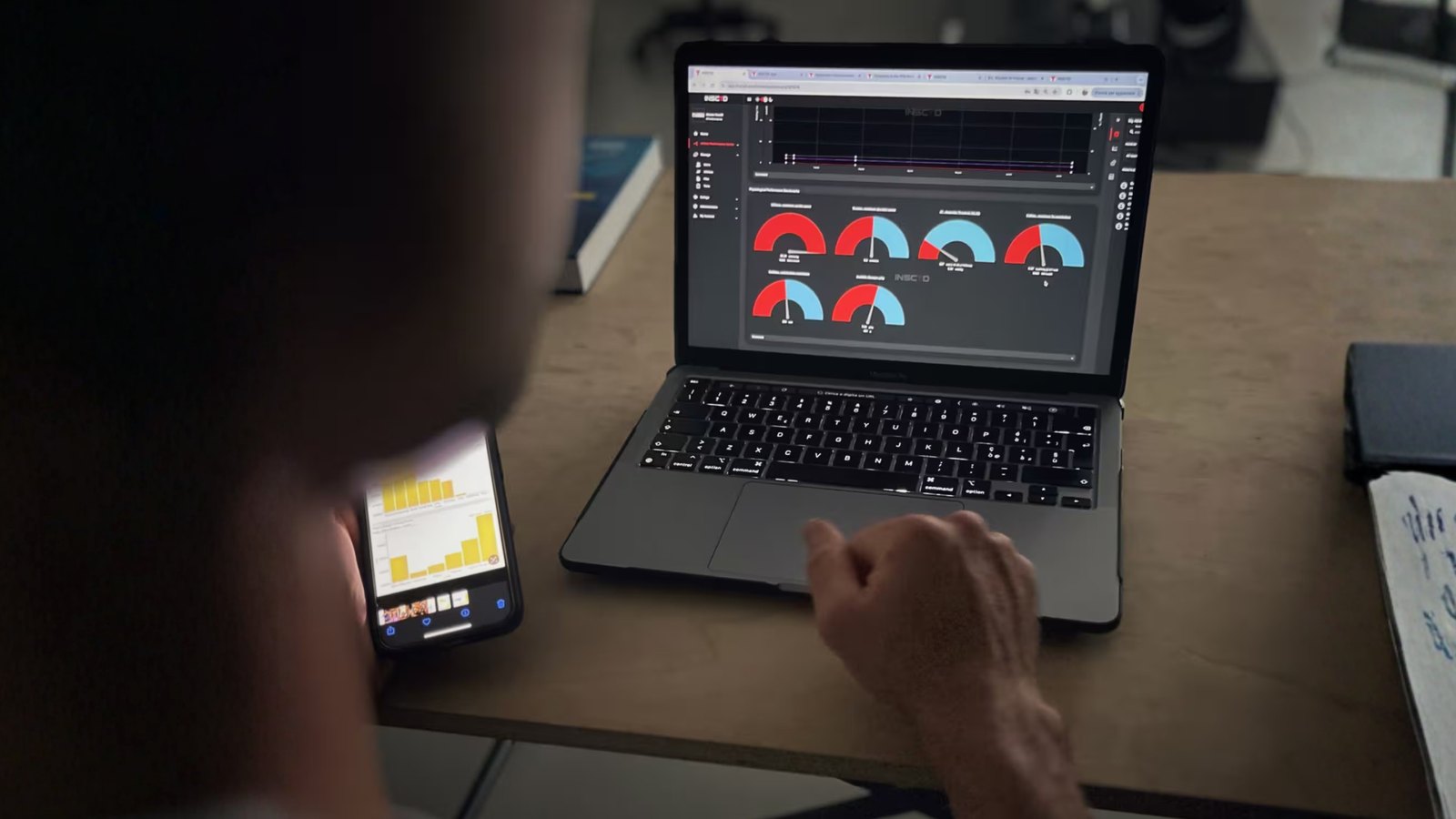
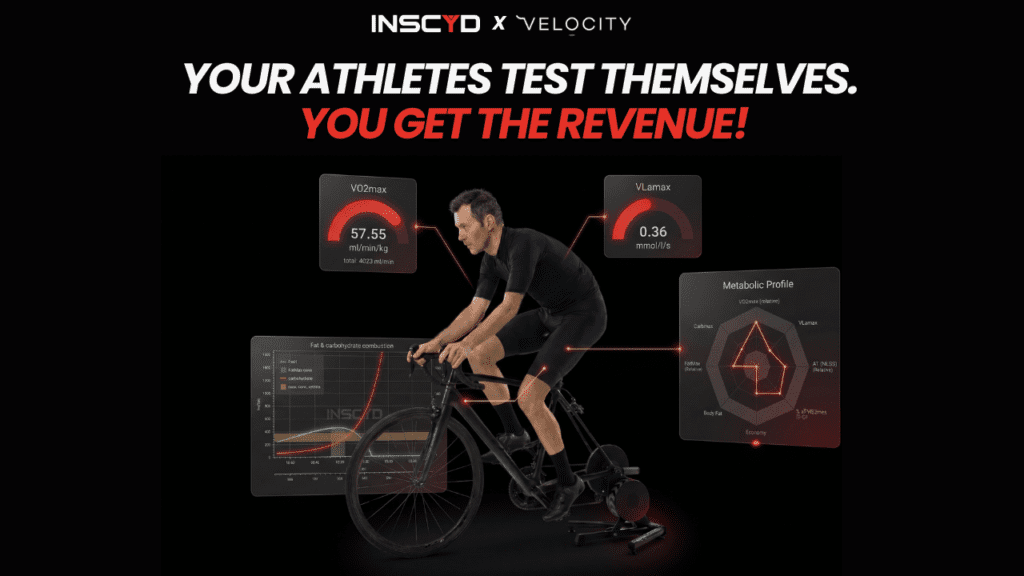
See the full protocol in action — how athletes test themselves independently, how a complete 360° metabolic profile can be generated automatically — VO2max, VLamax, MLSS, LT1, Fat and Carbohydrate combustion rates — and what this means for your coaching business or training.
No lab. No manual processing. Testing scales, your effort doesn’t.
Trusted by Elite Federations, Coaches, Labs and Leading Universities Worldwide
German Skiing Federation
Luxembourg Athletics Federation
Pro Cycling – Movistar Team
Roojai Cycling Team
Belgian Royal Speed Skating Federation
Olympic Center Upper Austria
American Canoe Association
French National Institute of Sport, Expertise, and Performance
University of California, Santa Barbara
Belgian Cycling Federation
German Triathlon Federation
Pro Speedskating – Team IKO
Finnish Sports Lab Jyväskylä
Belgian Triathlon Flanders Federation
Luxembourg Institute for High Performance Sports
German Swimming Federation
Pro Cycling – Team Alpecin Fenix
Pro Cycling – CANYON//SRAM
Pro Cycling – Team Bardiani CSF
Hungarian Canoe Federation
Singapore Swimming Association
American Canoe Association
Belgian Triathlon Flanders Federation
Pro Speedskating – Team IKO
Singapore Swimming Association
Pro Cycling – CANYON//SRAM
French National Institute of Sport, Expertise, and Performance
Belgian Cycling Federation
Pro Cycling – Team Bardiani CSF
Pro Cycling – Movistar Team
University of California, Santa Barbara
German Triathlon Federation
Belgian Royal Speed Skating Federation
Luxembourg Athletics Federation
German Skiing Federation
Pro Cycling – Team Alpecin Fenix
Luxembourg Institute for High Performance Sports
Olympic Center Upper Austria
Roojai Cycling Team
Hungarian Canoe Federation
German Swimming Federation
Finnish Sports Lab Jyväskylä
This Is Now Available for Your Coaching or lab Business
What you just watched is available now — for your coaching business or lab. The INSCYD × Velocity integration gives you everything you need to offer fully automated indoor metabolic testing to your athletes.
- Athletes test themselves independently — no supervision required
- Complete 360° metabolic profile generated automatically — VO2max, VLamax, MLSS, LT1, Fat and Carbohydrate combustion rates
- Individual and group sessions — no lab, no equipment investment
- Testing scales, your effort doesn't

0:00 okay i need to mute robbie here okay that's much better so welcome everyone who is not on their bikes but just in just sorry for that in the webinar room great to see you i'm going to share the screen here um so that you can watch our live session here so we already have several participants in the room and i would like to introduce robbie here again robbie hope you got your speakers muted now so you don't hear that echo great
0:41 so let's see if i can add you here so you can introduce the button to the platform i guess hello everybody i'm robbie ventura i'm the founder of the velocity platform and i am so excited that you're all going to take advantage of this incredible opportunity with sebastian we've actually been doing this for vision quest for the last couple of about a year and a half and it has been super effective for our athletes they can just come on and do a metabolic test listen to sebastian kind of walk them through that process like you're going to do today and it's
1:15 just been tremendously beneficial because sometimes you have a good day sometimes you have a bad day you want to be able to go out and do the test again really understand why you're doing it and sebastian's does such a great job of explaining why you're doing each one of these efforts as well as helping you optimize actually doing the effort so the velocity platform is pretty simple if you're a coach or an athlete you get to interact obviously we're interacting with sebastian right now you can interact with your coach live you can also do this on demand but you have a couple of things while
1:45 you're doing this test day they're going to be important the first and foremost is just make sure i know we're not all big ftp fans but we have to start somewhere your ftp is in the upper left hand corner make sure that number up there is kind of correct right all your data as it relates to your weight and your body fat and those things are also correct in the system and then you're going to see some steps along the left hand side sebastian's going to walk you through all those steps as you go
2:09 through this process but if you want to see them again and have a quick reference point to what what he actually wants you to do relative to your ftp you can see it up there on the right hand side below you're going to have two gauges that are going to be really important obviously the one on the bottom left is going to be your power gauge and it's as a percentage of your ftp now if you want to see actual power sebastian this is pretty cool you can just click on that percent average and it'll change
2:35 the power so if you want to know your average power for these efforts you can easily toggle to average power instead of seeing average percent some people are really focused on that some people like percent better it's totally up to you in the middle of the screen is something really important that's the time right that's the time you're going to be in a given step and sebastian's going to have some very important lessons or or instructions as it relates to time so make sure you listen to sebastian
3:02 you look at that clock in the middle and you optimize what he's trying to have you optimize for a given effort there's a zone and a watts per kg if you care about that and then of course on the bottom left you have your cadence gauge the top number is your actual rpm the bottom number is your average rpm for that step so again the top is your current the bottom is your average for the current step that's going to change every time you go through one of these steps along the bottom
3:26 that's the strip chart that's what sebastian's going to walk you through those are the efforts that you're going to make throughout the day and that dotted line is that ftp number up above so you're going to see you have a couple of really high intensity sprints kind of a quarter of the way through the effort then you have a longer sustained kind of three minute effort or whatever sebastian has there and then you have a longer final effort those purple efforts that means go all out give it everything you have and sebastian will walk you through that as well so if you want any other
3:54 information on the velocity platform please reach out to myself robbie or john nichols we'll send you a little note as well maybe igor i'll send you a note if you want more information you want to set something like this up for your athletes and if you're an athlete get your coach to to to get on board i mean this is a way you can interact with your coach on a regular basis so without any further ado sebastian i'll kind of let you walk through everything unless you have some questions for me
4:19 no uh not for now robbie thanks for that um can just emphasize what robbie said we've been doing this now for some time this is the second version already this improved ppd with an improved testing protocol a simplified protocol um there's less effort so that's good for you and uh it's super smooth that's a super smooth experience so robbie if you give it a thumbs up then we go straight into that just one thing john nichols just told me the power gauge is obviously on your left the cadence
4:51 gauge is on your right when you look at those two gauges you're going to know as soon as you start putting power out hopefully you've connected your devices and if you haven't yet you can still do it while you're doing this just go up to that little bluetooth thing in the upper right hand corner click on it if you haven't connected your your your power meter your or your trainer to the to the uh to the platform so good luck everybody enjoy it thank you so i guess robbie as you're on here um we can
5:16 start this session we can start the test straight away right i'm going to use a warm-up eyes to walk you through it so i will use the warm-up and the time in between to give you a little bit of um you know background information why we are doing that what's happening to your data and so on and so forth and then robbie if you want to come back uh during the all-out efforts for example um to cheer people up then i am happy to invite you back in okay so if everyone is ready then um we are going to start this
5:50 session uh right now and again i'm looking left and right because of my other screen here open there's all the great people uh joining the webinar and following you alive here uh thanks dennis again so everyone ready then we will start this session here right now so you can see the countdown here we've got five seconds to go so get ready it's going to be a relatively easy start right so it's going to be an easy first block um we do have these uh several steps here of a warm-up
6:27 which are basically there it's a little bit of a of a rehearsal of the sprint which i'm going to talk to you about and then you can see on the strip at the bottom there's a little like a little bit like of a ram okay and i'm going to walk yourselves as we go so on a high level what you're going to experience here today in those uh purple efforts that you see we're going to do two sprints two seated sprints and both sprints come after a resting period so i know that's very awkward especially for
7:04 cyclists if you would be looking at swimming or something it would not be that awkward um to basically come to a rest and so that we do two sprints 20 seconds each all out seated from a total rest period why do we want this why do we need this these two sprints are used to calculate the anaerobic more precisely glycolytic power of you guys or in other words the vla max that's also that's also why you were asked to enter your approximately body composition because what needs to happen vla max if you come
7:43 across this term don't worry if you're not i will explain why it's important it's expressed in millimoles per liter and so we need to understand body composition in order to go from watts what we measure here to liters so that's the two sprints what's the two sprints are for why that is important because it is a marker for your anaerobic or again more precisely glycolytic power so the higher that number is the better it is for anything that is short duration sprints attacks efforts you know counter attacks reacting to something whatever that's the upside of that metric so you could just
8:20 think oh yeah then the higher is better um like power output the higher is better so the higher the vla makes it better no it's not because if you have a higher glycolytic power it means you produce more lactate which means it lowers your threshold lowers your mls s or if you like the term better your ftp it also lowers your fat combustion because the only way how your muscles can produce lactate is out of glucose or glycogen so you have a higher carbohydrate combustion so it's kind of a trade-off
8:49 between how much more of an endurance do you want do you want to be as a rider meaning lowering it whereas how much you want to be punchy and explosive meaning higher meaning increasing it so that's why why we what we use those two efforts for and then the other big player which you will be mostly all aware of is a so-called view to max which is the maximum aerobic power aerobic capacity and in order to achieve this in order to bring your body to reach view to max you need efforts between three to ten
9:22 minutes this is why we have four minutes and eight minutes so we have each effort to we have two efforts sprints for the vlmx and two efforts four and eight minutes for the vl2 max which means we have redundant data so if for example the first sprint or the format effort you felt like the pacing wasn't great or the gearing wasn't great or whatever don't worry you have two efforts so the system will make up for that this is exactly the reason why the test is a little bit longer because we really want to have
9:56 high accuracy okay if you have any questions along the way and you have the air and the breath to ask then please raise your hand i will unmute you and you can ask any question along the way as as you want okay so we are almost done with the first warm-up block there's almost just just like a minute to go and then we will come to a rest and then we do only a six seconds second sprint as a rehearsal dennis give me one second as a rehearsal of the real sprint so this is just for you to get a feeling for it okay
10:34 uh six seconds um choose the gear find your position on the handlebar on the hoods on the drops whatsoever okay uh and practice the rear spread so i'm going to unmute dennis here you have a question yeah yeah
10:52 nice to meet you all i have a question about the rest before spring we should start pedaling or it's a small pedaling yeah so in a perfect world you should stop pedaling entirely um the system is looking for less than 0.5 watts per kilogram so to play it safe the recommendation is don't pedal okay and the rest uh on the warm-up we should look to the percentage on the left side like yes yes yes and that's approximately that's approximately that's fine okay so now now stop 20 seconds we do a shorter stop
11:29 because it's just a rehearsal just a practice okay for the sprint stay seated stay seated accelerate as fast as you don't aim to shift gears okay don't aim to shift gears we have five seconds to go stay seated stay seated try the gear two seconds one second go come on acceleration give it all full gas give it everything you have right looking great cindy you maybe are a little bit over geared and already done easy now okay so now you have a time to reflect on the sprint and reflect on the gear if
12:05 you felt like oh i was able to accelerate this fast meaning you were able to reach peak power within the first three to five seconds great if you feel like you ran out of gears for the next for the rear sprint take a bigger gear if you feel like oh i really have a hard time to bring this up to speed choose a smaller gear okay good so now we're going a little bit of a of a ramp you really need a ramp which goes a little bit closer to your estimate of ftp thresholds or so forth to activate especially
12:41 if you like all these uh scientific terms to activate lactate transport so you might have let me tell you the story you might or very likely you will come across the experience that when you do a set of intervals the second interval often feels better and easier than the first one many know this one main reason for that is the lactate that you produce in the muscles needs to get transported out of the muscle and this transport is an active transport and it happens with some shuttles with some carriers
13:16 which are activated by higher lactate concentration so you need a one-time higher effort with a little bit of lactate production to activate i always say this uber for the lactate to transport it out to other muscle cells or into the bloodstream and that's what a little bit happening now this is ramp you can see it on the strip below you're ramping up the intensity a little bit to force your muscles to produce a little bit of lactate to also of course increase vo2 to increase heart rate to step a little
13:45 bit more so that you're really prepared for these sprint and especially for these hard efforts okay great question here from the webinar from ingo from germany i assume why not stand up during the sprint i love this question thanks for that we have this question quite often it's very simple yes if you would ride out of the saddle you could for sure produce more power and get higher numbers the question that we need to ask ourselves is how do we want to use the data so most of you will use the data for example
14:22 to make training zones and have a better informed decision about training and so training i would argue happens primarily seated right when you sprint out of the saddle you use more muscles your biomechanics change your gross efficiency changes everything changes it's like i always say it's like cross country skiing only double polling or arms and legs combined and you simply cannot compare it so if you would sprint out of the saddle you use more muscles everything changes and you simply cannot apply the data as a measurement from this kind of testing to a situation where you just ride seated so
15:02 in short if more than 50 of your training is done out of the saddle you are allowed to do all the efforts out of the saddle if more than 50 of your training is done seated then all the testing is going to be seated so that means also four and eight minutes effort needs to be primarily seated okay hope this answers the question ingo if there's more questions and bring it up here happy to answer all of those if i can ah switzerland sorry ingo ah yeah it sounds german so the safest bet was to think you
15:32 are from from from germany 20 seconds to go 20 ramp it up and you will see we go to shorter steps uh we just go in one minute steps uh to trigger the system so that's kind of the of the goal here
15:48 so why we are doing that what you will get out of that you already mentioned already mentioned that we will get the vlam max maximum glycerotic power as a result and you also get vautomax as a result and i already mentioned that you have to do two efforts sorry for that because we are kind of obsessed with accuracy if you're interested in that a nice coincidence just a few days ago i think a week ago or something a new research peer-reviewed scientific publication came out in which exactly those
16:21 efforts exactly this protocol which you do today was validated against metabolic card testing so lab testing that you have these fancy rubber masks on and it showed that it has the same seriously the same accuracy as a metabolic card so what you're doing here scientifically validated you can read the um the publications about it um that the accuracy it has is as good for v02 max as going into a lab two seconds to go to the next step uh this is the hardest step so to speak of the warm-up and then
16:58 there's an easier step afterwards before the before the resting period okay good timing right now if you if you want to drink something you feel like you rinse your mouth with a little bit of carbohydrates or whatever you have that's that's a good timing uh to do this uh right now or after this effort so in about in about 30 seconds okay so um talking about what else do you get from this kind of testing mentioned vli max view to max which is maybe the two most uh important performance indicators you of course get
17:36 a threshold value so maximum lactate steady state uh the real threshold so to speak and not ftp as a proxy you can even get lt1 if you're interested in that so if you want to you know base your training on something like lt1 that's something you can do however most people find more value in actual substrate utilization so you get um fat combustion rates and carbohydrate combustion rate as a function of power output so if you are interested in at which heart rate or more important maybe at which power
18:11 you burn a certain amount of fat at which power output you burn the most amount of fat called fat max max this is what you get from that and you can use it to do your to steer your training um and especially with fat max as we have 30 seconds here to the resting period i can explain you why it is beneficial for example to do your currently on vogue zone 2 training uh based on fat max there's a good reason why you want to um whatever you call it zone one zone two let's say why you want to do your easy
18:44 endurance training based on fat max going to explain that in a second um five seconds to go to the resting period okay so now we recover we stop pedaling going back to dennis question um almost no pedaling at all what you can do is if you need to change gears if you need to change gears again going back to the the rehearsal um and you feel like you have been over geared or under geared change the gear now easy pedaling that's totally fine you can also use this time to think about which slack you want to start
19:23 first left or right foot first uh remind yourself to stay seated and check which hand position on the handlebar you appreciate most most people do it in the drops on the hoods um that's obviously that's obviously up to you okay then about the sprint the rehearsal was just six seconds which is a little bit tricky because i didn't tell you that it will start to feel hard approximately after eight seconds okay so be prepared that it will start to feel very ugly at about eight seconds in depending on how
20:00 hard you start okay six to ten seconds just push through that's totally fine we really want to see how the power goes up and sorry for that how it's basically uh fading down okay about talking about this i have a question here from jose i'm going to answer in a second now we concentrate on the on the sprint uh so i'm not sure if robbie is also doing the sprint here uh 10 seconds to go and then you give it all that you have stay seated okay full gas three two one and go come on give it everything you
20:37 have all out push it push it push it come on everything everything you have 12 seconds to go now it feels hard just push through push through eight to go come on five seconds three seconds two one good job excellent okay now it's just easy pedaling okay easy pedaling to recover i know that felt super super hard don't underestimate it right you now have produced a significant amount of lactate if you would measure your lactate now it will be somewhere between eight to 50 millimoles or seven to twelve depending on who you
21:18 are as a writer so that was kind of a lot okay while you recover i take some questions here uh from the um i take some question here from the from the chat um eddie i don't get your question sorry too many spanish wording in there maybe you can um um maybe you can uh you you can rephrase it uh there's some questions here about the protocol that you can download on our website yes the protocol on our website doesn't include the warm-up this is because in a in a non-online setting if you do this offline if you do
21:59 it out on the road or by yourself on a trainer without this great setup then you can do the effort so to speak in whatever order you want and we have a lot of people who split it up over two days so we have people who do session one one sprint four minutes session two the other sprint eight minutes so this is why um that is um that is not included so you have the full flexibility how you'd want to do it if you want to do it by yourself make a question here for martin wait a second dennis we'll be with you in a
22:27 second um so can this test be done um without power meters uh no we need power um heart rate as a supplementary you need power but it doesn't matter if it's a power that comes from your ergometer or from your um you know kicker or if it comes from your pedals or srm or crank power meter whatever you have you just need to record power okay before i come to dennis question here jose is asking um
23:03 what if during this three minute effort it's a four minute effort but i know what you mean the athlete depletes creatine phosphate in the first minutes and then fades before the end great question um i'm not sure if everybody on the same page here creating phosphate you might have heard heard of taking creatine of a supplement so creatine phosphate is the storage of energy in the muscle and it's used especially beginning of exercise the misperception here if i may say that however it's not used up without reaching vo2 max so pcr is mimicking it's a mirror of vo2 and therefore it is impossible to empty
23:43 it before fatigue before failure of exercise so the only thing that you can do you can overpace in the beginning and use a lot of pcr and then maybe the power fades a little bit but it's impossible basically if pcr would be emptied you would not be able to continue pedaling so jose that's not happening but i know that the idea that it comes from is like over pacing and over pacing too hard does it have any effect yes if you overpace too hard it can have a small effect on the accuracy this is why we have
24:15 two sprints uh two two of the longer efforts because the four minutes and the eight minutes is used to um to the calculate vo2 max dennis back to you sorry to have you waiting no problem sorry i have a question a small question about carbs maybe i need something can i eat something uh in test and second one if first print will be on the uh drops can i change for example for the high position yes so great question two great questions first about the nutrition you are very welcome everyone to take in carbohydrates
24:51 uh during this test okay just make sure it's easy digestible so better at jails and a plate of pasta maybe here even though it might look funny in the camera but go ahead have whatever you can okay whatever feels good with you and i would i would advise obviously more liquid cups jails drinks um maybe right now in between the sprints and therefore try to avoid it maybe before the four and the and the eight minute because that might feel heavy on you about changing something in between the
25:24 sprint great question thanks for that that's exactly why we have two sprints so if you now have a second sprint and your power is higher because you get adjusted to it right you uh you know better how you pace yourself you know better which positions fits you in the handlebar you know better which gear to use that's perfectly fine that's exactly why we do two again very very very very being very obsessed with the signs the sign shows that there's some kind of training effect that the second sprint not so much from the second to the third but especially from the first to the second
25:59 you might see higher performance because people get accustomed to it of a learning effect so to speak so yes change whatever you feel you need to change the algorithm will automatically look for the higher sprint with the higher vlmx and the higher power so no worry about that thank you for answer great and one more after second sprint is it possible to stop and go to the toilet for example that's fine with me no no worries at all okay okay thank you uh okay another uh eddie came back here with this question uh this was about the percentage uh ftp that is shown uh in the left in the left corner of the tiles yes
26:42 uh eddie as robbie explained uh to the beginning and for everybody who was maybe not here um um that's basically to start somewhere right so this session today is about the efforts and as i hopefully make clear about the accuracy of that and getting lab level accuracy as just recently proven in the scientific literature um and then for the warm-ups we need to have some ballpark of obviously you know what is a good warm-up intensity and the idea to this ballpark is as long as we don't have the precise metabolic profile
27:20 and we don't have a precise maximum lactate steady state we use the ftp just for practical reasons because most people have an idea of it and so they can enter that and we can use this percentage to understand for the warm-up and the recovery phases what should be the power output and at the end it's not so important if it's not super accurate because seriously if it's let's say off by 20 watts or 30 watts or whatever and you take a percentage of it let's say 70 percent then maybe you know your warm-up is 10 or
27:51 15 watts higher or 10 or 15 watts lower but for the warm-up it doesn't really matter okay so that's why a guesstimate an informed estimate on threshold um ftp power just to steer this protocol here is is fine we have 45 seconds to go i still owe you the answer why you should be interested in fat max intensity
28:19 for your low endurance for your low intensity training i'm going to explain this why we have only 30 seconds to go for or until the recovery period um this is because your body needs additional oxygen to burn fat that is the reason so if your body burns fat the oxygen uptake needs to be higher so basically burning fat is an additional aerobic stimulus so you could say you could think about this way relatively speaking for whatever intensity if your body burns more fat oxygen uptake is higher and
28:53 therefore the body receives a higher aerobic stimulus talking about aerobic system you stop pedaling now aerobic system is going to come down creating phosphate is going to refill this is why you do these these breaks okay so there's also some nice scientific literature which proves that writing at fat max is more efficient spending the same amount of energy and the same amount of time more importantly is more efficient to increase vo2max to increase aerobic capacity than just random any other you know low intensity training zone because not most not because you burn more fat which might be a
29:34 collateral which you're interested in to burn fat and maybe try to lose body fat but the main thing is again burning fat needs additional oxygen so the more fat you burn the more aerobic stimulus you have and therefore the more likely it is you will grow your vo2max so that's really um um that's really why you want to do it um so eddie is asking um if you can use heart rate here instead of power no not really uh especially on the 20 second sprint we really need to power measurement
30:08 sorry for that um 25 seconds to go everybody get ready please make sure you have the right gear make sure you remember to stay seated make sure that you know which foot to start with uh so which leg is in front which is behind um and make sure that you have uh the right gear and the right position five seconds to go two one come on give it everything your chance to increase to top your previous power come on bring it up dennis come on come on come on speed it up speed it up very good david is killing it here 10 seconds
30:46 to go come on it feels hot now i know keep pushing only five seconds three two one and easy great job awesome so hope you enjoyed it also that is so hard sebastian i mean when you push that hard your whole body wants to just give up if you just keep turning those legs around and getting that last little bit out to make this accurate everyone did an awesome job yeah and you know the four minutes might be more fun when it comes to that right way more fun yes
31:24 yeah i'm gonna get you guys going for the four minute test i'll tell you that i'm gonna come in here and cheer you on and get you going i've done a lot of these tests a lot of them for sebastian as well just got to keep concentrating and sometimes you don't want to hear anything that's fine you can turn us down a little bit and just kind of get in your groove but i will tell you the way you make this accurate the way you get really good numbers is if you give it everything you have and you have to
31:50 have an understanding of pacing kind of have an idea of where you should be you don't want to start and sprint and go as hard as you can some people make that mistake sebastian will make sure you don't but ultimately this is one of those things where the more you give there's nothing left the more accurate everything is so do your best listen to sebastian he'll get you through it thanks robbie yeah looking forward to your support in the in the four minutes yeah that's actually right huh so we will
32:17 need to be a little bit more careful with the pacing here in the four minutes to make sure that you give it all but that's something to vary in about uh in about eight and a half minutes here but you will make it and again it's good if your pacing is as constant as possible but don't sweat it don't vary too much if you overpace or underpace a little bit that's all fine the average power will just be slightly different and you will still get good results in the meantime i have a question here from
32:45 james who is saying um first time he sees the velocity system and he's wondering how the data is handled that's a great question so it's a great thing about this and why i like it so much the data processing basically happens all automatic so the velocity system obviously has the testing protocol so it understands exactly when an effort started and when an effort ended and basically after you connect it your inside account to your velocity account it all is automatic meaning an athlete comes in does a
33:24 test and after the test the athlete can say oh that was a great test looks good i'm happy with it i felt good i felt like i could do what i was supposed to do and then basically sends the data to the inside system automatically so once the athlete confirms yes this was a good test i didn't know what to do you know the athlete sends it and it automatically goes to inside james and it's automatically creating the metabolic profile you don't need to do anything it's just like magic just like next morning
33:56 you wake up and everything so to speak not the next morning just seconds later um everything is in your is in your system right um so that's super smooth nothing else you need to do there uh you can basically ask your athletes to do it on velocity by themselves so there's two options either you can do a live session like we do right now and you can coach your athletes through the test which is great like robbie said it's great to connect to your athletes um or i also recorded one of these workouts so you
34:33 have a kent you have a pre-prepared workout which you can basically just have your athlete do so you don't you don't need to guide them through it so it can run either you coach people or you take the kent workout and you don't have to do anything and the athletes can do the test by themselves and i walk them through them through them through the test so to speak for you um and in terms of um you know how that's handled in your account um it's basically uh using your normal inside subscriptions that you have
35:07 and then if you feel like you need uh additional credits in terms of tests or additional credits in in terms of uh athletes um you can james either reach out there's a button in your in your in your in your account you can easily reach out to uh change your subscription or you can change it yourself or if you feel like i'm not so sure if i really want to have a bigger subscription so to speak just because of doing these tests then don't worry then it would just be you know as soon as you exceed your
35:40 subscription it's basically going to build separate but there's a one-time belly so no strings attached it's pretty straightforward if you if if the velocity test you know that come to your account are covered by your subscription it's no additional cost if you exceed your subscriptions and it's just going to be uh you know a one-time charge or you up your subscript whatever you like um so martin is asking uh sorry come back no worries martin um to my previous question but i use a vahoo kicker on my swift bike
36:14 how can i be sure that the data is representative for their own gear so i understand if you have a vahoo kicker that's how i did the example session um that works you can just use the power from the vahoo kicker and um that should work so that seems to be pretty smooth um should be no problem i have a question here from yiri from belgium who i need to forward to john or robbie here he is asking if he needs a velocity subscription as a coach or an athlete or both and i honestly don't know the answer to that
36:50 but uh let me unmute uh athlete john here yeah absolutely thanks sebastian um you can just reach out to us igor is going to share the link to set up a call you can set up your own private portal so it's going to be branded logo customized to your coaching business um and we just set that up for you for free and then you can use that as a portal to both do inside tests if that's how you primarily want to use it you can also use it as a coaching platform so we can go through and show you the
37:27 different ways as a coach that you can activate it but it's a very simple process no commitments we'll just get you set up in your own private space great yeah so we will connect you um um to um to to to john or to robbie for that great guys you will figure it out but as you hear it's it's it's it's pretty easy i have my own portal here and again it's pretty easy and you can do the inside test or some trainings whatever you want thanks john for that um then while you guys are here and
38:02 a little bit shy of three minutes to go i will try to answer mark's question in time to be back for you guys while you're pedaling uh so mark wants to know if the test result goes straight to the athlete or communicated to the athlete by the coach lab yeah so mark the first question is the data ends up in your inside account and then you can um you know do basically use the data leverage the data as you do with any other inside testing so you can create pdf reports of it do um screen recordings
38:35 schedule consultancy with the athlete just sends the results whatever you do i have to admit i'm not 100 sure if i make a mistake here john do you display any of the results in velocity as well no this is okay so then as i just explained um you know it basically feeds it automatically mark in your inside account second question here was and i still have a little bit to go uh in the lactate protocol i can customize key insight from a coach lab perspective and create a blend of of the standard insights report
39:05 is our additional insight yes this is still possible so you can still create the same report uh as you can do with a lactate uh just with this the only difference is you don't need to do anything it goes fully automated mark into your account and with that i would like to give a spoiler alert i don't know mark if you are one of the beta testers but we have been working on a new pdf report and it has been tested in the last weeks with some users so the inside pdf report is going to be relaunched and
39:38 i know i'm biased fair enough but it's absolutely great honestly it's really you can customize everything it has a much much better design you can do whatever you want so you will have a new pdf report coming soon mark if you and everybody else if you don't have that yet with yet i would like to go back real quick to stefan here uh question uh yeah one quick shout out the new report is amazing so i can't wait to see it thank you and obviously in the 20 second sprint the idea is like accelerate as
40:13 quickly as possible what should we do in the four minutes and the eight minutes yeah great question let me work accelerate you don't need to go out of the cell okay a bigger mistake would be to accelerate too fast too hard in the beginning okay you don't want to ramp it up within a minute or so but you can take some time to ramp it up okay so if you whatever if you target let's say 300 watts ish then don't start with 500 okay so that's what we want we want it as steady as possible okay but don't
40:47 vary if you over pace a little bit okay five seconds to go three seconds two seconds and start four minute give it all ramp it up okay that's going to be a nice hard but mostly steady workout here robbie right you want people absolutely empty the tank whatever they have absolutely i always i kind of like this four minute effort it reminds me of the pursuit on the velodrome it kind of feels like a pain that you can tolerate to some degree but you're right kind of at that limit it's obviously
41:21 going to be slightly over your ftp so make sure that at least 100 of your ftp is kind of the minimum that you want to see maybe upwards around 120 for some people kind of in that range right there so kind of play inside of it but what i like to do is i kind of want and sebastian this is just my pacing strategy i like to start off pretty hard i like to establish a nice high number then i come off of that number just a little bit settle in roll for another two minutes and then if i have something at
41:52 the end i kind of open the throttle just a little bit it's a little bit of a safer pacing strategy kind of that j curve to some degree but at the end of the day some people like low to high some people like high to low some people like nice and steady but if you want to experiment a little bit at least don't build put yourself in too big of a hole don't go super easy in the beginning and then have to like pour it on all at the end you want to kind of disperse that effort through the whole four minutes
42:15 sounds like your pacing strategy on the track to first shock your competition then things are coming back and then you rip them apart great i like that yeah guys so two one and a half minute in keep pushing now you should have a good feeling of where you are as robbie said most of you will come out with whatever your ftp guesstimate was 120 some higher anaerobic guys david maybe maybe more like uh maybe more like 130 percent okay uh that might be something but we will see okay no problem at all
42:49 try just to you know push as steady as possible keeps the pace you are halfway through right two minutes to go two minutes done looking good and sometimes sebastian i even move around a little bit on the seat i search for power in different areas i try to just kind of i keep myself smooth but i'm always trying to find just a little bit more and i think as you start to approach the second half of this four minute test and i know you're all hurting you're kind of maximizing that oxygen utilization stay in
43:19 the pocket concentrate think about what you're doing make sure you get that breath nice and deep make sure all that air as much air as you can possibly use is getting deep down into your rib cage into your abdomen and really focus on keeping that pedal going around and around great yeah 120 to go also guys you can try what often helps try to envision to push a little bit over the upper dead spot and pull a little bit when you are in the lower spot it often feels a little bit smoother and
43:50 you can find talking about finding some additional power you might find a better feeling for a short amount of time there this said last minute entered 55 seconds to go less than a minute if you feel like you have anything left in the tank then now is the time to very very slowly very very slowly try to ramp it up if you feel like you're maxed out then just try to hold it okay if you felt like that maybe went out a little bit too hard try to hold it here and just keep it if you feel like you have a little bit left there's only 30 seconds to go okay
44:26 so 30 seconds left here in this effort maybe one of the most key efforts here you would get a scientific validated lab level accuracy view to max this is why you do this here right 18 seconds to go almost done come on you just have the last 10 seconds now starting
44:47 try to get one percent more try to get one more watt on your average just go go go five seconds to go give it everything you have right here get one more watt nice job good excellent so now another 10 minutes recovery keep passion keep pedaling keep pushing keep pushing just really really easy okay you also hook now i have plenty of questions over here in the webinar okay so you will hear me talk a little bit more you can just relax drink something easy gear just spin the legs okay that's just super important
45:20 great job everyone so i'm going to pivot back to the webinar here to answer some of the question uh one was about the redundant data and the two sprints and let me repeat picking up on that that also fast in terms of the algorithm the four minute eight minute is also to some extent redundant because we can use both to calculate a lab level accuracy as i said recently shown in the literature so the question is what are the criteria for accepting the data five or ten percent difference to be redundant and i meant
45:53 redundancy in terms of measuring the same value twice so having two efforts to measure vla max and having two efforts to measure vla to max that's the redundancy the the algorithm itself then has some more intelligence built around it to understand how to use this data and which data point maybe to discard and which one to use um there's a little bit more mass going on than just a percentage difference um and this is why we do have two to ensure if one is bad or not as good that we do have the other effort and we
46:29 we can use this okay um ingo is asking why are you doing the four minute before the eight minute uh you just did a 12 into four minute with another protocol uh honestly ingo as i mentioned that should not really matter um that should not really matter it is i would argue maybe a little bit more psychological effect to say the one that you know is the lower power output comes to the end so you can see here the highest two sprints that's where we start and then the average power sort of drops as
46:59 the duration becomes longer you can do these efforts in whatever order you want um i would however recommend to do the two sprints first um because you do have even more lactate in the four minute ones and the ones that people just did cindy give me one second um and therefore it's advisable to really um do the sprints first but then you can do it in order if you want and if you do it outdoors if you don't do it here on velocity you can also do it within two or three days or two sessions cindy
47:32 so um i'm at 2300 meters where i live here so how does that change the results obviously there's less oxygen yeah a great question it will it well how will it change the results the question is cindy uh more like for how long have you been there and will you use the data there so for example if you live there and you are climatized to that environment then the data will be different to compare to how it would look like if you do it on sea level but if you use the data in a similar altitude then it is
48:11 still the right data for you to use within training okay so i've been here 26 years so i'm acclimated i train here but i race at sea level okay great so then it comes a little bit to the question if you train there and you use the data primarily for training then you've done everything right if you want to use the data for example for pacing or fueling at sea level then you either need to either need you need to you know maybe increase the power numbers by five to five to ten percent for whatever you see
48:47 in the report or you would need to retest on a sea level um uh test base so to speak right in order to to really use it okay thank you and then the other tip is there if you stay low for a longer time like let's say more than a week then give it a week until you test again when you're in altitude to be able to adapt to it again so don't test immediately so when you try to get adapted a little bit to the lower sea
49:15 level and come back don't test immediately because then the numbers will not be accurate for your training okay thank you great no worries stefan
49:29 questions one is how accurate or differences in accuracy do you see if we were to do the eight minute test tomorrow instead of combining within an hour uh i guess that's yeah that's my first question um so i don't think there's one fixed percentage number which applies for everyone across all boards you might see uh some differences in in in some athletes uh you might see um also you will also see volatility in terms of like day-to-day variation a little bit right um and therefore it can throw a
50:09 little bit off but in terms of what we do here i would not worry about it too much because for example if your power output is 10 minutes higher or lower it will only change a decimal in the vo2 max and if you think that for example the test retest a reliability of a metabolic card is about two to 2.5 milliliters if you throw it off here by 10 watts and it changes 0.3 milliliters that's this that is lower than the range than a lab test could detect thank you the second question i've been doing this
50:43 test probably at least a dozen times over the last like six months or so um i've been using three minutes and six minutes you're using four minutes and eight minutes you find that's more reliable data no this in so we have validated on three to twelve minutes um and therefore you could choose those efforts as well okay so we have uh 3 45 to go to the eight minutes uh keep recovering keep paddling easy um drinking like cindy and dennis do here and i will answer a few more questions if you have questions here um then bring it
51:23 up okay so um so that's a question about doing this kind of test outside um let me let me read the questions here uh quickly first in case of doing the test outside sometime we don't generate power does the algorithm take into consideration or the best way to choose a road that allows us to pedal uh yes so you should try to choose uh a stretch of road which allows you to do the eight minutes the four minutes or whatsoever uninterrupted however as stefan just asked the protocol can so the algorithm
51:59 eats everything between three to ten minutes or more precisely two and a half to ten minutes so for example even if you're outdoors and you plan for four minutes but after 3 30 you run into a traffic light or stop sign or whatsoever then it's not too bad because you know the algorithm will also take this or you run out of road that's not a big that's not it's not so big of a problem okay jen is asking um stefan you had a negative percentage in your battery value um that's a quick one to answer that's because
52:32 that is you know the guesstimated estimated ftp and the guesstimated w prime and um because yeah it's a guesstimate we start this before the test uh it's natural that the numbers are not that accurate and therefore come to a negative thing without me going into the scientific scientific basis of w prime and why the chart rechart model scientifically has some inaccuracy to speak but that's another discussion jens we we can have if you want um eddie is asking um can this protocol be used for running yes we do have a running ppd test as well you can do it either with gps watches if you want um
53:11 um that's one option and there's even a simpler option you can just take people onto a running track and ask them to run 1000 meters for example and 2000 meters all out and stop the time so you can it sounds too stupid simple but it's more accurate than trying to get accurate gps data have people run as i said two sprints and 1000 meters stops the time at 2000 meters stops the time and that's it that is the most dead simple protocol you can have 1 15 to go for the eight minutes let me answer the
53:43 last question here um why do people still do ftp 20 minutes test doesn't make sense at all or what do you think i i don't think that you want to know what i really think but um basically uh i haven't understand the 20 minutes test in the first place anyway i mean of course i do understand that's a simple way to give you somewhat of an idea and yes if you have if you have a 20 minutes test then it's maybe better to have no than to have no test at all just of a benchmark but it's not giving you
54:14 good information about what you should be doing training and if you look at the scientific literature it's proven that many times that it can be so far off from like real thresholds and so on so with that i pivot back to the live session we have 28 seconds to go to the eight minutes last effort of the day i hope this motivates you to give it all one more time so power output obviously is much much lower uh when i say much much it's about 10 50 percent lower depending on who you are
54:45 as an athlete compared to the four minutes you have a little bit more time to ramp it up you can change gears five seconds to go stay seated as much as you can and off you go last eight minutes of the day another all-out effort empty the tank after eight minutes what is that robbie for you in terms of a track effort there's no yeah the eight minute efforts it's more like a pro prologue right the tour de france these guys are going for about eight minutes at the tour de france prologue
55:16 they always seem to start a little bit hard and settle in and then kind of pour it out at the end you can use that same strategy that you did for the four three minute four minute effort as the eight minute effort you just don't want to do quite as extreme of numbers right you want to keep this pretty much within five or ten percent the entire time you kind of know what you did for the four minutes you now you can make a quite an adjustment between that and your ftp and figure out what a
55:41 good number would be for eight minutes but don't let that hold you back either if you're starting to feel pretty good and the effort doesn't feel that tough don't be afraid to ramp it up just a little bit but before you you have to go a little bit at that new intensity before you determine if it's too much or too little because you don't want to overdo it too quickly so be patient this is one of those efforts that again you kind of get into a groove you get into a rhythm and like Sebastian
56:03 said i love what you said about getting that foot over the top quickly dropping that heel down and just kind of using that as kind of a ramp i almost whenever you see Pogacar doing that when he does those attacks and those long-range attacks it almost looks like he's dropping that heel and just kind of skiing a little bit as he brings that pedal down yeah and it's it's a good way to really imagine it because we focus so much on pushing if you focus a little bit more about pushing forward instead of pushing
56:30 down and pulling backwards it can really feel like providing a little bit of ease uh into the effort right this said we are uh two minutes in right so um six minutes to go guys you should come to somewhat of a rhythm here as Robbie said now okay hopefully didn't start too hard try to hold it now if you feel like like ask yourself a bit can i hold this for the full eight minutes then keep going keep going with this one and i think what you said is really important if you miss pace this a little bit
57:06 your body figures out how to get all the energy out by the end like even if you go a little bit too hard in the beginning or too hard at the end at the end of the day the data gets really good because when you're left with nothing at the end it all kind of normalizes out and ultimately you give yourself a really good effort so don't don't beat yourself up if you're suffering a little bit just bring down the power a little bit you're going to come around you're going to ultimately be able to manage the
57:30 effort but the one thing that i always say is don't worry about how much time you have left think about executing perfectly make sure you're pedaling properly make sure you're breathing properly make sure you're nice and calm do whatever it is that you can do to optimize the effort right now great yes and with that you have three minutes done five minutes to go keep it up everybody looking super strong here stefan obviously knows it all done dozen of those tests in the in the last days
57:59 uh or weeks and remember this will bring your metabolism to vo to max as well you are already on the way to vo to max if you would measure now you would likely be sitting at 90 95 percent of vo to max right now so it's going to be similar hard as the previous one right so you know you can do it because you've done it before okay and maybe there's a chance to up your result a little bit to bring up that number a little bit more as we're approaching here is a four minute mark so almost close to starting
58:34 another team pursuit here for you robbie yes and i always kind of look at my heart rate as well if you've connected your heart rate and you're looking at that you should be getting pretty close to 95 of your max heart rate that's a good indicator that you're giving a really big effort and i would love to know you know sebastian has been in the team car behind a time trailer doing the tour de france prologue what are you telling them here with like two kilometers to go bring them in yeah so when we
58:59 are like in the time trial first thing like with 2k to go is really to stay on your rhythm concentrate on posture of course there we have aerodynamics so it's about keeping your head down and staying in position focusing on pedaling strong and then as we approach like now as we approach like the final k if you approach like the final 1.5 k we will try to or we will put in like these check marks to see can we do it can we push it a little bit more right do we have something left in the tank
59:31 to ramp it up and that's the question where we need to go in like 90 seconds ish here to see can we give a little bit more right now it's all about staying in rhythm staying in posture concentrating on your pedaling stroke concentrate concentrating on keeping the power constant breathing regular breathing looks great i see people going to the max heart rate staying above 100 and all those good so far now sebastian can they shift their gears or they have to stay in the same gear anytime shift
1:00:02 anytime you feel you need to shift however right now you should be in the rhythm already right now likely you will not have the need to shift because what you do right now is likely you likely end up there you will likely shift more in the first in the first minutes and if you have to bring the power a little bit up or down this will likely happen right now just with a slightly change of of the cadence right and cadence can be whatever you're comfortable with some people like robbie said i had
1:00:33 a guy i coached to world time trial champion in 2008 man that feels like a long time ago because it was going with an average cadence of 80 right other guys winning world time time championships with an average cadence of 95 to 100 that's up to you guys okay so choose whatever cadence you are comfortable here is going into so to speak the last kilometer going into the last two minutes here of today yeah and don't be afraid to slide a little bit further forward on your seat if you're just trying
1:01:02 to find a little bit of power or sliding back just a little bit sometimes when you just move a little bit on your seat and a little bit with your upper body you can free up those hip flexors a little bit and try to find just a little bit more horsepower as you kind of enter these last 90 seconds and i always try no matter what to really focus and concentrate i'm lifting my power by one or two watts before the end and if you just kind of put that positive thought in your brain it's amazing what your body
1:01:28 can kind of come up with over the last 90 seconds they said we are in the last 90 seconds here so that's a time where you can try to ramp it up a little bit right stay above this 100 percent you just have 70 seconds to go remember that is the last 70 seconds of all the efforts you have to do there's only coming recovery afterwards okay so if you have a little bit left try if you do try to find out do you have a little bit left here it's one minute to go okay now it's a time going back to your
1:02:01 question about the time trial beyond the last 500 meters here which means now is the time to try to bring it up a little bit okay don't be afraid to try that don't be afraid to try to bring it up a little bit even if it's just for 10 seconds and you try to hold it you don't have to try to bring it up all the time to the end bring it up a little bit and try to hold a little bit higher level as you're going
1:02:24 into the last 30 seconds here all the pain goes away everybody in 25 seconds you're going to be mad that you didn't go harder so take away that excuse and give it everything you possibly have you over these last 20 seconds you will not be disappointed if you do that that's right 15 seconds to go that's even shorter than the sprints guys we have 10 seconds here come on keep pushing stefan looks very good come on dennis five seconds to go keep going keep going two one great job awesome so
1:02:58 you just completed the last of the efforts here the eight minute effort again another effort which we are going to use to get you a view to max value maybe the most crucial number not only for performance but also if you're interested in that when it comes to predicting healthspan and lifespan view to max is a single post most important marker for that and you get this with scientifically proving lab level accuracy as we say that i'm going to jump real quick to um a few more questions here um pivoting quite a
1:03:33 lot from cycling to swimming is there not a possibility to have a test like that in swimming not exactly like this there has been some discussion around should we do something like this in swimming it's it's much more difficult to translate the speeds then because of swimming economy but that's a different discussion to have uh yearly hope like very honestly open to hear from you what you think about that coming back to um to james question here about the data handling so in velocity when we finish this
1:04:06 here in two minutes and 10 seconds the data will be pushed automatically to insights the report will be created automatically and james question is when i am in the inside app myself and have to do it manually i still have to mark those efforts instead of the software doing automatically this is correct we do have some intelligence built around correcting this effort so you can be a little bit sloppy or less precise this marking those efforts but at this moment we still want you to be in charge so to speak and
1:04:38 control that you do have um that you do have the um the correct efforts selected we give you help to make sure you correct it's the highest performance possible but there is still a manual element to that at this moment as we speak uh might go away however 120 to go guys in terms of warming down and i have another question here from from ingo um asking about stefan is in the um is in the tt position yes um i obviously did see that i didn't mention about that it's a little bit similar to the question about staying seated in
1:05:17 the sprint or about cindy's question um doing it at altitude you should in general not only with this test in general you should test in an environment or in the same condition same environment as you want to use the data for so if stefan's pain training is done in the tt position then he should do the tt bike when i coached tony martin and we prepared for world championships we would do testing only on the tt bike because this is what we wanted to use the data for so that's basically the same
1:05:46 the same thing here and the same goes for indoor cycling if you do indoor cycling then i really recommend doing it uh testing indoors as well because it's more closer to the real application with that we have 20 seconds to go
1:06:04 nice job sebastian almost done ah i didn't do a lot those guys did 10 seconds so i'm not sure if it's the right wording but i hope you enjoyed this test as much as you can enjoy a test but uh especially you will and what you are going to enjoy for sure is um the the results that you get and what you're able to do with those results um that is going to be uh really awesome because there's a lot of information that you can use to to basically um you know steal your training make better informed decisions about
1:06:42 your training um and i know i might sound like a broke record here but why let me give you one last thing on that why you will find this is so important and why this is superior than just power testing think about it this way the power that you measure is a physical parameter that's just mechanical power but what you try to change by training is your physiology right this is what you do you try whatever you do in exercise training it's weight lifting or running or swimming what you try to do you try to change
1:07:14 your physiology so therefore you should base training on the physiology right if you want to increase vo2 max we should look at what is my vo2 doing exercise if we want to train the gut and be more efficient in fueling we should look at fueling metrics and this is exactly what you will get out of that so with that i think uh we can uh answer session here of course you guys can keep pedaling easy i hope you liked it a lot i will take in more questions here from the guys on the webinar uh randy is already
1:07:51 done that's good make sure you warm down sufficiently um ingo is asking about the resting period in between the four and eight minutes uh five minutes 20 ingo you did 25 minutes yes that's great 10 minutes is like we did here it's more on the shorter end uh this still work but yeah 25 minutes or even on the next day might be a little bit better um so with that sebastian i'm headed out for a two-hour ride road ride outside now that's good for you awesome yeah i i'm jealous it's getting dark over here so no uh no
1:08:30 outdoor riding for me but that's good uh wait a second uh i should do something with uh with dennis but i cannot unmute him uh seems like yeah i'm muted ah okay uh sorry i see the uh model window yeah with two buttons send these results to insight and do not send these results i should click send these results to inside and that's all yeah that's uh john can you not give a thumbs up to that i think that's what he should be doing right yeah and the cross like button with a stay here what will happen it will
1:09:08 just close the model window so john the question was uh dennis is has a model window to send the data to inside and some checkbox here yes he wants to submit it to inside yeah and uh it will i will not leave the session i just will send the tests you could bring him up as a co-host if you want i think robbie got bumped out yeah i cannot because i have this window here if i should link it or link it later john um you can link it later okay when i click that link it says uh i'll get charged 200 by my coach
1:09:55 since i am the coach can i still click on it or
1:10:02 yeah go ahead no problem yeah and i have uh like when i click send this result to inside it's asked me for pay for results now and how should i do if john i think that question goes to you because i think you had some special arrangements for the session here no
1:10:23 it i unfortunately i couldn't hear the question sebastian uh dennis has a question about uh that it tells him that he's going to get charged if he uploads this now yep and he should go there i believe dennis is one of the winners and i emailed him a unique code just for his account and he can put that code in and then he will the fee will be wiped yeah okay so that's good and then i have mess you here uh so he was kind of disconnected during the test uh i cannot answer this technical question messi unfortunately my
1:11:01 apologies for that um he's asking if you still be able to get the results because his blue tools disconnected okay so that's possible uh we'll take a peek and see how much data was captured okay okay messio so messio again as i mentioned the four minutes and the eight minutes are somewhat redundant so if for example you just miss the eight minutes we can still work with the four minutes um that should be no problem okay but john will have a look at it and um and take it from there cool
1:11:34 um here in the webinar anybody else has more questions i'm sorry i cannot answer the velocity technical questions as good but if you have more questions about the testing or the physiology then i hopefully can help um and um and then igor also posted something here i can leave this about the link uh if you haven't seen that to velocity to get set up if you want an account uh like john mentioned that he's setting you up for free that is uh something you can do in here did i miss anything or do we have
1:12:14 other uh questions here uh are there any infos about the velocity system on the inside website yes i mean what you can do what you need to do you need to get your api key which is in the key which is in your profile in in inside yeah and now you do have the kevin link as well so you should be all set so yeah basically like connecting to a system works by an api and there's an api key um and we do have help center articles and stuff how to set it up and again john will um
1:12:47 will uh will help you set it up as well uh yeah and to yuri's question back to swimming take a little detour here um yeah really that's right swimming economy is the main issue here but it would go away if we would instead give you a view to max for example give you a maximum aerobic speed and instead of vlamx give you a maximum glycolytic speed this is how we can circumvent that uh because the economy and swimming is only related to translating the physiological numbers into a speed and vice versa so again if that is something you're interested in
1:13:20 then that would be a way to go um mark is asking about how to find the velocity uh api key um i would need to check but i can do this really quick for you um i think it was in my profile or in um in um settings um but i will look it up for you mark here real quick oh here's a help center article and um yeah if you go to my profile you'll find integrations and here you have one to vision quest and you can basically set it up so you find your api key and you can um set up the in the connection so
1:14:12 if you log into your inside portal you go to my profile into integrations and there you find besides others the vision quest uh velocity of the vision gets virtual integration for what we did today
1:14:28 okay you don't have an integration taps in your profile marks and it sounds like a customer support question to enable it on your end so i will take a note mark okay and after the session um send a note uh over to the team
1:14:50 good so that should be solved by tomorrow morning other questions for today from anyone um great okay so with that then john any more comments from your end we are good no i think we're in great shape thank you sebastian good and thanks everyone for joining um if there's any other questions i hope you have our i'm pretty sure you have our contact details you can set up something with john or with us um mark we will reach out um about the integration key uh that should be a quick one and um then hope to see you soon and as stefan said wait for the new report
1:15:38 coming soon it's it's amazing really um yeah and see you there on one of the next sessions john george everett everyone have a great rest of the day thank you cheers bye bye thank you you