Three strategies for coaches to stay relevant as AI tools like ChatGPT enter sports, showing how physiological testing, data interpretation, and athlete relationships create irreplaceable value that AI cannot replicate.
AI in sports has become a hot topic, with many coaches concerned about the impact of advanced technologies like ChatGPT on coaching. This article addresses these concerns and demonstrates how coaches can not only stay relevant but thrive in the age of AI. Discover 3 strategies for integrating ChatGPT and other AI tools into your coaching practice while maintaining your irreplaceable expertise and value.
As AI in sports continues to evolve, sports coaches are starting to ask questions and having concerns about how it will affect their profession. Some of the most common concerns include:
Let’s address these concerns and discover practical strategies for sports coaches to collaborate with AI and differentiate themselves in a rapidly changing landscape.
As a sports coach, you might wonder what ChatGPT is and how it could potentially impact your profession. ChatGPT is an advanced language model developed by OpenAI, which can generate human-like text based on a given prompt. It can be utilized for various purposes, such as answering questions and assisting in the creation of practice and training schedules.
While ChatGPT has the potential to provide valuable insights and streamline certain aspects of coaching, it’s essential to recognize its limitations and areas where human coaches can still excel.
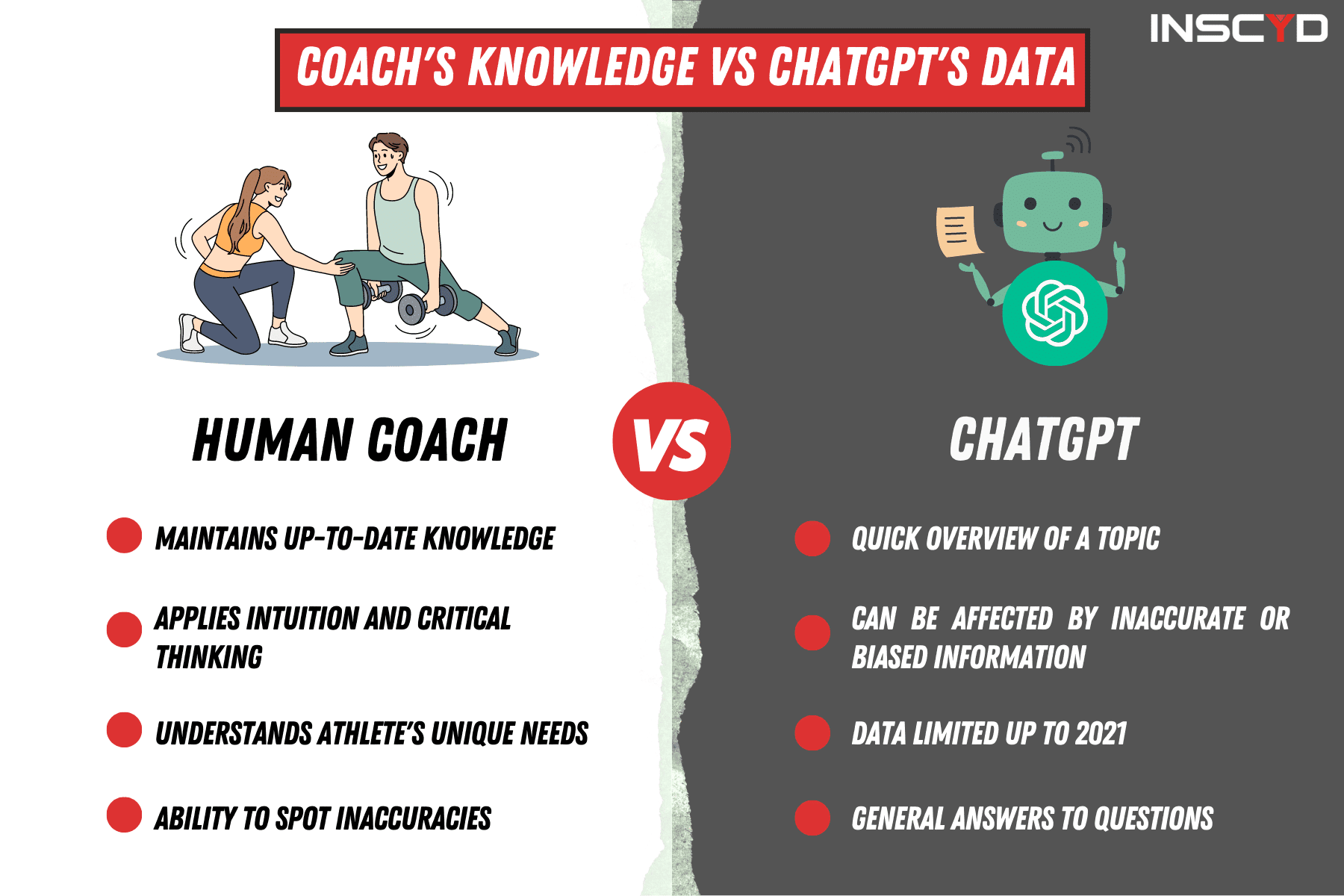
ChatGPT uses a wide range of sources, such as books, articles, academic papers, and websites, to learn and generate its responses. However, its data is only updated until 2021. This means that, while it can provide a quick overview of a topic or a general answer to a question, it might not have the latest information on certain subjects.
ChatGPT itself does raise a couple of concerns about its own learning method. It admits that it can be affected by inaccurate or biased information, simply because not all its sources (e.g. the internet) provide information that is 100% true. It just generates the next most likely word in an answer, without actually understanding the information itself.
Since ChatGPT is not able to distinguish between reliable and unreliable sources, it’s essential for coaches to verify any information obtained from ChatGPT before implementing it in their coaching. This can be challenging since some errors are difficult to notice because they are hidden in reasonable-sounding answers.

Example of incorrect information, provided by ChatGPT. The energy production above anaerobic threshold is not necessarily “primarily anaerobic (without oxygen)”. An educated coach is able to filter these inaccuracies.
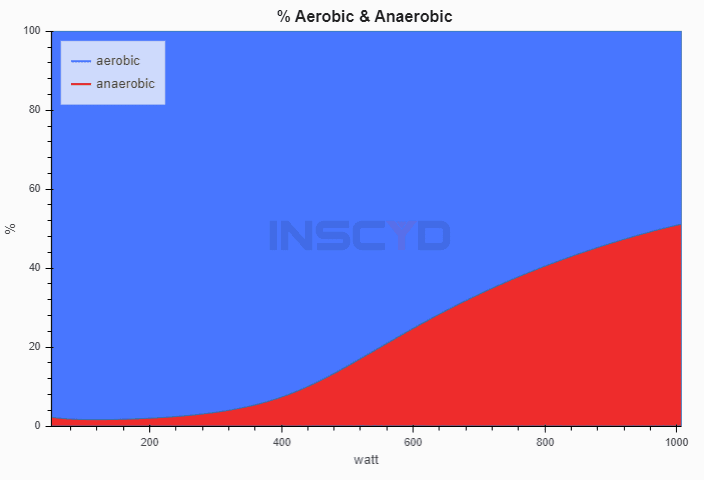
Example of energy contribution: aerobic vs anaerobic. This example athlete has an anaerobic threshold at 410 watts. Contrary to what ChatGPT claims, the aerobic energy production is still highly dominant (92%) at threshold.
The fact that ChatGPT is currently based on data up to 2021 is something to keep in mind when learning about topics in which we recently gained new insights. Or topics that were misunderstood in the past, like the role of lactate or the exact definition of the anaerobic threshold. ChatGPT does not have updated information about these concepts.
We’re not saying human coaches don’t make mistakes. However, being able to implement the latest knowledge is, and has always been, a way for coaches to distinguish themselves from others. Learn more about INSCYD education platform.
While AI tools like ChatGPT can provide quick answers, they lack the intuition and critical thinking that a human coach possesses. Coaches can make informed decisions based on their experience and understanding of the athlete’s unique needs, which is AI cannot replicate.
When you ask ChatGPT to create a training program, you can get pretty detailed results. Chances are that these programs are as good as a standard one-size-fits-all training program that you would previously need to pay for. If you are a coach selling these standard training programs, ChatGPT is a serious competitor.
Athletes can even provide personal data like “I’m 40 years old” and “My FTP is 250 watts”, to get a more individualized training program. However, this requires the athlete to know which metrics influence a training program. If you add “My 1RM squat equals 150kg” you can’t expect additional value for a triathlon training program.
This again shows the importance of being well educated yourself: the more you know, the more value you can get from an AI chatbot like ChatGPT. On the other hand: garbage in equals garbage out.
Keep in mind though, that even if you do add valuable data to your query, that doesn’t mean ChatGPT uses this information wisely. When your query becomes too specific, AI can start to make up information. This is called hallucination: without having the knowledge it simply creates an answer that it finds likely. Here’s an example:
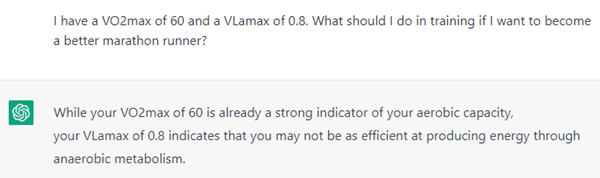
Example of questionable information, provided by ChatGPT. A VLamax of 0.8 mmol/l/s may sound as a low number to an AI chatbot with no knowledge about VLamax, but it is much too high for a marathon runner, rather than too low. ChatGPT continues with a training program that includes intervals to increase VLamax. This will harm the performance instead of improving it!
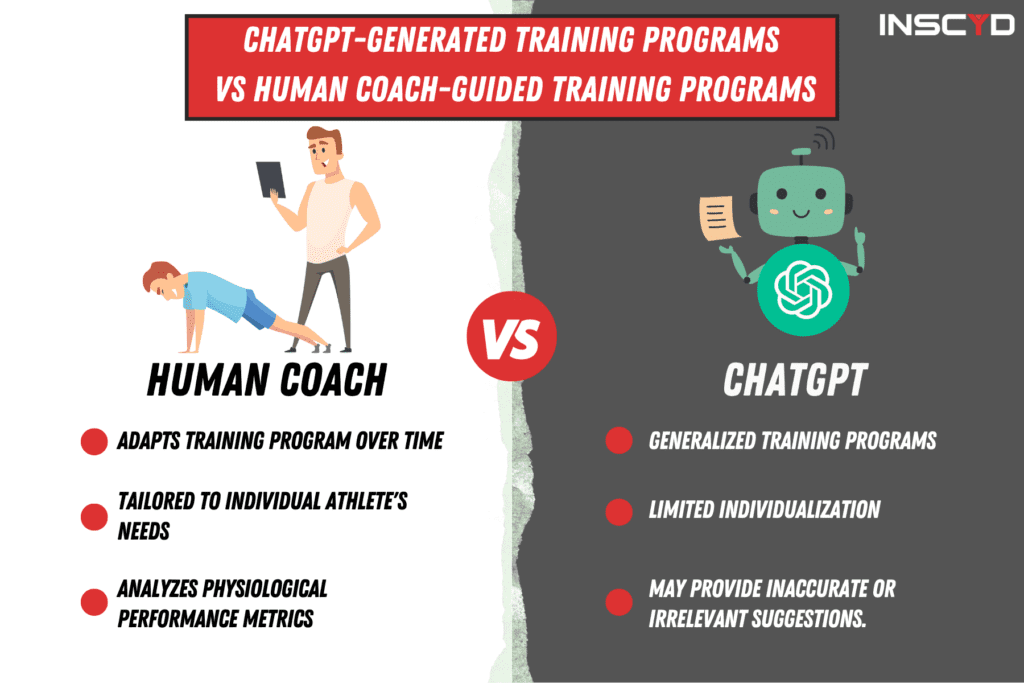
While AI can generate generalized training programs, they may not always be accurate or tailored to individual athletes. A human coach’s expertise in analyzing physiological performance metrics and adapting training programs is still unmatched by AI.
It’s the job of a coach to know which physiological performance metrics influence a training program. It’s also the job of a coach to analyze these physiological performance metrics, evaluate how they trend over time, and adapt a training program accordingly. After all, you don’t want to waste time on ineffective training.
An article in Current Sports Medicine Reports discusses the general sports training principle of individualization. According to the article, individualization involves the modification of training to account for an athlete’s unique capacity for and response to training. By taking these factors into account, individualization can significantly improve athletic performance by accounting for individual differences among athletes (Kasper, K. (2019). Sports Training Principles. Current Sports Medicine Reports, 18(4), 95-96.)
Since ChatGPT is not able to connect with a data source like INSCYD, it is not able to tailor a training program like that. INSCYD coaches know the added value of having metabolic data like the lactate recovery and accumulation rate, to create highly individual interval training for a training program.
“INSCYD goes beyond power analysis and allows us to see what happens in the body on metabolic level at every type of intensity.”
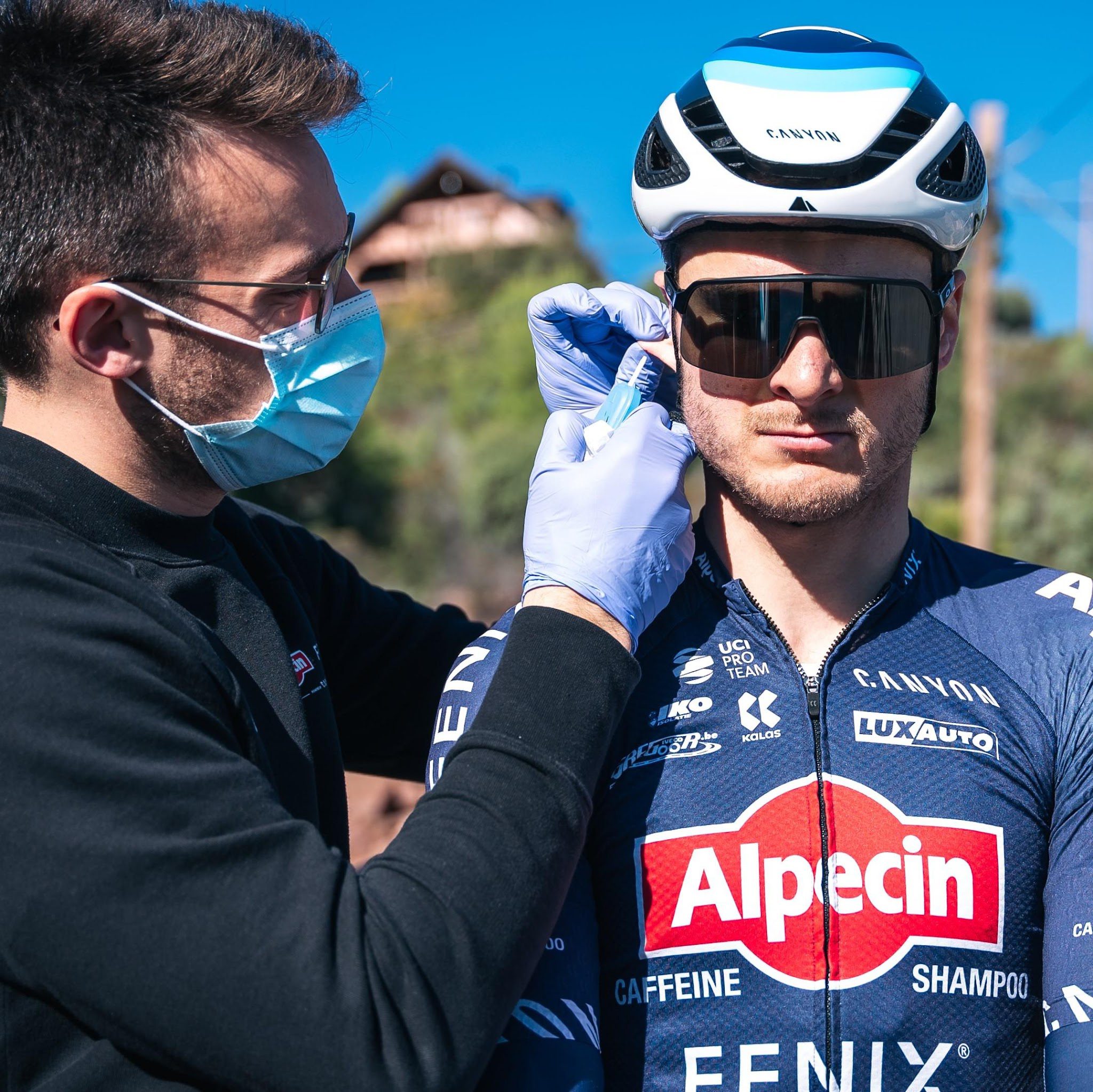
“INSCYD helps me to make sure that we make the best possible training program.”

“INSCYD enables us to precisely capture key performance metrics of the energy metabolism of our swimmers”

“INSCYD enables us to take real-world data from testing & training. This saves us time and effort, and refines the quality of our job.”
“Thanks to INSCYD, my trainer and I always know where I currently stand and where I can improve my performance.”
“I am convinced by the effectiveness of INSCYD to improve performance – it has proven to be a very powerful tool for us.”

“The INSCYD test opened my mind to an entirely new world of training and racing.”

“INSCYD testing helps my coaches to create the best training programs for us.”

“The more we can understand how an athlete does what they are capable of doing, the better we can focus on what they need to do to get better. This is why I am happy to partner with INSCYD.”

“INSCYD enables coaches to find that missing piece in training, to understand what is going on in the athlete's body and get the best out of them.”
“INSCYD looks inside the muscle and body in order to understand what’s happening based on a very limited number of measurements.”

Coaches, differentiate yourself from AI by incorporating metabolic data to create highly effective training plans for your athletes. Stay on top of your game and outperform AI-generated programs with the power of human intuition, experience, and adaptability.
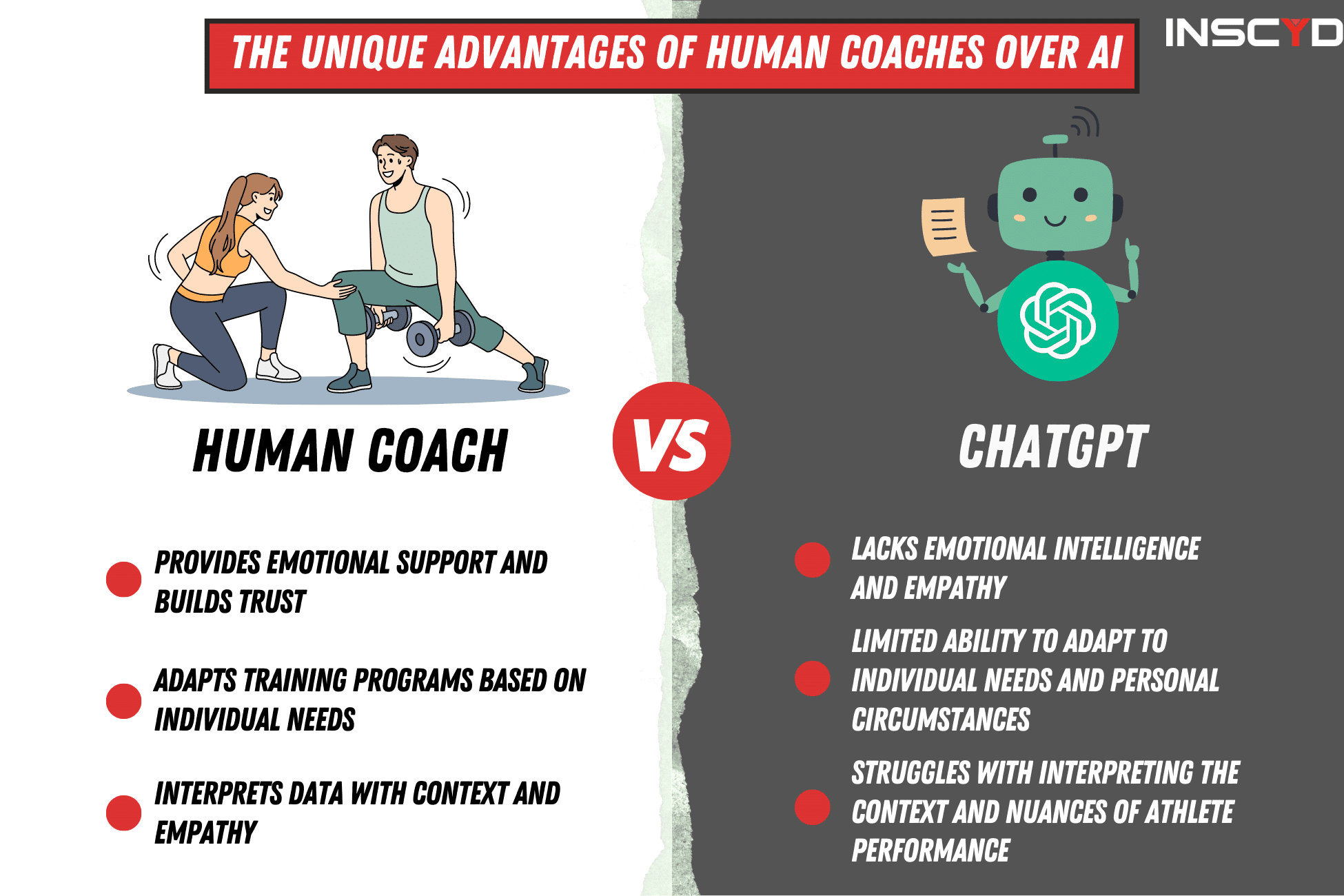
Some AI tools are able to import, analyze, and implement training data, which is a significant benefit for AI chatbots like ChatGPT. While AI is continually improving, at this point, coaches still have advantages over AI tools.
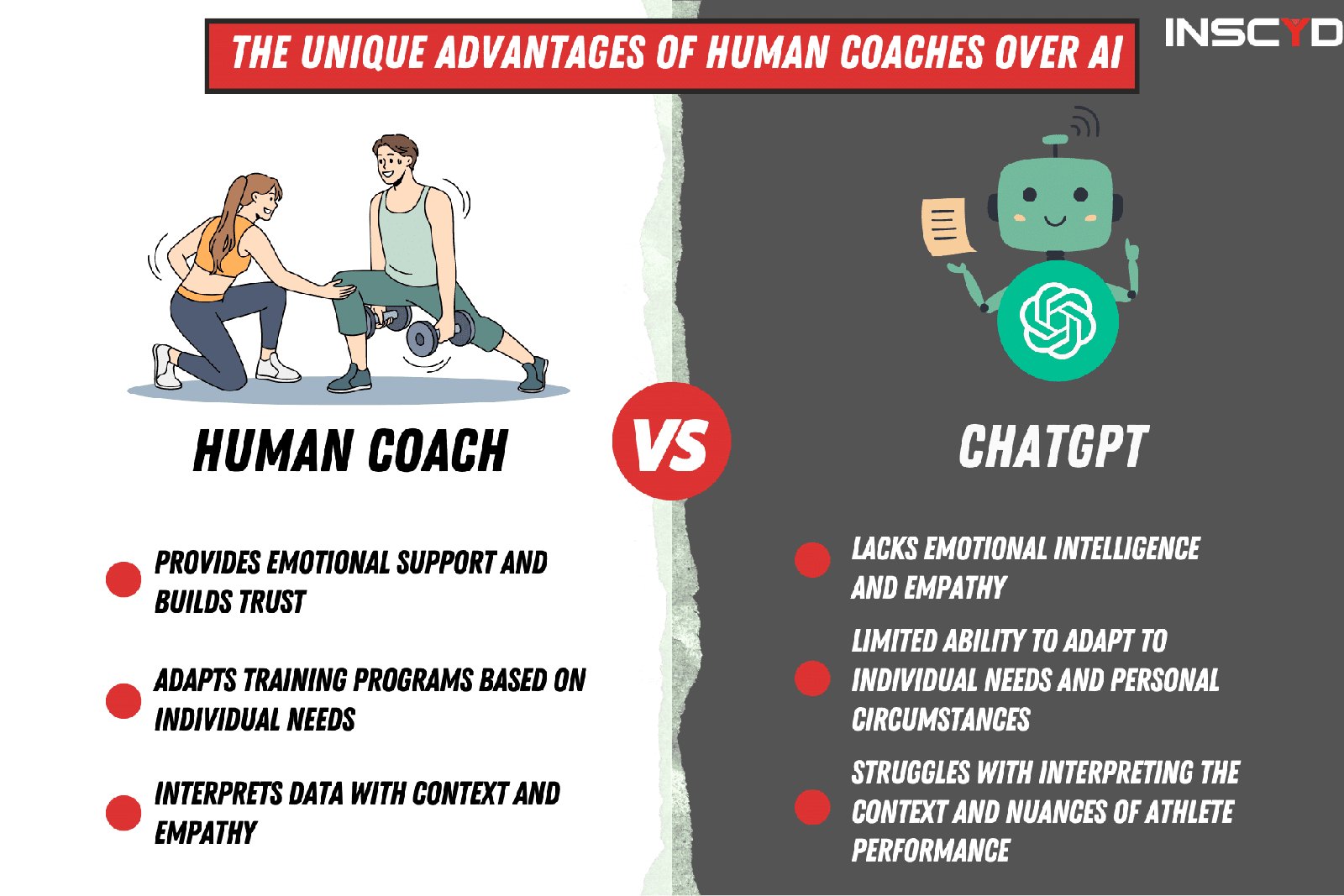
A human coach can put data into context and empathize with an athlete. They can adjust a training program by reading between the lines, taking into account personal circumstances that may limit time or motivation. A coach can also offer emotional support, build trust, and provide guidance in complex situations.
Based on the research “The coach-athlete partnership” by Jowett and Cockerill (2002), the coach-athlete relationship is considered to be particularly crucial. It is the foundation of coaching and provides the means by which coaches’ and athletes’ needs are expressed and fulfilled. The coach and the athlete intentionally develop a relationship, which is characterized by a growing appreciation and respect for each other as individuals. Additionally, the article cites several previous studies that support the finding that the coach-athlete relationship is an important determinant of athlete satisfaction.
Building this trust usually comes from an emotional connection and a proven expertise. In our education platform, INSCYD coach Philipp Seipp spends a full webinar talking about this specific topic.
Human coaches can go beyond the data to connect with their athletes on a personal level, understanding their emotions, motivation, and individual circumstances. This allows them to create training programs that are not only effective but also tailored to each athlete’s specific needs, an aspect that AI like ChatGPT cannot achieve.
We’ve discussed ways coaches can benefit from using AI tools like ChatGPT and how human sports coaches can add value beyond what AI currently offers. To summarize, here are three ways coaches can outperform ChatGPT or any AI tool:
Don’t let the AI revolution outpace you. Elevate your coaching with INSCYD’s expertise, creating personalized training programs and fostering strong athlete relationships. Time is running out – schedule a free consultation with our experts now! Athletes, secure your INSCYD coach or lab before it’s too late. Embrace the future of coaching and stay ahead in the game!
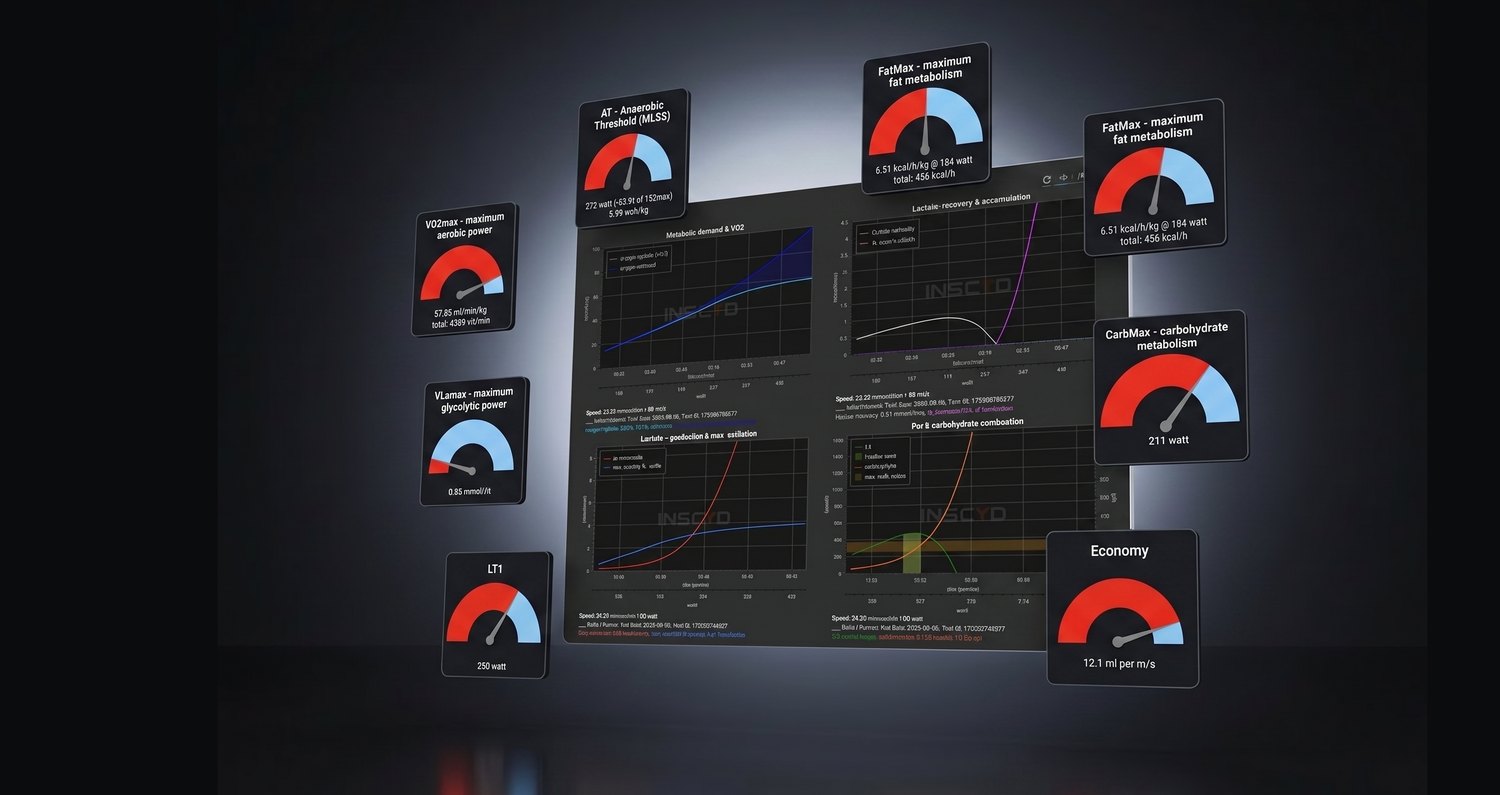
VO₂max, VLamax, FatMax, thresholds, fuel use and training zones, from a single test in the lab, in the field or fully remote.

