Science

Advisory Board

INSCYD’s scientific advisory board serves as a point of reference on scientific knowledge and methodology. They provide independent and objective advice on scientific matters to aid product development and scientific validation.

The scientific advisory board is composed of internationally recognized scientists in the area of human physiology and high-performance practitioners.

Trusted by Elite Federations, Coaches, Labs and Leading Universities Worldwide

Meet our advisors

David Pyne - Vignette
Prof. David Pyne

Sports Physiologist at the Canberra University (AUS)

Prof David Pyne (AUS) is a sports physiologist at Canberra University (AUS) with +30 years of practical and research experience in sports and physical activity.

His work has focussed on both practical interventions for enhancing sports performance and physiological mechanisms that explain variations in performance, health, and fitness.

Prof Pyne has published over 300 peer-reviewed papers in exercise and sports science journals. He has extensive experience with basketball, rugby union, Australian football, and swimming.

Prof Em. Alois Mader

Former Professor at the German Sports University in Cologne (GER)

Prof Alois Mader (GER) is a renowned sports medicine expert and exercise physiologist. He significantly contributed to lactate testing and exercise metabolism modeling in the ’70s and ’80s.

With 100+ publications, Prof Mader’s work focuses on endurance sports performance. Key achievements include developing a mathematical model of exercise metabolism, discovering the 4 mmol/l MLSS running speed value, and researching lactate at altitude.

He served as a Full Professor at German Sports University Cologne and Sports Physician for the Olympic Rowing Team.

Aaron L. Baggish - Vignette
Prof. / Dr. Aaron Baggish

Doctor/Professor of Medicine & Sports Science (USA)

Prof Aaron Baggish (USA) is the founder and Emeritus Director of the Cardiovascular Performance Program (CPP) at the Massachusetts General Hospital in Boston and currently chief of sports cardiology at the Centre Hospitalier Universitaire Vaudois (Lausanne, SUI).

His research interests include exercise-induced cardiac remodeling, pre- participation screening / sudden death prevention, high performance physiology, performance enhancing substance use, and exercise dose and clinical outcomes.

He has published more than 300 original peer reviewed research articles.

Prof. / Dr. Sebastian Gehlert

Professor at the Institute for Sports Science in Hildesheim (GER)

Prof. Dr. Sebastian Gehlert (GER), a notable figure at the University of Hildesheim’s Institute for Sports Science, specializes in performance diagnostics and sports science.

His work primarily focuses on muscular adaptation to strength and endurance training. Gehlert’s research interests include the regulation of molecular pathways in skeletal muscle and the integration of sports training with biological adaptation.

He is also engaged in optimizing training methodologies and nutrition for athletic performance enhancement, with a significant record of research publications in these areas.

David Pyne - Vignette
Prof. David Pyne

Sports Physiologist at the Canberra University (AUS)
Prof David Pyne (AUS) is a sports physiologist at Canberra University (AUS) with +30 years of practical and research experience in sports and physical activity.

His work has focussed on both practical interventions for enhancing sports performance and physiological mechanisms that explain variations in performance, health, and fitness.

Prof Pyne has published over 300 peer-reviewed papers in exercise and sports science journals. He has extensive experience with basketball, rugby union, Australian football, and swimming.

Prof Em. Alois Mader

Former Professor at the German Sports University in Cologne (GER)

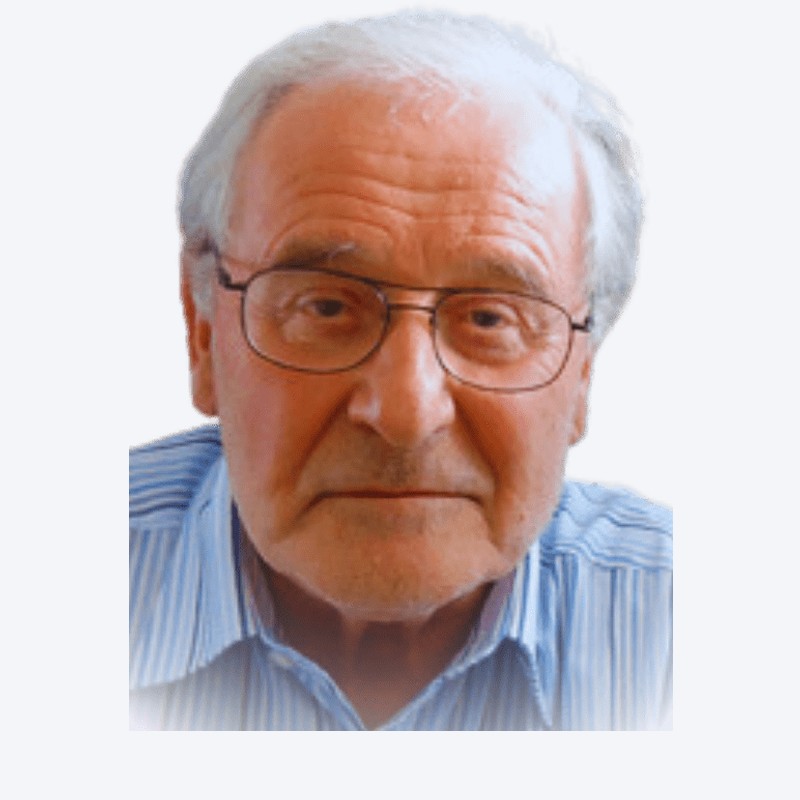
Prof Alois Mader (GER) is a renowned sports medicine expert and exercise physiologist. He significantly contributed to lactate testing and exercise metabolism modeling in the ’70s and ’80s.

With 100+ publications, Prof Mader’s work focuses on endurance sports performance. Key achievements include developing a mathematical model of exercise metabolism, discovering the 4 mmol/l MLSS running speed value, and researching lactate at altitude.

He served as a Full Professor at German Sports University Cologne and Sports Physician for the Olympic Rowing Team.

Aaron L. Baggish - Vignette
Prof. / Dr. Aaron Baggish

Doctor/Professor of Medicine & Sports Science (USA)

Prof. / DR. Aaron Baggish (USA) is the founder and Emeritus Director of the Cardiovascular Performance Program (CPP) at the Massachusetts General Hospital in Boston and currently chief of sports cardiology at the Centre Hospitalier Universitaire Vaudois (Lausanne, SUI).

His research interests include exercise-induced cardiac remodeling, pre- participation screening / sudden death prevention, high performance physiology, performance enhancing substance use, and exercise dose and clinical outcomes.

He has published more than 300 original peer reviewed research articles.

PROF. / DR. SEBASTIAN GEHLERT

Professor at the Institute for Sports Science in Hildesheim (GER)

Prof. Dr. Sebastian Gehlert (GER), a notable figure at the University of Hildesheim’s Institute for Sports Science, specializes in performance diagnostics and sports science.

His work primarily focuses on muscular adaptation to strength and endurance training. Gehlert’s research interests include the regulation of molecular pathways in skeletal muscle and the integration of sports training with biological adaptation.

He is also engaged in optimizing training methodologies and nutrition for athletic performance enhancement, with a significant record of research publications in these areas.

David Pyne - Vignette
Prof. David Pyne

Sports Physiologist at the Canberra University (AUS)

Prof David Pyne (AUS) is a sports physiologist at Canberra University (AUS) with +30 years of practical and research experience in sports and physical activity.

His work has focussed on both practical interventions for enhancing sports performance and physiological mechanisms that explain variations in performance, health, and fitness.

Prof Pyne has published over 300 peer-reviewed papers in exercise and sports science journals. He has extensive experience with basketball, rugby union, Australian football, and swimming.

Prof Em. Alois Mader

Former Professor at the German Sports University in Cologne (GER)

Prof Alois Mader (GER) is a renowned sports medicine expert and exercise physiologist. He significantly contributed to lactate testing and exercise metabolism modeling in the ’70s and ’80s.

With 100+ publications, Prof Mader’s work focuses on endurance sports performance. Key achievements include developing a mathematical model of exercise metabolism, discovering the 4 mmol/l MLSS running speed value, and researching lactate at altitude.

He served as a Full Professor at German Sports University Cologne and Sports Physician for the Olympic Rowing Team.

Aaron L. Baggish - Vignette
Prof. Dr. Aaron Baggish

Doctor and Professor of Medicine & Sports Science (USA)

Prof Aaron Baggish (USA) is the founder and Emeritus Director of the Cardiovascular Performance Program (CPP) at the Massachusetts General Hospital in Boston and currently chief of sports cardiology at the Centre Hospitalier Universitaire Vaudois (Lausanne, SUI).

His research interests include exercise-induced cardiac remodeling, pre- participation screening / sudden death prevention, high performance physiology, performance enhancing substance use, and exercise dose and clinical outcomes.

He has published more than 300 original peer reviewed research articles.

Prof. Dr. Sebastian Gehlert

Doctor and Professor at the Institute for Sports Science in Hildesheim (GER)

Prof. Dr. Sebastian Gehlert (GER), a notable figure at the University of Hildesheim’s Institute for Sports Science, specializes in performance diagnostics and sports science.

His work primarily focuses on muscular adaptation to strength and endurance training. Gehlert’s research interests include the regulation of molecular pathways in skeletal muscle and the integration of sports training with biological adaptation.

He is also engaged in optimizing training methodologies and nutrition for athletic performance enhancement, with a significant record of research publications in these areas.

Contribute to the Advancement of Sports Science Research

Coach and athlete analyzing metabolic performance graphs on a wall-mounted screen during a consultation session in a training facility, with cyclists training in the background.

If you have research questions or are an intern looking to contribute to scientific projects, or are a sports/physiologist professor or scientist interested in joining our collaborative network, please contact us.

Additionally, if you have inquiries related to the development of products, protocols, or services tailored to specific sports or have a unique demand, don’t hesitate to contact us.

Our scientific advisory board is comprised of world-renowned scientists in the field of human physiology and high-performance experts. They offer independent and unbiased guidance on scientific matters, contributing to product development and scientific validation.

Coach and athlete analyzing metabolic performance graphs on a wall-mounted screen during a consultation session in a training facility, with cyclists training in the background.

Scientific Research and Validation

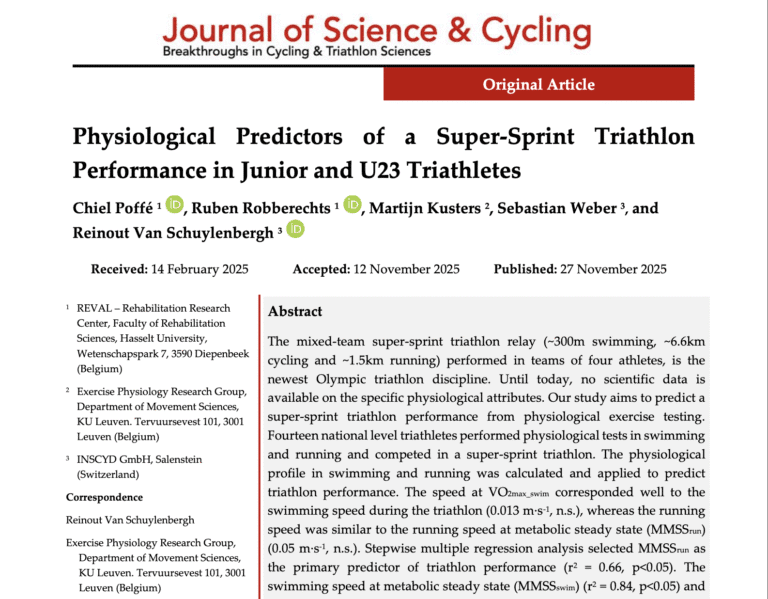
Studies that validate the accuracy and reliability of INSCYD, as well as research that leverages INSCYD to uncover groundbreaking insights in the field.
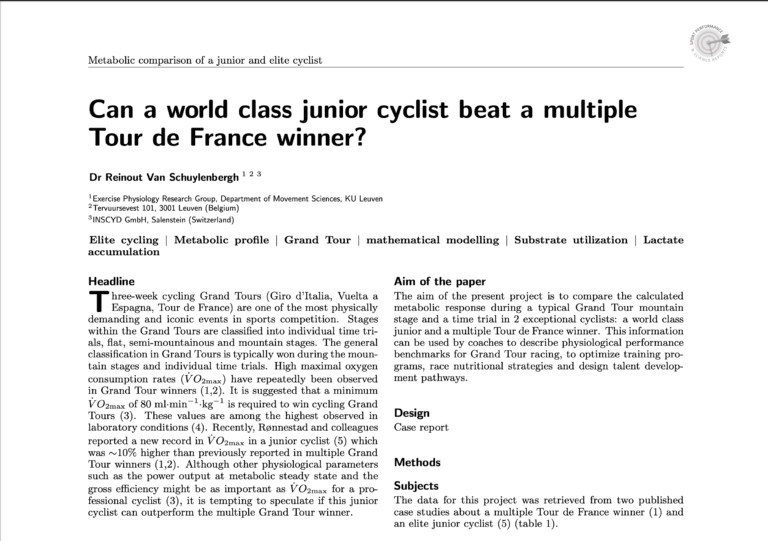
Can a world class junior cyclist beat a multiple Tour de France winner?

Three-week cycling Grand Tours (Giro d’Italia, Vuelta a Espagna, Tour de France) are one of the most physically demanding and iconic events in sports competition. Stages within the Grand Tours are classified into individual time trials, flat, semi-mountainous and mountain stages. The general classification in Grand Tours is typically won…
Read more

Our Commitment to Science

INSCYD is committed to advancing the scientific understanding of human performance. We actively support rigorous, innovative research and welcome collaboration with individuals and institutions who share the goal of contributing meaningful insights to the field.