Profile-Based Training: Tailoring Strategy to Athlete Profiles for Peak Results
In this exclusive webinar, Benjamin Tilus shares real case studies of national champions, revealing how to tailor training strategies based on individual athlete metabolic profiles for peak results.


Case Study with National Champions
Discover how to use data-driven, profile-based training to achieve peak performance. In this exclusive webinar, Ben Tilus, National and State Champion coach, will share real case studies of three national champions, revealing how to tailor training strategies based on individual athlete profiles.
See INSCYD in Action - Book A Free demo
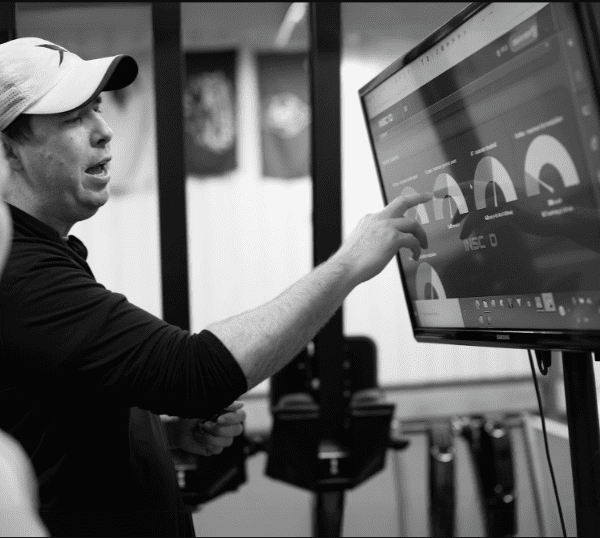
Your browser does not support the video tag.
Discover how tailored training approaches can lead to national championship titles. In this exclusive webinar, Ben Tilus, a National and State Champion coach, presents the profiles of three athletes who have secured national championships.
By exploring their unique profiles and training adaptations, you’ll gain valuable insights into how varying physiological characteristics shape training strategies. Whether you’re coaching athletes who excel across multiple domains or those who master specific aspects, you’ll learn how to apply flexible training models to bring out the best in every athlete.
Other Webinars
0:00 All right. Live as in you want me to rock and roll or? Yep. Yep. You're live. All right. Awesome. Thanks, Igor.
0:11 All right. Well, welcome everybody to this webinar. Thank you for those of you hopping on and I'm excited to share with you guys this webinar that I've been working on here. It's my, I believe, third one with inside. This one will be tailoring training strategies to athlete profiles. All right. Pretty common thing, but I think we're going to take a new angle at it a little bit. All right. And as always, leave stuff in the chat with anything going on and I'll try to keep an eye on it as well.
0:48 But excited to excited to look at that with you guys for joining. Again, really fired up for it. And I know we're recording it. So I see people still kind of hopping on and getting on. So no big rush. But again, as we're going, feel free to leave things in the chat. I'll try to keep an eye on it. Some of it will probably catch at the end. Some of it will catch as we're going. I'll do my best to do that. So, again, tailoring training strategies to athlete profiles is kind of a track and field metric.
1:23 Again, my name is Ben Tillis. I'm the founder, owner of Accelerate Performance Lab. We're based out of Iowa here in the United States. We've been around for about four years and we've had the awesome opportunity to work with well over 100 scholastic area champions in our what's if you're in the U.S., that'd be our state's championships for high school athletes, you know, between about 15 to 18. And so we've worked with about 30 to this year. We had over 40 of those, which is very awesome for our program. Super excited about that.
2:06 And then we've also had the wonderful opportunity to work with three national championship females, one from the in the 800, one in the 5000 meter and one in the two miles. So I think this will be a great opportunity for you guys to see. A lot of coaches are going to be the type of coach that maybe work with one. They have one main event or they're distance oriented or sprint oriented. Ours with our testing with inside has covered everything from, you know, all the way down to the 400 meter and sprinters all the way up to the 10,000 meter run.
2:46 This last year, we had a young college lady, one of our former national champs. We were helping with her, assisting with her, and she ran 32, around 50 or 32, yeah, 50 or so for 10K as a 19-year-old, first year in college, which is top, I believe, top 10 all time in world history for U20. So anyways, super excited to share with you some of this information. So again, leave anything in the chat as you go. And we're just going to kind of dive right in. I'm going to be bouncing back and forth between sharing the inside screen and as well as the inside page, as well as our presentation page.
3:38 All right, so we're going to go ahead and jump into that. The young man down here in the left, he's one of our state champions. He's a 16-year-old. He last year ran the mile around 412. As a 14-year-old, he actually ran the mile around 425 or so. So very talented young man. Looking forward to things he can do. He's a big, tall boy. He's about 6'2 and about 150 to 155. He's going to be very good. And then this young lady won the two-mile national championship here in the U.S.
4:24 for Scholastic Runners with a 959. Yep, and again, I see some questions in the chat. No worries. Some of those we'll get to at the end and dive into those. All right, so we're going to go ahead and look at the jumping into the presentation. All right, so our first page is on race-specific profiling. All right, every event has specific physiological demands. All right, the breakdown of those demands, a lot of you know them, obviously. 800 to 1,500 require very high total output, okay? Total power output.
5:06 Anaerobic power has to be high enough to create that explosive energy, all right? And the aerobic power has to be high enough to utilize the lactate that we're producing. And then we must be able to buffer it extremely well, right? As our acidity is going up and up and up from the hydrogen ions, we have to be able to buffer it and allow the lactate numbers to go higher and higher and higher. We've tried things like sodium bicarbonate, and we've seen athletes that sometimes have had to tap out around 10 millimoles or even less get up in the 15 or 16 with correct buffering
5:41 agents, which of course allows them to go further before their body and their muscles begin to kind of shut down on them, all right? All right, jumping over. And again, I got to go back and forth a little bit in the comments. I got two screens, so I apologize if that takes me a second to catch anything. The 1,500 to 3,000 requires moderate power output, a balanced anaerobic system. You need enough energy for surges and kicks, and a high aerobic system needed to manage a race effort that's run very close to VO2 max, okay?
6:16 And buffering lactate is of importance again, all right? So again, with VO2 max pace being around that six-minute marker for a lot of athletes, not a hard and fast thing, but right around that number, that 1,500 to 3,000-meter races fall kind of right in between those. So this race is run at a high percentage of your VO2 max, if not basically at full VO2 max or even faster if you're in the 1,500. So having a high on there is very important, all right? And you also have to deal with that anaerobic energy that you need to run those paces, not
6:53 as necessary as maybe blasting an 800, but necessary enough to drive to the finish and make necessary surges in the race. And 3,000 to 10,000, low power output requirement, low anaerobic power is very important. We don't want to be having a high accumulation of lactate. We want it to be moderate enough that the aerobic system can use it, but that it is not accumulating very quickly at all. Buffering lactates of minimal importance. Very rarely do they come anywhere near their maximum lactate numbers at the end of a 5 or
7:30 10,000. They're just so far away from it even before the kicking starts and whatnot. So anyways, that's rarely an issue. We rarely see anybody get near that max. It tends to be more like 60 to 70% maybe of their max when they finish a distance of that amount. Okay. Yeah. So somebody asked about bicarbonate experiences with different athletes. That is going to be an entirely, you know, genetic type of thing as well as maybe they've got bad habits and they're eating and it throws some things off.
8:05 You know, certain, certain, you know, phenotypes, phenotypes are going to respond better to that. Some have a very high buffering capacity already. So what I've kind of seen in general is that people with an extremely high buffering capacity, maybe 400, 800 runners there, they might not see as much of a benefit from that. If they already have a really high capacity. We have an athlete. I'll show you his data has about a 21 or so lactate. Uh, capacity when he goes all out, um, you know, for a couple of minutes, um, buffering
8:40 that is not going to allow that. That's a pretty high rate. Um, and then, but, but a lot of times I've seen it maybe more for those 1500, 3000 types that are moving down to a more aggressive 1500 race, or even the 800. Sometimes they tend to not be able to buffer high amounts of lactate. Cause let's remember they don't do that as often in training, right? So they're not hitting those, um, typical extremely hard, uh, anaerobic workouts that maybe push the lactate up into the 15, 16, 17 millimole range.
9:13 So if you have a longer distance athlete coming down to that middle distance, that's probably where you're buffering. The bicarbonate can kind of help with an area that maybe you haven't trained as much. Um, and so it can kind of maybe cover that gap a little bit. That's just something we've seen in the lab. Um, we're, we're really new to starting experimenting with that. Obviously having, you know, supplements like Martins and things that have, uh, better tolerance on the stomach is allowing us to try a little more of that.
9:43 Uh, it's obviously not cheap. So, uh, you know, uh, we've got to be smart with our utilization of that. Uh, and if anyone from Martins is listening, uh, we would happily take a sponsorship. So, uh, of that, I'm sure our athletes would love it, but hopefully that answers that question a little bit. Um, because yeah, 1500 is going to be pretty close to max lactate requirements. And it just tends to be lower. If you're a 15, three, uh, their tolerance tends to be lower. Um, hopefully, um, that helped, um, a little bit.
10:16 So yeah, um, again, typically your 400, 800 kids can already get up very high. They practice that all the time and your kids not.
10:27 So any other questions on that one, but again, you're looking at high power output here, uh, moderate power output here and low power requirements down there. Um, but again, that's kind of necessary for the event. Um, not saying low in general, the aerobic is high, but it doesn't have to even be as high as maybe middle distance here or 15 to three, um, because the race has not run, um, as close to VO two max, the races there. All right. Looking on now at athlete specific profiling.
11:02 Okay. Um, you have your, so we had our race specific profiling. All right. And then now jumping over to athlete specific profiling. You have athletes that are anaerobically dominant. This young lady actually was a 200 meter state champion, youth champion for us. Um, but we're talking even events, you know, or athletes that maybe are 400, 800 specific of middle distance as well. Um, those athletes would be, uh, we would say they're explosive and fast. Um, they'll rely on their high level of anaerobic energy and their lactate buffering capabilities
11:36 to find success. Okay. You know, we could get deep into the science of different, you know, uh, transport systems and the genetic, you know, uh, markers that lead to that. But let's just keep it simple. These ones, we know who they are. Um, they probably can even dip down in the 200 and be pretty successful, but they go up into the mile and that might be a little bit of a stretch for them. Okay. Um, again, so they're, they're really reliant on very powerful anaerobic systems and high
12:05 degree of lactate buffering. Um, it's going to be a challenge for them to have very high VO2. Some might have pretty good ones, but it's going to be a challenge to be at the highest levels because their ability to do that high VO2 work, um, or repeat it is very challenging for them. Then you have, uh, this term is fairly well used now, which would be hybrid. All right. Which would be between the anaerobic and the aerobically dominant. So those athletes are speed and endurance balance balanced.
12:33 Um, you know, they'll rely, they, they need to have that strong aerobic system or they do have that strong aerobic system. Um, and, um, that allows them to, uh, utilize accumulating lactate. Okay. So this type of athlete, um, so again, now we're not talking race specifics. We're talking, this is the athlete that shows up in front of you and these are their skills. Then you have this athlete that shows up in front of you. All right. This young lady only runs about 220 or so for 800, but she can run, you know, close to
13:02 10 minutes for 3000 meters. Okay. Very good. 5k runner as well. Um, we, those are your one pace wonders. All right. Sometimes we call those they've got, it seems like they're on the same pace for 800 through 10 K. It feels like they'll rely on their ability to run fast at steady paces. And it's, you know, they do that by having low levels of accumulating lactate. So having sort of a three athlete profile here or three athlete, um, you know, uh, three categories, so to speak, of course, this is a linear thing, right?
13:36 It's anaerobic hybrid aerobic. You know, it doesn't mean they fit neatly into one category or another. Um, but that's kind of a, um, uh, a general, uh, idea of what those profiles are. Okay. So, um, let's look at what do we do now? You had your, again, race specific profiling, athlete specific profiling, and what do we do with that? All right. So here is an actual example of an anaerobic profile. This is an 18 year old male completing or competing scholastically. Um, again, that's our high school programs.
14:10 If you're us makes perfect sense for those of you, maybe outside of that, that's our, our school based. We, uh, that's where a lot of the races are. It's a lot more school based than it is club based. Um, we run club, um, but in their school system, this is a lot of what they do. Okay. Um, he ran personal best times of 47 seconds for 400 meters, 51 seconds for 400 meter hurdles and 154 for 800. He only ran the 800 like twice. Um, and he basically sees an opener.
14:38 I think he was a sub one 50 guy. If he'd have focused on it. Um, but he ended up at the university of Stanford focusing on the 400 meter hurdles. All right. His testing values is a VO two max of around 73. All right. He has a VLA max, the anaerobic power. So this is his aerobic power. And he has an anaerobic power of 1.2. Okay. Um, so obviously that's kind of the, um, you know, a very extremely high number. All right. This kid is extremely powerful, but he can tolerate it.
15:14 Right. He's got a maximum lactate value or concentration at the end of an all out effort of over 20 millimoles. Okay. Um, per liter. Okay. So, um, for those of you new to these metrics, okay. This VO two max is the relative value, not the absolute. Hopefully it's not absolute 73 liters. Um, but this is in milliliters per, um, per minute, per kilogram. Okay. Um, of, uh, for his aerobic power about where it plateaus. And then the VLA max is in, uh, millimoles per liter per second.
15:48 And so basically this number means that's how much his lactate increases per second when he hits full throttle. Okay. And so this athlete, again, extremely competitive, extremely powerful, extremely successful young man, um, was actually our state Gatorade athlete of the year, which is just a sponsored athlete as, as the top scholastic runner in, in the, in our state this season. If we go to, um, I'm going to go into inside here. I'm going to share this tab. All right. We're going to go to rice. His young name or his name is rice.
16:23 This young man's name is rice. Okay. Rice Reynolds. All right. We're going to look at his data. You can see once we tested him, uh, in August of 2023, and then again, in March of 2024, um, had about an 8% or so increase in VO2 max or sorry, higher than that, uh, about a 15%, 14%. And then his VLA max stayed roughly the same, but if we analyze his more recent, and we knew that was the case, he had enough anaerobic power. We needed to boost his aerobic power.
16:51 But if we look at his data, um, again, he, uh, very high power, right. All the way over in these power metrics. Okay. Very moderate threshold, um, because his, uh, just this accumulation would be very, very high. Okay. Um, and you know, obviously as we, we, you know, if you look into his specifics of the, the test data, um, all right, let's see. Someone says, can't read the screen. Is that for the inside screen? Is that what I'm showing right now on the inside? Let me try to zoom.
17:25 Um, sorry. Let me try to zoom on that. Um, is that still kind of small? I'm going to try to see if I can enlarge a little bit of this. Um, there's a simple way to do it here. Um, I don't have a touch screen that I'm on right now, so it's a little bit harder for me to find a way to zoom. Um, Igor, if you're on there and there's an easy way to zoom, let me know, but I'm not sure, um, that that's the case.
18:00 I don't think so. Uh, my apologies there. Um, hopefully it's showing up. Okay. He's playing. Oh yes. Um, yeah. Sorry there, Jim. I'm going to try. Like I said, maybe, I don't know if Igor's got a thought. Cause again, I'm not on a touch screen. Um, are other people having that issue? Cause I may try seeing if I can, um, come up with a better way to zoom. Um, uh, viewers can zoom. Okay. Okay. Is the chat? Yeah. I'm trying to see. Let's see. You're sharing screen.
18:40 I'm trying to see. Yeah. I'm trying to make this. Ah, okay. Thank you. All right. There we go. Okay. I was going to say, I'm trying really hard to find that zoom. I appreciate it. All right. Thank you. Thanks Mark. Okay. Moving on with that. Then Paul, you asked about relative VO two, um, verse absolute for the example. Okay. So relative VO two verse absolute. Um, so like, uh, his, his weight, uh, factors in. Okay. So absolute is measured in liters per minute. Okay. So this young man, um, weighs and it doesn't include weight.
19:20 Okay. So he weighs 64.7 kilograms and in, uh, inside, um, it uses just the, the fat free mass. So that's 64.7 kilograms. Uh, if we take his VO two and we multiply it by that 64.7 times 73.95. All right. Uh, we can pull up that calculator. Some of you can do that math. Uh, 64.7 times 73.95. It's 4,784 milliliters. Okay. Per minute of oxygen going in or about 4.8 or so liters. Okay. That's the absolute value. The relative value is divided out over weight as well. Okay.
20:09 So, um, total kilograms of fat free mass is how inside measures it. Okay. Um, and so, uh, that's the difference between absolute and relative value. Absolute's just the oxygen coming in with no regard for the person or the size or whatever doing that. The, uh, relative value is based on the, the, uh, organism that is taking it in and their size. Fair enough. All right, here we go. Let's see. Um, anyways, this athlete, highly successful, 400, 800 meter runner, this maximum lactate value, obviously very high. Being able to tolerate that much lactate is, um, of very high importance.
20:50 Okay. Um, if we look at like, you know, how an athlete like that tries to run, let's say, you know, an 800 around a minute 50, right? Uh, inside has some really unique data here. All right. We basically can go in, we can punch in a minute. 50 is 1.833 seconds. We know that what speed can he run. Um, we'd look at that, um, in terms of, uh, what that pace is in like, let's say minutes a mile or whatever is around three 40. All right. About 16.3 miles an hour.
21:30 Okay. 16.3 miles an hour, 7.29 meters a second. So we plug that in. And the total accumulation would need to be 22.5. Now remember his was only 20.1 in the test. So we may have to go down. What if he runs 7.2 meters a second? That's getting closer. 7.1 meters a second. 20.7. Now getting closer, maybe seven meters a second, a little bit low. So 7.05 maybe right around that. Okay. So again, based on what he ran on the treadmill, 7.05 meters a second. All right. We would be able to say 7.05.
22:11 Put that back into miles an hour. It's 15.8. 15.8 miles an hour. Sorry. Doing a little math here on the side is about a 347 mile or 220 per K. So around that 153 metric. And again, he ran 154 flat basically. So that's checks out, right? And so if this accumulation could go up, if we could buffer it using bicarbonate or something and nothing else changed, what if it could go to 23? Then we could be back into that, you know, 7.4 zone maybe or 7.35. So, you know, being able to buffer more and allow that lactate to go higher, let's say
22:52 it could make that much of an adjustment. Again, this is pretty high already, but let's say it made that much of an adjustment. That 7.35 suddenly now, again, he's running the time that we thought he could run. And that's with no other changes. You know, obviously we'd hope VO2 and things, but let's just say it was a, a, um, like a sodium bicarbonate or something, um, 16.4 miles an hour. And he's obviously sub 150 then. Okay. Does that make sense? Hopefully that is, um, uh, making sense to you guys.
23:22 Um, how did we increase the athlete's VO2 max without decreasing the VLA max? Oh, Ryan, great question, dude. Really, really good question. So this is actually, um, and I apologize. I'm not sure if my network is lagging. It shouldn't be. It's really good wifi, but I hope it's, so I'm not sure why it would be, but hopefully it hangs in there. Um, I've never had issues with it. Um, but let's look at what you're asking. How do you raise the VO2 without lowering VLA max? It's actually quite simple.
23:53 Um, because remember the VO2 max is going to be improved. You'll get the highest stimulus, the faster you run. So a sprint is going to be the most exhausting. The aerobic system. We just can't do very much of it. All right. So distance runners tend to run down here aerobically, but look at how low that VO2 max stimulus is. And it's a very low VLA max stimulus. But for someone like Rice, he's not going to run in that range. He's a 400, 800 guy. He's barely going to run in this range.
24:21 I mean, heck his VO2 max pace at the fastest zone at 105% of it is about 430 a mile. It's still 67 seconds a quarter, 33 seconds of 400 or 200. It's just not a zone. He's going to train in very often, but we did some of that. Maybe we did, you know, 200s at 32 or 33 with a 30 second rest and try to do maybe two sets of eight or something like that. Okay. But you'll notice the accumulation rates fairly high and his clearance rate down here is very low.
24:54 Okay. Okay. So you'll notice though, it's a, the bigger VLA max stimulus is come at the faster paces. And so we were able to kind of, we didn't go down here. We didn't do a ton of like 300s at, you know, 36 seconds or something like that. That would have been a big VLA max stimulus. We did some of that, but that's probably why it didn't grow much. Basically held serve. So we kind of just balanced and kept this training fairly stable with that, but just added in a little bit of this work.
25:26 All right. In this VLA max zone, just a little bit, you know, and even a little faster, maybe 110%. All right. So it would maybe training in these zones, but again, you're not having a 400, 800 kid going out, running a bunch of threshold miles. All right. So if that makes sense, we did that with him and then he was mainly lifting and other things and plyometrics, you know, two days a week with explosive lifting. And then the other, maybe four days a week, he was incorporating running with some light, you know, plyos and hill sprints and things like that.
26:03 But not a big volume guy. All right. So that's his anaerobic profile. All right. That's, that's kind of a, that's an athlete specific, but you'll notice probably checks out and matches pretty good with what we talked about here on the race specific profile. Remember high power output, anaerobic power, very high anaerobic power, high enough. 70 VO2 for 800 kid, pretty good. And buffering lactate of high importance. Wow. Let's look right there. This athlete matched his profile of being anaerobically dominant with running in the correct races. Now I put 815, this could say 400 to, you know, 800 or so in that range.
26:47 That's more of his, actually you can still, the dude runs a pretty decent 1500 as well. But more on that side of it. All right. So he matches up. So again, that's where it would be. It's important for matching, matching up the athlete to that profile. What would their eight to 10 K look like for an athlete with this type of profile? You want to see what that looks like, Jack? An 8 K for this athlete. Well, it's very simple. You do the same thing. You know, you go in here and you say, well, I don't know.
27:22 It's probably going to take the dude 30 minutes. All right. At least. But we'll just put 30 minutes for an 8 K maybe. Okay. I don't know. Let's do 40 for a 10 K. 10 K is probably around about 60% of this 20. I don't know. 60% of 20 is like 12. So we'll say we can get up to 12 accumulation of lactate. Cause 10 K probably can tolerate about 60% of that max number. Cause just over a longer time. So 12, we're looking at, I don't know, 4.2 meters a second.
27:54 Yeah. Let's just say 4.2 ish meters a second. Obviously significantly less. And again, sorry, punching in some behind the scenes. It's about 9.4 miles an hour. And so he's running right around four minutes a K. So I guess pretty close. I said 40 minutes. So it's pretty much right on. Um, so yes, that athlete would be a 40 minute 10 K guy to the VLA max is just way too high. The anaerobic power is way too high. I assume you don't have any interest in having this kid run a 40 minute 10 K.
28:25 I highly doubt he's going to come back to your practice. Uh, and I don't think it's going to do much for your coaching business. All right. So, uh, and I did want to catch one. I know somebody asked earlier about, uh, inside, not being for individual athletes, um, only available to coaches. I mean, technically I guess it's available to anybody. Um, but obviously it's geared more towards coaches. Um, I mean, anybody could set it up and do it. I think, um, there's a lot of coaches that can assist with it.
28:52 Okay. It's just kind of a, you know, you can do a virtual, um, you can do, you know, their programming. Otherwise that's a good question for them. Um, but not really sure on that. Uh, anyways, um, all right. Going back to this hybrid profile. So this young man, okay. Was about a four 30 miler. And then out of nowhere this last year, he dropped the four Oh eight. Okay. Just literally out of nowhere. Um, I mean, not out of nowhere necessarily for us, but it, it was pretty impressive.
29:25 Um, he runs about 51 for the 400, 152 for 800, 408 for the mile and around 908 for two miles. Um, and so, uh, very talented young man. Um, you can see here, he's got an aerobic, uh, power of 82 for his relative VO2 max. His anaerobic power is 0.66. So it's a little under half the value or a little over half the value of rice. Rice's number, the previous athlete or anaerobic profile. And his VO2 is higher by, uh, roughly, I don't know, 15% or so.
29:59 I'm at 13%, I think. And his maximum lactate value is under 13. The other athlete gets up around 21. Um, so this is the type of athlete where maybe that bicarbonate could really benefit because he's doing a lot more aerobic type of training. Um, than he is the anaerobic, you'll know it's four seconds slower at 400. All right. And so he's not getting a lot of stimuluses at this 12.8. All right. He's just not. And so, or that it gets up to that, you know, where he would push it into the 15, 16, 17,
30:31 18, 20 range in practice. He's not training that. So the bicarbonate could, could potentially give him some, some boost there. All right. Oh, I'm so sorry. I went back to, and I didn't switch. All right. I'm going to switch. Uh, I'm going to switch my fault entirely. Um, share this tab. Sorry about that. Went to the inside page and I don't have the comments on the same page. Um, do, do, do. Sorry. Sorry. I'm back here guys. Um, my apologies. Um, but this is the hybrid profile.
31:04 Okay. So I'll let you look at that for a second. Um, and I'll do my best to remember to switch tabs. Uh, The, uh, yeah. So again, you can see the numbers down here. Okay. So give you a second kind of glance at that higher VO two, lower anaerobic, higher aerobic power, lower anaerobic power and lower buffering capacity or lower, you know, lactate max lactate concentration levels. Okay. Um, if we went to this young man and we overlap them and we're going to go back, I'm going to
31:33 share this tab. Uh, we're going to overlap them. We're going to show you rice. Okay. Um, we're going to compare and we're going to compare Tony. Okay. Roughly the same age. Compare. Okay. Multi-profile. For those of you that have seen this, you see rice has a little higher percent body fat. Uh, Tony's a little bit lower. Yada, yada, yada. Uh, all right. Tony's is the dotted line. Rice's is the solid line below it. This is the aerobic requirement in VO two. Tony can obviously do more of that with his aerobic system at each pace.
32:15 As we go faster, left to right, let's say they're running at two flat 800 pace. Uh, Tony's able to do, uh, use about a VO two. He's taking up around 72.3 milliliters per minute per kilogram. Rice is taking up about 63. Okay. But the requirement is 92. So Tony's doing more of it with his aerobic system. The shaded areas where the lactate has to kick in to assist. Okay. So Tony benefit is aerobically. Then this is their clearance ability. Okay. Tony, again, the dotted line and clear way more lactate, way higher rates at much faster
32:49 paces than rice. Okay. Um, and again, Tony, like rice, his anaerobic system kicks in very early and his aerobic system plateaus earlier. Tony's is a delayed thing kicks in later and his aerobic power plateaus later. Okay. That allows his threshold to be significantly faster. Um, 5.2 meters a second versus around 3.9 over a meter a second, faster threshold at his anaerobic threshold. Same thing here. Rice doesn't use fat as a fuel very well. Tony uses fat as a fuel very well. All right. So those are some different metrics that you might see, um, between an anaerobic profile and
33:31 a hybrid profile. And this is the, the athlete specific. This doesn't care what race they run yet. Okay. If we went to Tony. Okay. Um, if we went to, uh, if we went to Tony here. All right. Let me go back in. Just was making sure I didn't miss anything in the comments. Let's go back to Tony. And we, let's look at that same 800. Okay. So we know that he can get to that 12.8. All right. Deselect these. Okay. Now we knew that rice could get to 20.1 or whatever it was, but Tony can only get to 12.8
34:06 in his total accumulation of lactate. Okay. So at the time of his test, I think he ran faster than what he did on this test, but the time of his test, um, we're going to see if he could run around that 1.9 and his meters a second, somewhere around seven, this accumulates 14.3. He can't do that. He can only do 12.8. What he showed us on the test. So we're going to slow it down a little bit. Still too high. Slow down a little more. Still too high.
34:36 All right. 12.8, 6.85 meters a second. Okay. 6.85 meters a second. It was a little bit under two, 15.3 miles an hour, probably about that 158 range. All right. Obviously he got down to one 52. This was preseason. I guarantee you as he went through the season, this accumulation, his ability to tolerate lactate went up significantly, probably much closer to 20. All right. He probably had some changes in his VO2 and his VLA max, but my guess is his buffering capacity went way up. We did not test him, um, in the middle of the season, but this would have been his profile
35:13 leading into that. So this probably went way up. Um, might've gone close to, you know, that, uh, I don't know, 18 range or so. Um, it would have had to, yeah. 16s. So if he increased that buffering capacity by roughly four and a half or four millimoles, he would have been able to run that one 52. Okay. Um, we see the same for his mile. You know, we ran roughly 4.0, uh, 4.1 or so minutes at a pace of, I think it was around 6.3 meters a second.
35:45 All right. And again, 14.3, if he was closer to that 16 number, right. Then we're in that 6.4 range, 6.4 meters a second. Again, if we look at that 6.4 is about 14.3 miles an hour, 14.3 miles an hour. Is around 4.11 for the miles. We're in the ballpark. Okay. And I actually went on the low side of that. So if we went up to 16, six or so, we're probably right on that time that he ran. Okay. So, um, it checks out that more than likely he got to where he could handle this amount
36:25 of lactate. Okay. And so, um, through probably, you know, I don't remember if he was using bicarbonate or not. Uh, he would have been a perfect candidate for it. Um, they trained at their school during the part of the season here where he did some of that he did at least. So we didn't have as much control over his season data, but they did a great job with him. All right. All right. Still looking. Okay. Nothing crazy in the chat. All right. So, um, anyways, hopefully that's valuable for you to see that.
36:55 Um, you know, if someone asked about that 8k range, you know, an athlete like this or 10k range, maybe we could run, I don't know, 33 minutes or something. You know, five meters a second, 60% of that 16 is probably around, you know, 10, nine millimoles or so. So you probably could run 5.5 meters a second. Nope. Not going to be there. Much smaller variables in speed. You know, probably 5.3 or something like that. 5.3 meters a second is around 11.9 miles an hour. Okay. 11.9 miles an hour.
37:33 We're roughly at.
37:37 Uh, 307 per K, which is 1530. So roughly 31, 20 or so. So 32. So somewhere in there. So pretty good range for that. Significantly better. Almost eight minutes better than rice. Same 800 time, but eight minutes better. Um, at a, at 10k. Okay. Fair enough. Um, what training strategy was used to increases buffering, um, capacity? Um, and for Bradley, uh, cyclists, uh, nope. So this is, uh, track and field. Um, you can take the same, maybe type of race strategy. There's obviously quite a bit different, but ours is, um, profiling track.
38:12 Um, uh, let's see. I'm going to do Paul's first training strategies used to increase his buffering capacity. Basically you need to deal with it to improve it. So you're going to want to do things that have high accumulation, right? So you could do a VO2 workout where you front load it with maybe a really hard 300 and then go into your maybe 600 meter repeats at VO2 or something like that. So he might do something like a 339, which accumulates for him would get up around nine,
38:47 you know, millimoles of lactate suddenly in his body. And then he would do the VO2 reps, you know, maybe two minute reps and he could get up, uh, there's be five and a two minute rep. You'd be up around 14 and then a total recovery, something like that, or a recovery enough to just go down two and a half and then stay around 11, keep bumping from nine to 14, nine to 14, nine to 14. Um, and to get down two and a half, it looks like his recovery rate would be about four
39:13 minutes. So maybe you're doing an 800 at the four minute recovery and you're, but you're starting at nine millimoles and not down around maybe two when you start the VO2s. Okay. Does that make sense? So if you do a quick burst at the front of the workout and then you're doing the rest of the workout under a lot of lactate, you're going to improve buffering. They're not going to like it, but you're going to improve it. Um, or you simply just do, you know, things that push this number higher, you know, trying
39:40 to do, you know, maybe a 300 faster than this with accumulation rates higher in that amount of time or whatever, or shorter rest before doubling back with one of these. And that drives that higher and higher. Um, those are kind of the strategies. Basically, if you're dealing with it, you're going to improve it. That's why we see athletes as the season goes on, they're 800 times get better, things like that, because mainly, um, for them, uh, the main, the thing of main importance, um, is the, of, of high importance is that buffering capacity.
40:10 So as they practice it more in competition, they're getting better at, at buffering it. Um, so, uh, we'll look at a few more of those, um, strategies, but again, basically don't overthink it, uh, just deal with it a couple of times a week. Maybe, um, don't overdo it. It's very stressful on the body going that acidic. All right. Uh, David, um, does ability to produce and clear lactate change? Um, these simulations assume that the max level can be trained and seem to indicate production and clearance. It's showing a short, uh, if we change that, um, the ability to produce it and clear it
40:50 would be changes in VLA max or changes in, um, uh, VO two max, right? And obviously those are changing as well. They're not static. Obviously that would never be totally static. Let's say instead, maybe his VO two went up to 84, his VLA max went up to 0.73 or something. Um, and then we could look at those same numbers. Um, and let's say his lactate capacity though, didn't change. And we stayed with those numbers, right? Cause that's certainly possibility, right? If we didn't focus on that buffering, that could definitely be the case.
41:30 All right. So we'd go in here and we know he can get 12.8. All right. We're going to go down here. We have the new increased number, higher VO two, higher anaerobic power, but he can only get 12, eight. We're trying to run this about 1.87 or so is the time we needed at around, I don't know, 7.1 meters a second. Um, you know, we're in that 14 range. So we're still, unless we increase that buffering, it's going to be hard or we probably needed to not increase his lactate, um, uh, lactate, uh, power, his VLA max.
42:04 So about 6.92 or so meters a second. So for him, if we increased the VO two, but didn't really increase buffering capacity, 15.5 miles an hour. Okay. 15.5 is going to be roughly 155, 156. So obviously buffering capacity was of major importance probably to him had we had that test. So yes, the ability to produce it can change. Um, we've seen it change with him over time. Again, if we, we showed you his data over time, Tony's data, um, we'll delete the virtual here, but he's started at a 73, seven, well 0.39 and eventually has worked up to production
42:47 of this. We do that with him cause he's more of an 800 guy, mile, 800 mile guy, more of that hybrid. So we don't need this super low. Um, and then you can see his ability to clear it using his VO two max, um, has improved significantly over the timeframe, you know, from Jay, it's about 18 months or so. Okay. Um, so anyways, hopefully that is a good answer to your question there. So always everything is changing other variables as well. Um, but that gives you an idea of the different things that change, but his biggest weakness
43:22 was indeed his ability to buffer lactate relative to his product or his production level here. Okay. Um, then we can look at an aerobic profile, a very low res image here. I'm going to go back to the profiles. Hold on one second. I'm going to share this tab. Um, all right. So aerobic profile. All right. Um, competing, you know, again, this is a 15 year old, very young guy runs right in that low twos for 800 around four 30 for the mile. But just recently after three months of training, you know, or whatever, he's run a 15 Oh three
43:54 for five K. Um, he was in the mid 15s before higher 15s. Um, but you can see he's got the same VO two as Tony, but only about two thirds of the VLA max as Tony. Okay. And about a third of the VLA max of rice. Okay. But he can only tolerate 9.2 millimoles again. Why? Well, he's so rarely deals with it in training. His body doesn't produce a lot. So it's hard for him to tolerate something that takes a lot for him to get to higher level
44:29 to get above nine to is really challenging for this kid. I mean, if we look at, you know, a type of workout for him that would get him above nine two. All right. If we look at that type of work, uh, his name is Preston. Okay. If we look at that type of work, okay. For him to get up to a 9.2. Okay. If we look at maybe a, his training paces here, let's say he's doing like repeat eight hundreds and we didn't do like a front loaded VLA max.
45:02 All right. Give it a second. If we didn't do a front loaded VLA max, he's only accumulating one. One point seven a minute. So let's say he's going about two minutes. All right. He can get, he'll get one rep in. Let's say he's doing one to one. So he gets one rep in. This is up around four. All right. Then he clears it one a minute. So he's doing one to one, about two minutes. Let's back down to two. And then he does another rep goes up to six clears it.
45:28 It's back down to four. Does another rep goes up to eight clears it. It's back down to six. Yeah. Or whatever. He can do four reps of near all out, you know, eight hundreds with two minutes recovery before he's, um, you know, uh, at his lactate cap. So it's very hard for him to get up. There's very strenuous testing. So you have to do things like front load workouts. You can even front load threshold. That's for a whole nother. That's a whole concept, but front load, like peak fade stuff inside has some info on that
45:59 where maybe you front load, you don't do your lactate, your threshold work at three millimoles. Instead, you bump it up to six and then stay at six the entire time through using, you know, right at threshold, but your numbers are already six. It's only a three because that's kind of roughly where it started when you got running. So, um, bumps up a little bit at the beginning. All right. So, um, anyways, you can see for him, uh, what happens there. Right. And you can see, I'm going to use the, the 800 again, because poor dude, it's 800, you
46:33 know, um, you can only handle about 9.2. So we're going to go, you know, two minutes, uh, you know, 6.5. Meters a second or so, you know, so he's right around that, you know, two flat pace. Okay. A little under that, maybe 201, 202. Okay. So obviously didn't quite maximize his 800, but, uh, he didn't run it a lot either. Um, but you can see it's not going to be anywhere near those other guys. Right. And so again, if he simply increased his buffering capacity to, let's say 12, um, you know, all
47:11 of a sudden, um, it's faster here as well. Maybe 1.93, something like that. And all of a sudden, you know, he's running a lot closer to this 155 range, 6.9 meters a second or so. Um, again, that's around that 155 to 156. So you can see the buffering capacity matters a lot in these 800 and mile races. Um, and you know, for this athlete though, now you look at that 10 K time, right? You go to that. We're just, cause we've been talking about it. Okay. So the other young man was able to run roughly around that 31 high to 32.
47:47 Um, and so, um, let's go with Preston here. He's probably able to run right around six millimoles for that. It's maybe 31 minutes and he can get up to accumulation of six. So obviously faster than five meters a second, 5.52 or something like that. Okay. 5.5. We'll just say, uh, 5.5. All right. All right. 12.3 miles an hour. Okay. 12.3 miles an hour for him.
48:18 Right around three minutes. Okay. Which is going to be right around that 30 minute mark. So there you go. All right. Obviously runs five care on 15.03. So he's probably got more in his five K even than what we saw, um, in his test. I don't think he's quite running up to what we've seen in tests. Um, but obviously those are fast paces and he's a 15 year old. He's learning how to race. Um, and so, uh, obviously it's probably would run closer to 32 or so just off of, um, mental
48:47 capacity and willingness, um, you know, to, to push himself at that long of a race. And we wouldn't do that at this age. All right. Jumping back over here. See if anybody had anything else in the chat. Okay. Nope. So again, hopefully you guys can see there's another different type of athlete. I'm going to jump back to our presentation. Okay. We're going to share this one. So again, here's our three types of athletes. Okay. High anaerobic and high tolerant, high buffering capacity, high VO2, moderate buffering capacity,
49:18 moderate VLA anaerobic power, high aerobic power, lower anaerobic power and lower buffering capacity. So those have nothing to do with the race profile. That was entirely the athlete profiling. It just so happened. They ran those race distances and we have the results. All right. All right. Now, if you've hung with me this far, let's have some fun. Okay. Key concepts. Okay. Key concepts. All right. A little fun graphics spinning around here. Let's go back over here. View tab. All right. Oh, sorry. Let's go to view tab.
49:50 My bad. There we go. I think we're on the right one now. So. Is this screen a special feature? I don't have it in my software.
50:02 Yes. Thank you inside for responding to Paul there. Um, sorry, if I use the, uh, sorry, Igor, if I use the feature that not everybody has, uh, I'm definitely a power user. So I'm not sure if I get access sometimes to things. Um, but it's a cool, you can, you can do that another way. Um, just really quickly. Let me show you that in case some of you want to use that and you're not doing that. You could do it over here. You could go into this.
50:27 Um, you've got to assume roughly maybe a one millimole starting point, but you could go over here and say, all right. Um, you know, you can get up to accumulation and in a minute of 4.6 to get to a 9.2 and an 800. So 4.6, you know, there you go. Roughly about two 30. Okay. There's your one 59 or so. All right. So you could do it that way. Sorry. That was just quick glance of that. Just giving somebody an idea there that maybe doesn't have that.
50:53 Um, and yes, it looks like there's a wait list. Sorry, Igor. Uh, hopefully maybe that inspires people to keep an eye on the, uh, incoming new stuff. They're doing awesome things all the time. All right. So here we go back to the key concept. So yeah, you'll love that. Those of you that are, don't have that feature yet. Um, probably in beta and I probably gave away some info there. Um, but key concept to unchangeable components, race requirement. You have to run the distance. Okay. You have to run it on the surface.
51:27 It's run. Those are the requirements. If they line you up for an 800, you don't get to go. Well, I prefer a thousand meters. Okay. I mean, you can, but they're not going to, they don't care if you run another 200. They're going to time you at 800. The other one is your genetic predispositions. Okay. Your genotypes, phenotypes, those things. Okay. That I'm not saying unchangeable. I mean, we can change your metric through, you know, some things. But your, your actual genes are not going to change.
51:54 Okay. Um, so you have to, your success will be determined by your ability to integrate these two pieces. Um, and manipulate the remaining variable variables. How close do these metrics align will increase the performance outcome. We kind of are already getting an idea of what I'm getting at here. Right. We know this, we know we want to get all of that good stuff. The 800 says, I want 150, 150 to get down here has to fill this up. How close is this genetic predisposition? If we're not even close, if this does not come close to matching that, it's going to take
52:34 a while. So let's look at that on this next page. Okay. Looking at these two chart or at these two photos. Okay. Which one will fill up faster? The cup or the hourglass? All right. Obviously the cup is going to fill up significantly faster than the hourglass. Why? There is nothing hindering the flow from the race requirement to the outcome. The genetic predisposition is not being hindered because they line up and they match. This one does not match. All right. You have a race requirement. You want this great outcome, but the genetic predisposition is so different that it is going
53:18 to take a long time. So if you want an athlete, just look at this to have success. You must be prepared to recognize two very important realities. The closer you can match them, the quicker you'll see the success, right? Again, boom, much faster. We'll play on both these again. Which one do you think is going to go faster and fill up? Right? Okay. If you're trying to fit an athlete to an event for which they're not suited genetically over here, you had better be patient, very patient.
53:50 Okay. Because you are going to struggle mightily to move them through that. Look, Rice Reynolds, the person who asked about the 8K and the 10K for our 400, 800 kid, the 400 kid. 40 minutes for 10K? It is going to take you a long time and likely will never be highly successful or anywhere near those other guys at that event. It's because you're going to risk injury. It's not what their muscle types normally do. It's just going to take you a very long time. So stop stressing about like, hey, well, I want a good four by 800 on my school relay or
54:27 scholastic team or something, or I need this kid to run cross country. So I'm going to train them like a cross country. That is going to be this. If it's an 800 guy training for 5K cross country, good luck. Godspeed. I mean, you know, a lot of them do it here in the States because it's the, they're at different times of the year. Um, and it can be good for them, but do not expect a very fast outcome to be successful. It's going to take a while.
54:57 Okay. And so, um, and then you have to expand it back out to get back to here. Now that happens a lot quicker for them, but that's kind of the nature of it. Again, I'm keeping an eye, um, on the, uh, list here. Okay. Hey, Jim, most can't make a silk purse out of a sow's ear or at least not quickly. Yes, Jim, that might be the strangest analogy I have ever heard. Um, but I will now probably steal it. Uh, I'll give you credit, I suppose.
55:25 But, um, that's exactly right. Don't try. You can try it, but don't come yelling at me and don't definitely don't blame the athlete. If you did not match these up very well, I know you don't always have control over that, but do not blame them. All right. And I know we're, we're cruising along here with this webinar can go, you know, I know we've got, you know, I was talking with Igor. He said, I got a two and a half hour slot. I ain't going to go that long, but we will go past the hour here.
55:50 Um, and I will at the end. So for the hour, feel free to chat. Have a question for the end and it will record and you can get the recording and get your question answered that way. If any of you have to go at the hour. Okay. 800 meter national champion, 17 year old scholastic athlete. We're going to buzz through these faster. We're not going to go into all their data. She ran two Oh six to win the U S high school national championships in 2021. Um, and so she runs for the university of Arkansas now ran two Oh two indoors last year for them.
56:24 She also plays soccer for them in the fall. She's a very talented young lady. Her performances. She won the Drake relays 400, 800 and 1500. Okay. Uh, two different years, won these one year and these the next year and got second trying to win the triple came within a couple of hundredths of a second. Um, doing it a couple hours after the 800. Um, the other young lady, very talented, wonderful young lady, no knock. Um, but did not run the 800 before the fourth. Um, so be a little bit, uh, I'll throw that in there for fun.
56:55 Um, it's just, it's true. It doesn't matter whether they like it or not, but that's true. Um, she did not back away from a race in her entire career in high school. I never saw her finish outside of the top four and outside of the top two, only twice, uh, incredibly gifted competitive athlete, but notice her profile starts to fall off at 3000. Now she probably could have ran 10 flat, but didn't run it a lot. Um, physiological data, very high. And again, our VO twos are going to be inflated a little bit.
57:27 Um, we're using that dividing the kilograms by fat free mass. And so those are going to be inflated by whatever body fat percent that they have. So let's say she had 10%, it's higher than that, but 10% or VO two, if it was full kilograms, not fat free mass would be more like a 61. So don't overthink it. But for us, it's all the same, uh, metric for us. Okay. It, uh, apples to apples on our end. All right. VLA max of 0.56 and could get up to 17.2 millimoles of lactate.
57:57 Another metric on here. I added just for fun, her percent of VO two max at threshold. So when she's running at that crossover point of the anaerobic threshold, where the production of lactate and the combustion match, she's at 79% of her threshold. That's going to be important because I'm taking you from her to another national champ. So we had, okay. Um, two mile national champion. Okay. This was the young lady last year, this past summer. Um, she ran nine 59 to win the U S high school championships.
58:33 Okay. She was a two 15 for 800, four 21 at 15, nine 21 at three and 1629 at 5k. She now runs for the university of Alabama. VO two max of 70. VO two max of 0.41. Again, if you look back here, higher aerobic, lower anaerobic by about 25% lower here and about 5% higher here. Max lactate concentration of 13.2. Hers 17 to hers was 13 to. And as you can see, very good. 1500. She's a miler at four 40. She's the only athlete in U S history to, for a scholastically to be ranked in the top 50
59:11 all time and events, everything from 1500 through 5,000. Um, and did it in the same year actually did it in about a three week span. Um, so very talented, awesome young lady dominated one by, I don't know, 60 meters in her national title race coming two days after getting second in the 5k. Um, so yes, but look at this percent of VO two max of threshold 88. Okay. Okay. So she can run at a significantly higher percentage of her aerobic max when she's running at that threshold, when that crop, when she starts accumulating lactate, what was Ainsley's 79.
59:48 This is Ainsley Erzin. This is Addy Dorn camp. Okay. Again, I'm checking real quick.
59:56 Can I switch my thumbnail to left hand corner settings? Um, that's a good question. Can I just drag it? I already done. Oh, okay. Thank you. Sorry about that. All right. And let's see. So now I got to go back to the chat. I'll just click apply. I'm going to cross out of that. Okay. Thank you for helping with that, Igor. Okay. Jumping back over though, to, um, a couple of things here, just answering a few questions. Um, when matching athletes, how much of VO two max and VO I max do you see as trainable?
1:00:31 Um, uh, VO two max trainable problem more. Uh, I don't know. Uh, as they age, the anaerobic starts very low. I work with youth athletes. So most of the time I've got some, some adult and pro athletes, but mostly youth athletes. So as they have very low muscle mass when they come in. So boys change a lot and it grows a lot as they put on muscle, the increase in testosterone, but I, I, that levels off a lot more. And then as adults, it changes more. They can manipulate it more through, through diet, but otherwise it's a little harder because
1:01:08 you've got to remember that's mainly coming from fast switch fibers, which are less trainable, especially if they're type, uh, two B fibers that are, that are, um, not, not oxidatively trainable. The type two a are, so your hybrids will be able to move their lactate more because they probably have a lot of type two a and not a lot of type two B. Um, so they're, that's why they're hybrids and they can pivot between the two. Um, there's is more mobile. Um, the distance runners are not going to be able to raise their VLA very much at all because
1:01:41 they have such a high level of, uh, slow twitch fibers. All right. So they don't have those trainable fast switch fibers as much. So, um, the VO two, um, the VO two max on the other hand, again, that can be trainable more, um, in different ways, um, than just muscle fiber type as well. Um, so, uh, definitely more trainable might sometimes take longer. Um, but again, I work with youth athletes, so we see a lot of mobility in their numbers. I think inside, you know, and Igor could give you some examples of athletes and on their
1:02:21 website that you can look at that has data over time for athletes like Peter Sagan, a, um, you know, cyclist, some data like that, um, where it changes throughout a year, but maybe not as much. Um, but they change it depending on if he's doing maybe criterions or, you know, one day races versus like a tour where he's got to do, you know, 21 days or whatever. Um, so, uh, just those types of things. And that's very diet based for them as well. Um, they lower their carbon take and that can quickly reduce VLA max also quickly reduces
1:02:56 their overall energy. So you got to be extremely smart with that. Um, but anyways, I'm just kind of giving you guys that lay of the land there. Okay. Um, but yes, hopefully that helps a little bit. Could I expand on percent VO two max at threshold, a higher number, better, et cetera. Uh, depends on the race, um, the race distance. Um, if they're going, if it's like a 5k and stuff, that's where you get that one pace wonder because they're, they're five. Let's say this young lady is a 88% of you to max at threshold.
1:03:29 Well, let's say her, her six minute pace VO two pace is whatever. Let's say it's, uh, she'd run a five minute mile probably for six minutes. Okay. Um, and so 88% of that at threshold, which is a race that's probably closer to like six to eight K maybe eight K something like that. Um, and so a little longer than 5k, um, even if we just said it was 5k for the sake of humoring it, um, she would be able to go at 88% of that speed. Okay.
1:03:59 Um, when running at threshold. So the downside to having that high percentage, the upside is you can go very fast for a very long period of time. Looking at this young lady, again, sorry for the bad image there, but, um, she has a 92%. This is the young lady who ran 32 minutes for 10 K last year as a seven, uh, 18 year old at 17, she won the national title in 1604 in her first ever track 5k. Um, uh, one by a hundred meters, one even challenge.
1:04:27 Okay. Um, but you'll notice slower, uh, race performances at 15 and 3k because, because this is higher, it means the anaerobic power is likely lower. So this can go up this percent VO2 max at threshold. If you have a lower VLA max or a higher, a aerobic power. But again, if you're taking away that VLA max, um, you're reducing their overall power. And that probably doesn't help as much for like the mile. If that makes some sense. Um, we have a boy athlete who, who has a 90 VO2 again, relative to our systems, probably
1:05:05 around 80, 81, he's about 10% body fat. Um, but he has a 0.66 VLA max. And so his downfall is that his percent of VO2 max at threshold is very low. So when he tries to run 5k cross country, people don't understand why he can break four minutes for the mile on a treadmill. Um, but cannot run much under 16 minutes for 5k cross country. It's very low percent VO2 max at threshold. So you want this number higher and higher as your race distance goes up. Uh, and then it can go lower in the shorter races, but only if you have tremendous foot
1:05:42 speed, probably. And I'm talking max velocity rather than, um, anaerobic power. Like you better be able to make it up with great efficiency and movement of speed. Um, hopefully that helps Mark. Hopefully, um, that, that got the, uh, info to you there. This is the young lady, um, that, uh, I was just, you know, as we're talking through again, you can see her numbers, high VO2 max right in between these last two young ladies. Okay. Lower VLA max. Okay. Again, lower close to this one, but a little lower, um, and decent maximum lactate concentration.
1:06:20 But again, progressively lower and progressively higher threshold. Go all the way back. Do not do this. Do not put her in the 3k and expect something like this. Do not put her, this young lady in the 800 and expect this. Okay. Like that, that's going to be really, really hard. So if you're asking why I really want to change them to that. Why now, again, if you have a season and they're running for a team and they need to run. Um, the only available distance is cross country as happens in the United States 5k.
1:06:55 Right. Uh, and that's your only available thing. Uh, there's your why, but then don't expect much. Now she was very good at cross country. She finished second and third at the state, but you can see partially she gets her job done with a high concentration and not as much from an extremely high anaerobic power. So she actually was decent at the longer things, but again, never want to stay title because, um, just too much lactate accumulation. You would say, oh, she should have a great kick, but no, she was at too high levels of
1:07:25 lactate concentration near the end of the race. All right. Hopefully that checks out. Training concepts. What hopefully a lot of you have been waiting for. Okay. Training concepts. We're getting near the end here as you'll be able to tell. Okay. Next one is connecting with me. So we're getting near the end of this and then it's question and answer time for any of you that would like to know a little bit more. Okay. Training concepts or key areas of focus for athletes that align with the event.
1:07:53 This is for athletes that align. This has nothing to do with the athletes that are over here, not the hourglass athletes. That is good luck. Godspeed. You're going to have to try a lot of different things and you're going to be very patient because sprinters cannot handle high levels of aerobic volume that would need to change to lower their VLA max and raise their aerobic power and vice versa. Just again, this is about matching. If you match it for an 800, 1500 runner, this young lady. Okay.
1:08:26 Those numbers. Very good. And actually she probably could have ran 420 for 15. She didn't ever run one fast. She was a championship runner. She actually raced this young lady who has the better PR. And with a hundred meters to go in that 431 race, she put, I'm not exaggerating when I say 30 to 40 meters on her in the final hundred, just absolute blasted. Okay. So obviously I had a little more in the tank there, but if we're looking at an athlete like that, moderate aerobic volume, high volume of faster VO2 max work.
1:08:57 When I say faster, I'm saying maybe not on the slow edge where you're doing a lot of mile repeats at close to VO2 max. You're maybe doing more of those 400s, things like that, 600, stuff like that. Low volume of threshold work. So this is probably not your double T type of kid. If you know what I'm talking about, double threshold, like Ingebrigtsen type. And Ingebrigtsen does not claim to be an 800 or anaerobic guy. He says his best event is probably 5k. Okay. He said that before.
1:09:25 I mean, as the, he shattered the world record at 3k, right? Just absolutely obliterated it. If you haven't watched it, go watch it. It's one of the most insane, ridiculous things you'll see. Just obliterated it this summer. Okay. Um, but that's not this athlete, low volume of threshold work. Okay. Moderate volume of anaerobic power. It's already pretty good. And quite frankly, you can way overcook anaerobic power. I would hardly ever say high volume of anaerobic power. Um, because you can overcook that system. Those fast switch fibers can peer out pretty quickly and struggle to recover.
1:10:01 High focus on maximal. And it definitely is the case for distance runners, like longer distance runners, even sprinters. That's hard to recover from. High focus on maximal speed development. We haven't talked about that much today, but this is just your sprint work. Obviously they've got to be very explosive, powerful. This doesn't even take into consideration. This is a high weight room focused athlete, high plyometric focused, um, athlete. Okay. So these would be your concepts. All right. I'm not here writing workouts for you. If I did though, again, it would be something like the high volume of faster VO2 max work.
1:10:35 Let's say this athlete faster level of VO2 max for him is probably close to a four minute mile. Um, for six minutes, he's more, you know, he's four 10 miler or so. So that'd be the faster edge of VO2, maybe four 10 or so. So we aren't doing repeat miles at four 10. I mean, that's just not, that doesn't make any sense. Right. And so, but he's going to do, um, cause he's only probably 70% VO2 at threshold. Can't do the, they're going to be significant and close to threshold.
1:11:06 Okay. Moving on to 1500 and three K. Um, uh, uh, real quick. I looked at the comments from Falk. Hopefully I said that right. Falk. Uh, you asked, do you report VO2 max with body fat removed to make them better comparable about their potential? Yeah, it's a little bit better metric too, of what the oxygen is, is actually being utilized in the muscles and the fat free mass. So, um, that's a good question for like Igor as well. And, uh, you know, Igor or the inside guys, um, it's a good question.
1:11:39 Um, the reason they do that, but yes, it's a little more related to the working area of the body and not sort of parts of the body along for the ride. Um, that's probably not a great answer to it. Um, I honestly, again, I don't know that it matters a ton. Most of your elite athletes are going to be in a relatively similar body fat area. If you have longer distance, half marathon marathon, and they have higher body fat percentages, um, that may factor in a little bit more.
1:12:10 I've been using inside. Good question, Jim. I've been using inside for about three years. All right. And again, we've had three national champions in that timeframe, all within about a 15 mile radius, actually less all within a 10 mile radius of our area. And there had actually never been a national champion in the previous hundred years in the state. Um, uh, until we started this program. So, uh, you can imagine competing. It's the entire U S of scholastic athletes having three from a 10 mile radius. Uh, we're in Iowa gyms.
1:12:42 We're in Iowa dead center of the U S we not a high population area either. We're in one of the bigger metros in Iowa, but definitely not high population. So going out and cross the U S and taking out the best runners from around the U S. Um, uh, we actually enjoy taking out Nike has a Nike elite youth program and kind of fun to put our Jersey out, you know, ahead of theirs when they're funding millions of dollars and things, not necessarily millions into that program, but they've got a lot of resources
1:13:07 in there. I say that because of the works inside works. Okay. If you use these concepts, the way we're talking about it, it works. Okay. And so these were not athletes. I'm going to back up just a smidge. This young lady was 20 seconds behind this young lady the year before this young lady was second on her team. When I met her second on her high school team, um, this young lady was pretty good, but not tops on her team. Um, and this young lady walked in and had all the talent in the world with the day I met
1:13:43 her. I thought she'd win a national title. I saw her first ever race as a, as a 11 year old or 12 year old was like five, 20 mile. So this one kind of kicked off a lot of our, you know, got us some, some momentum going, but we also had two young men break nine in the two mile here locally a few years before that, when it had never been done in Iowa and they're from the same small school. So I've been able to prove that we can do this with very small population sizes.
1:14:07 So yeah, it's pretty cool. And again, it works. That's why you're on this webinar guys, right? It works. If you get this right, it will work. Okay. So just finishing up those thoughts though, jumping back over here. So what makes this, what type of training does this, a young lady like that more of a 15, three. Now I would say she's more three and five, but she ran a good mile. And we did a lot of these things because she wasn't running the five K till the very last.
1:14:30 Um, and that was like her final meet. Um, we tried it. We don't run five K for high school track very often. That's pretty hard race. Um, and they're pretty young. We run it in cross country. It's cause it's the distance they give us, but pretty hard on the track. Uh, and pretty boring for, you know, 16 year old to run 12 and a half laps in the training. Pretty high, high aerobic volume though, for 1500 to three K. That's just going to be important because you got to raise the VO two, but you don't want to
1:14:57 raise the VLA max a ton, which means you got to do it with the slower. So you're going to have to just accumulate a lot of moderate VO two stimulus. And quite frankly, running a, you know, seven minute mile is not a very big VO two stimulus. You know, you're going to have to stack it. You're going to have to do a lot of it. High volume, like Inger Britson, let's see around 120 miles a week, a hundred miles a week, something like that. A lot of doubles, high volume of variable paced VO two max work.
1:15:23 So you could do the faster stuff. You could do the longest that you could do 400 repeats at the faster VO two hundred, five hundred, 10%. You could do miles at the 90%, you know, range of VO two max, just kind of in that world. Okay. If you go slower, you're going to have a lower VLA max stimulus. If you do the longer reps at slower paces, if you go faster, shorter reps, you're going to have a higher VLA max. Just don't overthink it. You go faster.
1:15:48 You're getting better stimulus and faster. The slower, you're not getting a better stimulus at the faster stuff. Don't overthink it. Moderate volume of threshold work. Okay. So you don't, you can't overcook this or maybe that anaerobic power, you change too many of those type two, a fibers to be too aerobic. I don't think that's going to be the case very often, but you just don't need to overcook this because you're doing a high volume of this in our whatever. So you can't do high volume here and high volume there.
1:16:13 Low volume of anaerobic power work. You just don't need much of it. Again, they're a hybrid. They're naturally going to have a nice blend of this. So they're not going to be too far either way, probably. Okay. So you're, and you don't want it to get too high because in this race still in the mile, you know, you're talking to 80% of the races is aerobic. 800, it's probably 70% still. Okay. And a moderate focus on max speed development. Now you can always focus on max speed.
1:16:40 I'm just talking like as a key component to the, your regular daily, you know, plyometrics, explosive lifting. I'm not, you know, these types of things are gonna be similar in track training, but adding it in for, you know, muscle development as well would, would be a moderate focus. Okay. Check in the comments. Okay. And 3000 to 10 K very high aerobic volume. Okay. It's just the name of the game. They've got to have a low VLA max, but they've got to have a big VO two max.
1:17:11 That's the name of the game. So guess what? You got to go slow and you got to do a lot of slow. Okay. It's just the name of the game. Okay. You're not going to get away. I mean, maybe at 3 K sure. You're going to see some people that are freaks of nature, pull this stuff off. It's just not going to be very common. They must have probably naturally very just good foot speed. I don't know. You know, there's just some other efficiency has to be very high.
1:17:35 We aren't talking economy at all today. That'd be another entire metric that we would want to add in, of course, but we're not. That that's very important, but not, not part of necessarily what we're working on. That's definitely a tough one to change. Moderate volume of slower VO two max work. You're not going to do those more explosive VO two, those 600, 400 very often. Mostly the slower at 90% of VO two max 95 again, 90% of VO two max can be threshold for these guys, but 95 to a hundred, you know, or whatever.
1:18:05 I mean, I got young ladies. This young lady did. I mean, her VO two max pace is like four 50. Actually, this won't be a good example. Her VO two max pace was like four 50 or five minutes. And she did three by mile at four 55, right. With like a minute recovery, minute and a half recovery. Um, so you get, you get the idea. Like they can do more of that, but that small recovery, they, they clear lactate very quickly. Um, so moderate volume of that, but we don't do a ton of that.
1:18:36 That was maybe one workout surrounded by two by K on either side at, at threshold K's of three 20 or something like that with, you know, 40 seconds recovery, maybe. Um, and we maybe hit VO two once every two weeks with an athlete like that. Very, at least harder VO two, uh, high volume of threshold work. Um, again, this is your double T type athletes, um, that are just cranking out, you know, double threshold sessions and whatnot. Um, it's kind of the, the fad, but it is working.
1:19:07 So, um, not all the science we're sure exactly why specifically double, um, would, um, would be great on this slide to include representative. Ah, yes. Profile numbers, uh, above each column. Fair point. I might go in and adjust that and can send out an updated PDF. That's a good point there, Jim. Uh, always going through. And I thought, I actually thought that as I was presenting it right now, I was like, oh, that would have been nice if I included that. Um, so we'll do that for, for future presentations with this one.
1:19:36 Uh, appreciate the insight there, my friend. Um, would Parker Valby fall into that exception? Uh, of being able to do three by 10 on low. Now she's not low volume. Um, she's not low volume. She's extremely high volume. When you take into account, um, the volume of, of cross training, she's, she's doing a massive aerobic volume of training. Um, that would be my guess. She doesn't train running very much. And actually she does a lot more now. Um, but her volume is extremely high. So she's not necessarily that type.
1:20:16 That would be a, you know, I would say like a 50 mile a week person that has a phenomenal 5k, you know, that's, it's very not common at all or whatever. So, um, but that would be my thought on that. Um, or, uh, sorry, Jack, um, Philip, these training concepts are very specific. Um, what training related to the metabolic profile, these training concepts are meant to be when they're matched again, this is the aligned. So what I'm saying is the profile does match the race specific. That's what these athletes can do.
1:20:51 These athletes cannot do this. These athletes cannot do this. I mean, they can, but again, it's going to take you back to here and be here. So they are profile. Um, these are to their profile as well. Right. Because we said that this athlete would be, that would be what they would do. Right. This athlete would do the type of the high VO two max low pressure. Let's, that's kind of what we're talking about. So yes, they are specific here, but I should have put the types as well.
1:21:22 This is your anaerobic power athlete. This is your, uh, that I see the confusion now. This is your hybrid athlete. This is your, um, uh, this is your, uh, aerobically dominated. Okay. So that's where they need to match. And that's where I got to put that in there. Aerobically dominated, uh, you know, in that regard. So I'll put that in as we're kind of wrapping up. So that, that lives on the profile. I see the confusion now. So thank you for asking that. Okay. Thanks, uh, Philip, um, Mark to clarify, when I say doubles, are we referring to two by 20
1:21:59 type workouts or double training sessions per day? Yeah. Double training sessions a day. So something like they might do, I don't know, four by mile to be a high, a collegiate athlete. I got a pro athlete. Let's just say she does four by mile, uh, roughly threshold or so. She might do four by mile at five 30. She was the national third place finisher in our NCAA steeplechase. So she, uh, nine. Uh, so like five 30 pace with short recovery in the morning and then maybe come down and
1:22:25 do, I don't know, 10 by 400 at 105% of threshold or so. So maybe like 75 or something, um, in the afternoon. That's what I'm talking about with double. Okay. Fair enough. Um, and, uh, so yeah, there you go again, high volume threshold, low volume, very low volume of aneroid power work. Uh, don't know why you'd be doing it. You're trying to lower that VLA as much as is safely possible. I mean, it can get too low, but you are, you're bringing that down unless you need surges or
1:22:57 a very strong kick. You need some of that. And everybody's like, yeah, I want that. Well, the more you get that, the slower pace you can sustain. Uh, there's your Ingebrigtsen trying to win 1500 world title problem or whatever. If you can set the two mile world record, you might have trouble winning in a kick against guys that are mile specific that maybe have a little higher anaerobic power. All right. There's your problem there. There's your downside that you can't have it all when you're trying to climb Everest.
1:23:24 While it would be wonderful to bring an Airbnb and drag it up behind you with your truck and trailer and sleep at the top. You don't get that. You got to go to get to the highest peak. You got to go with the least amount. The tools have to be very specific and you don't get to carry a lot of them. Fair enough. Okay. Uh, last things on here for you guys looking at this, connecting with us, any further questions, reach out. Okay. Shoot us an email support at accelerate-performancelab.com or directly to me would be Ben, B-E-N
1:23:54 at accelerate-performance lab. But this will eventually get to me too. I have an assistant that looks at it, but will eventually get to me. Okay. Would love to help give consulting info for anybody in that regard. Look at athletes' profiles. If you've got data, talk to you about whether Inside is a program for you. I can tell you, you will win if you use it. You will win if you use it and use it effectively and get the right consulting to learn how. You absolutely will win.
1:24:22 That's just what it's going to be. If you're, if you can use this, they do. That's not a disguise. They're winning with pros. We're winning with pros, youth, collegiate. It's just once we can, and we can match them to the race. Fair enough? All right. That is all I have. Time to dive into the comment section. Thank you guys that came and stayed for the presentation about an hour and a half. Hopefully a valuable one. If you do not have any questions or are bored by comment section conversation, check out now.
1:25:00 Thank you for your time. Please go share. Talk about Inside with your other friends and people. I don't get paid to say that. I actually pay quite a bit to use this. I'm quite the power user. We do hundreds of tests a year. So anyways, appreciate you guys. Log off if you're not interested in comment work and then look at it later if you want to. You can always circle back. So yes, let's rock and roll. Comment section time. Jacek, best from SPACS by Endutrition or is that E-D-Nutrition?
1:25:41 Endutrition. So Jacek, maybe just want to make sure that's right. Would love to check it out. Yeah, leave any. If you guys want me to check out your sites or anything or looking for supporters or whatever, let me know. So Jim, we all got a learning curve to climb, my man. If I was on here with Sebastian, I'd have been sweating bullets. I talk with him off and on. He is so bright. We all have a learning curve. Just dive in, my man. Dive in. Hey, Tomato.
1:26:09 That right. Thank you, sir. Appreciate it. I'm assuming, sir, it could be, ma'am. Thank you. Appreciate it. Bradley, thank you. Mark, appreciate you. Appreciate it. Anybody else in the comments here? Again, I'm just kind of waiting you out. I know people like to check this out. I see we've got a strong number still on live, but I'm also guessing some of you are just letting your computer roll and have stepped away as well. Paul, as incredible as always, experimenting with sodium bicarbonate. How would you start? Go to Martin's.
1:26:50 Use the M-A-U-R-T. Martin's for bicarb. I would use that because it's really specific to would allow us to. It's very specific to their weight. It does all that program for you. And we've had a lot of athletes not have issues with their stomach taking it. So I would try it in a all-out test or a workout where you want to see where you maybe know they've normally only been able to get to eight or nine millimoles. And you want to see, can it get to 12, 13, 14?
1:27:23 So you're trying to see, will it go higher under the same stimulus? That's what you're looking for. If it does, boom, you're on to something. Okay? If it doesn't, it might not be for them or you might need to try a higher dose or some other things or whatever. Okay? Jack, if you have a high school collegiate runners who fall in the hybrid model, wish to take on a half marathon, what would you recommend differently compared to traditional? Just bend them that way, so to speak. Bend them that way.
1:27:53 And by that, I mean, you still need to train them within their, this is where their sweet spot is. But bend it this way. Maybe the aerobic volume goes up a little bit. Maybe you aren't doing the variable pace and you're not doing the faster VO2. You're doing more moderate volume, the 90, 95% stuff, and maybe not the 100, 500, 10% of VO2 work. The threshold volume might replace some of this. And again, you're going to probably reduce this anaerobic power a lot, basically do almost none of it.
1:28:28 And anaerobic power is going to change by doing things like, you know, 20 second or longer reps, 20 to 50 second reps. Things like that are going to push it with full recovery. I didn't really get into that too much, but that's what's going to push that. Moderate focus, you know, again, you don't need to spend as much time, maybe weight room, power, plyo, speed, that stuff. I would just tilt this way, live in the margin over here. If you're trying to pull or push. Okay. If you're going the other way and you're trying to take, you know, hybrid down to here, you're going to live in these margins.
1:28:58 Okay. These are kind of sweet spot areas for those athletes. And again, conceptual, think concepts. Don't get wrapped up in finding specific workouts as much as concepts. When you get concepts, you can use your own, you know, intelligence and ability to put together training. And you're flexible when you use concepts and you don't. I very rarely go into a session, honestly, with a full workout planned out. Um, I know they need improvement in certain areas. I know what I want to do that day, maybe lower VLA max or improve VLA max or whatever.
1:29:33 Um, so I usually talk with the athlete and say, um, what are you feeling today? And maybe mentally they're not feeling mile repeats for threshold, but we could do Ks and we can get very much the same stimulus. If not the exact same, I just file that away in my brain. Um, for the little adjustment that might make physiologically. And then the athlete is extremely successful in the workout because they had ownership. Um, and so on. So you kind of go in with a concept of the day, but again, depends how many athletes you got to work with too.
1:30:05 You gotta, you know, I understand. Um, uh, Jasek, thanks. Um, let's see, Jack, if I have a high school collegiate runner. Yeah. Half more than triathlon. Okay. Sorry about that. Got that one. Bruce law, a program manager and head coach for a youth cycling development team inside appropriate. Absolutely. Now I would say, um, Igor could probably speak to this too, or some of the inside guys. I would say when you get much below like 14, 15, 14 or 15, especially for boys, their anaerobic power is just very low because their muscle mass and their testosterone is not high yet.
1:30:39 So you're going to see them. You might be training a lot and thinking you're keeping it down. It's just growing every time you, you know, test them. You're like, what the heck? I'm not even doing anaerobic power work while they're just putting on muscle and testosterone. Okay. Um, and then, so I think it's extremely valuable. Um, but I think you are going to not quite know their long-term sweet spot genetically through doing that. But I use it all the way down to ages like 14 and, and it's been very, even down to 13 year olds and been very successful.
1:31:10 Probably debate on that, but I found it to be extremely successful and helpful, especially in programming paces and things like that. So Bruce, I'd be happy to give you more info or ideas on that as well, or connect more, but, um, you know, very good stuff. Um, would be interesting. Angie, would it be possible to see what the software looks like again? Share a window. Yeah, yeah, yeah. Let's just pop over there. I'm just going to, um, I'll go back to this one and then I'll just share this tab.
1:31:35 Sorry about that. Angie, we'll just share tab there. There you go. Um, kind of just scroll through a little bit, get a lot of data. This has a lot of performance benchmarks and things. Okay. Um, this is development over time and it actually is, um, drop down menu, you know, and you can see comment boxes and things. It's so it's live. It's not just the PDF. You can download PDF, but this is also, um, in real time live. Okay. So, um, multiple pages on here, um, raw data, these charts, the load characteristics.
1:32:13 This is, this is where the bread and butter happens, but you gotta be pretty, you gotta really dig in and learn. And they have great videos on their site, uh, to help you learn about each of these. You can even, you know, click in and learn more about specifics. Um, but there you go. There's some more on that. So hopefully that's helpful. Just leave that on that screen for you. All right. Um, Brett, thanks Ben inside. If you're interested, I support your needs, recommend a free demo call.
1:32:41 Yes. Do the call. These guys, these guys are awesome. Like, again, I don't make any money from these guys. Like I, I really, but they just, I genuinely like them. They're really nice people. Igor, just a great dude. Um, they're, they're just all great. Like, it's just a really good, easy group to talk to. And they genuinely want to see your athletes have success. All right. All right. My mouse is like batteries dying. So scrolling is taking me a hot second. I apologize to test the full profile.
1:33:09 What tests you do? Do you lactate only or have a VO tube mask? How well does your treadmill results transferred outdoors? Okay. Good question. Um, I mainly do lactate on our youth because they tend to not perform well with a mask on. Um, and then down the road, we sometimes use it to get economy measurements. My older, my collegiate and stuff, they're a little more, or if they've been around me longer, can use a mask. Um, they won't rip it off a hard to get two minutes into an all out test.
1:33:35 Then somebody rips off a mask. That's not great. And you kind of struggle with that. Um, so anyways, um, but our profile is exactly inside lactate profile. They're doing some cool new ones. So stay tuned for that. That'll be even easier to use treadmill results. Um, I use 1%. Um, what I realized is anything faster than about 10 and a half miles an hour, um, needs to probably be one and a half percent. Anything faster than 13 miles an hour needs to be 2%. Or you're getting about, if you stay at 12, you're probably about, if they're running faster
1:34:09 than a four 40 mile, it's probably 10 seconds slower on the test than what it says they can do per mile. So about five seconds for an eight and so on. Um, so you need to get up to that 2% treadmill if you're going faster than 13 and about one and a half percent, uh, if you're going above 10 and a half. Fair enough. Otherwise 1% all the way below that. Okay. Um, thanks Ben. That makes sense. Thanks Jack. What type of lifting program? Honestly, lifting program.
1:34:40 The only thing that you might want to watch out for is lifting. That's more built around, um, uh, uh, I'm, I'm blanking. I don't know why I'm blanking. This is, uh, um, growing muscle mass hypertrophy. Okay. So, um, obviously hyperbolic is that ain't it, um, high hypertrophic training. So, um, where the muscle mass is intentionally increasing. You don't really need that for any of these programs. You just don't see it. That's more your, your sports where you need, you know, linebackers, you know, football, uh, bigger players, things like that.
1:35:15 Um, so I generally recommend a, ours is actually designed by physical therapists. So it's meant to be a little bit more around shoring up all the weak areas of their body. Um, you know, doing a lot of things like monster walk, like banded walks and things like that to help adductors, abductors. We do squats. We do deadlifts and cleans once a week. Um, but very light, these kids, especially distance, they're just not very good at it. Um, especially youth, uh, takes a little while to learn it.
1:35:44 Um, so just be smart, but I think you're not looking to change the profile much with the lifting, um, unless you're changing the muscle composition a lot. Um, and so generally you're just talking truly tensile strength in the muscle or tendon strength through plyometrics, improving economy, not necessarily changing metabolic things a lot. Again, for people that had no muscle and then suddenly they lift a bunch, that's where your VLA will go up. But once that kind of stabilizes, it's probably going to be pretty level. All right.
1:36:19 It's a tough one to measure because you'd have to do it totally on its own. And very rarely is somebody going to give up, you know, three months of running training and just lift to see the difference. So that can be a little trickier to measure. Um, speed of lifting can impact that a little bit. The more quicker, more explosive is going to be more in line with your fast switch fibers, the slower lifts that, you know, where you're lifting really slow heavyweight is going to be real slow is going to be more, uh, hypertrophic, I guess.
1:36:48 Um, thanks Bruce. Um, and we do have lifting programs if anybody's interested and we've got some of those, um, merci, merci as well for joining. May I see the spider graph again? Yes, Angie. Sorry. Spider graph is a little wonkadoo because you've got to understand it. Wonkadoo, very high technical term there. You've got to, cause it's not higher is better and sorry. Can't quite get all of it on the screen here. Um, but higher being better, um, is not necessarily like this just means low body fat.
1:37:22 Um, and so on, um, this means very good threshold. So it doesn't mean this body fat is bad. So that's why this chart can be a little wonky. Uh, I don't love it. So I don't use it very often. Um, and it's based around norms for their population and age, um, and gender. Um, yes, it gives us some, some things that, but it's a little tricky to read and understand. Uh, cause again, like this just means low body fat, not bad. This means low VLA, not bad.
1:37:54 Low VLA to low carb max, slower threshold, lower percent. So having them all out here does not necessarily mean better. VLA. Sometimes we want it way down here. Your middle distance are probably more in here. Okay. So I would like to see it. Maybe this designed a little different. Um, so I don't use it a ton, but, uh, it could be very valuable. I think it just needs to be maybe reshaped a little bit. Yeah. Just my two cents. Don't kick me off Igor. All right. Um, and again, all done with VLA to max and blood lactate threshold are other tests included
1:38:25 and integrated. Um, yes, this is all designed by that. We actually don't even often use the mass. We're just doing, they have algorithms that calculate it. They've got some, uh, white papers on that, that show how accurate it is. And we've compared it to masks is very accurate. Um, so yes, we don't do a ton with that or any other tests we do. I mean, and it's not integrate. You could do heart rate monitor. Um, that, that, that is included, can be included. I don't include it often.
1:38:56 It's kind of a, can be a weird metric that people can get too fixated on and is all over the map, especially with middle distance athletes. When it takes time, there's a delay. Um, there's lag in it, whatever. So like, um, it can be a little wonky. Um, but, um, power, you can do stride. Um, you can do stride power as well. Um, we've had some people do that. Um, but not a lot else there, uh, as part of the test necessarily, uh, motion metrics for inverse kinematic running analysis and time, whereas replacement for VO2 master
1:39:29 were not tolerated. Jim, you're the man. I'm actually like writing that down. I'm like, I'm taking a screenshot of it right now. Like that. I'm going to look into those. Uh, this is why I love community. I am going to look into those right now. You are the man. Thank you, Jim. Would this benefit hybrid or higher athletes, which is more an endurance race, eight by K runs with stations in between. Yeah. Um, I think that'd be very good. I think just making sure the pace is going to be very important, making sure it's more
1:39:58 moderate pace, um, keeping the pace slower, um, and keeping the rest shorter and the stations. Yeah. Do some. Yeah. I assume stations you're doing like, uh, pushups or things like that lifts. Yeah. I think that's great. I think that's always very valuable. You're getting the, what you're doing there is you've got the fast switch fibers are being tamped down a little bit. We call that giving, feeding the line grass. You're feeding the fast switch fibers, uh, oxidative energy and trying to downplay their glycolytic response. Um, if I'm saying that even remotely accurately, that's very oversimplifying, but, um, uh, yeah.
1:40:34 And then you're throwing in a little bit of strength work, but you don't have the anaerobic power fired up to really do the straight year. So yeah, I think that's great. Yeah. Very good. These are adjuncts inside, not replacements. Perfect. Jim got to run. Get out of here. My man. Wonderful meeting you. Angie got it. How do you get body fat data into there? I, uh, we have a evil machine, um, just finding a good one, but they will also tell you it. If you go on the website, they, the way their algorithm works is it is not highly body fat.
1:41:03 Um, adjust. It's not, it won't majorly throw it off, but it is important to have something to measure that. Yes. Mark stride. Uh, yep. Stride's great. They've got it working for there and yep. Change your. Love it. Wouldn't prescribe. Pace chart. You target a specific blood lactate. How much tempo do you prescribe for the purpose of threshold work? Okay. It just depends on the athlete. I'd say our younger athletes in the 14, 15 are doing three to four miles, 16, 17, maybe four to five, 17, 18 year olds that have been in it five years, maybe five to six collegiate
1:41:42 athletes, maybe doing seven to eight miles worth of threshold. Often split over doubles. Um, I use my own inside, um, training zones. I created my own based off of millimoles of lactate because I can take it during a workout. Um, you can do it that you can actually create your own training zones in their software based off of whatever metrics you want, percent of VO2 max, all kinds of conditions. You can see that we do threshold miles at a slower pace than Ks and fours because your
1:42:14 concentration at that steady pace at that distance will only be this much. Okay. So you're not really that that's your, you haven't really blown by that crossover point by much yet based on the amount of time. Um, so, um, and then tempos, you know, again, even slower than that to just keep it steadily over that long distance below that three. So we're kind of using these as metrics and then, but again, I can do that. I take a lot of lactate samples. Um, and we took it when we tested, but you know, again, we try to match our testing to
1:42:48 where we train the most. Uh, Falk, let's see. When do you sprint test for VOA max? How do you set that up? Do you keep the athlete on the track 150 meters out from the finish line? How do you start and stop them? Uh, we, we don't sprint test very much, um, with our setup in our lab. If we're at a test, we will, or at a track, we will, we're working on building a new facility. Hopefully that has an indoor track and some other awesome things really.
1:43:18 So if you have a company that's interested in maybe, um, being a part of something like that, um, we're looking at some lease spaces for some nutrition, more testing availability, sports psychology, other things like that. Cycling looking at even potentially a velodrome around it. So let us know if that's, you're like, Oh man, that sounds awesome. It's going to be awesome. We're just putting together all the partners and investments and things right now, but very hard to get a sprint test there. You, it inside has the protocol for you to do that.
1:43:46 We don't do it. I know you'd be like, well, you got to do that. Um, well they, the algorithms can adjust. And if you're off really at all on the sprint, it can throw it way off. So I'd rather be maybe one less thing on the test and the algorithm accounts for it pretty close, uh, then try it on a treadmill and miss by a lot, if that's fair. But yes, you keep the athlete on track, 150 out from the finish, take the sample, you know, after they've been standing for two or I think like three minutes, then walk to where you're
1:44:17 going to finish. Um, and then start them. They've got to be standing still. Okay. That's, that's what I do. Yes. Well, that's exactly how I do it though. If I do it on track, you know, you got to make sure they're standing still for at least about three minutes. There is a protocol on inside that will explain that for you. So again, they can help you with that. Leandro Perez, do I have any data to apply this data on soccer teams and specifically separate data based on players position?
1:44:41 You know, Leandro, that's a really good question. We've had people ask and we haven't, I don't have the staff at the moment that has branched into that. Um, but there are some really soccer players are, are generally hybrid by nature. Um, that tends to be your best players. They can run a long time, but at pretty fast speeds. Um, and so training them more in that hybrid approach tends to work really well. Um, you got to factor in what they're doing in practice and things like that.
1:45:09 Um, I would say the shorter overall, if the, if their position requires a faster, more explosive speed, you're still better off working in that hybrid approach more like, or at least getting them a higher VO two because the competition length is so long, 90 minutes or 60 minutes at scholastic levels and 90 at the pro levels. It's just, it's a very high level of aerobic requirement. And you don't need a super high anaerobic power. You're very rarely going to a max lactate situation of a 42nd all out run.
1:45:47 That's going to be a very rare situation. So you're generally running more in that hybrid type. You don't want to go full, maybe endurance training one. That's going to require a tremendous amount of time away from practice to they're getting a lot of that in the training and three, like they, they do need the anaerobic, like they just, they need the surge power that comes from anaerobic training. Hopefully that helped. All right. I am down. That was it. Anybody else? Final call, final call for the comment section.
1:46:24 I'll give it about 30 more seconds and then I'll assume Igor will come on here and say, or whoever's, I assume it's Igor still. If not, sorry, whoever's running it there. If not, we will wrap there at the hour 47 mark. 20 more seconds. Really enjoyed this. We've got other webinars and other stuff. Shoot us messages. If you have questions, info, want to partner with us, whatever, want to partner with inside, we can help give you that info. If you're wanting info, like in terms of, like I said, partnering with us in terms of lease
1:46:57 spaces, if you're in our area or would like to be, let me know.
1:47:02 147. There we are. Thanks, Jack. Appreciate you.
1:47:09 Yeah, Mark, I get it. Yeah, exactly. I know. It's very interesting, isn't it? Thanks, Melanie. Thanks, Phillip.
1:47:23 All right, Igor, I'll let you decide what we got to do whenever we're stopping. Thank you.