IMPLEMENT INSCYD IN YOUR COACHING OR LAB BUSINESS: BOOST PERFORMANCE & GROWTH
Step-by-step guide to implementing INSCYD in your coaching or lab business -- covering integration process, real-life examples of successful implementations, and actionable insights to maximize business growth.

Discover the strategic advantages of implementing INSCYD into your business. We will walk you through the step-by-step integration process, share real-life examples of successful implementations, and provide actionable insights to maximize the benefits for your business.
Boost Earnings & Enhance Athlete Results
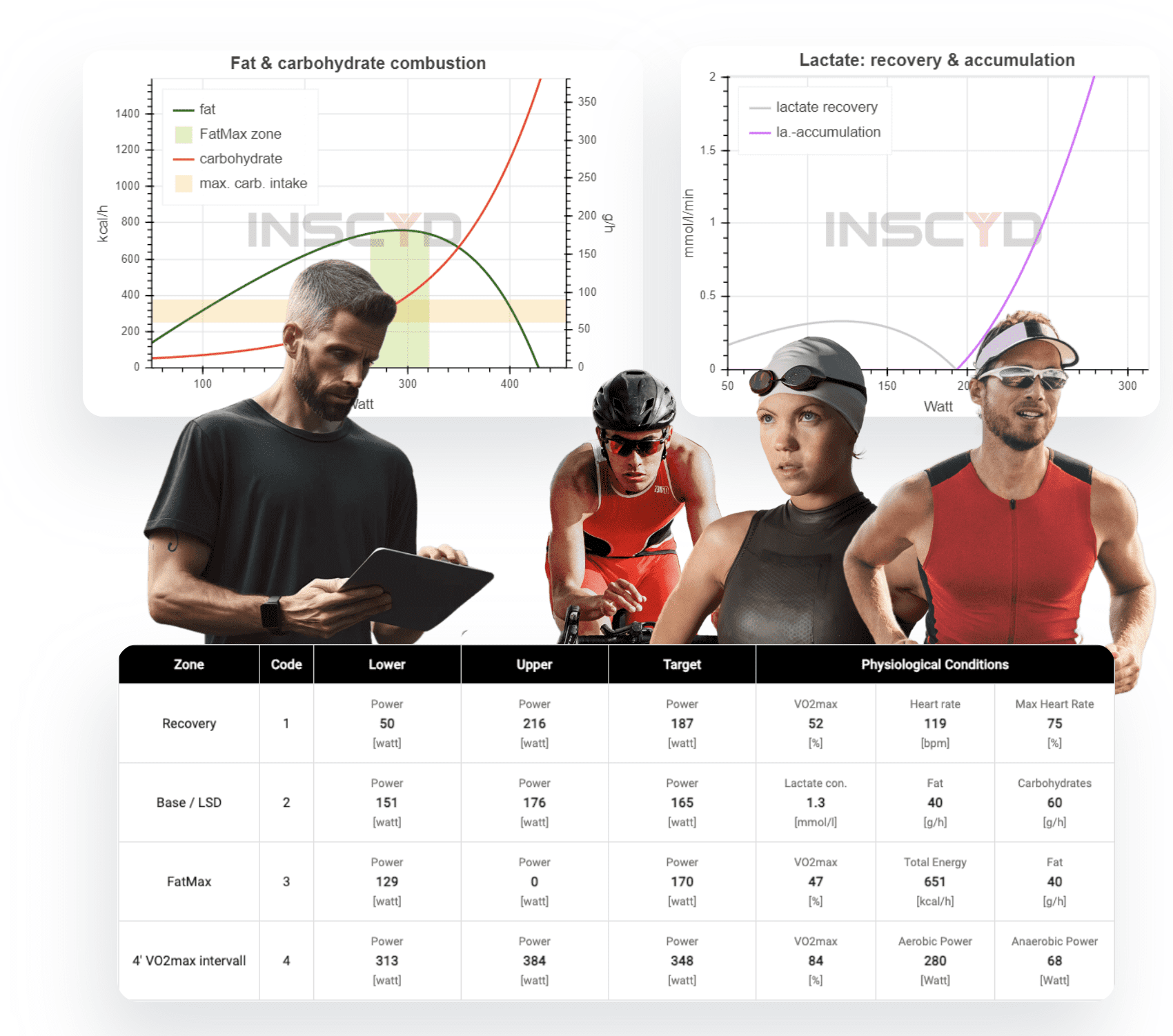
Boost your income and enhance athlete performance by delivering detailed insights without the need for new equipment. Elevate your coaching and lab services with personalized training plans that attract more clients and drive revenue.
- Test Remotely or On-site
- Use the equipment you and your athletes already have
- Full Metabolic Profile From 1 Assessment
Boost Revenue & Expand Reach
Boost your income by offering advanced metabolic testing services (remote or on-site). Turn your current coaching practice into a virtual performance lab without additional equipment expenses, and unlock new revenue streams.
Connect with New Clients
Expand your coaching business by tapping into INSCYD's marketing network, reaching over 80,000 athletes each month who seek INSCYD coaches and labs. Gain global visibility and attract new clients using professional materials like videos and testimonials.
Stand Out with Advanced Insights
Set your services apart by focusing on essential metrics. Dive into a metabolic profile to uncover each athlete’s strengths and weaknesses, offering scientific insights that translate into actionable training strategies.
See INSCYD in Action:
BOOK PERSONALIZED DEMO
Our personalized demo, tailored specifically to your unique needs, will showcase the power and benefits of our platform. Plus, you’ll be able to ask any questions you may have.
Other Webinars You May Be Interested In
Hungarian Canoe Federation
Olympic Center Upper Austria
Belgian Triathlon Flanders Federation
Singapore Swimming Association
Pro Cycling – Movistar Team
Belgian Cycling Federation
French National Institute of Sport, Expertise, and Performance
American Canoe Association
Pro Speedskating – Team IKO
German Skiing Federation
Pro Cycling – CANYON//SRAM
Roojai Cycling Team
Luxembourg Institute for High Performance Sports
Luxembourg Athletics Federation
Finnish Sports Lab Jyväskylä
Pro Cycling – Team Bardiani CSF
Pro Cycling – Team Alpecin Fenix
German Triathlon Federation
German Swimming Federation
Belgian Royal Speed Skating Federation
University of California, Santa Barbara
0:00 Good morning. We will get started here in a few minutes. Thank you everyone for attending. We will be talking about implementing inside into your coaching business or your lab and going through some common questions that we see and saving some time for some Q&A at the end here. So if you have questions as we're going through the presentation, please on the Q&A area or the chat area, throw those in there. We love to see those questions and we're going to make sure we save ample time at the end.
0:35 And I'll say as long as there are questions coming to address those questions. So we're going to probably wait two, three minutes here for people to log in. And a few things of note, we will be recording this session. We're going to be sending a recording as well as the PowerPoint slides to everybody. Probably happen in the next day or two. So you'll be able to get that. And then we also, as I'm going through the presentation, there's going to be a few slides where I reference some free content that we have.
1:10 So that's something where if you're interested, you can raise your hand by sending an email. So send me an email. You'll be able to see this when we get to those slides. And just let me know that you're interested and we'll go ahead and get that off to you.
1:37 Good morning. Good afternoon. Good evening. Depending on where you are. Thank you for attending. I'm just going to give everyone a chance to jump in here. Give it another couple minutes here.
1:57 If anyone's having difficulty hearing or seeing anything, please, in the comments, just drop a line and we'll see what we can do to help you out. Ryan, good afternoon from Philadelphia. Thanks for jumping on. I don't know how old you are, Ryan, but you may or may not remember. Inner Bike was in Philadelphia back in, I want to say, 1995. I went there. I was much younger at the time, walked away with probably two or three trash bags full of water bottles. That was my haul. Working at a bike shop as a 14, 15 year old at the time.
2:54 Australia. Nice. Looks like we got somebody from Denmark. Indianapolis. Awesome. Awesome.
3:06 Tenerife.
3:11 India. Nice.
3:15 Switzerland. All right. We're going global. This is great.
3:23 DC-based Brit. Slovakia. Netherlands. All right. Romania. Hey, Ted. Good to see you. Block Island. Lucky guy. Nice.
3:36 John. California. That's right. Sunny here. I'm in California, too. All right. So we're going to get started here. I am Greg Hilson with Inside. We're going to be talking about implementing Inside into your coaching or lab business. We're going to talk about some strategies to boost performance and growth of your set business. And hopefully some new ways to help you do that. So I like to think that there's going to be some really good free content here that does not apply to anybody that is not an Inside user.
4:11 And certainly if you are an existing Inside user, hopefully there's something new here. And if you're thinking about Inside, that's why we're doing this. So thank you again. All right. We're going to jump into it. As I noted at the beginning, for anyone that wasn't on, please keep the questions coming. We're going to save time at the end. And I'll stay on as long as needed to address those questions. So I'm going to go ahead and jump in. And we're going to start talking about the content that we have prepared for you today.
4:44 Our agenda. So we're going to talk about Inside. What is it? What are some of the benefits of Inside? A step-by-step integration of Inside. So how do you incorporate Inside into your business? Communicating the value to athletes. What are some pricing strategies of Inside? And how do you promote your coaching business? And enhance your operations. And then at the end, certainly Q&A.
5:12 Some housekeeping. This was originally scheduled as a ask me anything. And we're just going to hop on here and have the questions flow. We thought it might be helpful to do a presentation. And provide some visuals as a framework to guide the discussion. And then open it up for some questions at the end. Many of the topics are going to be summaries of much bigger topics. Much bigger discussions. If there's something that you're specifically interested in, let us know. Because this could add to an additional webinar down the road.
5:47 It might also lead to additional content that we push out to existing Inside users. So please let us know what you want us to go deeper on. The examples. We have detailed supporting information and content. So there's going to be a number of examples or scenarios that we start to talk about. We don't have the time to go super deep on these. But if you're interested, let us know. We'll be able to get you that supporting content. And again, we're going to have time at the end.
6:17 Please send your questions. It gets a little bit long for me to be here and just monologuing. So I want to see those questions and be able to address those.
6:28 Let's get into it. There's a lot of hype right now. So much noise. How do we decide? Where's the hype coming from? We got HRV. We got sleep tracking. We got the Norwegian method. We've got zone two. We've got lab testing. We've got HIIT. We've got carb loading. We've got the ability to do 120, maybe 140 grams of carb per hour for athletes that are out there racing and training really hard. Genetic testing. Lactate testing. Lab testing. And so much more. We're just inundated as coaches. What in the world do we do with all this information?
7:04 We've got AI coming. We've got virtual coaches. What do we do to help distill this down to the things that can really help us as coaches and help our athletes perform at their best? How do we make decisions which help our athletes and our business? That's the crux of what we're going to talk about. Step one. I want to focus on the highest return on athlete. So I added an A there. Investment. We can make for our coaching or a lab business. So this is the return on athlete investment.
7:40 Both your time investment and the athlete's financial investment to you or through you. A little bit about me. So on the left here, you're going to see my somewhat recent inside running profile. Maybe at the end here we can get to a little fun. Maybe you guys can guess what my VO2 max, VLA max is. And then on the right, if you really scrunch in there, you can see it's very pixelated. It gives you an idea of how old I am and how long ago that photo was taken.
8:14 So, yes, at one point I did attempt to race a bike and both road and mountain biking. What can I offer you? So more specifically, I've worked with hundreds of coaches to help implement inside. I've run sales teams in technology, bike, outdoor, and consumer packaged or products and goods. Multiple time founder, co-founder of businesses in tech and outdoor. I can relate to a lot of the challenges that you face. It's hard being an entrepreneur. I want to try to simplify that for you today. And I want to see you succeed.
8:57 No, this is really, really simple. With or without the use of inside, I want you all to succeed. The bigger we can make the pool of coaches and athletes, the more success we're all going to have. The bigger the opportunity for all of us.
9:13 Today's objective. I really want all of you to leave with something new you can use to enhance your coaching business over the next couple weeks. And I want to show you how to begin using inside as well. I'm going to pose a question, a bit of a challenge to all of us here. Is it possible to improve the performance of our athletes and at the same time grow our business? This is one of the key tenets that we really set out to do with inside is helping coaches to improve the performance of their athletes and provide them with a way to grow their business and do this sustainably.
9:53 What are athletes looking for from us? This is a question that comes up quite a bit. We've spent a lot of time doing surveys, interviews, really understanding what is the landscape? What are athletes looking for and what are coaches looking for? We'll get to that in a second.
10:13 Every athlete has a unique set of goals. But why has that athlete reached out to you? Generally, it comes in probably seven or eight different forms. We have experience and expertise that you have in the field. They want to improve their fitness. They want to change their body composition. They have an upcoming event that they're looking to prep for. The value. So there's value in hiring somebody because it takes away the time and energy that they're putting into trying to figure out what do I do? How long do I do it?
10:45 Am I in the right rep range? Am I spending enough time doing, quote, VO2 intervals? Whatever it might be. So stop struggling alone. Find somebody that can help them. The support. Somebody that's there to talk to them. Somebody that's there to be that trusted advisor. We'll get to that concept in a second here. Accountability. Somebody that's really going to be watching and making sure that you're doing that two hours in zone two or going out there and doing those hard, really hard efforts when you need to.
11:16 And then word of mouth. Maybe they heard about you from a friend, one of your athletes that you're coaching. They put in a good word for you. So there's a number of ways in which an athlete may be reaching out or might be interested in what you have to offer. We got to think about what is the athlete looking to achieve? What are they looking to do by working with you? We know that the number one goal is the expertise that you bring to bear. So in surveys, we know that 84% of athletes are looking for this level of expertise, perceived or otherwise.
11:53 Confidence in what they're going to do today in terms of the training is going to give them the result at their next race, trying to get a KOM, whatever it might be. And they want to see results. And how do we show them those results? Because, again, results can be quantified so many different ways. It's not always about FTP, right? We might have an FTP that, believe it or not, goes from 300 down to 280. But all the other physiological metrics go up. And that's actually an increase in performance.
12:24 Maybe their results have gotten better. But that's a hard thing for athletes and a lot of coaches to square if they're seeing that one performance metric, if that's the KPI that everyone's measuring, go down. So we'll start to unpack that in more detail. Well, they are always, athletes are always trying to find new ways to save watts, generate power, go faster, set a PR. This is just inherent to the athlete's mentality. Accountability. Talked about that. Ways to stay on track. Most athletes don't have the luxury of time, right?
12:59 Working professionals, we need to be precise with our prescriptions. We need to make sure that everything that we're giving them is getting them to that goal and doing this as efficiently. And effectively as possible. Take the guesswork out. Athletes, a lot like coaches, are being inundated with new products, tech. So we've got AI coaches out there. We've got different ways to go about training that might be nontraditional. So all of this is coming in. Just open up any sort of social media. If you're a coach, if you're an athlete, you're going to see this.
13:32 And then the last thing that we really need to think about is there's a willingness to pay for coaching and for this data. They're spending tons of money on going to a race, equipment. Performance is up there. That is something that they are willing to pay for.
13:49 What do we know about all of us on this call? What do we know about coaches? We are the trusted advisors. Right? I don't want to sound cliche here, but your influence carries significant weight. And this is something in talking to hundreds upon hundreds of coaches. I think a lot of you diminish this value. So athletes are looking to you to provide them with a complete experience. This is daily training. This is fueling recommendations. This is pacing strategy. What is their potential to improve? And so much more.
14:24 In the consulting world, this really is the holy grail status. And we need to make sure that we're not abusing this power. So we've got to have confidence in the services. And we need to make sure we demand fair value for the level of expertise we're bringing to bear. Let's talk about some of the coaching pain points that we have. So most of us would rather ride 100 miles on a flat tire than be forced to market our business. I think that's a true statement. Talking with coaches and doing surveys, we know that 80% of coaches, talking about hundreds of coaches,
15:05 list marketing as the number one pain point in their business. So struggling to sell and market their services. That's the number one thing. We, as a group of coaches, also tend to undervalue our time and our services. We overthink. We overcomplicate training prescriptions. We're always looking at that next new thing that's going to help us reach this next tier, whether it's a new scheduling tool, whether it's a new way to incorporate fatigue resistance, or whatever the new buzz thing is that's out there. These are all things that we're always looking at, we're always aware of.
15:45 But what does it actually get us? What are we trying to achieve? So we're really trying to be thoughtful about what is out there, how are we incorporating that into our business? But we don't have time to try everything. We worry about the athlete retention in our business. How do I maintain my 20 athletes, my 15 athletes, my 10 athletes? Maybe I'm just starting out. I have two athletes. How do I grow it to four? How do I go from four to six? These are important considerations.
16:15 And we want to maximize profit. But there's a fear. If we increase our prices, if we start trying to charge for camps, if we start asking an athlete, hey, if I'm going to come to the race today, I need to be compensated for my time, we fear that there's going to be this pushback. No, no, no, I can't do that. All of a sudden, I've lost some of that confidence, that connection I have with my athlete. That's not the case. And we don't leverage simple marketing strategies.
16:44 Hopefully, some of these that we shared today will be new and helpful.
16:50 What's this mean? We have a mismatch between the coach and the athlete. Athletes want to pay for a premium service. As coaches, we're undervaluing our service. Athletes trust your expertise and experience. But we're insecure as coaches about our training plans, providing nutrition information, fueling strategy, pacing strategy, goals to help the athlete get there. Athletes want answers. And they want you to provide them and make it as easy and as simple as possible. And they want you to provide them. Yet, on the flip side, we're asking the athlete what sounds good to them.
17:28 So, the example that we use a lot here at Inside is you have a plumber come out and you're not waiting for the plumber to come and ask you, hey, your toilet's clogged. Do you want me to really go in there and snake it? Of course. They're not asking you, hey, which snake should I use? They're saying, hey, Greg, it's going to be $300. I got to snake it. It's going to take me 45 minutes. Okay, here you go. Here's a $300. Get it done. I need my toilet working.
17:54 I got kids.
17:58 Athletes are looking for ways to improve and they're going to pay. And we worry about charging for camps, for testing, on-site support. All right. So, what are the keys for success or to success?
18:15 Some of these might seem cliche, but I want to run us through these because these are really important. This comes out of surveys we've done, my personal experience in business, along with many others. So, these are things that hopefully we can or you can refer back to and use in our day-to-day coaching in business. One, focus on one business at a time. One, stop surrounding ourselves too thin. A lot of us will find ourselves not only working a full-time day job, but also trying to get a coaching business up and running.
18:48 That's sustainable for a certain period of time, but we've got to think about where are we putting our focus? What are we doing to grow the business? And how are we going to be able to do this long-term? Master the basics. So, we've got to understand our athletes, hone our sales and marketing approach. That's a big part of it. We've got to sell the results, not the time. So, let's focus on results, not on the time that we're spending. So, if it takes me five minutes to create a coaching plan, a training plan for an athlete, and I think, oh, it only took me five minutes.
19:22 I really shouldn't be charging this athlete $300, $400, $500 a month. We're looking at it the wrong way. It took me years of coaching, years of education to get to the point where I can do that and do that effectively. Think about the value you're providing to them. We want to find ways to increase customer lifetime value, offer additional products or services, improve customer retention, provide exceptional experience for the athlete. We want to outwork and out-learn. We want to be relentless in our pursuit of knowledge, constant improvement.
20:00 Let's not underestimate our ability. This means to sell high-priced coaching, upsell, and to do marketing. I'm going to go back to that 84% of us not enjoying marketing or identifying marketing as being our number one pain point. Let's not underestimate our ability to do that. Be patient and persistent. Entrepreneurs, which we all are, our coaches, need to be patient and persistent. So consistency over time is going to trump anything else. Doing that same thing every day, being consistent. The example I always use is I want to go out and do a marathon.
20:39 I can't go out there and do one long run and consider it good. I'm going to be crippled. Go out there and do 15 miles. I'm not training again for two weeks versus three, four miles a day for the first week. Maybe bump it up to four miles the second week. You get the idea. Invest in ourselves. So take the time to invest in educational, personal development. The more that we're learning, the more that we're growing, the more we can contribute to the business and to our athletes.
21:06 And then embracing failure. Very, very cliche. But, yeah, it's something we need to learn from. And this is where a lot of important lessons come from.
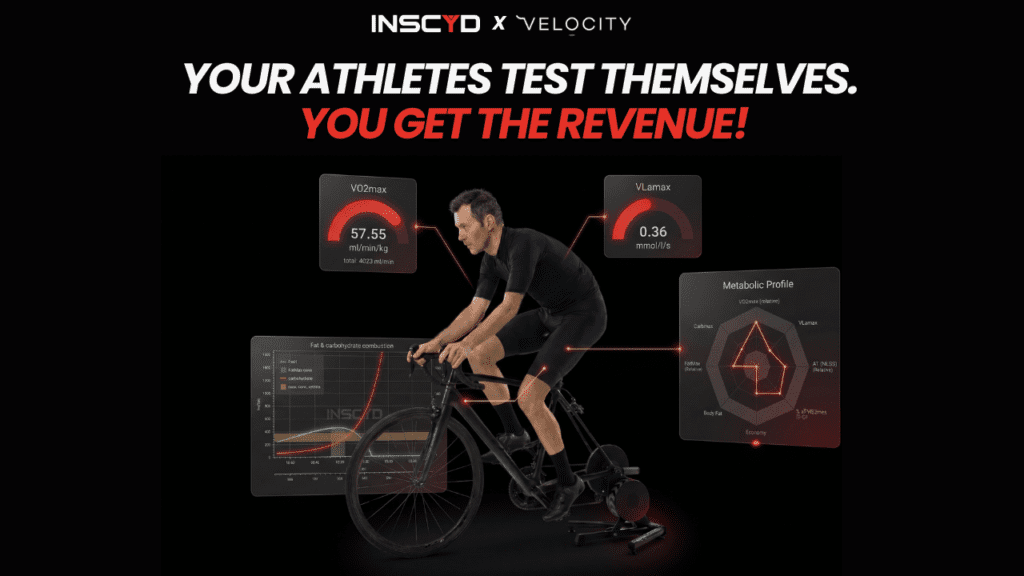
21:19 Let's take a deeper dive into inside. So I think a lot of us on this call probably are familiar with inside. So we're not going to spend too, too much time. But for anyone that's uninitiated, inside is your laboratory to determine all critical performance metrics. This includes VO2 max. So our maximum aerobic capacity, VLA max, our maximum anaerobic or glycolytic capacity. Maximum lactate steady state or FTP or anaerobic threshold. Substrate use. So how much fat, how much carbohydrate we're combusting at any given intensity. So it makes it really easy to put together fueling strategy, pacing strategy for an athlete.
22:01 Lactate production and combustion rates. Again, at any intensity. So the cool thing here is I can see that when I send an athlete out for a four-minute high-intensity or VO2 effort, I know how much lactate they've produced in that four-minute effort, five-minute effort. Then I can pair that with the amount of rest and the duration of rest because I can see the combustion rate. So it takes the guesswork out, simplifies our lives, and makes things much more predictable for the athlete. Remote or in-person testing. So this means we can do a remote test using our PPD technology, running or cycling with a power meter.
22:45 That can be done anywhere, anytime, anyplace. You don't need to be there. Very simple protocol. All the way to a lab where you want to be doing in-person testing using lactate, gas exchange. Try to remain as agnostic as possible so we can take data from wherever you're collecting it using whatever type of collection device you have. We have inside users that range from coaches with one to two athletes all the way to teams and federations with dozens of coaches, hundreds of athletes. So very, very scalable. No one's too small.
23:17 No one's too big. No one's too big. The idea or the theme of collecting data anywhere. We want to really reinforce the idea that inside allows you to perform tests remotely, on-site, in the field, wherever your athlete might be. So convenient testing, flexible and efficient. So you're getting this lab quality data regardless of the methodology, regardless of the type of testing you're doing. You get these really comprehensive insights. So we talked about that. VO2 max, VLA max, anaerobic threshold, lactate production combustion, being able to project performances, being able to look at where the athlete is today.
23:59 And then show them using our virtual technology to say, hey, look, if we go out there and train the next three weeks, sorry, three months, three weeks would be nice too. Three months. And our goal is to increase VO2 max. And we're able to go from 48 today to 52 or 53. Here's what the impacts are in terms of fueling. Here's what the impact is in terms of your marathon time. And then it's a time-saving process. We get efficient data. We get the necessary data to be able to then use to prescribe, to inform, to do all the things that we need to do to really build that rapport with our athlete and hopefully, at the end of the day, increase performance.
24:45 I'm going to show you an example of a coach using inside. So we've got Joby, my friend here down in Southern California, FC Endurance, great coach, works with multi-athletes, multi-sport athletes, I think primarily half and full Ironman athletes. The reason why I'm showing this here is he's incorporated inside test information into his website. Very, very simple, right? So he added an additional page that has some information about inside. But I think majority of the content in terms of the text, this is all part of the marketing materials that we offer to coaches.
25:24 And then he has three different ways in which you can go ahead and run an inside test. So the takeaway here, it's simple, right? You don't even have to worry about anything content-wise other than just adding an additional page to your website. If you want to make something a little bit more extravagant than this, absolutely fine. But the idea being, let's keep it simple. Let's make something that we can do five minutes on our WordPress or whatever type of website we're using. Add it. We'll help support you with the content.
25:57 We can even help you with layout. Why are we considering inside? Why are we on this call today? What is your why? So Simon Sinek wrote a book, What is Your Why? Stealing this from him, but this is really the drive or the motivation behind what you do and how you do it. So I bring this up because I think each one of us is here for a unique reason. And I'd love to hear that. You can throw that in the chat. You can send me an email one-to-one.
26:26 I'm happy to chat with you about that. But why are you considering inside? And is it going to address the concerns or issues or challenges that you're facing as a coach? And here are some of those examples. What do we want to achieve as a coach, as a business? We want personalized training. We want to be able to offer nutrition and fueling strategy. We want to be able to offer pacing strategy for our athlete. We want to see improved performance, whether that's in the race, KOM that we're chasing on Strava, weekly world championships.
27:00 Is it retention? Is it revenue generation? Is it attracting new athletes? Is it enhancing our marketing? Is it taking a more science-based approach? Is it athlete satisfaction? Is it something else entirely? These are questions that you need to answer and really think about how does this map to what inside might be able to provide to me. So we have a free framework to help you with some of these business decisions. If you want to email me, greg at inside.com, for a copy, I'm more than happy to share that with you.
27:32 More than happy to review that. Can we agree this is what is required as a coach? I want to take a second here to think about what is required of our existing athletes to help them go faster. Or when we have a new athlete come knocking on the door saying, hey, Greg, I'm interested in your service. What do you provide to me? So I think we'd agree that athlete assessment, understanding their current fitness level, their strengths, their weaknesses, past injuries, that's important. We've got to start there.
28:07 We've got to understand what are their personal goals. So we've got to align the training to the goal, how much time they have to train per week, short-term, medium-term, long-term goals. We need to periodize it. So we're not just going to go out there every day doing the same thing. We've got to think about what's the structure. We're going to offer some rest weeks or rest days. When are the races? Those types of things. We need to be able to track and manage the load. So balance intensity with volume, with recovery.
28:34 We've got to think about nutrition and fueling. We've got to ensure the athlete has the proper diet, both on and off the bike or run or swim or whatever the sport might be. We need to offer maybe some psychological support. Good job. You're doing awesome. We're getting there. Those types of things. So help them validate that they're going down the right path. Feedback and adjustment. So we need to continually monitor what is happening and be able to make tweaks as necessary. And then using technology. So a lot of us probably using training peaks to be able to schedule and monitor what's happening on a day-to-day basis.
29:13 We need to be able to use that effectively to help our businesses grow.
29:21 Let's transition now and talk about how do I begin using inside. My take-home message before I even say anything would be simple. Try to make this as simple as possible. So step one is the assessment. Schedule a time, if you haven't done this already, with one of our partnership managers. We're going to discuss your coaching business. Help advise you as to what is the best format of testing. So is it going to be remote testing using our PPD technology? Is it going to be using lactate testing if you have a lab in conjunction with gas exchange?
29:59 Is it a combination of those things? Get into those details. So we'll discuss your coaching business and give you our best advice based on the other coaches that we've worked with as to what the best plan and package might look like. And then we also, I want to make sure I note this, speak a number of different languages and are fluent in, hopefully, the language that is your native tongue or native language. Step two, implementation. So we create the account for you. You're going to get a login.
30:38 You're going to be able to start your first training, which takes about 60 minutes until you can actually begin testing. Right? So we're talking about an initial phone call, implementation. So we have a little bit of training, 60 minutes. And now you can start testing. And you're able to get all the really robust, all the really cool data that we talked about, VO2 max, all the way to substrate information about your athlete. We're going to provide you with all the protocols. We're going to provide you with marketing material.
31:11 We're going to have access to something I'm going to show you in a second here. You're going to be able to get all those test results and be able to share all that information with your athletes, probably about two hours of total time from the uninitiated to being able to get started with inside. Really, really simple.
31:30 Ongoing support. When you get started, we're going to have the ability to, or you're going to have the ability to access our help center. You're going to be able to schedule one-to-one meetings to review test information, run through questions, address any concerns you have. We're going to have webinars like this. We're going to have clinics for inside coaches. All that's available. The thing I mentioned last slide, inside college. So we have some free content, and then we have paid content as well. I'm going to share more about that in a second.
32:07 Step four, start testing. As I said, two hours from kickoff to testing. We're going to offer one-to-one support, access to our marketing materials, inside college. Feedback for that has been extremely positive. And you're now going to be able to deploy this science-based approach to athlete assessment, testing, coaching, fueling, pacing. All that is now at your disposal. Really, really simple.
32:35 You heard me mention inside college a few times. So what is this? This is expert-led education using a platform that's going to bridge the gap between theory and application. So really, the thing to keep in mind here is, how do I go from understanding, hey, cool, I understand that there's type 1 and type 2 muscle fiber types, slow twitch, fast twitch. But apart from that, how do I ever take that information and apply it? So I know that I might get a test result that tells me I have an athlete here that's very fast twitch.
33:08 They come from a background in team sports, and now they're trying to get into triathlon. They want to do a half Ironman this year, and next year their goal is a full Ironman. Well, how do I take into account where they are today, the idea that they're more fast twitch dominant, and start applying that into day-to-day training to help them maximize their gains? That's one area where inside is going to be able to help you with our inside college. So inside college has courses on nutrition, influence of the glycolytic energy system, altitude training, margins of anaerobic threshold, interaction of the three different energy systems, muscle physiology courses, business courses, and much, much more.
33:54 Again, this is not all free. Some of this is paid, but I think you will find the content very, very detailed and very specific to coaches working with endurance athletes. That's the unique thing here is we've tailored this content specific to coaches, really with an eye on how do I go from understanding the concept to applying it into day-to-day training. Use this QR code right here. Reminder, everyone's going to get this presentation, so you don't have to worry about taking a screen grab right now. You're going to get this, so if you're interested, go ahead, click on that code to gain access.
34:38 Let's talk about connecting with new clients. So once you are an inside coach, we will have you listed on our website. So it's going to unlock new opportunities to grow your business. We have over 80,000 athletes every month coming onto our platform. So this gives you the opportunity to get some visibility, get featured on the website, and hopefully get some of these athletes coming to you for testing and or coaching. We also offer professional marketing support. So we have ready-made materials that will easily plug in. You use these for social media, your website, all the things that coaches are traditionally, going back to the surveys we've done, struggling with and identifying as things that they don't want to spend time on and really struggle with.
35:35 Save time, reduce emails, free marketing. I can't see you right now, but I'd like you to maybe raise your hand to yourself and say, yes, that's me. That's something I'd be interested in. And I'm hoping that everyone out there is going to raise their hand and say, yes. Let's talk about that. Presenting inside tests, whether it be fueling, pacing strategy, the actual test itself, or for those of you that are saying, hey, inside's not for me, that's okay. This is one of the takeaways that I think is very, very valuable.
36:07 Step one, I want you to get Loom, Snagit, or some other video recording tool. Many of these are free. Some of them, I know Loom, for example, is $9.99 per month. What's it allow you to do? You can record yourself talking. You can see me there in this little picture here I have, talking about whatever is on your screen. Okay, I know it sounds super simple. Maybe some of you are doing it today. What is the power of this? You spend five to ten minutes recording information about what the athlete is going to be doing.
36:41 This could have to do with training. This could have to do with the test results. This could have to do with pacing strategy for an upcoming race. Instead of sending an email or instead of hopping on the phone. This is the best referral engine ever. Typically, we see that an athlete will watch this five to seven times and share it two to three times. No joke. So it gets you tons of mileage. Right? Just think about, we get done with a ride. What do we want to do?
37:12 Most of us, I got to post it to Strava. I got to get those kudos. I got to get people to know that I did this thing. Well, you get this result or you get this information about training or pacing strategy for your Ironman. People are going to want to share that with their friends and tell them, hey, my coach shared with me this really amazing tip on how much carbohydrate I need to take in based on my goal pace, 250 watts. And we can see that it's 120 grams per hour of combustion.
37:44 If I take in 80 grams per hour based on the amount of muscle glycogen I have, I'm going to get through and be able to hit my goal time of 10 hours. Now, admittedly, I simplified that example, but that's the idea here. They get it. It helps them understand what's going on. Reduces questions. Saves you a ton of time. You get some additional leverage out of it. You get miles in the bank because it's now being shared. And you can actually ask your athletes, hey, if you thought this was interesting, can you share it with a few of your friends?
38:18 I'd really appreciate that. They're going to want to do that.
38:26 Let's transition now to what and how do I charge my athletes for inside? We are going to take a very, very quick trip down three different options of pricing. This is going to be fast. So if you miss anything, you have questions, throw it in the chat. Get in touch with me one to one. Want to break it down. Three primary ways to do this. Option one, monthly subscription included as part of your monthly coaching fee. So let's say you're charging $200, $300, $400 per month. Maybe you find a way to embed this.
39:08 Maybe you increase your rates $25, $50, $100 per month to be able to absorb the inside fee. Option two, bundled test plan. So this could be an annual test plan where the athlete is buying three, four, five tests per year at a fixed price. Two to four tests, as I noted here. The third option is pay by test or a la carte. So you're going to charge anywhere from $200 to $300 per test for an athlete to be able to provide them with all the information that inside is going to make available.
39:48 First scenario, monthly pricing. So this is active athletes. So what are some of the pros of this? Allows for a single payment from your athletes. We don't have to do any sort of additional invoicing and back office activity. So that's nice and simple for us. We can use inside's active athlete plan, which allows for unlimited testing of these athletes. So this is ideal for anybody that's going to be doing more than three tests per year. It could be two, but typically three or more tests. Or for anyone that's a multi-sport athlete.
40:28 So triathletes, you're probably going to want to capture at least run and bike, potentially swim. Do that test two, three times a year. If you think about individual tests, we're already up to four, six, eight, maybe even 10 tests if we think about run tests and bike tests.
40:46 And you can be break-even for only $25 a month. Think about that. All the information we talked about, all the value, all the benefits, $25 a month per athlete. Based on surveys, athletes want to pay $40 per month just for substrate data alone. Say that one more time. Athletes are looking to pay or want to pay an average of $40 a month just to know how much carbohydrate and how much fat combustion they're getting across a variety of intensities. You can now do that and then some.
41:24 Where are the cons of this? Well, athletes looking for consulting or a single test scenario, probably not going to be a good fit. If you have low monthly fees, $100 a month, maybe not the best. So I ran through a quick ROI here, a suggestion of $50 to $100 per month premium. We have one athlete per year. So that's a profit of $600 per year. ROI, if we have 10 athletes, that's $6,000. You've got to take into account the inside cost. So at the end of the day, it's going to be a 2 to 3x investment or return on investment for you.
42:02 That's scenario one. Scenario two is bundled pricing. What do I mean by bundled pricing? We offer up a package that gives an athlete three tests, good for 12 months, for $500. So this would be a discount of maybe $100. Why do we do this? It locks them into testing for the year. So we get retention, get that athlete connected to us. It's predictable revenue, an additional revenue stream, and we get reliable data to now incorporate into daily scheduling. Some of the downsides require some additional selling on our behalf.
42:38 If we need to determine the best option for the athlete, no more than two options is ideal. So what do I mean by that? Let's not offer two tests bundled, three tests bundled, four tests bundled, five tests bundled, six tests. Two options. Let them pick this or that. Keep it simple on you. Simple for them. So we have a suggestion here, three tests at $500. Turn on investment for one athlete. Your net $275 or more. So 10 athletes, we're looking at something like close to $3,000 when we actually do the math.
43:18 So it's going to be roughly $5,000 total gross. And then the net is going to be the less the inside cost gets us to that same 2 to 3x year investment. So really high return on investment, not to mention all the other intangibles. Pay per test or a la carte. So this would be individual tests. You're selling for $200 per test, maybe as one example. That's kind of the low end. Higher end could be $300. And that's going to include a review and some consulting, $400. We know some coaches, they're going above $400.
43:59 They're doing the testing and they're spending some time running through that information, getting the athlete familiar with what the data means, how to apply longer term into the next 12 months of training. So it's not necessarily a coaching agreement, but we're doing this test to help get them going. Hopefully it gives them an opportunity to come back to us to retest and maybe to bring them on board as an athlete. So the pros, there's no commitment required from the athlete. Great value. So think about what you're getting for that $200 versus going into a lab.
44:32 You're getting all the information that you could ever want from a physiological perspective. Use this. Really good way to get the athlete to say, yeah, I could really benefit from this. Can be done remote. So that's for most of us now. Many of us work from home. So things have shifted in the last four or five years here. So we got work from home. We've got athletes that we're either coaching or consulting with that might be global. Now we can do testing that gives us lab level of accuracy remotely.
45:07 I'm in San Francisco. I have an athlete in Buenos Aires. Easy. No issue there. Some of the cons. Requires selling and marketing. Right? Comes back to one of the main points I said. We don't like to sell. No commitment from the athlete for future testing and coaching. And then for you as the coach, you're going to be paying a slightly higher cost per test. So suggestion is $200 to $300 per test. Return on investment. We have one test per athlete per year. We have somewhere between $150, $175 profit per test.
45:49 We do 25 tests per year. We do 25 tests per year. We see that as a total gross of $6,000-ish. And we pull out the inside cost. So if that costs us, let's say, roughly $75 per test, we see that we're still solidly in that 2.5 to 3x return on investment. Very, very high. Let's talk about marketing. How do I promote my business? How do I promote my business? Again, some of this is going to seem really super simple. Yeah, Greg, I got it. But let's just hit on some of these because there might be something new here.
46:30 So we got our website. Cool. We're doing that. Social media. Instagram, Facebook, LinkedIn. Please, no cat pics. You're trying to sell your coaching business. We don't need to see your barbecue you did on the weekend unless it has some relevance back to your business. We don't need to see your cat. We don't need to know that you went to a baseball game unless there's some way to tie it back to what we're doing. Keep it specific to what you're trying to achieve. Are you trying to draw in athletes?
46:57 The other thing that's important here, you don't need 500, 5,000, 50,000 followers. If you have an audience on Facebook, on Instagram of 50 people and you're able to get 10% of those people, that's five people. They're interested in more than just following you. If you can have some sort of hook, some way to get them to start to interact with you. Maybe they're interested in testing. Maybe they're interested in your coaching service. You don't need a massive audience. You don't need a massive platform. How do you get there?
47:33 Put out quality content that's different, that's authentic to you. So I'll use the example. I haven't brought this up yet. If I was starting a coaching business today, I wouldn't just go out there and hang a shingle out and say, hey, Greg the coach. I personally have a background in road and mountain biking, but I also developed atrial fibrillation. So I would say, you know what? I'm going to work with athletes that have heart arrhythmias. And I'm going to find people that are 35 plus in age.
48:05 Maybe it's going to be men. Maybe it's going to be women. And they're going to be people that are looking for this really bespoke service that's $500 per month. So I've got to find people that are willing to pay that. So I'm going to go ahead and kind of get into this narrow niche where I can really differentiate myself and know exactly who I'm going to go after. So this goes to the next point, paid advertising. Meta makes this really, really easy. You can start with a few dollars a day.
48:35 You can go ahead and categorize how you want to go after potential customers, potential athletes. Think about that. Happy to talk more about that. We have some additional resources for this. Local clubs. In the U.S. alone, we've got thousands of cycling clubs. I don't know too many coaches that are spending much time trying to pursue the local club angle. Speaking engagements. This could tie back to a club. This could be at a bike shop. This could be at a coffee shop. There's plenty of these types of opportunities.
49:07 Seek them out. Podcasts. So we could either think about starting our own or reach out to somebody that hosts it. A little bit more challenging. A little bit longer tail on this. It's going to take some time. Something to consider. Do we have a blog? Do we have a YouTube channel? Again, creating content that allows us to be seen as an expert. Referrals. Said this before. Your athletes want to help you succeed. Be really thoughtful about this. Ask them for referrals. We've got kits. We've got clothing.
49:42 So are you going to have... I don't know if you can see it. I got my inside shirt on. So do we make up a bunch of t-shirts? Shirts. Hats. Things like that. Is that a way to get our name out there? Is that going to give us a return on investment? Maybe not. Does a cycling kit. If we're going to be doing specific races. If I have a group of people. I don't know. These are things to think about. Sponsorships. Probably not the best way to get value.
50:07 But maybe there's something strategic you can do. Maybe it's not a money sponsorship. Maybe it's an in-kind sponsorship. Cross promotion at fitness clubs. Contests. Right? Use this as lead generation. So it goes back to the point around social media. You have 50 people. How many people are on my mailing list? Do I start writing a weekly sort of a newsletter. That has information about the athletes that I'm working with. And some of the successes. And more about my position as a coach. So coming back to me.
50:42 If I were coaching. And I had this really unique position. Where I'm trying to say. Hey, I'm only working with athletes that have heart arrhythmias. That are 35 plus. I start to put that information out there. You'd be surprised at how quickly people start sharing that.
50:58 Summary. Let's recap what we have here. So we have short videos. Court short videos. With your athletes. With relevant information. About what they're trying to achieve. Acts is a great way to get referrals. Shares. Additional interest. In what you're doing today. Assess where to invest. What is going to give you the best return. Learn on athlete investment. Marketing. Start with one thing. Keep it simple. Be consistent with it. Play the long game. Just said this. Got to make sure that you're being consistent for a period of time.
51:35 Just like training. Not going to go out there and win a marathon by training one day. It's going to take time. We. We. All of us at Insight are here to help. Got dedicated sales and support team. All we do is work with coaches and lab owners. We want to help you. Ask your athletes for referrals. Share recordings. Get in touch with us. Recap of what Insight is. So Insight is your physiological testing and access for all athletes. The most accurate and complete profile. This is all the physiological data you would need from VO2 max to substrate use.
52:19 We're going to provide support. This is one-to-one. This is through email. This is through the help center. Webinars. Monthly ask me anything sessions. Much, much more. Marketing. So we got website materials. Social content. Highlighting on the website. Blogs. Social media. We have information. Content that's going to help you immediately plug and play. Get going. Then Insight College, as I mentioned. Some free content. Paid content. Learn about the most important components of performance. How to really deconstruct it. And then how to apply that to your day-to-day training.
53:01 All right. So here's my sales pitch. We talked about what is required of a coach. This slide might look familiar. We talked about it earlier. This is what we need to do as a coach. Athlete assessment. Understand the goals of the athlete. We need to find ways to periodize the training. Structure the training. So the athlete is able to be at their best when a race comes up or a key event. We need to understand training load. We need to understand nutrition and fueling. Psychological support. You can see that's in yellow.
53:39 Come back to that in a second. Feedback and adjustment. So we need to monitor progress. We need to make necessary adjustments. And we need to, generally speaking, use some type of technology.
53:52 Inside checks all these boxes.
53:56 Psychological support in yellow. Maybe not quite as much. But I could maybe make an argument there. I'll leave that to you to ponder that. So that is my sales pitch. Inside checks all these boxes to help you, to help your athletes.
54:18 I want to thank you, all of you, for sitting on and going through this with me. If you have questions, I encourage you to reach out. Greg at Inside.com. Easy to get a hold of me. We're also going to go into some Q&A right now. So any questions, throw them in the chat. I'm going to take a second here to take a look at what we got. And if you want to stick with me, I'll be happy to answer any questions that you have. So just give me a second to scroll up and start looking at the questions.
54:50 All right. We have a question about how long do you consider the test result given by Inside to be valid? This is a good question. So typically, I'm going to answer this in two ways. We would encourage coaches to think about testing and then retesting probably in a two to four month frequency. Why? So we know that if you're, let's say, going into a block of VO2 max training and the goal is to boost aerobic capacity. If we test today and we're thinking about, right, how long is that information going to be valid?
55:34 Probably about two months ish until we can see some sort of change, which will require us to probably tweak what that formula is, i.e. being able to see that in the test. And now think about, all right, we've seen an increase in VO2 max threshold has gone up, changes in lactate production and combustion profile. So now we need to incorporate that into a updated profile and updated prescription for that athlete. Now, flip side of that is if we're talking about more of a muscle fiber type adaptation, argument could be made that that could take longer.
56:12 So the goal is to take a team sport athlete, really more fast twitch muscle fiber dominant, and we're trying to get them ready for an Ironman. It might take a little bit longer, three, four months to really start to see some of those adaptations take place. So I'll use a cake analogy. When you put that cake in the oven, you really want to let it bake and do its thing in the oven without taking a look and trying to poke and prod at it every five minutes.
56:39 It's not going to cook as well. It's not going to taste as good at the end. So we want to give it ample time. Two months might be a little bit too short. Three months might be more along the lines of what we're looking for. So rough idea, something we can get into in more detail if you have specific questions about an athlete.
56:59 We got a question on prices of inside. Yeah, happy to share that with you. Just get in touch with us. Whether you've been working with an individual, one of our CST members, or you want to send me an email, greg at inside.com. Happy to share that with you. Probably need a little bit more information from you. So I'll use this analogy. I'm selling a car. I've got all different types of car on my lot. It's going to take me a long time to tell you the prices on every single car.
57:28 I'd like to know what kind of vehicle are you looking for? So how many athletes you have? What type of athletes? Are they triathletes? Are they cyclists? Are they runners? How many athletes? Give us a little bit of a framework to work off of so that we can come back to you with the best answer.
57:48 Recommendations on coaching software, which integrates well with inside. Yes. So right now we have an integration with, why am I spacing on the name? I apologize. It'll come to me in a second. James, I'll make sure that I note this. Apologies for my brain fart. But we are also working on integrations with a number of the bigger platforms that you're probably familiar with. So I'd like to think that within the next four to six months, if not sooner, we're going to have integrations with the majority of the big platforms that are out there.
58:31 Inside college, we have elements that are live right now. We do have some additional content that is coming soon. So depending on what you're looking for, it may or may not be live today. Something that you can either log in if you're an active inside user or get in touch with us if there's a specific course that you're looking for. So that would be a good one to either send an email directly to me or through our support email.
59:06 Question on marketing materials from Debbie. Yeah, we have that on within the inside. Once you log in, we have the help center. We have content there. And then we have additional content that you can access that might be more individualized. If you are looking for something you're not seeing in the help center, get in touch with us. So we've got, as one example, all of the blog posts and the content that feeds into the blogs that you can see on our website. If those are things that you're looking for in PDF format, reach out.
59:42 We're happy to get that to you. So we have all sorts of different infographics, videos, all of that should be easy for you to find Debbie if you are a existing inside user.
1:00:01 Somebody said they're using the Q&A. Cool. I'm going to jump in there. Next. Let me just get through these here in the chat. Talked about marketing materials for testing using the ergometer. Do I need VO2 measurements plus lactate or the power measurement plus lactate good enough? James, get in touch. This is one where I'm not familiar. I'm familiar with that ergometer. I just don't know in terms of the accuracy of the power measurement coming from that. So why don't you send an email and I will get you in touch with Chris, our head of support, that's going to be able to give you a better answer on that.
1:00:50 So we got a link for the help center for the marketing materials. I think Igor did that. Thanks, Igor.
1:01:02 Somebody asking about using inside for triathlon research. Please send an email to any one of us. If you want to send an email to me, you have my email here or to support. We'll connect you with the proper person depending on what you're trying to achieve. So just send us a quick snid bit of what you're looking to do and what your thoughts are. We'll get that to you. Ted, yeah. Question about expanding and rowing. We already do that. So yes, the answer is yes.
1:01:39 Rowing is absolutely possible to test. You will need to use lactate is the way in which you'd be testing. And you can combine that with gas exchange information to get some really cool information.
1:01:59 Yes, thanks. No worries. Marine farts are my superpower. I appreciate that, James. Ryan Drummond has a question about PPD tests. I would say reach out to Chris and we can help you with that or any of our CST customer support team. Find that there's some, you have a question about the self-auditing system and want to understand a little bit more about that. Yeah, that's something we're more than happy to talk you through. It'd be good, Ryan, if you have an example of a test that you want to share with us.
1:02:39 That would be a good starting point for that. Will inside create a typical workflow that a coach could follow when utilizing test results for training? Some of the data, like the test, is actionable in training while others is more informational. So good question here. Yes, the answer is we're working on this right now. We hope to have some of this live within the next two weeks, believe it or not. So, Eric, good question. We understand that a lot of people want the additional comfort or the additional, yeah, comfort is probably the right way to say it.
1:03:18 They want to make sure that, hey, I'm taking this information, I'm applying it in the right way, and the actual day-to-day prescription I'm using based on the profile of the athlete is aligning to what the actual intended outcome will be. So we have content that we're working on right now that maps to that should be live in the next two to three weeks. Just to read through these questions, appreciate all of you sticking on here. If you have questions, please throw them in the chat. Okay, good question here from Royce, talking about high school track and it sounds like cross-country using inside and worrying about the data being maybe too complex or not having the knowledge.
1:04:16 How do you overcome that hurdle? First thing I would say is everything that inside is providing is based on peer-reviewed science and it's based on what you would find in any sort of exercise, fizz, book. So VO2 max, maximum lactate steady state, lactate production and combustion rates. So if your goal is to train athletes in a way that is science-based and you are looking to really further the performance of the athlete and individually for the coach, then spending a little bit of time to understand why VO2 max is important and what you do to enhance that or why it's not always about having the highest maximum lactate steady state if you are a, let's say, 800 meter runner on the track.
1:05:19 And maybe it has to do more with what are the demands of that event and is it purely aerobic, purely anaerobic? Well, no, the answer is no. It's probably going to be actually in this case for an 800 meter runner, there's going to be a considerable amount of anaerobic energy contribution. So being able to see that, identify that, and then use that to help these athletes train more effectively and efficiently is going to be a superpower. So that being said, coming back to the presentation, we provide one-to-one support.
1:05:52 So I would think in a situation like this, within probably an hour, hopefully we'd be able to simplify what you're getting out of the inside test and make this applicable to anybody that's been coaching athletes for any time longer than, let's say, I just raised my hand up because I'm a teacher at a local school and decided I was going to be the cross-country coach. Not to take anything away from them, that's great. But somebody that really understands that you've got to periodize training and that there are different considerations that go into the individual athletes and how you're going to train them.
1:06:31 I think we could get them prepped and using the data very efficiently within hopefully one 60-minute session. And then from there, our support team is going to be able to help on an ongoing basis to kind of do some audits and take a look at the test results and make sure that that maps to what the coach is using day-to-day in terms of the prescription. Thank you.
1:07:01 Is it okay to translate the marketing content? Sure. Yeah, that's totally fine.
1:07:22 Just reading some additional questions here. Okay.
1:07:31 How do I communicate with athletes when the results are inaccurate? So the anaerobic threshold is lower than their 10K time. I would look back on the actual test. So what we need to be thoughtful of here is let's say we have this athlete go out there and do, as part of the PPD protocol, a 12-minute full gas effort. That athlete does a 12-minute full gas effort, and let's say they're running at four minutes per kilometer time. And we know that they did a recent 10K, and they ran that at 350 per K.
1:08:12 Well, it's on us to make sure that we go back to the athlete and say, look, you just did a 10K, which took you 42 minutes to run, and you did this 12-minute effort, and you actually ran slower in that 12 minutes than you did during the 42 minutes. So we need to make sure that we have them go back and retest that. Thank you, Bill. I thought the college course on energy was very valuable. Awesome. Thank you. Royce, thank you very much. Ted, rowing protocol, get in touch with us.
1:08:53 Good question. I think that that might be in the help center. If not, I will get in touch with either me or Chris. We'll make sure you have it.
1:09:03 Matt, if you had certificates or you've been through some of the training in the old college, they cross over. Yeah, a lot of the content on protocol, getting started with inside, data handling, all of that is going to be very, very similar. So if you're familiar with that, Versa and that, yeah, absolutely.
1:09:25 Thanks for joining, Matt. Bill, would be great if there's more information on reducing VLA max. Yes. Yes. So comes back to the question, maybe two or three questions ago. So how do I apply some of this information? This is content that we actually have been working on for the last two weeks. So how do I apply some of this information? And specifically, what does that look like in training? So yes, Bill, that's something that is coming. Keep an eye out. And I think that Igor, our head of marketing, will make sure that that's being sent out.
1:10:00 All right, looking at some additional questions here. So from Greg, my namesake here, question about marketing material on the validity of PPD, I can use to show why PPD is the right task for recreational amateur athletes. Yes. Actually, there's some really good content in our blog. So just on our website. And you don't even need to be logged in. So if you go to the blog, we've got probably at least four or five, maybe even six different posts about the validation and validity of the PPD protocol.
1:10:58 And I think that should answer the question. If you have additional. Oh, and I see that looks like Igor jumped in. So there's. You guys have that one step ahead of me. Perfect. Perfect.
1:11:13 Perfect.
1:11:29 Johan, if you're looking for. People in Belgium, you can go on the website and find coaches that are located in that area that are using inside.
1:11:43 Question about marketing approach being different based on the level of the athlete. Yes. So it comes back to what I was saying before about my marketing approach for the example of athletes that have a heart arrhythmia. That approach, that messaging is going to be different than the athlete that's looking to go out and go sub seven hours at Leadville next year. So let's dig into that. What's that actually mean? So one, it's going to be the messaging. Are we concerned just about purely performance? Are we concerned about having a balance between what we're doing in training and our ability to recover from the training and working a full time job?
1:12:26 So all of that needs to be considered. And then from there, we've got to think about who are we messaging to? So again, if I am trying to find the person that has eight to 10 hours a week to train, that person is self-identifying as being a little bit different or maybe even very different than the person that has 20 hours per week to train and is trying to achieve a professional cycling license. So yes, there's going to be differences there. More than happy to talk about that in more detail.
1:12:55 But this is hopefully one of the takeaway messages from this presentation is it can't just be one size fits all. We need to make sure that we're figuring out what our niche is, how we're communicating that message, and who we're trying to communicate with. So if I'm trying to tell somebody, this example works actually, if I'm trying to tell somebody that doesn't have a heart arrhythmia, why it's very important for us to really focus on recovery and maybe HRV and maybe waking, resting heart rate, and why that is going to be a better indicator of our readiness to go out there and train versus some other metric that they might be otherwise using.
1:13:36 These are things that are really important and we need to consider. And so yes, that is something that needs to be thought about. Send an email if you want to talk about that in more detail, or if there's interest, let us know. We might be able to put together a webinar just on that topic alone.
1:14:01 Yeah, good question, Bill. Are some other coaches finding anaerobic threshold and inside tends to be less than FTP from Training Peak Swift? Yes, yes, yes, yes, yes. 100%. Let me explain. I'm going to do my best. And I think we have some content on the blog that talks about this. So for most of us, when we do an FTP test, that's going to be a 20-minute full gas effort. I'm going to go out there, 20 minutes, full gas. A 20-minute effort is going to have a combination of aerobic and anaerobic energy contribution.
1:14:38 So in theory, I am able to ride above my maximum lactate steady state. So a visual here, and this might be a little bit hard, but I'm going to do my best here. So if I can get to a peak lactate concentration of, let's say, 10 millimoles of lactate, we're going to try to keep the math really simple. I can get to a peak of 10 millimoles of lactate. And I start, in this case, let's say I start at zero, even though my baseline lactate might be one millimole.
1:15:09 Let's just math, really simple. Start at zero. I can get to 10. I'm doing a 20-minute FTP test. So on a minute-to-minute basis, I can accumulate 0.5 millimoles of lactate above my maximum lactate steady state. So that 0.5 millimoles of lactate production rate or accumulation rate above my maximum lactate steady state might be 20, 30, 40, 50, 60 watts. So because of that, now we can say, yes, your FTP is always going to be higher than your maximum lactate steady state or your anaerobic threshold that you're going to see in inside.
1:16:04 And the reason being is when you're doing this FTP test, there is anaerobic energy contribution that is not insignificant that is helping power that effort.
1:16:20 Hope that's helpful, Bill. If you want some more detail on that, again, I think we have something on the blog about that. And feel free to email me. We can get into more detail on that if we need to talk about that. Matt, looks like you have some questions on PPD analysis. Please get in touch if you have some examples of what you're looking at. Send those along to Chris or our support team. Greg, FTP equals fictional threshold power. No comment. Wink, wink.
1:17:10 Debbie, I'd love a webinar on heart issue training and testing.
1:17:17 Maybe, Debbie, send me an email with what you're talking about there. I think you mean maybe different types of heart arrhythmias. That would probably require some time for us to come up with that. But that is, as I said, no pun intended, near and dear to my heart. So please reach out. That could be certainly of interest to me.
1:17:48 Ragnar, marketing content that is specific for clubs, federations. Let me think about that. We, I would probably want to know, is this cycling? Is it triathlon? Is it rowing? So number one, what's the sport? And then what's the level for that club? And a club, at least for me, is going to be very different than a federation. So I'd want to know some of those details. If you're looking for something specific, reach out to me. I can help you put something together. But I really want to know some of those details so we can be specific.
1:18:32 This comes back to the specificity piece. I want to make sure that we're really tailoring that to the right audience. Debbie, gotcha. I will think about that. Send me an email. I would, just as a reminder. But yeah, that topic is interesting and something that I would like to dive into in more detail. Thank you. So Eric says, find a disconnect between maximum lactate steady state and FTP to be a hurdle with using the test data. And you're having a hard time reconciling this with your athletes.
1:19:53 You're wondering if there's a workaround strategy when you're using training peaks or WKO. Yeah, I think part of it is education. So helping your athlete to understand that FTP is not the same as maximum lactate steady state. That's number one. So I, driving my naturally aspirated gasoline 200 horsepower car can never expect to have the same acceleration as a 500 horsepower naturally aspirated vehicle, assuming conditions are the same in terms of chassis weight, etc. That's very important. I think as a starting point to help your athlete understand that fundamentally they're different.
1:20:40 And additionally, FTP is taking in this anaerobic component that for athletes with a higher VLA max is going to be seen as a bigger disconnect or a bigger deficit between those two numbers in most cases. So I think that that number one needs to be understood by the athlete. And then second is FTP is a feature of your physiology. It doesn't define it. So if we know somebody's FTP, what else do we know about them? We don't know how much of that energy was aerobic. We don't know how much was anaerobic.
1:21:24 We don't know things like lactate production and combustion rates. We don't know their VO2 max. We don't know substrate utilization. So again, it is a feature of their physiology. It tells us something about what they're able to do for 20 minutes, but it doesn't define anything about their physiology. It was a good shorthand attempt to try to define something and give us, give people structured training zones where you anchor to that point and then work above and below it. But as hopefully we've pointed out, and I think the reason why we're on this call today is we acknowledge that there's better ways to do that.
1:22:01 And so, yes, I understand the challenge, especially here in the States. So many people have been indoctrinated into this FTP protocol and system. So it is something that we have material out there about. Eric, I'm happy to point you in the right direction if you want to email me. In addition to that, hopefully with some of the connections that we're going to be making with some of these different training platforms, it becomes easier to directly see the inside data and training zones. Yeah, keep the questions coming if there are any.
1:22:42 It looks like we're starting to get a little bit thin on the questions. So if there's nothing else, we might try to wrap this up. Again, I'm happy to stay as long as there's questions. Bill and Jasmine, thank you for your feedback to Eric's question. Bill and Jasmine, thank you for your feedback to Eric's question. Thank you. All right, I'm going to give it one more minute here, see if we get any additional questions. And if not, we will sign off on today's webinar. Again, I thank you all for jumping on here.
1:24:06 Hopefully this was informative. Get in touch with us if you have any questions or want to talk in more detail about the topics we went through today. All right. We got 10 seconds to get our last questions in, I think. Oh, here we go. One more question.
1:24:55 When trying to boost VO2 max, do you recommend any attention to VLA max as well as, for example, lowering or getting it higher? Very good question. Very good question. And you're not going to like my answer. I'm going to say it depends. So if we have somebody that has a relatively low VO2 max and they're just starting training, probably not going to worry so much about the VLA max component. In fact, you're going to be able to see VLA max go up or go down simultaneous to VO2 max going up.
1:25:29 There's ways to incorporate that. Now, as we get, let's call it more elite or stronger as an athlete, that's where the amplification of somebody's VLA max becomes much greater as it relates to VO2 max. So if you have a 0.7 VLA max, the implications of that, if you have a VO2 max that's 70 and what that can do to, let's say, your anaerobic threshold will be much greater than somebody that has a VO2 max of, say, 30 and a VO2 max of 0.7. And that being said, I would say get in touch with us.
1:26:10 I hate to keep pushing, kicking the can down the road here, but it sounds like there might be a specific question you have here, maybe related to one or two of your athletes. So send us an email so we can better address that for you. Question about template of system to discuss the results of the test to their periodization, which value to work on based on the period or the year.
1:26:44 Current answer is no, we don't have a template like that. The future answer is we are working on content that helps to take specific physiological data and then apply that to training and how you would do that. So I think that's coming from Gregory. Yes, something that we are working on and will be hopefully incorporating in the very near future. So the start to that answer, Gregory, will be over the next two to three weeks. We have some content coming and there will be further expansion on that.
1:27:30 Thank you, John.
1:27:38 So, yeah, Gregory, it is planned for the very near future. We have some content that relates to VO2 max, VLA max, how to apply that data to training. So what does it, this is going to sound really simple, but what does it mean and then how do you apply it to training in terms of a template? I would say it's not going to be a template, but we have some content. So it's going to be e-learning through Inside College coming on the application of the different physiological metrics to day-to-day training.
1:28:30 All right. 10-second warning here. Anyone else has a question, throw it in there, please. Otherwise, we will wrap things up. Again, I really appreciate all the feedback. Thank you for attending and we'll look forward to doing this again sometime in the near future. Thank you again. Hope you all have a great day, evening, wherever you might be.
1:29:13 And as I look here, I think we are going to sign off if there's no more questions. So, again, thank you. Be well. We'll talk soon.