Ask Me Anything with Sebastian Weber: Live Q&A for Coaches & Labs
An exclusive Ask Me Anything session with Sebastian Weber, INSCYD founder and world-renowned sports scientist -- answering coaching questions on metabolic profiling, testing protocols, and training prescription.


Eexclusive ‘Ask Me Anything’ session with Sebastian Weber, the founder of INSCYD and a world-renowned sports scientist. In this interactive session, Sebastian will answer any questions you have and provide valuable insights on how to leveraging INSCYD
Topics Covered:
- Applying INSCYD data to real-world training
- How to effectively explain data to athletes
- Discussion regarding testing protocols
- Discussion on current features and potential future improvements
- And more
0:00 Good afternoon everyone. Welcome. I hope you can hear me okay. Let me ask you if that is the case. So I can get some feedback of you here. That would be great. So before we start, you could give me feedback if anyone has issues hearing me loud and clear. Perfect. Thanks Dave and Ryan. That is great. So I have another Ask Me Anything session and waiting for more people to drop in. For everybody who's new here, how this works is you just basically throw all kinds of questions you have at me here in the chat.
0:59 You can see the chat is public. That's on purpose because hopefully questions that other people may have might be also, you know, help you ask other questions or encourage you to ask questions. Or maybe a question of some other person, you know, sparks your mind with some ideas what to ask. Okay. I will read those questions. You have to give me some time here to read the question, especially if some of them are very long. And that gives you the time to write your own questions in here. Okay.
1:37 And if I don't understand something, like how the question is asked, I will, I will, I will just, yeah, ask and address the question. So I hope that everybody who's asking questions actually here. The first one on top of my list here is from Sebastian Eisenhut. And I'm not quite sure if I, if I, if I, if I understand right. So Sebastian, if you can help me out here. So can I do a lactate test with O2 and what of the heart rate monitor Garmin HRM Pro.
2:12 Okay. Sorry. That's my bad here with the phone. Let me shut this off. So that is, I'm not quite sure if I understand.
2:24 That sounds like you are saying that your heart rate monitor is giving you an O2 and a power value. So if you could elaborate on that, if that is what you mean, and if there's effectively a heart rate monitor that's trying to give you an O2 and power reading, that would be, that would be great. If you can, if you can please rewrite the question here, Sebastian, so I can come back to that. Okay. Okay. And then Bill is asking, so hopefully you'll come back to that, Sebastian.
2:54 Bill is asking, I'd like to have, to know about using lactate targets to set up work. Let's say you're designing from fairly intense and fairly intense session and want to elicit a lactate of X. How do you determine what level of lactate X is required for an individual athlete? And how does the level vary according to the type of session? So you are asking basically how to determine what your lactate level should be based on, based on the session. When creating the work out of your max type session might create a lactate level X1, whereas a threshold of series might create another X2, right?
3:31 How do you prescribe the length and the interval or the number of reps in a set set by the target?
3:38 And then how to set up the recovery periods. Okay. So that is quite complex. Let me try to rephrase it so we make sure that I'm on the same page and hopefully thereby get to the first answer so that you guys actually have, hopefully, some good answers here four minutes into the meeting. So what I would say first is that with that question, you somehow, and that's not a bad thing, don't get me wrong, you somehow flip around the order. Like normally people start the other way around.
4:10 They look in a textbook, for example, in training zones and swimming and say, ah, zone whatever, five is supposed to be a lactate concentration of eight millimoles or six millimoles or whatsoever. Okay. And then try to set it up this way. Okay. So what you are basically saying, you flip it around and you say, okay, what lactate level should I reach? And I don't mind you flipping around the question. I think that's great. We should all try to think outside of the box as much as possible or right often, so to speak.
4:42 But I don't know really if, honestly, if there is a certain lactate concentration that is really useful here. What do I mean with that? The lactate concentration itself is a result. It's an outcome of obviously the physiological metabolic profile of the athlete on one hand and the exercise the athlete is doing on the other hand and the time when you measure it and so on and so forth. So I'm not sure if it would be really good to hit or to define, so to speak, a certain lactate concentration.
5:18 What I would say is that you want to think about how high an athlete can go from a lactate concentration. So you understand basically where the cap off is and doing a lactate test with one all out effort that helps you to determine that number. And then the second question is, I would normally use lactate as a lactate level in training as a metric to monitor if you're actually doing what you want to do. What do I mean with that? For example, you could argue I want to set up a training at 90% of VO2 max or I want to set up a training which uses 8% or 18% of VLA max.
6:01 So you have these goals in terms of how much you want to stimulate, how much you want to trigger a physiological system. And then for example, you can use a training zone builder and ask the question if that would be a 400 meter effort on the run or a three minute effort on the bike, what would be the lactate level in this particular athlete? So your X value after let's say three minutes at 90% of VO2 max. And then you can use this level individual for the athlete as a control metric and basically test the lactate and see, okay, did the athlete reach whatever, let's say it was eight millimoles.
6:42 And therefore, is it likely that the athlete was actually executing as prescribed, meaning in this case, for example, staying at 90% VO2 max. Okay. So long story short, what I'm trying to say is I would argue about if it makes sense to prescribe training based on a fixed lactate concentration, other than what you see from textbooks, in contrast to using it as a control metric to check if the athlete does in training what you actually wanted the athlete to do in training. Okay. I hope this makes sense.
7:22 Now, sorry for the long, wide answer. The second part of the question, how to set up the recovery periods. And for this, I always come back to that, but I really think it's a great course. I recommend the energy metabolism course about glycolysis because what you will learn here is that high lactate concentrations basically have a pretty good linear relationship with pH levels. So the higher the lactate, the lower the pH, which means acidosis. And acidosis inhibits glycolysis. And that is the important mechanism to understand. So if you have a high lactate concentration, you inhibit glycolysis, which means if your training goal is to improve glycolysis, for example, 100 meter track sprinter, right?
8:13 You want to improve glycolysis because that is your, one of your, or maybe the main energy system for 100 meter sprint. So don't inhibit it. Don't shut it down, right? Because you want to use it in training in order to adapt. That's the only idea of a training. So this means you would want low lactate levels before the next interval, which means you would look at an almost full recovery, flushing out all the lactate, clearing all the lactate. In contrast, if, for example, you don't want to increase your glycolysis system, aka you don't want to increase VLA max, then absolutely it would be contradictive to have a full recovery, have the lactate go down to resting level.
8:56 Because you want this lactate concentration because if the lactate concentration is high, it means there's a very high certainty that your pH level is low, which means you inhibit glycolysis and therefore have potentially a lower training stimulus. Because in the next interval, you will now not use your glycolysis as much, right? Basically what happens, there's more energy contribution from the aerobic system, for example, because glycolysis is inhibited. So if, for example, your idea is, oh, I want a higher aerobic stimulus by my interval training and a lower anaerobic glycolytic stimulus, basically saying I want to, my main focus is to increase VO2 max and not increase VLA max, then you should have a shorter recovery period that allows for the lactate concentration to not go down.
9:42 So I hope this answers your questions. So I hope this answers your questions. We do have, but I really recommend the basics that explains all the basics about the fundamental principles, the college course about glycolysis, really recommended for that. There are some nice studies to give you an idea on the size of the effect on how much glycolysis is shut down and how quickly. And I guess I'm pretty sure there's also a course on setting up interval trainings where this is also part of. So I hope that helps.
10:10 So, therefore, we continue down here. Oh, yeah. It's four questions so far. Come on. Keep it coming. I coach mountain bike athletes. Dave is asking, the majority of the test results are the VO2 max falling well below the line between AT and BLMX. Is, I see this as pros and amateurs alike. What should I make of that? So I guess, Dave, you're talking about PPD testing and the regression line. The majority of the test results in a VO2 max falling well. Ah, yes. Yes. Yes. Yes. Yes.
10:45 Yes. Okay. Now I got it. So what Dave was saying is use PPD test and PPD test plots a line of identity, basically meaning X equals Y of threshold value of VLMX value and VO2 max. And the VO2 max is below the line of identity. And for example, the AT value is above. Okay. And why you see that and why you see that specifically mountain bike athletes is because of that. The AT value is assumed to be a certain percentage of your FTP or critical power. Okay.
11:33 And that in general, you know, it's relatively similar for most athletes. However, if you have athletes who are trained and accustomed and are pretty good at riding a longer time above threshold, for example, not, you know, not accumulate lactate very fast, which brings me to an update. We are going to deploy. Okay. And this looks like hopefully this week, there's a new metric about this. We can talk about this is that those athletes who are able to ride a lot of like pretty, pretty easily for a longer time above threshold.
12:15 This percentage, so to speak, is, is, is a little bit off. And that is often the reason besides, okay, it could be error of measurement and so on and so forth. But from a, from a physiological point of view, you'll likely look at athletes who accumulate lactate relatively slow. So basically this accumulation, this pink accumulation curve in the low characteristics, it's not super steep, but a little bit more shallow. And, um, therefore, um, the, the threshold, so to speak, is a little bit overestimated. We do have a fix for that in the pipeline that should make this better.
12:46 But, uh, yeah, currently, um, if it's not an error of measurement and is, I assume here it isn't because you have this, um, observation systematic, right? It's not just one athlete. It's like systematic. So of course, I assume they don't use the same power meter. So therefore it's a systematic observation. And because you're saying it's mountain bikers, I would assume that they are able to ride well above threshold. And that's, that's the main reason. Um, but it's not a big, you know, it's not a big issue.
13:15 I mean, this is why we have the self auditing mechanism and algorithm included to, to, uh, to account for that.
13:24 Nicola is asking, have you had the opportunity to test the Calibre analyzer?
13:31 Um, no, not personally. I have some partners who did it and, um, yeah, I mean, put everyone on the same page. Calibre is, uh, is a relatively inexpensive VO2 analyzer, which came out, I think one or two years ago. Um, I think it's around 300 bucks or something. Uh, so really like much, much cheaper than everything else out there. And it tested last year. This is where it was got so popular. It tested last year in a validation study. As one of the best devices. And this was a validation study where they put the analyzer on an, on a calibration rig.
14:07 So basically like a pump, which pumps certain gas concentrations with a certain simulated breathing frequency. And there it performed very good, but it is not designed. So neither from a hardware design, like how the mass sits on your face, nor from the sensors. It is designed to work with athletes and is not designed to work in outside conditions. So basically it got sold out, um, very quickly, uh, after the study came out. And actually one of, uh, Niels of our customer support team, he has one. And he, and tries it as well.
14:43 And I know, uh, we have people from USA triathlon who tried it and it's always the same thing. Like if you are more like a sedentary kind of person and you are testing indoors on a, on a elliptical trainer or some walking exercises should be okay. If you want it for athletic use outdoors, this is not what it was created for. Right. Especially dealing with humidity, for example, that's not what it designed to do. Um, it is not, not good. So not recommended. Uh, which ergometer do you choose excluding SEM?
15:20 Um, considering price accuracy, well, price, that's the question. Um, well, you do have a lot of people obviously use smart trainers like a Vahoo Kicker or a Tex or something. I personally have a Cyclos 2 here in the office. Uh, Avantronic Cyclos 2 is also pretty popular, which sits somewhere in between an SEM ergometer and a, um, and a, and a smart trainer. So that might be an option also. Yeah. Sebastian is back, but unfortunately not telling me about his original question, but comes up with a new one.
15:52 Is there any experienced lactate test with a power measured with a heart rate monitor? In the sports of cross country skiing, mountaineering is, I'm sorry, I still don't get it. Or two is measured separately. Is there an experienced lactate test with a power measured with a, so you cannot really measure power with a heart rate monitor as a bastion. Otherwise I miss something otherwise there's some kind of IMU or tracking system, which tries to get it from mountaineering or cross country skiing. Um, if you measure all two, obviously it's no problems and you can measure wherever you want.
16:33 Um, I still don't get it. I would, I would recommend Sebastian, sorry, but to get it straight, ask the question in German and then at least I can understand it. Maybe some others, and I'm happy to reply in English. So everybody understands, but maybe it's me. I really don't get what you mean. I'm very sorry for that. Or send me an email afterwards, but maybe try here in German. Um, yeah, my apologies. Um, ah, Leandro is asking, do you have any updates regarding the release of your REM protocol LT1 determination?
17:04 What literature do you recommend applying the testing results to practical training application? Um, okay. So first one, uh, REM test protocol for LT1, LT2 determination. Well, we don't call it a REM test because REM tests for me indicates that it's like short steps, uh, just like, you know, 30 seconds or something. Um, this intention to elicit, for example, VO2 max with less than 10 minutes. I would call it incremental test or step test, which means you're trying to elicit like almost steady state, uh, conditions, uh, submaximum three minutes, five minutes, uh, step duration.
17:38 How far is that? Um, we might have some beta users, um, end of this week, early next week, playing around with that. Um, we are, honestly, we are running validation. We have a lot of calculations on that for like months now. Um, we have a big pool of validation data from different sports and, um, we, so far it's looking very good. Um, it took longer and we struggled a lot, to be honest, this poor measured VO2 data. So the biggest issue, like we haven't seen it so much in the last weeks here, why it is slow is because we take some validation data and we run it.
18:22 And, and for example, you know, VO2 comes back different than what we calculate or vice versa. And we say, oh, wow, you need to fix the algorithm. And then we dive into the data and we find out that, for example, you know, VO2 max was measured with an RER of 1.0, um, and no leveling off. So no valid VO2 max. So we do have, um, kind of problem with validation data and we do run a lot of validations. Uh, and we, long story short, we still find things where we feel like we can improve the accuracy even more.
18:54 Um, and this is why it's not out there, but we are making good progress. Um, literature recommend for applying the testering results. I would, sorry, um, I would start with the, um, the inside college. I would start with the focus lessons, which are for free. Um, because I, I really think that those provide a great starting point. For example, when you start working with VLA max, you have, um, um, um, you have the, the, um, um, um, the majority of the information there to start, and then you can dive deeper.
19:31 Um, besides that there are some good textbooks on physiology and, um, yeah, and this is where I would start. So just this really, this is the fundamentals, to be honest. Um, we're working on some stuff, which is more like short cutting, so to speak. So, um, yeah, we have a draft, for example, uh, how to design, uh, interval trainings based on the metabolic profile of a, like short free, uh, course kind of thing. Um, but I don't have a timeline when this is pushed out. It's just a draft at the moment.
20:07 I hope this answers your question anyhow. Uh, okay. Next one here. I coach triathletes 70.3 and full distance, and some of them have a low carb max. There are the other metrics are medium to high. What would be the impact on their metabolism? How would you take care of that? Yeah. So first of all, I kind of looping back to Leandro's question here. There's a publication, uh, actually on our website under validation on how carb max is one of the strongest predictor on long distance triathlon performance.
20:38 Um, so I recommend looking that up, um, in order to like, you know, bridging the gap, like where does carb max sit in terms of real world application? Uh, so yeah, so it, it correlates best with what you actually see in the race performance. Um, so carb max being relatively low, um, can have, can have several implications depending on what you look at. Um, for example, if you're talking about the relative carb max value, so what's per kilogram or in running speed, it is often an issue of, um, the high body weight.
21:11 Right. Right. Um, because it's, it's relative and then therefore it's low. So it might not actually be that meaningful, uh, for triathlete on the bike, on the run is a different story, obviously. Um, and the other way how, for example, you get a carb max value, which is below fat max, right? So maximum fat combustion rate, you can have your carb, your 90 grams carb combustion at a higher intensity. So right of it or left of it at a lower intensity, uh, and that's often a question of the, of the metabolic profile.
21:44 If you have some, someone with, um, relatively high VLMX values, um, with like an average VO2 max, this is often what you see is it's a carb combustion because it was a relatively high VLMX. Uh, sits actually happens actually, uh, you know, the carb max to be left, meaning at the lower intensity power speed of the fat max. And then, uh, then you have already decent VO2 max working on the VLMX would be a good starting point. And a starting point, the general principle, how VLMX adapts again is in the college course about VLMX and it's free.
22:19 So you should be able to access it, uh, anytime without doing anything extra. Ken is asking, when doing the PPD test, what's the difference in doing three minutes compared to the six minute efforts? Oh, it's okay. That indicates you still might be doing the six minute. So first things first, um, the six minutes you don't need anymore. As long as your longest effort is 12 minutes. We pushed that out. I don't know. It was six months ago or something. So if you have your longest effort, 12 minutes or longer, then you don't need the six minute at all anymore.
22:54 Okay. The six minute was a validation for the, um, for this threshold value or for the critical power value. And the three minutes is primarily used to get the VO2 max value. Okay. Now, as we talk about this and as you guys are here and, you know, to, to avoid, um, any confusion, uh, in the future. And yeah, some of you might know this already. Uh, so, but I tell it anyway. So when I say we use a three minute effort primarily, uh, to get the VO2 max, it does not mean, I'm not saying we just use three minute power output and then use, for example, equation from the ACSM, which, you know, tells you all there's a 0.9 ish correlation between power output in four minutes and VO2 max.
23:46 That is not what we do. Okay. That is something like you can find in golden cheetah or WKO or something, but you just have, again, from the literature that says, oh, in general, there's a correlation, even though it's 10% plus minus. There's a correlation between, uh, power output and let's say, for example, a four or three minute effort and VO2 max. Why is there such a strong correlation? It is because of course, in a three or four minute effort, the majority of the energy comes from the aerobic system and therefore the power output correlates with your VO2 max.
24:19 Now, the 10% plus minus that is in there is obviously because you have people who are anaerobically stronger. So in the three or four minute effort, you have a higher anaerobic energy contribution. And then the, for some other people who like, yes, it's just this case, this Ironman triathletes, that maybe they are, um, anaerobically not very strong. So the anaerobic energy contribution is lower. And that's basically what is special here. So what is happening? We take the stream and effort. We determine the amount of energy that's needed for that, which is pretty, pretty easy, right?
24:57 Because it's, it's, it's, um, it's just, you know, um, the power multiplied by the time. And then from the VLA max, we can understand how much of the energy actually can come from the anaerobic system. And then what's left over comes, so to speak, comes from the aerobic system. And therefore this is how you get a more precise V02 max. And then it's the last step, which is what Bill asked about. It is compared to all the other, uh, to all the other metrics, um, and then fine tuned, right?
25:30 So basically let's say we get a V02 max of 60, uh, based on the three minute and the VLA max. And we say, ah, but you know, based on your critical power and based on the sprint and the other values, it might be more like 59 or 61. Then you get this 59 or 61. So as even, you know, making sure that the data is consistent. So long story short, sorry for the long winded answer. Um, you don't need the six minute effort, uh, anymore. If your long effort is 12 minutes, you can still do it.
25:58 No problem. And the difference is the six minute was used or is used when you entered, uh, to determine critical power. Um, the three minute is used to also determine critical power, but primarily because of the VO2 max, as I just explained. Valentin is asking, are you planning to organize hands-on training sessions in Europe, like performance clinics in Arizona? Yes. So for everybody who's not, has not heard of it, we are planning to do a clinic together with USA triathlon in Arizona, which is unique because it's not only learning and teaching.
26:37 It's also working directly with elite athletes. Are we, are we thinking about doing something similar in Europe? Yes, we are, but this will be more, let's say later in the first part of the year, or actually the second part of the year. So for now, I invite you to come to Arizona.
26:57 Next one athlete racing, um, racing 70.3 full and Ironman natural runner coach for 10 years. We maximize a percentage of VO2 for half Ironman. Um, Okay. And here, let me read and her first test and results show a good view to relatively low AT and actually she is racing her 70.3 almost at 100% AT. Not that she really had a hard time pushing Watts without using the ERP mode. Would you suggest that the test shows more value for AT than it should? Okay. So basically you are saying you tested an athlete and the threshold values that you got back is more or less what's the athlete does in a 70.3.
27:46 And you ask, is that for real or is that because the athlete had a problem in ERP mode? Three answer, three parts of an answer. First, could be very likely that as you say, athlete has problem pushing the power and therefore, you know, obviously the algorithm only sees what it sees. So if the power that you enter is relatively low because the athlete had problems pushing it without the ERP mode, the results come back to low. So very, very high probability here. Um, that is, that is one thing.
28:15 The other thing is, um, could also be if you tested recently and the race performance was from whatever last year, summer or whatsoever, it might also be that you just see, you know, seasonal fluctuations in, in performance. So actually in two or three months times, power is maybe much, much higher. Second part of the story. So the third part of the story I want to bring up here because I just had it recently, meaning end of last year, where there was a PPD running test from someone and his threshold value came back seemingly too low compared to what, what, you know, people were expecting.
28:54 Okay. And the answer was, uh, yeah, the threshold value is basically the speed that the athlete can run in a half marathon for two hours. So the speed was so that the athlete would complete a half marathon in two hours, 3.2 meters per second or something. And then if you look at the carboyter combustion, the carboyter combustion at that speed would mean that the glycogen stores without fueling actually last two hours, 50 minutes ish. So that's means it's a spot on, uh, that basically means that it's spot on with what you see in the real life.
29:32 So why would I bring this up here is that, um, in this case, again, very likely problems with the ERC mode, um, right. Not doing, uh, um, not, not finding, uh, not, not having the real power output measured. One thing, the other thing could be seasonality. The third thing is your 70.3 race performance could be closer to anaerobic threshold than you actually think. So I would not get hung up with this threshold. I would really look at the carboyter combustion rate and look, okay. You know, how high is the carboyter combustion rate in the leg muscles?
30:09 So meaning cycling and running combined, and how much is that, is that going to last?
30:18 Uh, okay. Now finally, we get back to Sebastian's question. Okay. So what he's trying to do, um, that's great. So he wants to do testing for cross country skiing and ski mountaineers. Okay. And we do have a sport in lactate, which available for lactate testing, which is called cross country skiing uphill. And this is based on basis. This is based on power. So this is really a little bit of question for the customer support team. So maybe we continue from here. Um, but. As we are here and ask me anything session, let me comment on this, how this works.
30:51 There is, uh, uh, there's some very good publications that have. It's a peer reviewed publication, which enable you to calculate the power output of a runner on a treadmill running uphill in very, very, very steep uphill. So also there's also ones obviously for like one, 2%, but there's also ones for, for like 10%. Okay. Okay. And so how this then works is you do a lactate test on a treadmill, for example, um, as you could also could do it outside, but we would need to look at the, at the, um, um, at the,
31:30 at the publications, at the data exactly. Um, and then from the speed is possible to calculate the power and then use this as a base for lactate test. And then you would not need an O2 analyzer. And some people say, yeah, but it would be better. And so on and so forth. Again, I've seen just in the last weeks, I've seen more than three dozens of tests running and cycling. There's a view to analyzer, you know, the, the inaccuracy of view to analyzers is so difficult to manage sometimes in practical application that you might, you are pretty, pretty good.
32:04 Um, just using speed. Okay. So this is how it works. So I think Sebastian for user missing link here is the Excel spreadsheet specifically for that sport or that equation. So it's more like an account setup. So, um, I take a note here and, um, then I can talk to Chris from customer support and we can come, come back to you, um, to get you a set up here because it's kind of a unique, uh, case, right? Just take me, let me take a note here. Um, cause country ski up, we'll set up.
32:37 Okay, cool. Hope this helps. Um, Emrah, welcome back. Remember you from last time when designing a cycling view to max interval workout for three minutes, how can I make sure that I reach the view to max threshold at the end of the three minutes and power value I determined what's the marker. I want to create a three, five, eight minute view to max zone via the training zone. Great. Okay. So that's relatively simple. Um, you can either use, uh, if you have a maximum lactate concentration, trying to loop
33:10 back to the first questions that we had here. So if you have the maximum lactate concentration of the athlete, you can go back and use that and say, okay, I want to be approximately in this ballpark. Okay. Um, and then for the other stuff I would use, uh, I would use, uh, the view to max power. So for example, you can set, uh, 120% view to max power for the five minutes, uh, for the three minutes, 110 for the five and 148 minutes. Now I understand that this answer is not exactly what you're looking for.
33:43 Um, and I understand this might open up the idea for a product enhancement or an upgrade. Um, because, um, what I just said is that you pick view to max power and the training zone builder instead of view to max. Um, the issue is that, you know, because of different metabolic profiles, some guy has a faster oxygen kinetics. Some guys has a slow oxygen kinetics. It is not that straightforward to determine exactly the percentage of view to max. Somebody has at the end, uh, of a three or five or eight minute effort.
34:20 However, this latest improvement, I feel a little bit more comfortable that we should include it because what you are asking, not settings of view to max power, but settings actually view to max whenever was in the very first version of the training zone builder. And then we took it out, not because we saw it like, okay, that's not what people need. No, I know exactly. That's what you're asking for, but we weren't happy with the accuracy. Um, and accuracy means like we want to match what the metabolic car tells you within, you
34:51 know, a few percentages, which is like three, 4%, um, because this is the reliability of metabolic car. So for now I would start with the percentage of view to max power, 120, 110, 100%. Um, and then you will see, you will see the, uh, then you can choose percent view to max at the output. Okay. And this is in calculated for the athlete. So you can set it as an output, not as a master metric. If you want to be more granular, then set up like for each three, five and eight minutes,
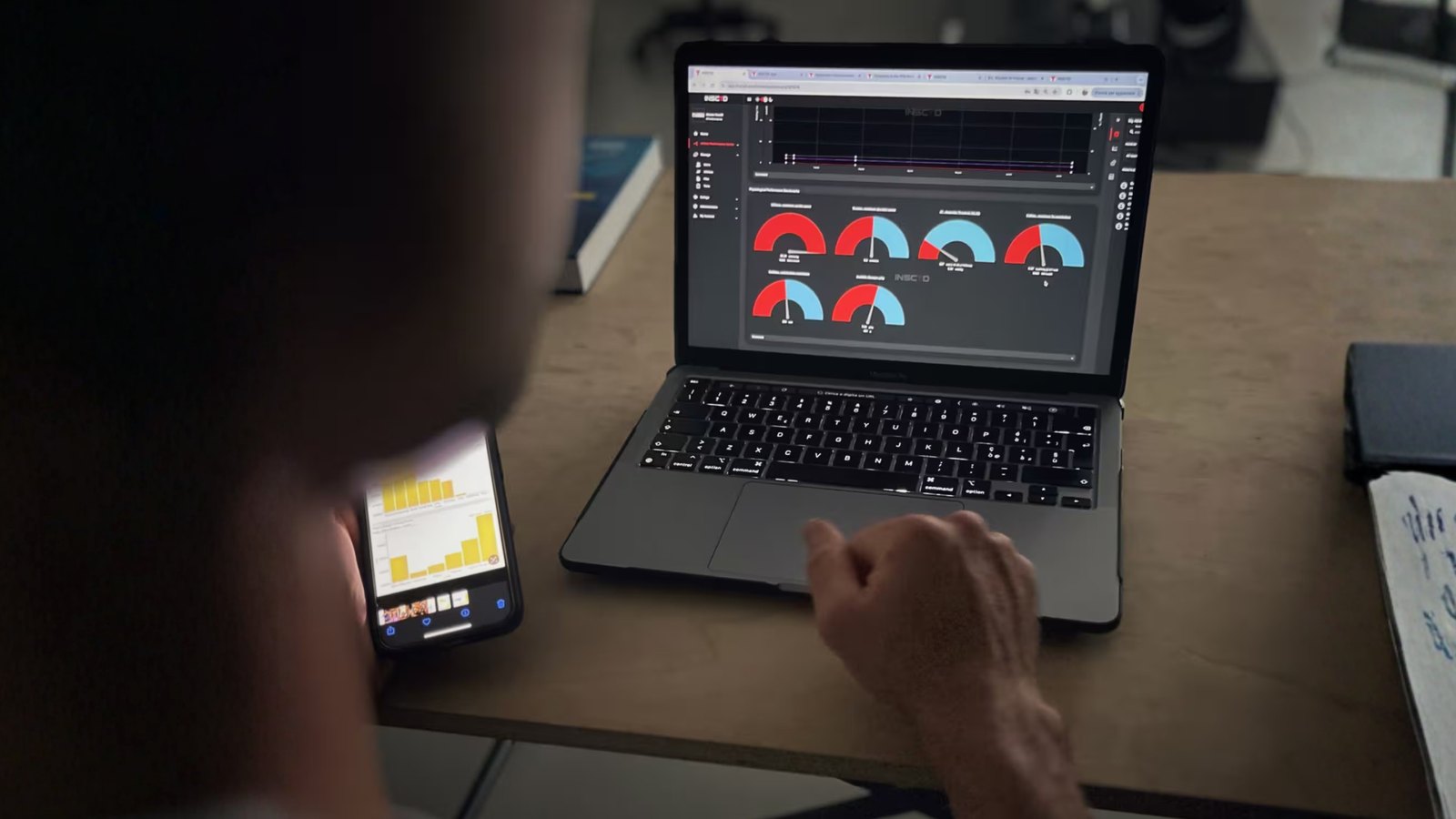
35:25 set up three different, uh, intensities, 125%, 120, 115% of view to max power. So you have a little more granularity. Then you would get a training zone template with actually nine zones and you just mark, you can print it or whatever and mark or tell the athlete, okay, for you, you choose zone number two, zone number seven, zone number nine, for example. Okay. So this is how we do it. Let me know if that makes sense. Um, Stephanie, could you please explain the physiological benchmarks benchmarks in more detail?
36:00 Are these benchmarks based solely on the athletes individual profile or are they compared in the background to others taken into account the athletes data body metrics and level amateur pro? For example, I have an athlete with a full red bar for both view to max and VLMX, but the anaerobic threshold bar is halfway red. Great question. Great question. Great question. So, um, yes, we do have in the background, we do have, um, so to speak peer comparison groups. So if we compare the data, uh, for the three levels, professional, recreational and amateurs,
36:37 um, based on the gender, we compare it to, yeah, comparison groups, right? Uh, based on the sport and the gender, because of course, you know, let's say somebody in football, a professional football player has a different view to max and a professional cyclist. Okay. So it's based on sport, gender, and those three categories. This is how it is compared. Okay. Now you will see an update fingers crossed this week, uh, where you can define your own categories. So on top of these three default categories, you will be able to define your own one and say,
37:16 okay, I have a master athlete, junior athlete, you know, whatsoever and define your own ones. Again, based on, uh, for different sports and based on different genders. Okay. Um, and then you can, yeah, basically create, uh, for whatever needs you might have in the specific case of your athlete, the second part of the question, for example, an athlete with a full red bar on view to max, which means view to max is very high and full red bar on VLMX, which also means VLMX is very high and threshold is half a red.
37:50 And this is answers always a question. So as you will know, a high view to max brings up threshold and a high VLMX lower threshold because you have a higher lactate production and so on and so forth. So basically what you described here, you have somebody with a full red bar because you have a higher view to max and a full red bar because there's a high VLMX. And because the one increases threshold, the other decreases is your threshold bar is only half a red. I think the underlying assumption is here.
38:24 Maybe you work with endurance athletes that VLMX should be red when it's low, but this means, and this is, I know it can be confusing, but this is how they, how we have to do it is that we say high is red because a high VLMX means more anaerobic energy production. And it could be the case that for example, for triathlon, you don't need it, but a 200 meter freestyle swimmer would appreciate it. Right? So red means high does not necessarily means good, but same thing. You can change that in the very near future using your custom athlete categories.
39:04 Okay. Nicolara. If I test an athlete on his own bike power meter and accurate smart trainer or cyclist two, and there's a big error in his power meter compared to the smart, which power values is best to pick? Very, very important question. The best is to pick the power value that you think is the correct one. So for example, if you have a professional ergometer like a cyclist two, then you would likely pick this one. Okay. Because this is what the software is using to calculate, for example, your VO2MX.
39:40 So if your VO2MX is off, you cannot expect, sorry, if your power output is off, you cannot expect the software to calculate an accurate VO2MX. Okay. So this is what I would do. What you can do is, however, you can use the power meter of the athlete to then prescribe training zones. Right? You know that the power meter of the athlete is over 5% or 10% reading higher or lower. You can use that information to give the athlete training zones and then hopefully ask him or her to calibrate and check the power meter.
40:10 Bill, Arizona is 5th to 9th. Oh, okay. It's already answered. 5th to 9th March is Arizona. So it's a five-day camp. It's a five-day clinic. Morning to evening, full gas. It's basically combining master classes that we did, for example, in the science and cycling conference about training adaptations and about energy metabolism. And then on top of it, you learn everything about testing and applying metabolic data to training, running the data, creating training programs out of the data end-to-end. So we start from the theory to the testing to the application and training.
40:52 Dimitris, is it possible to improve VO2MX by working at 90% of VO2MX when the contribution of VO2MX to the effort is only 8% without significantly decreasing VO2MX? Should the contribution of VO2MX Italy remain below 10% for this purpose, as I recall from a previous webinar? If so, how can the threshold of less than specific percentage of VO2MX be determined? Yes. So in general, that's from experience. What we see, if you stay below 10% VO2MX utilization, that is approximately where you would see, in most cases, no improvement, so no increase in VO2MX.
41:32 Takes this with a grain of salt, right? Of course, if you have somebody that's like a super, super low VO2MX, haven't done any higher intervals, you might see a slight reaction in VO2MX as well, but normally that's about the threshold, okay? The second part I don't understand. If so, how can the threshold of less than a specific percentage of VO2MX be determined? Maybe, Dimitris, you can ask the second part of the question again, because I don't get this. If so, how can the threshold of less than a specific...
42:08 No, please ask again for the second part of the question, sorry.
42:14 Dave, can I get a maximum lactate level from a BPPT test? In theory, you could. In practice, we are not happy with how accurate you can get it. So my answer currently is no. In theory, you can do that. In practice, you might not be happy with the results. But I think we should have a substitute for that because, I mean, the question obviously comes from, I want to use that to plan interval trainings and I think we will have a better solution for that. It's a big lot of work, so I don't want to promise any time because we have other stuff like you just learned,
42:56 like the step test and LT1 and so on. But yeah, there should be a solution for that, which is much better than just using a maximum lactate. So, I think we have a good question. So, I think we have a good question. So, I think we have a good question. So, I think we have a good question. So, I think we have a good question. So, I think we have a good question. So, I think we have a good question. So, I think we have a good question.
43:16 So, I think we have a good question. So, I think we have a good question. So, I think we have a good question. So, I think we have a good question. So, I think we have a good question. So, I think we have a good question. So, I think we have a good question. So, I think we have a good question. So, I think we have a good question. So, I think we have a good question. So, I think we have a good question. So, I think we have a good question.
43:31 So, I think we have a good question. So, I think we have a good question. So, I think we have a good question. So, I think we have a good question. So, I think we have a good question. So, I think we have a good question. So, I think we have a good question. So, I think we have a good question. So, I think we have a good question. So, I think we have a good question. So, I think we have a good question. So, I think we have a good question.
43:43 So, I think we have a good question. So, I think we have a good question. So, I think we have a good question. So, I think we have a good question. So, I think we have a good question. So, I think we have a good question. So, I think we have a good question. So, I think we have a good question. So, I think we have a good question. So, I think we have a good question. So, I think we have a good question. So, I think we have a good question.
43:55 So, I think we have a good question. So, if you go to kids training, you will see entirely different, not entirely, but vastly different anaerobic metabolism, not a great developed VLMX, different buffering systems that place a different mechanics here, so to speak, at high intensities. So, I would exclude those. So, let's say you go sub 16 years, I would say, okay, that's now really a special case. For everybody else, let's say also above 50, I would argue, maybe not so much of big differences. For two reasons.
44:39 For one reason is you always have to factor in lifestyle recovery and so on and so forth. So, older athletes may recover slower. There's also maybe lifetimes considerations, so on and so forth. But that's the same for all athletes, right? That's the same for everyone, not only for masters. And then the other thing that I think is really important here, maybe it's the most important part, is that what changes this age, for example, this masters 50 plus about the physiology is, for example, you see a drop in anaerobic performance.
45:18 Okay? So, this age, there's a tendency that you lose VLMX, you lose anaerobic performance, you lose explosiveness. And that is exactly, this is exactly what is represented in the metabolic profile. So, the answer to the question, the specific training, for example, for masters athlete versus a guy of 25. Yes, there is a specificity, but the specificity is based on the differences in the metabolic profile. For example, lower VLMX, not very high glycolytic capacity. So, that changes your training approach. Yes, that's exactly why we do all this, right?
46:00 And maybe there's longer recovery times, which is not something we have an insight. You would need to look at training diaries, questionnaires, HRVE, whatsoever, right? Which, something you would also do with somebody half the age, obviously. So, I would argue that the same principles apply, because you do have the same enzymes, you do have the same muscle, you have the same physiology. Yes, maybe things run a little bit slower in terms of adaptation and recovery, but that doesn't change anything about the general principle. So, for example, when we talked about how VLMX tells you somewhat about if you are better off doing long, slow distance training or intervals, or like, you know, the lactate kinetics tells you something about how to define recovery periods versus on periods of the intervals.
47:00 Then, this is based on the metabolic profile, and this doesn't change by age, but the metabolic profile changes by age, so that's inherently baked in there, so to speak. Okay? And about the general training load, how many hours per week or how much recovery is needed, that's, sorry, that's obviously nothing currently we deal with inside. So, that's kind of outside of that. But the general training principles, 100% apply, maybe in a different dose or in a different density, like amount of training. So, that's Sergio, nice to hear from you again.
47:37 In your experience, what is the biggest percentage increase in VLMX you have seen for endurance athlete? My curiosity is set expectations, how much an athlete can increase a VLMX through correct training? Are we limited by our genetics? Well, I think everything is limited by genetics. Otherwise, we would have people with VLMX of 240, like a sled dog or something. But limited in terms of what is the absolute ceiling you can achieve. Okay? So, you can win the Tour de France with a VLMX of 86, 87. Doesn't mean that everybody can go to 86 or 87.
48:15 Right? So, that is genetic ceiling. But everybody can improve VLMX, right? It's not that you are born with 87, you die with 87. Going back to the question of Boris before. Yeah, your VLMX also drops this age, right? Also represents this metabolic profile. So, it is highly trainable. This is why you're asking. How much can you expect it to change? Well, the interesting thing, what many people don't expect, you can have a changing down. So, decreasing VLMX much faster than you can actually increase it. So, starting with a down one, when you do a lot of super hard training, okay?
48:56 Overloading functional, non-functional, overreaching, you can expect to see a significant decrease in VLMX within a week to two weeks. Okay? Remember that at the end, at the very last step of oxygen consumption, where it's actually happening, beside cardiovascular, like transporting the oxygen via the blood down, blah, blah, blah. It happens in the muscle and the mitochondria, right? There's only one enzyme in the whole body, complex IV, cytochrome C oxidase, which is actually using oxygen to make energy. And mitochondria are pretty sensitive, for example, for heat and for overload, and they have a half-life time of approximately 14 to 18 days, depending on how much you use them.
49:41 So, if you have an immediately big increase in training load, you can actually kill mitochondria and therefore decrease VLMX. Percentage-wise, no problem to see a drop of 10, 20, 25%. I even have seen some extreme cases of 30% within one or two weeks of jumping up the training volume. How long does it take to increase it? Depends on who you're looking at. With like sedentary people, you start training them, you can see an increase in VLMX within two to three weeks. You see an increase in blood volume and therefore increased blood oxygen carrying capacity and therefore, you know, that goes pretty quick.
50:23 And you see that within a very few weeks. Again, as I mentioned, mitochondria half-life time, two to three weeks-ish, two, two and a half more. So, you can expect to see the first tendency to increase VLMX within a very few weeks. You can see a full established increase in about six to ten weeks and changes depending on what you're aiming for. I've seen jumps from 50 to 60 in eight weeks, no problem. You can also see jumps in from 50 to 65 or from 40 to 55 within two months if the training is really spot on.
51:05 Nicola, any news on mastering on the aerobic system course? No, not yet. But good reminder, we need to check how many people are actually interested in that. And then we will see if we go for that. It's part of the Arizona class, for example, obviously. And if you do something in Europe, then it will be the same there, I guess. Yiri, when the aerobic maximum training zone shows a plus 10% VLMX stimulus, but you want to train for higher VLMX without stimulating VLMX, how should you handle that best way?
51:42 Ah, yeah. So, basically, you say you have a training zone, in this case, aerobic maximum training zone, which tells you VLMX utilization is higher than 10%, but you're not interested in increasing VLMX. Well, that's relatively straightforward because then you just lower the training intensity. Remember, every training above maximum metabolic steady state will lead to a VO2max sooner or later, right? So, that is basically what is happening. So, therefore, if you want to go to a high VO2max, you want to go to 90, 95 VO2max, you can either increase the power and do a three minute effort or you can lower the power and do a six minute effort.
52:29 Okay? So, the benefit of the six minute effort, it utilizes the VLMX less. So, therefore, what you do is you switch to still an interval above threshold, but a lower intensity and increase interval duration. Okay? Hope this helps. Andrei, I did some PPD tests for recreational athletes. Value of VO2max and their team very low and VLMX differs. What is the best strategy for upgrading performance? Try increasing VO2max or NNT first or is training dependent on the value of VLMX for low performance? Let me try to reread this.
53:04 So, you have VO2max and anaerobic threshold very low and VLMX in some range. What is the best strategy for upgrading performance? Try to increase VO2max and anaerobic threshold first. Ah, okay. Is training, that's the first question. So, what should you focus on basically? Is training dependent on the value of VLMX for low performance? So, in general, the effect of an increase of VO2max, for example, on threshold value is much, much higher than the effect of VLMX. So, but the influence of VLMX increases with VO2max. What does it mean?
53:48 If you have a VO2max of 35 or 40, your VLMX doesn't matter that much because the influence is on anaerobic threshold in this case is not very high. When your VO2max increases, you go to 60, 80, so on, then the influence of VLMX becomes bigger and therefore you should pay more attention to it. So, Andre, to answer your question is if you, in this case, what to prioritize, you want to look at VO2max and see, okay, is VO2max more like 60 or more like 40? And then for the more like 40 guys, you then look for the VLMX and say, okay, can we, can we, can we decrease that?
54:31 Can we decrease the VLMX? And for athletes where you are like not so sure about that and you have like a VO2max, which is more of the range of 40s, I would focus more on increasing VO2max first and don't worry so much about the VLMX. Okay. The other thing to keep in mind here, guys, is the time of the year. I mean, if you, I don't know, in Tenerife or in Arizona where it's warm, maybe no problem. But if you are more on like in northern parts of Europe in this part, this time of the year, then maybe you also need to handle, you also need to handle maybe the, you know, weather conditions.
55:11 So you actually might think, okay, maybe it's better now to do a little bit more interval training because I can do it indoors without getting super bored. And this might also inform what you're actually focusing on. Okay. Tobias. Hi, Mr. Weber. I'm also, I'm almost inclined to not answer this question because you say, Mr. Weber, not Sebastian to me, but okay, let's, let's forget about this. Some good ranges for females in VLMX triathlon, especially Olympic distance. Ah, great question. Yes. I can give you a broad range and then the answer on why it's relatively broad.
55:45 The broad range would be somewhere in the ballpark of 0.3 to 0.5. You will need a higher VLMX to start the swim very hard and to finish the run very strong. And if your athlete is better off as a VLMX of 0.4 than 0.5 or vice versa depends on buffering capacity depends on the race, obviously, but also especially depends on the VO2MX. Think about it this way. The VO2MX is simplified speaking as a combustion engine, which is combusting, for example, the fuel that comes from the glycolysis.
56:26 Right? So lactate, right? Is basically a fuel. It gets converted to pyruvate as a true co-iron, goes into the mitochondria, into the aerobic metabolism, into this combustion engine. So that means the more combustion, the bigger the combustion engine, so to speak, is. So the higher your capacity to combust fuel and therefore also lactate, the more fun, so to speak, it is to push a lot of lactate via a higher VLMX into that. So there's a dependency and this is why there's not a straight answer. I can give you a range because I assume a certain range of VO2MX and professional female Olympic distance triathlon.
57:04 Right? We do have a tool in the making and sorry, I always come back to this in the making, this in the making, but it's true. We are pretty busy making new stuff for you guys, which you can, you can already see it. It's already linked in one of the e-learning courses and you should be able to see and learn about it by the end of this week in your app, which allows you to answer that question for the. Optimum VLMX specifically for an athlete. Okay. So you bet it's going to be a tool.
57:36 It's close to beta tests relatively soon where you can basically go in and say, okay, this is my VO2MX. This is my VLMX. This is the kind of effort I'm trying to do. For example, 400 meter, 1000 meter final search in the race. And then get the answer based on my VO2MX and so on. What would be the optimal VLMX? So yeah, that's in the making because this Tobias is one of the, of the most commonly asked questions. Okay. Okay. That's like almost spot on. We have two minutes left, but no questions left.
58:10 Wow. Okay. Then I will not close immediately. Let me bring you everybody on the same page. First of all, thanks for all this great question. It was a fun session again. Time was flying. Ah, this feature, Alejandro, because we are not good with naming, we call it the performance projection because it allows you to basically project a certain performance based on changes in your physiology. And again, you will be able to learn about it, I guess, by the end of this week. So that brings me back to what I wanted to say.
58:49 So everybody of you who has an inside account, we wanted to push an update live before Christmas last year. And, and then we're not able to do it because we were not happy with this performance and needed to change a little bit in the UX and so on. We are just doing beta testing as from today. And if that, if that goes well, then you will see some significant updates, for example, custom categories for your athletes and some new metrics and already a preview on such new features like performance protection tool.
59:25 You will see this by the end of this week. So with that, fingers crossed that our beta testers here don't find too many issues. I've tested myself in the last days a lot. So hopefully that's, that's coming relatively soon. And then my only request here for you is I would really love your feedback. Okay. So these sessions here hopefully help you, but they also have me and the team because we understand what are the most pressing, pressing questions. And we can address that by blog post features or e-learning courses.
1:00:04 And we can improve the features and the stuff that we have. So therefore my only request to you is if you see anything in new features or in currently what you, what you have, which you don't like, then please, please tell me. Okay. Please tell us, please give us feedback on, on, you know, what we should improve and what to make better. Okay. With that, Max. Yes. Let's do it in the next one, in the next session, please. And Sergio Pogacar's numbers is an update you need to purchase.
1:00:42 Sorry for that. With that, have a good evening, everyone. Cheers and see you next time. Bye bye.
1:00:52 Bye bye.