Measuring Energy Demand in Swimming using simple Pool Tests
In this webinar we show how to measure the energy cost at a given swimming speed, using simple testing in the pool. About the webinar The energy cost at a given speed is decisive for the race performance in swimming.

In this webinar we show how to measure the energy cost at a given swimming speed, using simple testing in the pool.
The energy cost at a given speed is decisive for the race performance in swimming.
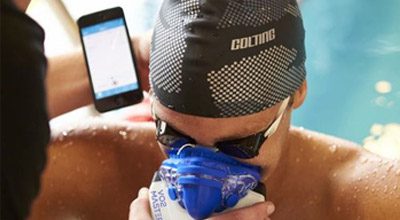
The methods shown in this webinar are all based on peer reviewed scientific publications. We will show how a face worn VO2 Analyzer (VO2Master.com) can be used for this testing at the pool.
You’ll learn how to assess energy cost in swimmers and triathletes, the effect of energy cost on overall performance. Another highlight of this webinar will be the application of the method to determine the energy cost or saving using different garments (swim suits, wetsuits, etc.).
The methods learned here apply for swimmers as well as for triathletes.
0:00 Good morning. Good afternoon. Can you give me a quick feedback, please? If anybody, everybody hears crisp and clear, if anybody has issues understanding that. Okay. Seems like Thailand is going and doing good. Excellent. Perfect. Guys, thanks a lot for the feedback. Thanks for your patience here. I'm starting a tiny bit late. Welcome to our webinar on measuring energy demand in swimming using simple pool tests. So we're going to have approximately 40, 45 minutes of presentation. Please feel free to send questions in the Q&A, not in the chat here.
0:44 We have a Q&A section where you can post questions. Okay. And I'm going to answer these questions either along the way or after the session, after the presentation in a short Q&A session. So what I'm going to present on today is some technique we have been using for several years now in swimming. It's becoming quite a common technique on how to measure energy demand in swimming. We did a workshop for the FINA, for the World Swimming Federation, a little bit more than two years ago in Canada.
1:26 It's a FINA World Convention for Aquatics. And, yeah, it's about showing you how to measure energy demand in swimming, why it is important, what it is, and what actually, what kind of practical applications it holds, and why it might be, you know, a nice and beneficial thing to do for some of you here. Let me first start with some kind of definition. What are we talking about when we talk about energy demand? Often words like economy and efficiency pop up. And for those of you who work with other sports, like especially cycling, also rowing or kayaking,
2:12 you might be familiar with measuring mechanical power. Everybody, of course, will be somehow know and be familiar with measuring speeds. This is obviously where we want to go to. And then a little bit more complicated thing, so to speak, would be measuring metabolic costs, which is another word for describing energy demand. So what we are talking about today. And in terms of get these terminology right, economy and efficiency, there's two things we can look at. And the first thing is the transformation from metabolic costs to mechanical power,
2:53 which is what you might want to call efficiency. Or you can also call it gross efficiency, so to speak. Okay. So this is something which, you know, has been validated and has been part of the scientific research community for many years. And especially if you talk about cycling, for example, as many, many studies show lately, the work from Jim Martin, for example, that there's nothing that you can really change or you cannot really change a lot about efficiency. For example, in cycling, even though there's different cadences, different crank length whatsoever,
3:38 there's not a lot you can change about how much energy you need to produce one power or one watt or a certain amount of mechanical energy. Now, how do you translate this into speed then is a totally different story. And this is what you could call economy. And sticking for a second, even though we will talk about swimming more, sticking for a second with the example from cycling, this could be described basically on how much power do you have and how do you translate that into speed.
4:10 And I came up with this image here, for example, pretty obvious to see if you're riding in a less or more aerodynamic position, you would have more or less drag, more or less air resistance, and therefore have a better or worse transformation from mechanical power into speed. So, that's quite clear and that's for most people easy to understand because that's something you know most likely from your everyday work going from mechanical power to speed.
4:49 So, that's known. Now, in swimming, going back to swimming, we do have the issue that obviously measuring mechanical power is not really easy, not to say available. I mean, there are some devices, but for the whole body, it's quite difficult. So, in swimming, we do need to jump from metabolic cost straight to speed. Okay. Let me pause here for a second. Some people complaining not having audio. So, we do... ...down here. ...for a second. Sorry for that.
5:50 So, please check your audio if you have any issues with that. Okay. Sorry for that.
6:02 Okay. Getting feedback. Most people have audio. If you don't have...
6:35 Okay. So, in swimming, because you can't measure mechanical power, you would need to jump directly from metabolic cost to speed. And then you could describe that as either efficiency or economy. It's kind of a mix of both, right? So, that is what we're going to talk about here. We jump that mechanical power issue and go directly from metabolic cost to speed. So, when we talk about metabolic cost. So, when we talk about metabolic cost, we have to look at where is the energy coming from. And, you know, as you know, there are three ways for the muscle to produce energy, which is by the breakdown of creatine phosphate, by glycolysis, and by aerobic metabolism.
7:17 And, in order to get energy costs straight, you would need to look at all those three versus the velocity or the speed you're looking at. So, that's quite difficult looking at all three, especially the breakdown of creatine phosphate and the dynamics here is difficult. The good thing is, creatine phosphate, energy contribution from creatine phosphate is not important in steady state conditions. So, when you go to steady state conditions, we can, you know, or more or less steady state, quasi steady state condition, we can neglect that. And that leaves us only with glycolysis and aerobic metabolism.
7:58 And that makes things quite easy or easier, so to speak. So, what we need to do here is now we need to measure, we have to have a marker for the glycolysis, and we have to have a marker for the aerobic energy production, and then we have to measure speed. Speed is quite easy, right? And then, especially in swimming, measuring lactate and measuring VO2 can be a little bit challenging. Lactate may be being a little bit easier, obviously. And the main part, or one of the main things to talk about is obviously measuring VO2, which is what we're going to spend some time on in this webinar.
8:36 So, these are the three components that we need to understand whenever we want to understand the energy demand versus speed. So, the economy or efficiency, whatever you want to call it here, based on what we said before. Let me start with lactate. Very simple these days, very easy. You just go to the internet, you know, find any distributor. I took one here from the U.S. and buy some of those lactate machines. Now, especially in Europe, there has been some buzz around the accuracy of handheld machines that use quite a small blood sample.
9:18 And compared to a tabletop lab machine, you know, some people complain about the accuracy. Part of that is maybe true. But on the other hand, you have an advantage because you measure directly in the plasma. While tabletop machines, you know, takes the whole blood, but then break up hemoglobin in it. And hemoglobin has a higher lactate concentrations than plasma. And so, talking a little bit about the nuts and bolts here and, you know, going a little bit into a small rabbit hole, so to speak, using lab machines.
9:55 There's always a correction factor for hemoglobin in there. So, long story short, handheld devices can have a little bit higher tolerance in measuring lactative values. On the other hand, you are very robust because you're not depending on hemoglobin values. So, also, it's pretty fast. And the good thing is it's relatively inexpensive to buy those machines, you know, a couple of hundred bucks, no problem. And then you have a device which you can reliably measure lactate concentrations. When we come back or when we dive deeper into the methods of obtaining that data, you can also go back and see or we will talk about a little bit more why the higher tolerance and the handheld devices are not really important or bothersome when it comes to total accuracy of your measurement.
10:50 Now, VO2 can be a little bit more tricky. A very popular way to do that is, you know, having your swimmer using a snorkel and then having your metabolic cart, your VO2 analyzer somewhere next to the pool. And even though it's nice to have real-time measurement and everything during the swim, there are some, you know, roadblocks here. The devices are pretty cumbersome plus they are pretty expensive. But even though that is not an issue because you can afford those things, there are some problems with a snorkel.
11:36 Swimming with a snorkel is never the same as swimming like you normally swim without the snorkel, right? All your breathing is different. Your movement pattern is different. You have a pretty high dead volume space in here with these big tubes. And then you cannot use it really very good for all strokes, like especially in butterfly, it's even more difficult than in freestyle, for example. And what's about turns? How you do flip turns with a snorkel, right? That's pretty, pretty difficult. So you end up having no real-world measurement, right?
12:15 So in other words, what this means is that for many, many years, measuring VO2 in swimming and therefore assessing energy demand has been something that is more like a theoretical scientific thing to do. And it's not has been something really accessible in the daily life, so to speak, of performance monitoring in athletes or elite athletes. And when we jump a little bit later on how important energy demand in swimming is, I mean, everybody talks about swimming technique, you know, it's a big thing in swimming, have a better technique and have a better body position in the water.
12:54 But it seems like people are not able to quantify that. They're not able to quantify what is the performance benefit from that. And for this, you would need to have VO2 measurement. And obviously, that's not so easy. Now, there's another technique that has become more and more popular in the past. And this technique uses the VO2 kinetics. So this is a simplified overview on how VO2 kinetics work. When you start an exercise, you have some kind of a mono-exponential, to simplify things, reaction of the oxygen uptake.
13:28 And then you have more or less in a steady state conditions, assuming that you have a steady state load. And then you have these offset kinetics, right, where the VO2 goes down after the end of exercise. And it's pretty comparable easy to work with this model. And for example, model those kinetics, like you can see here, right? The dots are measured data and then you see the black line as a model. You can very, very good, so to speak, in a good quality, a good data quality model, the oxygen uptake in the onset kinetics and also in the offset kinetics, right?
14:14 So now what has been used and there's a lot of peer-reviewed data out there, very good data, very solid data, is to use the offset kinetics to mathematically describe the offset kinetics to understand what has been the oxygen uptake in steady state. So to get this straight, instead of applying a snorkel during the swim and effecting the swimming technique and ending up just having some idea of oxygen uptake for scientific research but not what it is in real life, you could now just have your swimmer swim and after the effort measure very precisely,
14:59 this is breast-by-breast technology obviously, measure the offset kinetics and then mathematically what is called backward extrapolation, go and find out what has been the oxygen uptake in steady state conditions. And this has been, again, very good peer-reviewed, validated, a lot of papers out there, how to do that. It's mathematically not super difficult, something you can easily do in Microsoft Excel or something. And lately, it has been shown that just taking the average for the first 10 to 15 seconds is as good as if not even better than a more complex exponential extrapolation.
15:45 So it's comparable easily to easy to do. And again, it's not interfering with your swimming technique. So summarizing that,
15:56 it gives very reproducible data. We've tested that ourselves several times. And the backward extrapolated VO2 uptake that you end up with has the same tolerance if you would just, you know, put the VO2 analyzer on an athlete on a bike ergometer on a treadmill. It obviously has no effect on the swimming technique simply because, you know, the device is not on while you swim and therefore it also works in all strokes. You can have real world turns, flip turns, just normal. And lately, what we have been using and like what I mentioned initially in the FINA,
16:41 for the FINA conventions, for the workshop, for the World Swimming Federation, we've used the device called VO2 master, which is comparable inexpensive compared to traditional, you know, devices. And the nice thing is, especially in swimming, this is why I've shown it here. I mean, we've also used Cosmets or Cosmets K4, other portable devices. Besides, it's inexpensive. The nice thing is, especially in swimming, it is a very small package. It's a very small package. So it's easy to bring it to the pool. And because it's not so expensive, cost about the tens of a normal device,
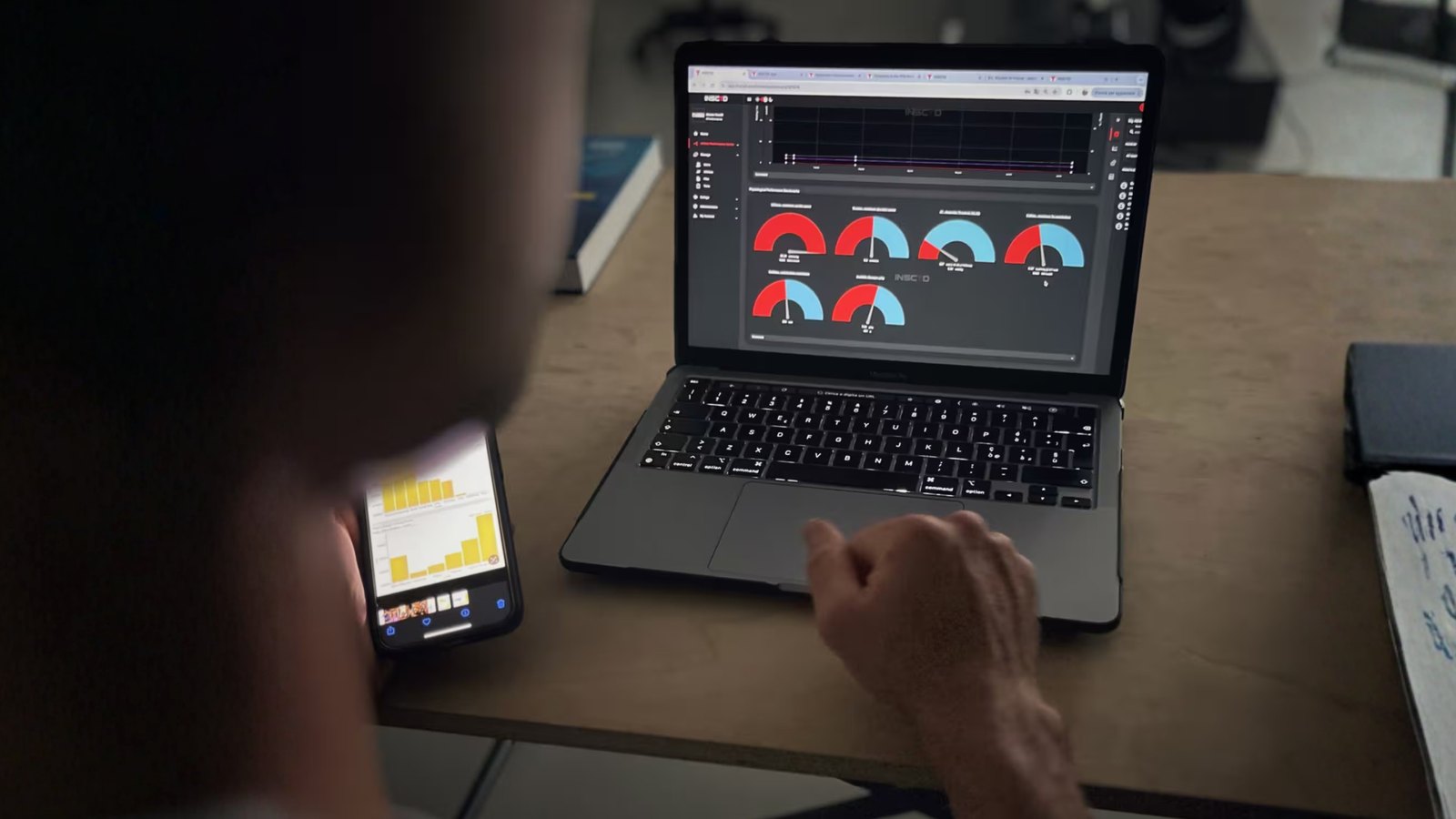
17:22 you know, I can do it more regular in training and actually end up regularly monitoring the development of my energy demand and therefore quantifying and putting a benchmark on my swimming technique and body position in the water more regularly. So I could actually take this into the regular performance monitoring. And, you know, to share some experience here, the device, you know, would connect to a smartphone or something. And I can pull off the data afterwards, the CSV files, and then, you know, import into Excel and do this backwards extrapolation.
18:05 So it's, you know, it's quite an easy thing, you know, to do. It doesn't have any cables or something. So that's why I choose it and I like it. Again, we've also worked with Cosmets or other devices, which, by the way, all have the same sensor technology. So the oxygen cell is always the same, no matter what kind of device, Cosmets or whatever cortex, whatever you use, it's more or less always a mini mixing chamber in the chemical cell. So, well, so that's S part. And now going a little bit back to the glycolysis and the aerobic part, what you would then need to do,
18:43 you would need to add up the energy systems. Because as we just said, you have a glycolytic energy contribution and you do have an aerobic energy contribution. And let me show you one example how this is done inside. So I can show you a screenshot here of the data and how it goes into the software. So, for example, we have 400 meters, so I'm in 348, so reasonable fast, pre-lactate value of 1.6 and a post value of 13.3.
19:15 So then you measured, for example, a VO2 of 77.2. So now we have two energy components, right?
19:31 So that's something, you know, to take into account. And I'm going to show how this is taken into account. I have some questions popping up here. Come to that, come back to that later, if you don't mind in the Q&A. So this is then what happens with those data in the inside software. We are making a regression curve fitting the measured data to come up with what we call a VO2 total VO2 demand. So instead of using energy, it could also use energy, kilojoules or whatsoever. We use VO2 as a unit.
20:10 It doesn't really matter again. And what I wanted to point out, as you've seen before, we've measured a VO2 of 77-ish. But because there is an additional energy contribution from the lactate system, from the glycolytic system, the total energy demand estimated here or calculated from adding up those two systems is actually bigger, right? To give you one example, which goes a little bit back to the questions that we have here. If you would have moderate intensity below maximum lactate steady state, let's say, and do your six-minute more or less steady state effort,
20:52 need to measure a VO2, this may be, you know, you might come up with whatever, let's say 60 milliliters at a swimmer. And now you have the swimmer swim whatever 50 meter flat out maximum at a much, much higher speed. And the VO2 that you would measure would be a little bit lower or significantly lower. That does not mean the swimmer needs less energy by swimming faster. This basically means most of the energy is coming from the anaerobic system. And if you don't account for that, then obviously you underestimate the energy amount.
21:24 So, you know, this is basically what it's done here. Adding up, this is what Insight does, adding up the energy from both systems and converting it just in VO2 again, instead of using energy and kilojoules or something. And then what you end up with, you end up with understanding as a function of speed, what is the total energy demand, right, which would be the upper black curve here, right, the upper end of the curve. And also understand where is the energy coming from in this particular athlete.
22:00 And that's, you know, nothing really new to speak in general terms and qualitative terms, that at a low speed, you can see there's almost no fraction, no contribution from the red, from the anaerobic part. And then the higher the speed goes, this gap opens up. And then obviously you would have a high contribution from the anaerobic or more precisely glycolytic system. Okay. And this can be vastly different from one swimmer to another. And that's something we're going to look at here in a second. Testing protocol, how this could look like.
22:35 In order to have a good fitting and good understanding of the energy demand at different speeds, we recommend having three as a minimum, better like four bouts of exercise at different speeds, low to high.
22:56 Minimum three minutes duration to make sure that you go towards a steady state, right. However, going back to one of the questions here about slow component, it does also work with shorter intensities, shorter durations. You do a pre-post lactate sampling and you would capture the maximum lactate value afterwards to understand the glycolytic energy contribution. And then you just basically immediately, immediately hits the wall, you know, finishes his effort. You immediately put on the mask to get the first breath already into the mask and have the first data for your backward extrapolation.
23:42 And if you do that with five bouts of exercise, you end up with a total time demand of about 30 to 45 minutes ish. Right. So that would be, that would be a decent protocol to do this kind of testing, you know, in the pool. Okay. And then when you do this, you might find, and now we are talking more, we come more to the practical application of things. You might find something like that. This is overlaying two athletes. So the solid lines is one athlete, right.
24:15 Similar as we've seen before, the dark blue, the navy blue is a total energy demand or total oxygen demand more precisely. And the light blue is then the aerobic part. And so the light blue area is the glycolytic contribution. And so the solid line is one athlete and the dashed line is another athlete. So you can see that the dashed line, the other athlete, the dashed line athlete has, for the same amount of speed, needs a significant lower amount of oxygen. Or in other words, with the same oxygen uptake, he swims significantly faster.
24:51 And also with the same energy demand, he swims significantly faster. Okay. Okay.
25:00 And another thing, obviously, is that it differs quite a lot between strokes. Obviously, for example, breaststroke has a much, much higher energy demand compared to freestyle. Backstroke is more similar to freestyle. And then butterfly is a little bit in between. But also in between swimmers. In between swimmers, it can vastly differ, pretty significant. It's significant differences here. And this is technique. This is body position in the water. And this is also body shape. In general, taller swimmers, taller swimmers who have a long torso and a long body,
25:48 have an advantage, especially at high speeds. You could see these quite exponential or curvature increase of oxygen demand, which happens at higher speeds. And, you know, the less, the less, you know, long the athlete are, the shorter they are, the more energy they might need at a higher speed. So, how does it look like in a real application? I show you three athletes here. Energy demand are three athletes. As you can see, we have three data points here. And to give you an idea of the magnitude of differences, three swimmers, one line is one swimmer.
26:39 The dashed line is the energy demand as by one literature. So, the different literatures out there, different papers out there, having some very good populations, some very good N about how the, you know, what the energy demand is in different strokes and so on. And so, these are three swimmers all in freestyle stroke. And for example, if you look at an oxygen demand of 60 milliliters, independent if this is, you know, coming from aerobic energy contribution or from glycolytic energy contribution, even then looking at that, you may find differences from 1.2 meters per second to up to 1.5.
27:28 And if you translate that into the swimming speed, you can see how significant that is. So, it's fair to say that whenever you want to have a precise understanding on the performance of your athlete in swimming, it might be well worth looking at energy demand because obviously, especially, you know, we are talking about increasing, you know, improving technique, improving body position in the water. And how do we quantify that, right? And energy demand is the most direct and most important measure to do that. In this case, I also have to say that the swimmer with the blue line here is much taller and a much bigger unit and is elite level.
28:22 And the purple one is not a swimmer per se, but, you know, it's not a professional swimmer, so to speak. So, you can see quite a lot of differences. And also at higher speeds, you can see this guy, for example, which is something quite common to see that at a certain speed, there's some kind, you know, you could even call it like a break point or something where, you know, the energy demand gets tremendously higher compared to what you've seen before, where you have this great curvature, this big exponential increase.
28:58 So, that's one thing how you can do it. And for the last part of this presentation, for the webinar, I would like to focus on another thing what you can do. And this is using this technique and using this technology to understand the energy demand for different equipment. Again, those of you who are familiar or work with the sport of triathlon or cycling, you will be familiar with aerodynamic testing, testing of equipment in the wind tunnel or on the velodrome. Again, to understand the transformation of power to speed.
29:34 Same thing, right? More aerodynamic, less aerodynamic. And I'm showing you some examples of some assessments that we did. So, for example, this is a professional triathlete. In this case, we've done it not in the pool. In this case, it's in the flume. It was just more convenient in terms of logistics. And what you see is all data is for 0.88 meters per second. So, very low speed. I mean, obviously, Ironman athlete, you know, you don't need to test at high speed because it's too far off from what he sees in competition.
30:11 And you'll see swimming with no suit, which is just like speedo, just like normal swimsuits. And then a custom wetsuit, custom made wetsuit. A swimsuit, on the other hand. And instead of the swimsuit, the bike and run suit. So, triathletes use one suit normally for swimming and one suit normally for the bike and the run, which is, you know, supposed to be optimized for those events. So, first thing that you can see, well, no surprise, you have a tremendous difference between swimming with no suit versus swimming with a wetsuit.
30:49 Obviously, you should, you would expect better position in the water, better float. So, that's one thing to point out. But there's some other things to point to, which we come back to the next slides. And then what might be interesting is the big difference between the swimsuit and the run suit. I mean, the run and bike suit, it's not that this is, you know, a normal T-shirt, your normal Fruit of the Loom kind of cotton T-shirt kind of thing. It is a tight piece of equipment here,
31:23 which fits very, very good to your body for aerodynamic reasons, obviously, on the bike. But still, there's a tremendous, like, approximately 15% or so, 12% difference or something in between swimming with a dedicated swimsuit and just a normal, you know, time trial and running suit, so to speak. And you can do it, you can do this a little bit further. And we did this for looking at wetsuits. We call this, like stated here, the aero testing in the water, so to speak. So, you know, similar to the aero testing triathletes do outside
32:03 or like in the velodrome. And so this one is looking at different wetsuits within another professional triathlete. Similar scenario that's also done in the flume. Apologies for don't have the speed up here. Again, without wetsuit. And then we have different wetsuits. And additional to the oxygen demand, which are the orange bars, we also calculated the time savings. Okay? The time savings for 100 meters. Now, this might sound a little bit high or it might seem a little bit high. But remember, this is in the flume, this is without flip turns.
32:49 So the effect is much bigger. So you can see, obviously, a big jump again between no wets, between without wetsuit and the different wetsuits. But then even in the wetsuits, there's almost a 10% difference. So between those two, these two are very similar, two different models of the same manufacturer. Very, very similar. And then this one is a kind of an old school vetsuit, just as a comparison. But even comparing, you know, current models of the market, there's quite a significant difference. They're talking about, what is that?
33:28 Approximately 42, 41 milliliters versus 37. So still almost 10%, right? And if I would come up to a triathlete and say, this wheel or this helmet or this bike frame or whatever is 10% more aerodynamic, it saves you 10% of energy, right? That's like going from on the bike, let's say, 300 watts, 270 watts. That's huge, right? Just to put this in perspective. And now you might say, okay, that depends a little bit on the swimmer and that might be just a case study. Well, no. Showing you here different data or more data of two different swimmers.
34:14 So in this case, it's another slower speed. And we have many, many different vetsuits here. And in this case, instead of showing you the energy demand, oxygen demand, I'm just showing you the percentage savings compared to baseline. So what we've done here is because there are so many suits, we always, after five suits, did a new baseline. And then if there was a tendency in the baseline to either, so baseline means there's no suit. So in order to understand if there's a fatigue during the test, we repeated baseline testing and then corrected the values using interpolation,
34:58 corrected the values to a new baseline. Basically, so to speak, simplifying things, long story short, to understand if there's a trend in either increasing or decreasing energy demand for the same speed, maybe because of fatigue or because of the fatigue, maybe change in technique or quality of movement. So it's quite solid data. And you can see again, the percentage saving in terms of energy demand can be quite huge. Interesting, there's even one suit where the saving is negative, which means with this suit, the athlete needs more energy to swim the same speed
35:38 than without a wet suit. Now, this might be very surprising. The point here is that, you know, you have to think about, yeah, you have better float, you have better position in the water with a thick, big suit. But if it's too big and too thick, especially in the upper body, then you might have additional energy demand to just move your arms because there's a resistance from the suit itself. And so that's one point. And the other point is that this suit in particular didn't close, like it was kind of open.
36:12 It was not really snug and tight fit around the neck. So there might have been water coming up, coming into the suit in the front end. And this would obviously create some breaking force, so to speak. But even in between the most popular manufacturers of wetsuits, you can see quite big differences, right, in energy savings with the different suits. So this is one athlete because the question is, is this specific to the athlete? That might be another question coming up if this is specific to the athlete.
36:51 The answer is yes and no. A little bit yes, but it's similar again. Sorry to always come up with this example for everybody of you who's not working in triathlon or cycling as well. It's a little bit similar to aerodynamic equipment on the bike. If you have a very aerodynamic helmet, it will be very aerodynamic and produce very good aerodynamic numbers with every athlete. However, with one athlete, it will be a little bit better than another one. But a good, fast, good aerodynamic helmet is always good aerodynamic with everybody,
37:22 even though the total difference can be a little bit different. So we're looking at another athlete here, similar scenario, just a little bit higher speed. And you get a similar view. You get a similar picture here. Suits that performed very good in this athlete, like, for example, this bar here, almost 20% savings. It's also pretty good here. And then suits which are, like, more mediocre, like maybe this one here, is maybe a little bit more mediocre here. So similar things. It's not sometimes not directly comparable because the names for males and females,
38:04 so the other one was a female, the lower is a male. The names of the products differ a little bit. So therefore, it's not so easy to compare directly. But you can see that, you know, a suit that helps this athlete lower energy demand, the same manufacturer also has a fast suit for the male athletes here. And you can also see, please take note of the percentage differences, right? So it's not the same scaling here. Apologies for that. So we have, you know, a good several suits here sitting in the range of 10 to 15,
38:43 even up to more than 20% of savings. And that is similar here, but obviously with a higher speed, it seems to be that you have more suits going into the range of 20% energy savings, which is obviously quite, quite big. And if you paid attention to the previous slide, there's the orange bars there also, the zone three was also the, you know, one of the best performance. And again, confirming that a fast suit is a fast suit for mostly everybody, right? And then there's a question about the fitting of the vetsuits.
39:20 Yes, of course, as good as possible. I mean, no vetsuits, no commercial vetsuits are fitted custom made, like the one we've seen with a professional athlete. But of course, we ensured that the suit, you know, that we use the size of the suit according to the instructions of the manufacturer for that size of the athlete we used it for. That's for sure. So can we buy speed? Yes, you can buy speed also in swimming with vetsuits, choosing the right vetsuit. And on a side note, I think looking historically how aerodynamic testing developed
40:03 also in age group triathlon, I think we might see a similar development in the develop, in the testing for and decision making of choosing your vetsuits for triathlon. Currently, it's more by feeling. And we might see a shift similar to the bike industry where people pay more attention, not so much about the marketing, but more about is the product really faster. On other words, in the bike or triathlon industry, you could not afford to bring an aerodynamic product, either it's a wheel or a helmet or a skin suit or whatever.
40:41 You could not afford bringing that to market without proving or indicating that you've tested it in the wind tunnel or on the velodrome or whatever. You would have to prove that it's fast. And currently, that's not the case in swimming really. And I think we might see that change in the future. Because again, the technology is there. The methods are there. Very good reviews. The technology is there. Think about the product like the VO2 master. Pretty affordable. Pretty easy to do. You can do it in the pool.
41:12 So, yeah, you know, it might be something we could see more in the future. So, summarizing what we've talked about today. We've seen from the differences from different athletes that the metabolic demand versus speed, so the economy or efficiency, whatever you call that, you know, can be a significant differentiator between athletes when it comes to swimming performance. It's not a little bit we are talking about. We're not talking about one or two percent that a good technique and position in the water saves you. We're talking double-digit numbers here,
41:57 both in terms of percentage saving and of seconds per 100 meters. So, quite tremendous amounts. You've also seen that the testing is comparable simple. It's comparable simple. You don't need three scientists on the pool deck with a metabolic card and some kind of, you know, tables on wheels which you can put next to the pool or this kind of stuff. You just need an iPhone and a mobile lactate analyzer and, you know, and a mobile VO2 analyzer. And you will get more realistic data and reproducible data.
42:37 And this technique is actually used by several swimming federations around the globe. So, that's nothing specific here to inside of you to master. What we are doing, again, that's something that's done by several, you know, federations in elite sports and high-performance sports around the globe. So, yeah, very relatively low expensive and mobile equipment. Also, the assessment is done pretty quick, 30 to 45 minutes for full assessment. Now, think about it. You don't really need to always have a full assessment, right? If you talk about performance monitoring,
43:17 you could have, you could do this full curve, this full fitting to understand the energy demand over the full range of speeds. But then maybe as a read test, as a control test, as a follow-up, only look at one specific speed you're interested in, right? To understand if whatever your speed for your Ironman race or for your 400 meter freestyle race in a swimmer or whatever it is, if the energy demand in this got less or more. So, the follow-up doesn't even have to be full 30 to 45 minutes.
43:50 This is why, what, you know, what I'm trying to point out here, this is mobile and relatively inexpensive equipment. You know, I mean, I can put a view to master in one pocket and the lactate analyzer in the other pocket and have my phone with me anyway. And then I go to the pool and make a quick reassessment and follow-up of energy demand in the swimmer. If, for example, I prescribe the training programs to increase swimming technique and therefore hopefully lower energy demand. And last but not least,
44:22 as we said, as we have shown, it becomes possible to reproduce, it will test the energy cost of different equipment, even the water, and determine the fastest setups for races. And, this might be besides the effect of performance monitoring and understanding and quantifying the technique of your athlete, right? Not looking what is beautiful in terms of movement, but what is fast in terms of movement. So, additionally to that, this kind of technology and methods would allow you also to determine fastest equipment, swimming equipment. And I could well see that,
45:04 that for some people, that might be something that also could be offered commercially. If you think about whoever of you works in commercial testing and offering sports performance as a service, if you think about, if you think about, you know, all these vetsuit testing, it's a big thing and it all depends on feeling. And again, that's not happening anywhere else in the industry, right? That's not happening for a dynamic stuff on the bike. Nobody would sell a pair of wheels by, oh, it feels faster or it looks more beautiful, right?
45:42 You have to prove it. So, that could be actually something, you know, which could be included into a commercial offering, so to speak. And hereby, I conclude. And thank you very much for your attention. I've added some links to some of the technology, obviously, so you can look it up on the website and now we're going to go back to Q&A. So, please use the, please use the, please use the Q&A here in the tool. So, going to start with one. Very early on, I got a question
46:27 about the slow component when you are not at steady state. Yes, that's possible. As I indicated, you can even, you can even use, you can even use the shorter effort and then you don't have a steady state but you have a, more like a peak, right? You do have more like, more like a peak value and the only issue that you would run into here is if, if the peak is not representing the final VO2. So, for example, if you would do, let's say, a three minute max effort,
47:05 right? You would not come to a steady state, right? You will run into the VO2 max and that's still a valid test. The only issue where it gets complicated is when the effort is so short that you are in the middle of the VO2 onset kinetics and because then again, creating phosphate breakdown comes into play and therefore, it becomes, it becomes a little bit more, a little bit more complicated. So, if you avoid anything between, let's say, 30 seconds and 90 seconds in terms of duration, you get,
47:40 you get a very, a very solid and reproducible assessment.
47:48 Then another question was about VO2 master and Cosmate having measuring results. You know, I don't have a direct comparison between VO2 master and Cosmate. I have direct comparison between Cosmate and metabolic cards and this is not necessarily good. That has been, to say the least, but I don't want to bash Cosmate here because, you know, VO2 analyzers is, is, is a high technology. It's a, it's a more complicated part of technology here. It's not as easy as a stop was or the power meter. It's not as easy
48:26 as, as a, as a lactate analyzer. So, what I'm trying to say here is that you might have, you know, some higher tolerance data in, for example, a Cosmate, right? And then you maybe send it to a service and you get a new VO2 cell and then it works quite well. And the same applies, you know, for the VO2 master, you know, we've tested them. I've used the, I personally used the, the prototypes and have seen very valid and reproducer results. Also, even did a small validation study
48:57 with that using a, using a machine, a simulator, but it comes down to the same thing. There's a chemical or two analyzer in it and they last about a year and then, they need to get renewal and that's the same that's used in the cortex as far as I know and it's very similar or the same as used in the Cosmet K4. So therefore, you know, you run into the same kind of issues or needs that you need to have your device well serviced and up-to-date, right?
49:28 There's another question about this tight fit of the mask when you, when you do that, that's not an issue. as you might have seen in the picture here, what you would normally do in this picture, you would, you can hold the head of the athlete and therefore, you have kind of a counterforce and make sure that you can press the mask a little bit harder on the face of the athlete. So that's, that's normally not an issue. Again, that's another thing why, especially for the swimming, why I choose
50:04 to show you our application here with the VO2 master beside, that's what we use for the Fiener. You have some issues with conventional systems with a pump because you need to dry the air and, you know, you have this kind of issue also with the VO2 master but there is some kind of system in there where you have like a little cotton piece so when you, when it gets very wet so if you, what I'm trying to say if you have some dips of water in there
50:35 the device seems to be a little bit more robust to me than if you spit water into a turbine of another system so that's definitely helpful here. I appreciate that, that I don't have to worry about getting water into the turbine.
50:52 Let me look into other questions here.
50:59 Okay.
51:02 so then there was a question about a product diagnostics. I have no experience personally with this diagnostics. I have to say I approached the company some time ago trying to do the same application was not very, not very easy to get hold of it. I talked to some people I know some people have it in use and, and have some good experience as far as I understand. The point is that in order to do this with the swimming you would need to have access to the raw
51:45 breast by breast data in order to do this backward extrapolation and what I've heard again, communication has not been so easy on my end with that but what I've heard was that was that from, from the, from the guy I know that it's difficult to access the raw data and the diagnostics and therefore I didn't, I didn't investigate any further so sorry I can't really, can't really, you know, comment too much, too much on that.
52:15 So let me look for other questions here. Oh, there's some people, some people sending questions in the chat bar. Okay, so that's getting a little bit more difficult. So, Roka Vetsuit, no, we did not test Roka Vetsuit so have no ideas on this one and then there was a question about the resting lactate before the effort if this needs to go back to baseline. Yes, it would be beneficial if it goes close to baseline however, you're looking more to the delta, you're looking more to the, to the pre-post-lactate
52:55 delta in order to understand the energy contribution from the glycolytic system. So, it's, it's beneficial if it's lower because it might affect the maximum lactate concentration afterwards but it's, it's not super, super sensitive to that so you might actually long, short answer is you might allow for a little bit higher, a little bit higher resting lactate because, yeah, the algorithms are not very, it's not very sensitive to that.
53:26 So, more questions. Let me see if we can pick one more.
53:36 So, there was a question about a retest here. Trying to wrap my mind around what the question is. if you do a retest scenario, if the steady state error seems to be rather larger, I don't feel like that. I don't feel like the steady state tolerance or test, retest scenario error is quite big. We've done several retest scenarios and were able to reproduce the oxygen uptake by one or two milliliters from one test to another. So, if you think about 40 to 50 milliliters, that's quite stable.
54:20 What I need to comment on in this context, though, is when you do it in the pool and we don't do it in the flume, you need to ensure or you need to control and you want to be precise with the pacing. anything. So, remember those oxygen uptake graphs or energy demand graphs. When you go to a high speed, when you go to a high speed, there's more or less an exponential increase in energy demand. And with some athletes, this is even more pronounced, this is even
54:54 more extreme. So, when this athlete jumps to higher speed, only let's say for the last 50 meters of what's meant to be a sub-maximum effort, you might see a jump in VO2 and also lactate levels not because of the speed of the full, let's say, 400 meter effort, but only because of the last 50 meters. So, you need to be accurate and mindful of the pacing and you want to help your athlete keep the pacing and keep the right pace by, for example, walking next to them
55:26 or giving them feedback. It's comparable easy on 25 meter pool, obviously, because it's easier to provide feedback on the turns. So, that's something you want to be mindful on and when you ensure that, I don't see any issues with reproducing steady-state measured values.
55:45 And then maybe last one here, if there's a possibility opportunity to... okay, I'm sorry for that, I go back to the retesting sum of squared errors in the model running inside.
56:10 Okay, I think there's a misunderstanding here for that. So, the question is, when there's just a single bout of exercise run in submax tests, the sum of squared errors gets bigger. Well, the point is, Insight does not calculate energy demand in swimming when you only enter one data point. You need to have at least three data points to trigger the software to calculate,
56:44 and this is nothing, I mean, that's specific to us, but if you think about it, so I'm talking about this curve, only in our software, only if you have three data points, it starts to calculate the energy demand. And if you think about that, independent from inside, if you would do it by yourself, just do it in Excel and make a fitting here, if you have a curve linear increase, exponential curve, you cannot describe it mathematically well enough is two points, right? If you have two points,
57:16 you can connect those by a straight line. So this is why I said in the protocol you want to have data points at a very low, low speed, and you maybe want data points at a higher speed so that you don't have to extrapolate energy demand at a low speed, but you can interpolate in between those points. So that's hopefully answers the question. So don't misunderstand or don't mistake that for saying about sub maximum analyze of lactate values in our software. Last question, I think if it's
57:53 possible to measure or estimate energy demand from just using lactate values in the software, no, obviously not. Obviously, you need to have a VO2 measurement. You can have a little bit better understanding of energy demand, but that's a very deep dive into the details. When you have a more direct estimation of VLA-max, you can kind of follow it backwards to understand a little bit better the energy demand, but this is not really an analyze. This is just, let's say, a better guess, so to speak. So to really
58:33 understand 5, 10, 15% changes by different equipment or different swimming technique, that's not really possible. Okay. Thank you very much, everybody. Really appreciate your attendance and your questions. We will have this presentation available. There is a recording in a couple of weeks, so please be a little bit patience if you want to review that. It will be available a couple of weeks and you will have, you will get an email notification once this is available. If there are any more questions popping up later or that you feel
59:16 have been unanswered or you want to just