
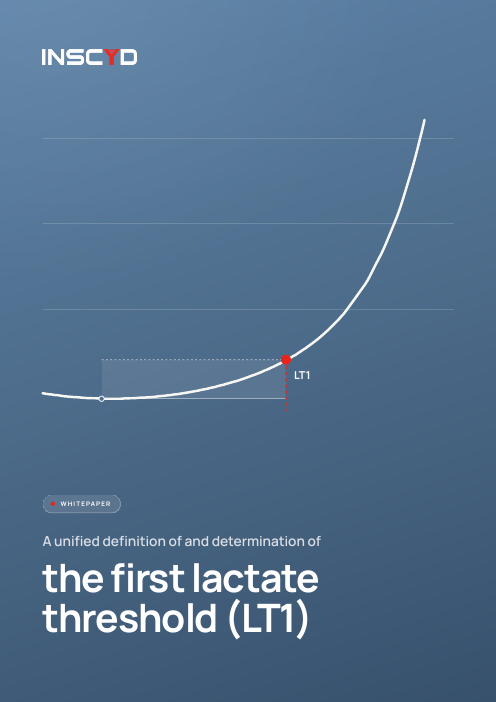
Where exactly do you mark LT1?
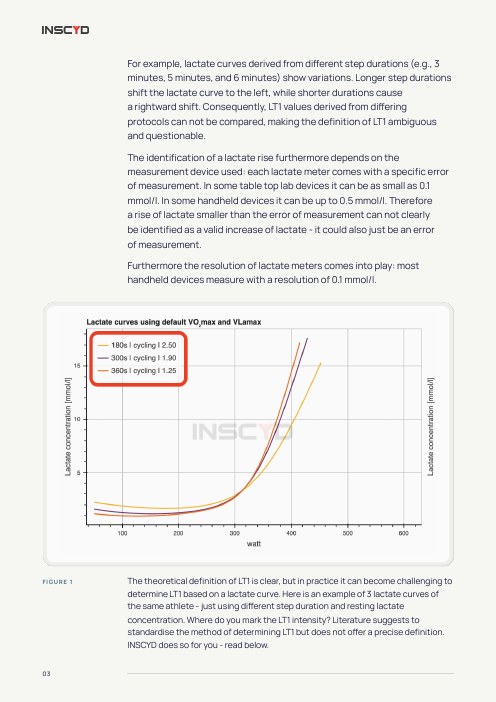
The power or speed assigned to LT1 can change with the test protocol and with the rule used to decide what constitutes a meaningful rise in blood lactate.
What's inside
Why the protocol moves LT1
Starting intensity, stage duration and the size of each workload increment all affect the lactate values measured at a given point in the test.
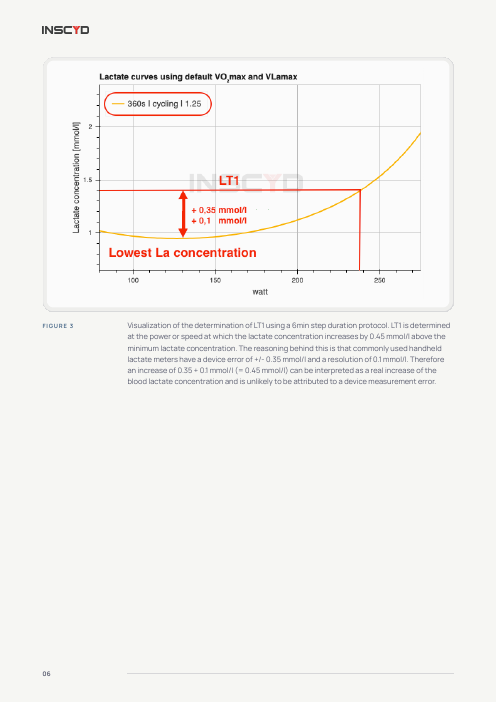
What counts as a real rise
The reference point, minimum meaningful change and measurement uncertainty all need to be defined.
One standardized LT1
INSCYD solves this problem by determining LT1 using a standardized definition, independent of the test protocol, even when no lactate samples are taken.
LT1 and Training Prescription
LT1 is widely used to organize endurance-training intensity.
If LT1 is used to prescribe training, the accuracy and reproducibility of LT1 directly affect the prescribed power, speed and heart-rate targets. A protocol-dependent or measurement-dependent shift in LT1 can therefore shift the athlete’s training zones even when the athlete’s physiology has not changed.
A standardized LT1 makes longitudinal testing and training prescription comparable: changes in the prescribed training intensity reflect changes in the athlete rather than changes in the testing procedure.
The same athlete, two prescriptions
The range below LT1 is named differently in different zone models, so it carries no zone number here.
The lower bar is the ceiling of the low-intensity range as the standardized LT1 sets it, and it does not move. The upper bar is the same ceiling read from whichever protocol the athlete happened to do.
A Standardized LT1 with INSCYD
INSCYD solves these methodological problems by normalizing LT1 to one standardized definition, regardless of how the athlete was tested.
one protocol: independent of what protocol was used for testing, LT1 is always determined using a six-minute incremental protocol.
defined lactate increase of 0.45 mmol/L above the lowest lactate concentration.
Because LT1 is derived from the athlete’s physiological profile rather than simply selecting a point from the raw lactate curve, the same standardized definition can be applied to different testing workflows: laboratory lactate tests, field lactate tests and remote performance tests using power or speed. No lactate sampling is required for the remote workflow.
The result is a comparable LT1 value even when the underlying test protocol changes, and access to LT1 even when no lactate test was performed. This provides two levels of information: a standardized LT1 that can be compared across assessments, and the metabolic context needed to understand why LT1 is where it is and why it changes.
Pages from the whitepaper
A complete picture of an athlete's physiology
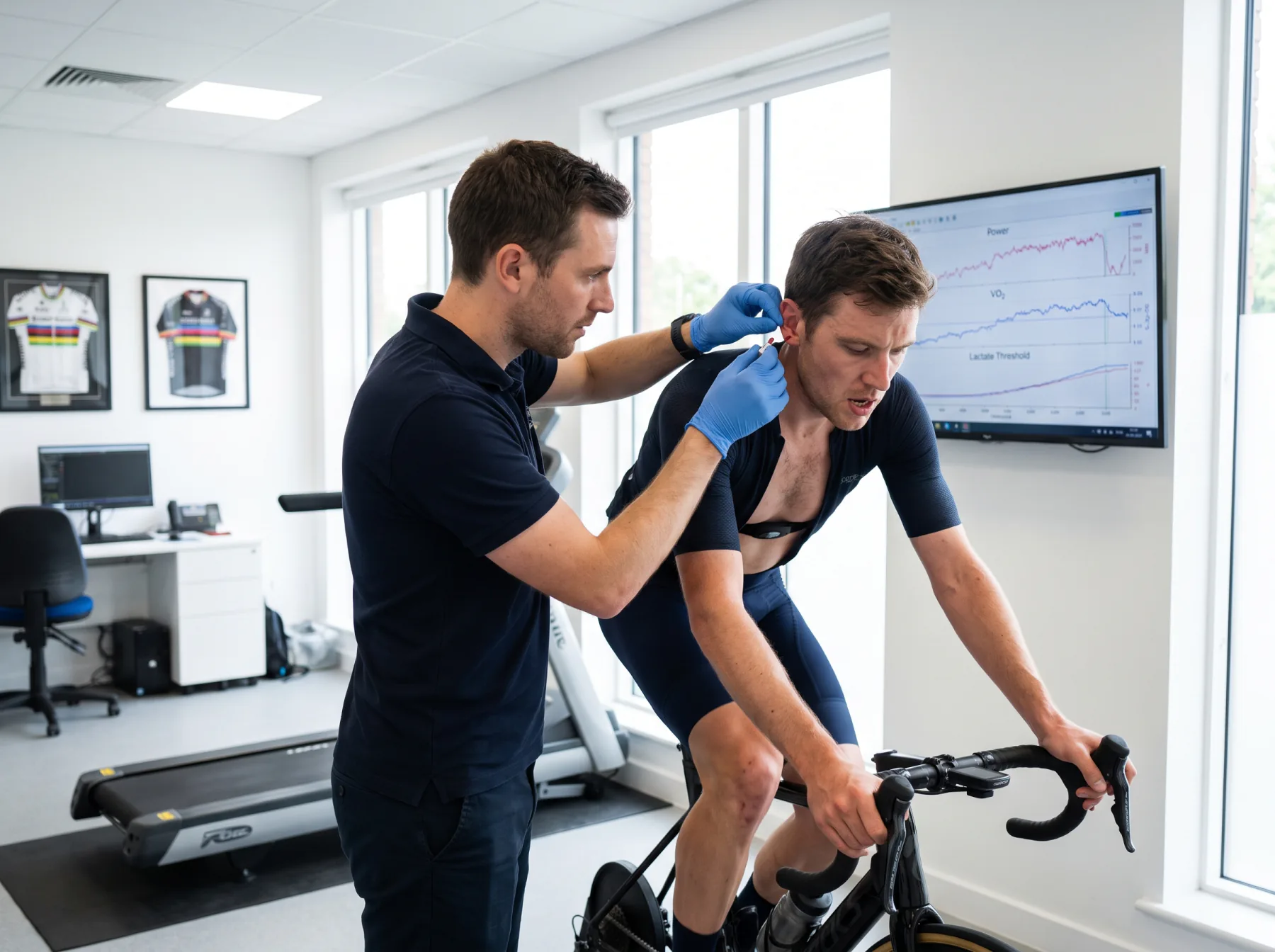
With INSCYD, generate VO₂max, VLamax, substrate utilization, thresholds and training zones from the same conventional lactate step test you already perform. No additional testing time, sprint tests or extra equipment required.
To create physiology based training programs, understand performance and monitor adaptations. Purpose-built for lab, field, and even remote testing.
Trusted by the teams and federations behind the best in sport
From national federations and Olympic programmes to WorldTour teams and professional clubs worldwide.








Get the free whitepaper
10 pages · PDF to your inbox
Get the free whitepaper Already testing athletes? Book a demo of INSCYD.